
Car AC Vacuum Pump Essentials | Why Quality Tools Matter
What really happens inside your car’s AC system before the gas goes in? Most drivers never think about it, but skipping just one step in the process can ruin cooling, damage the compressor, or waste refrigerant. If your car AC is not cooling, it might not be the gas, it could be poor vacuuming. The car AC vacuum pump plays a bigger role than people realize. And in places like Dubai, where heat beats down hard, this one tool can make or break the entire AC repair. Let’s break it down, piece by piece.
8/30/202511 min read
Role of Car AC Vacuum Pump in AC Servicing
Ever wonder why a car AC refill sometimes works great, and other times does nothing at all? The answer often lies in what happened before the refrigerant was added. That’s where the car AC vacuum pump steps in.
A vacuum pump is not just a suction tool. It is used to evacuate moisture and air from the entire AC system. Without this step, refrigerant cannot circulate properly, oil might break down, and the compressor could fail early. Here’s how it fits into the car AC evacuation process:
Pulls a deep vacuum inside the AC lines and components
Removes non-condensable gases like air that block flow
Eliminates moisture, which reacts with refrigerant and forms corrosive acids
Prepares the system for a clean, full car AC gas recharge
Any garage skipping this step is either rushing or not using the right AC vacuuming tools. In Dubai's heat, that is a recipe for breakdowns. A proper car AC gas recharge preparation always begins with a clean, moisture-free vacuum. Nothing else works without it.
Types of Car AC Vacuum Pumps Used in Dubai Garages
Not all vacuum pumps are created equal, and in a place like Dubai, where extreme heat tests everything under the hood, the difference becomes obvious fast. When it comes to car AC evacuation, the type of vacuum pump being used can either protect your system or slowly ruin it. So, what types are actually used in real garages?
Single-stage vacuum pump
A basic design that pulls air in one go. It works, but only to a point. These are slower and might not reach the deep vacuum levels needed for high-humidity environments like Dubai.Two-stage vacuum pump
This one pulls in two phases. The first clears out the bulk, and the second draws out the deeper vapors and moisture. It is a standard in most pro-level AC setups. Better for long jobs and tight systems.Oil-lubricated vacuum pump
Common in shops. Oil helps maintain tight internal seals and cooler operation. But the oil must be kept clean. Dirty oil can cause more harm than good.Oil-less vacuum pump
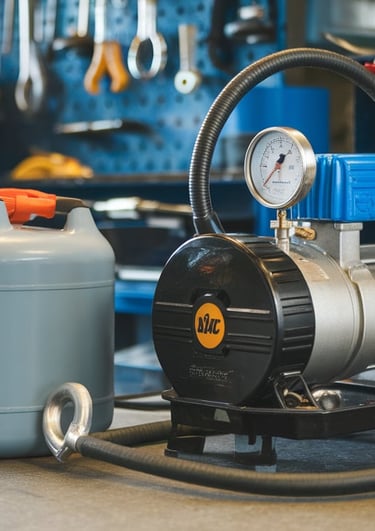
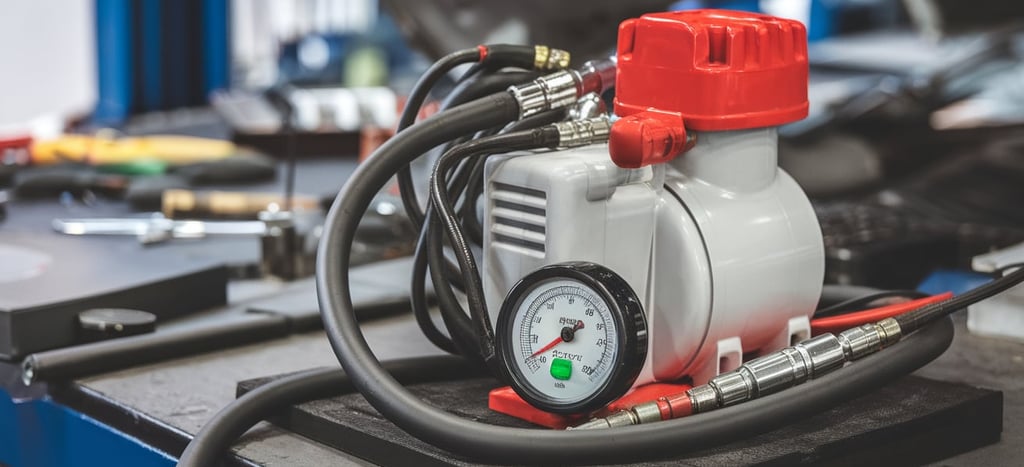
Easier to maintain. No fluid to manage, but often less efficient. Good for occasional or light-duty work, but not ideal for deeper car AC evacuation in larger vehicles or heavy use cases.Portable 12V vacuum pumps
Often found in DIY setups. While they may sound convenient, most do not generate enough flow or depth for proper car AC gas recharge preparation. Use with caution.
Garages in Dubai lean toward two-stage oil-lubricated pumps with at least 4–6 CFM (cubic feet per minute). Why? Because they can handle back-to-back jobs in high heat, without leaving moisture behind.

What Happens When AC Vacuuming Is Skipped or Poorly Done?
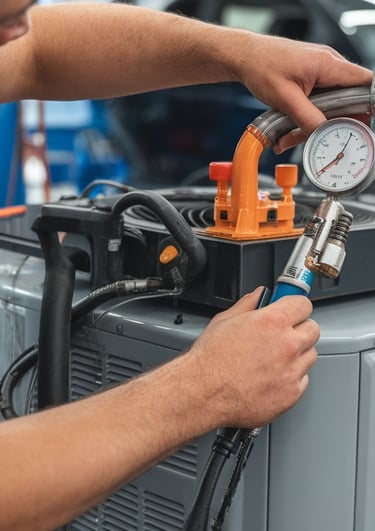
Ever paid for an AC recharge and still got lukewarm air? You are not alone. We see it all the time in Dubai, cars rolling in after being “serviced” elsewhere, only to find out the vacuuming step was skipped or rushed. And honestly? That one missed detail ruins everything. Here is what starts going wrong:
Moisture Stays Inside the System
Moisture is not just water, it reacts with refrigerant and turns into acid. That acid eats through metal, rubber, and even the compressor oil. The worst part? You will not see it until it is too late.Air Blocks the Flow of Refrigerant
Air does not compress like refrigerant does. It takes up space, builds pressure, and disrupts the cooling cycle. So even if the refrigerant is there, your car AC might not cool.Compressor Damage from the Inside Out
If moisture turns acidic or air causes pressure imbalance, the AC compressor becomes the next casualty. And that’s not a cheap fix.Cooling Becomes Inconsistent
One day the AC works fine, the next it blows warm. That is the classic pattern of a system contaminated with air or moisture.
The car AC evacuation process is not optional. It is step one of protecting the entire system. If you hear, “We’ll just top up the gas,” and there is no mention of vacuuming? Walk away.
How Dubai Garages Vacuum Car AC Systems
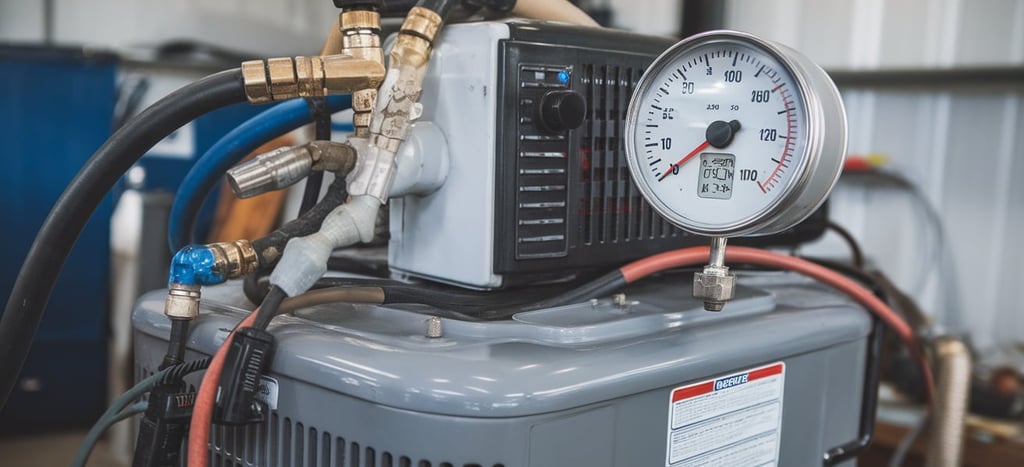
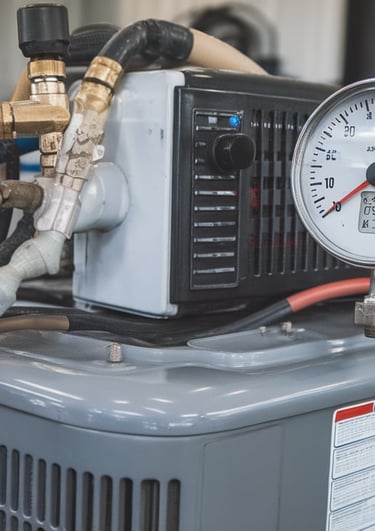
Most people picture AC service as just “topping up the gas.” But if you walk into a real garage during a proper car AC gas recharge, it looks nothing like that. There are gauges. Hoses. Hissing valves. And one machine running quietly in the corner, that’s the car AC vacuum pump doing all the dirty work before the gas even goes in. So how do professional garages in Dubai handle vacuuming the right way?
Here is a look at what we actually do:
Connect the Manifold Gauge Set First
We start by linking the AC lines to the manifold set. This is where pressures are measured and where the vacuum pump hooks up.Check for Pressure in the System
Before pulling a vacuum, we make sure the system is empty. If there’s still pressure, that means refrigerant (or worse, air) is still inside. Vacuuming without recovery is pointless, and illegal.Run the Vacuum Pump for 15–45 Minutes
Time depends on the size of the vehicle and how bad the system is. For most cars, we run the pump until it pulls below 500 microns on a micron gauge, not just “looks good on the needle.”Watch the Micron Gauge for Rise
After switching the pump off, we monitor the gauge. If the reading rises quickly, it means there is a leak or trapped moisture. We don’t recharge until it holds steady.Re-oil the Pump When Needed
Dubai’s dust and humidity mess with pump oil fast. If the oil looks cloudy or dark, it gets swapped out immediately. Dirty oil = contaminated vacuum = useless evacuation.
That is how car AC evacuation should be done every time. Not rushed. Not estimated. Not skipped. Vacuuming is not a side step, it is the core of any real car AC gas recharge preparation. Without it, everything else is just guesswork.
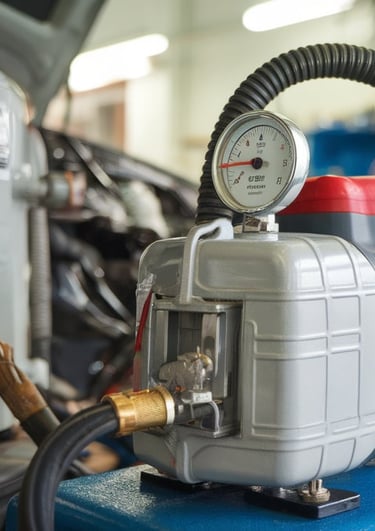
DIY Vacuum Pumps vs Garage-Grade Tools | What Really Matters
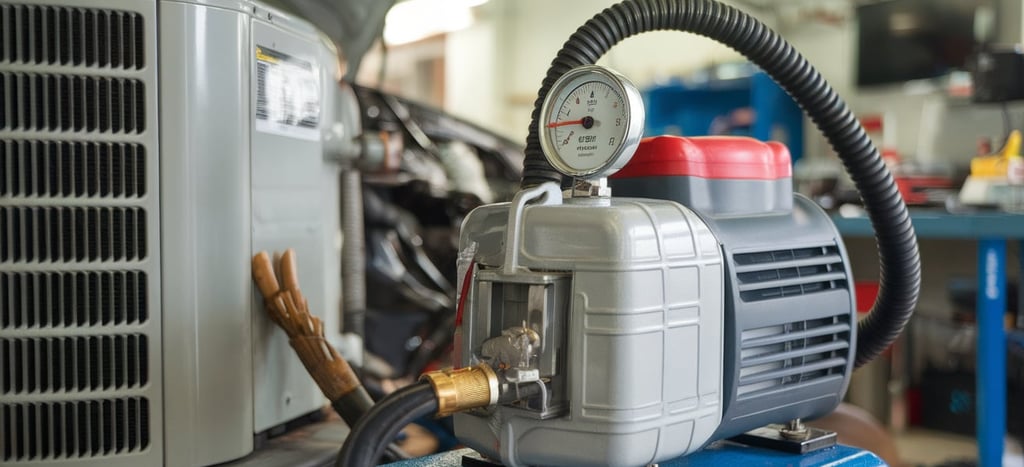
So you are thinking of doing it yourself? Cool idea, until the Dubai heat cooks your AC again. Let’s line it up properly:
Vacuum Depth
DIY setup? Pulls a weak vacuum. No way to measure microns.
Garage-grade tools? Pulls well below 500 microns with precise micron gauges. That’s the level needed to strip out moisture completely.
Pump Type
DIY gear: Single-stage, oil-less pumps. Simpler, but shallow in power.
Pro equipment: Dual-stage, oil-lubricated pumps that dig deeper into the system.
CFM (Cubic Feet per Minute – Suction Power)
DIY pumps: 1 to 2 CFM. Feels like it’s working… but it is slow and weak.
Garage-grade: 4 to 6 CFM. Clears out your system fast and fully.
Leak Monitoring
DIY: No way to know if there is a leak. You guess.
Professional tools: Micron rise test tells you if there's air sneaking in.
Oil System
DIY units: Usually oil-free or fixed oil that cannot be cleaned.
Workshop tools: Changeable oil, visible through a sight glass so you see when it is time to swap.
Thermal Protection
DIY vacuum pumps: Rarely any. They run hot, then they quit.
Garage pumps: Built-in thermal cutoffs so they do not burn out in Dubai’s brutal heat.
Tool Lifespan in UAE Conditions
DIY: Struggles under repeated use, fails fast when heat climbs.
Professional: Handles high-heat bays, built to survive daily abuse.
Micron Gauge Support
DIY? Nope. You will not know what you pulled.
Garage-grade? Comes standard, because accuracy matters.
Safety for Your Car’s AC System
DIY approach: Leaves moisture or air inside. That turns into acid. That ruins your AC.
Professional vacuum tools: Ensure a full, deep evacuation. No moisture, no air, no risk.
End Result
DIY setup: Cool air… for now. Expect problems to return.
Garage-grade tools: Stable cooling, longer life, no comebacks.
Fact: Most DIY setups cannot even pull a vacuum deeper than 1000 microns. That’s still loaded with moisture.
You are not just comparing tools, you are comparing outcomes. And in Dubai’s weather, there is no room for shortcuts when it comes to car AC evacuation, because skipping steps is often the hidden reason behind a car AC not cooling issue.
Checklist Before Starting the Car AC Vacuuming Process
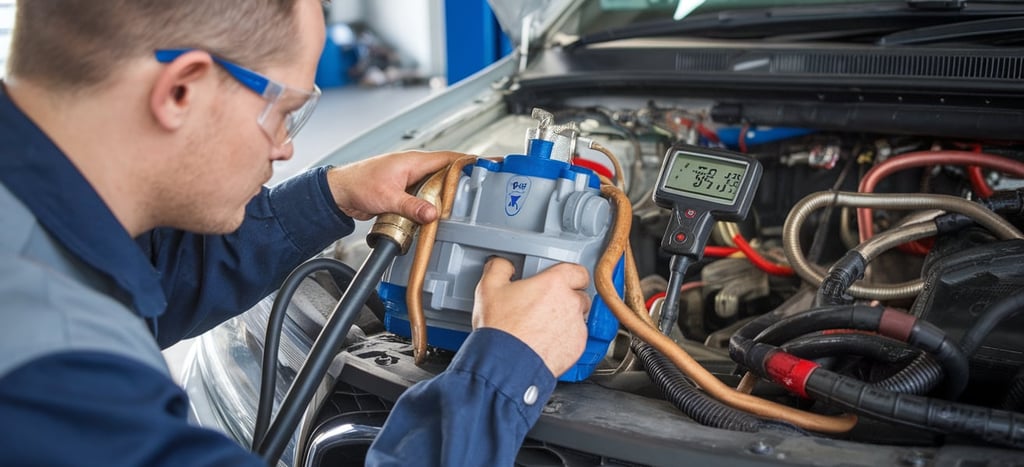
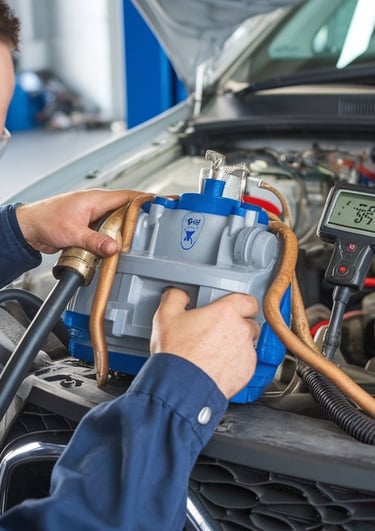
Most AC problems start long before the refrigerant is added. That is why we follow a strict car AC gas recharge preparation checklist before even switching on the vacuum pump. It is not about overkill, it is about doing things right the first time. If any of these steps are skipped, the entire job can fall apart. What Should Happen Before the Vacuum Starts:
System Must Be Fully Recovered
If there is leftover refrigerant, the vacuum will not do its job. Recovery ensures no pressure or residual gas is hiding in the system.Leak Check Comes First
Vacuuming a leaking system is like bailing water from a sinking boat. Pressure decay or nitrogen testing should be done first to confirm no leaks.Correct Hose Connections
The manifold gauge should be properly attached to both low and high sides. Loose or mismatched fittings allow air back in.Select the Right Pump for Vehicle Size
A small sedan and a large SUV do not need the same pull rate. The pump’s CFM rating should match the system volume.Micron Gauge Must Be Installed
This is the only way to know how deep the vacuum is. Relying on analog pressure gauges is like guessing in the dark.Oil Level and Color in Pump
If the oil looks dark, it is time to change it. Old oil can carry moisture back into the system or reduce pump performance.
Skipping these checks is like skipping a pre-flight before takeoff. It might work. Once. But when it fails, it fails hard. Car AC evacuation is more than connecting a few hoses. The prep is what makes the vacuuming effective. Everything after that depends on how clean and tight the system was before the gas touched it.
How to Know If Vacuuming Was Done Properly
Let’s say your AC was just “serviced.” It is cooling better, but how do you know if the job was actually done right? Most drivers never ask. Most garages never explain. But if the car AC vacuum pump did not do its job properly, you will be sweating again soon. Maybe not tomorrow, but soon. So how can you tell if the car AC evacuation process was done the way it should be?
Here’s what real vacuuming leaves behind:
Micron Level Below 500
This is the gold standard. Anything above 1000 microns still has air or moisture in the system. Below 500? You’re good to go.Micron Holds After the Pump Is Off
The pump runs, a vacuum is pulled, then it is shut off. If the micron level rises fast, you’ve got a leak. If it holds steady for 5–10 minutes, it passed the test.No Cloudy or Boiling Sounds
During vacuuming, bubbling or noise from the pump’s oil sight glass could mean water is being removed, which is good. But if that continues too long, it means too much moisture was inside to begin with.No Quick Recharge Without Prep
If your mechanic jumped straight to refrigerant without vacuuming at all, that is a red flag. Even 5–10 minutes of vacuum is not enough for deep moisture removal.System Feels Consistently Cold After Recharge
No sudden shifts. No lukewarm air. Just steady cooling. If your system fluctuates after a recharge, poor vacuuming is often the root cause.
A proper car AC gas recharge preparation includes one key test: pull the vacuum, watch the micron gauge, and wait. That small moment of patience saves compressors, stops leaks, and keeps the cooling strong for the long run.
Key Features to Look for in a Car AC Vacuum Pump
Let’s say you walk into a garage and spot a vacuum pump humming away near the manifold gauges. Looks like it is doing the job, right? Maybe. But unless it has the right specs, you are probably wasting time, and gas. A good car AC vacuum pump is not about looks. It is about what it can pull and how deep it can go. Here’s what matters when choosing AC vacuuming tools:
CFM Rating (Cubic Feet per Minute)
This tells you how fast it pulls air. For passenger cars, 4–6 CFM works well. Anything less can take forever or never pull deep enough.Micron Rating
You want vacuum levels below 500 microns. That’s the gold standard for car AC gas recharge preparation. Without hitting this depth, moisture and air stay in the system.Oil Sight Glass
On oil-lubricated pumps, being able to see the oil color and level matters. Dark oil means contamination, and that pump might be doing more damage than good.Thermal Protection
Dubai heat can fry cheap tools. Built-in thermal protection stops the pump from overheating during longer vacuum cycles.Noise & Vibration Control
Okay, this one is less technical, but if the pump sounds like a chainsaw, it’s usually not balanced right. Excess vibration can mess with fittings and gauges.
So next time you are watching an AC evacuation job, ask about the pump. If they cannot tell you the micron level or CFM, they might be doing it blind and that poor process will eventually stress the AC Expansion Valve. When moisture or non-condensable gases remain inside the system, the valve cannot regulate pressure correctly, leading to uneven cooling and long-term damage. A precise evacuation, paired with professional AC Expansion Valve service in Dubai, keeps your cooling cycle efficient and balanced.
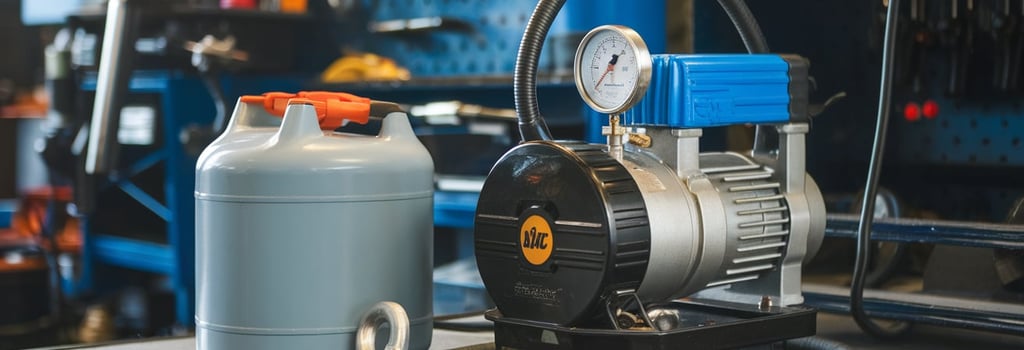
Why the Vacuum Pump Is the Most Underrated Tool in AC Repairs
Most people think the magic happens when the gas goes in. Cold air starts blowing, everyone’s happy, and that’s that. But here’s the truth: if the car AC vacuum pump did not do its job properly, that cold air won’t last long. We have seen it too many times in Dubai. AC recharge today, back in the garage next week. And the one thing that always links those cases? Poor vacuuming. Let’s call it what it is, this tool decides if the job was worth doing at all. Here is why the vacuum pump makes or breaks the whole thing:
It is the gatekeeper between a clean system and a contaminated one
It protects the compressor from moisture damage and pressure imbalances
It prevents callbacks, refunds, and wasted refrigerant
It saves your wallet, because redoing an AC job is not free, especially in Dubai
And guess what? Most garages undercharge and over-promise. They skip the micron gauge. They run the pump for 3 minutes and call it done. That is not AC service, that is gambling with your cooling system, which is why our car air conditioning repair in Dubai service focuses on precision, accuracy, and long-term performance, not shortcuts.
We treat vacuuming like a separate job in itself, not just a step in the process. Why? Because everything that follows depends on it. If it is rushed, sloppy, or skipped, the gas won’t stay, the cooling won’t last, and the AC won’t survive.
Most AC failures in Dubai do not start with the gas, they start with the vacuum. You would be surprised how many cars roll into the garage with “cooling issues,” only to find out the system was never vacuumed properly to begin with. The car AC vacuum pump is not just another tool, it is the first line of defense against moisture, air pockets, and acid buildup. Skip it, or use the wrong one, and even the best refrigerant will fail. In a city where 45°C is normal, that one overlooked step can cost you a lot more than comfort.
Experts
Get your car air conditioner repair done by reliable experts in Al Quoz.
Dubai
Contact
Car AC Heroes
0506087150
© 2024. All rights reserved.