
Free Pickup and Delivery AC Service
Pickup and return can remove the transport problem, but “free” must have a clear eligibility rule. We confirm the location, vehicle condition, service scope, timing and transport method before collection so there is no surprise charge or unsafe handover.
What a proper collection service should protect
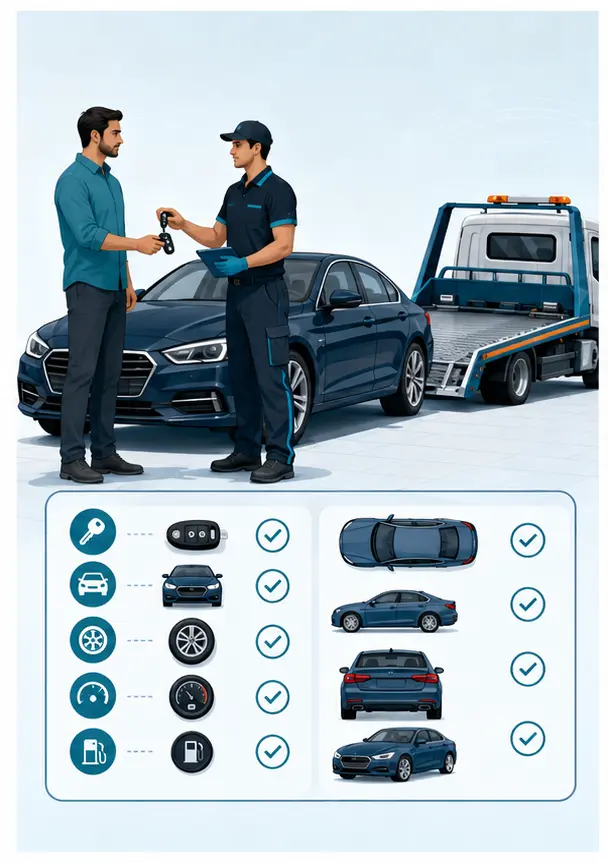
Convenience begins with certainty about responsibility. The handover should record the vehicle’s visible condition, fuel or charge level where relevant, warning lights, keys, valuables and the customer’s stated AC symptom. Photos taken from consistent angles reduce disagreement about marks that existed before transport. Personal documents and valuables should be removed whenever practical.
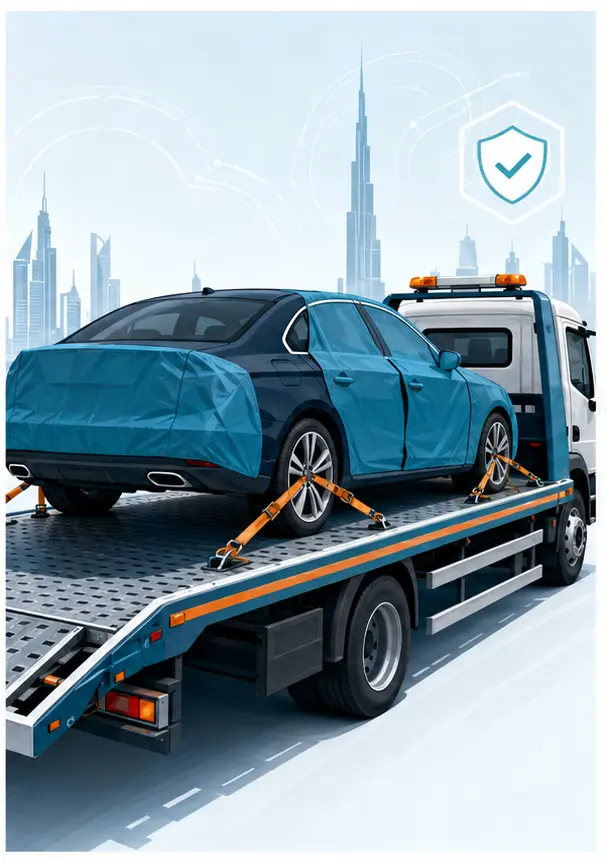
Transport method depends on vehicle condition. A car that starts, steers, brakes and carries no safety warning may be collected by an approved driver where insurance and booking terms allow. A car that should not be driven needs suitable transport. The customer should know who is moving the vehicle, the destination, the estimated collection window and how approval for workshop work will be obtained.
At AMF Auto Services, the vehicle enters the same evidence-led process as a direct arrival. The diagnostic scope is agreed, findings are reported and no additional repair is treated as approved merely because the car has been collected. Return delivery follows the final quality check and payment or authorization terms stated in the booking.
Eight handover controls that make collection dependable
A pickup promise is operational, not decorative. Each control below reduces ambiguity for the customer and the workshop.
Coverage is checked before confirmation
The location, collection window, vehicle size, condition and booked service are reviewed together. A map pin alone does not prove that free transport applies to every journey.
If the request sits outside the current free-service conditions, the team should explain an alternative before booking. The customer can then choose workshop drop-off, paid transport or another suitable route.
The vehicle is documented at handover
Walk-around photos, visible damage, warning messages, odometer reading and the key count are recorded. The customer can point out a fragile trim item, low tyre or other condition that affects movement.
The record protects both parties and helps the receiving technician distinguish an existing vehicle problem from the AC complaint. Number plates and personal details are not used as public content.
Personal items should leave with the owner
Documents, cash, electronics, access cards and loose valuables should be removed. The boot and cabin need enough clear space for safe movement and inspection.
If an item must remain, note it at handover. A workshop pickup is not a storage service, and technicians should not move through personal property to reach the filter, battery or diagnostic connector.
Collection method follows risk
A burning smell, smoke, overheating, severe belt noise, damaged steering or brakes, collision damage, high-voltage warning or a vehicle that will not start changes the transport plan.
Ordinary pickup should not be used to drive a possibly unsafe car across Dubai. Suitable recovery or a transporter may be required, with cost and timing confirmed separately if it falls outside the free offer.
Collection does not approve repairs
The agreed intake or diagnostic fee and the authority to move the vehicle are separate from permission to replace parts. Findings should be reported with a written estimate.
The customer chooses the repair scope after understanding the fault, options, exclusions and availability. Silence, missed calls or possession of the vehicle must never be treated as approval.
Windows are realistic rather than exact-minute promises
Traffic, access, prior jobs and transporter availability can change collection and return timing. The booking should use a window and a contact method for updates.
Same-day return is only appropriate when diagnosis, approval, parts, labour and final testing all fit. Otherwise the workshop should protect quality and explain the revised plan before the expected time passes.
Loading and movement suit the vehicle
Low ground clearance, air suspension, parking locks, steering locks, EV state and aftermarket body parts can affect loading. The correct attachment points and transport method matter.
A protected vehicle is not dragged by an unsuitable point or forced onto equipment that can damage the bumper, battery enclosure or wheels. Special needs should be disclosed before dispatch.
Delivery follows a recorded quality check
The completed work, warning-light status, cooling result and any unresolved item are reviewed before return. The vehicle should arrive with the agreed keys and handover record.
The customer can compare the original complaint with the final test and receive care guidance. If the fault cannot be reproduced or remains conditional, that limitation is stated instead of claiming a complete cure.
What can change pickup eligibility or transport method
The final decision is made from the actual booking information, not from a generic website promise.
| Handover condition | Collection response | Transport decision |
|---|---|---|
| Running car with a comfort-only AC complaint | May qualify for ordinary collection within current coverage | Location, schedule, insurance conditions and booked service still need confirmation |
| Non-running vehicle | Needs an explanation of why it will not start | Transporter or recovery equipment may be required and may not be included |
| Overheating, smoke or burning odour | Do not arrange a driver to operate the vehicle | Safety inspection and suitable recovery take priority over convenience |
| Low sports car or modified bodywork | Share clearance and towing-point details | Loading equipment and protection method must be checked before dispatch |
| EV or hybrid with a system warning | Send the exact warning and state of charge | High-voltage or movement precautions can change the collector and destination plan |
| Large van, truck, bus or minibus | Provide dimensions and weight category | Commercial transport, bay capacity and route restrictions may require a separate arrangement |
Free pickup and delivery applies only to bookings confirmed as eligible. No unverified coverage radius, minimum spend or universal same-day promise is stated on this page.
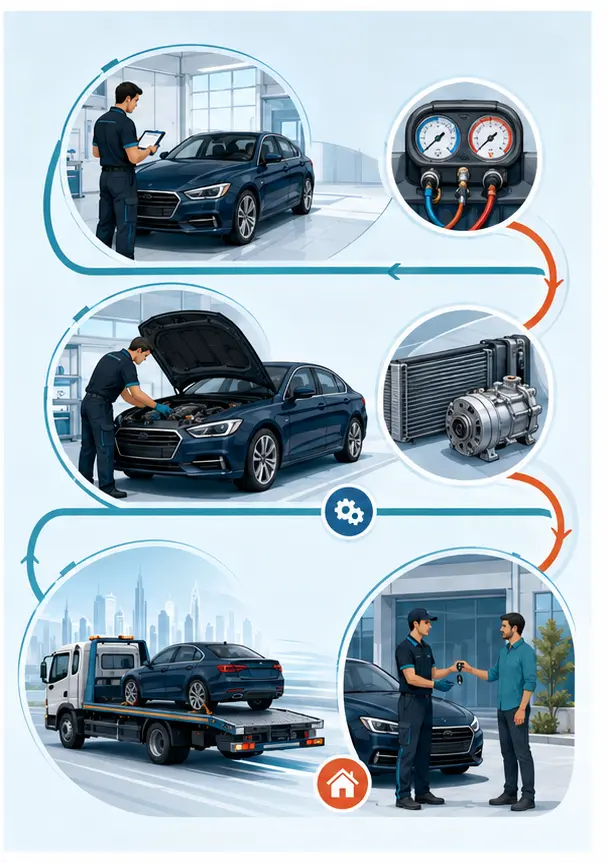
Handover, protected transport and workshop authorization form one chain
The illustrations teach the process and are not images of a particular customer vehicle, transporter or completed AMF repair.
The repair quotation stays separate from transport convenience
Collection can be included while diagnosis, refrigerant, parts and labour remain chargeable. The written booking should identify what is free and what is merely being transported. A customer should not discover after collection that an undisclosed minimum repair value was required.
Workshop findings may change the estimate. A weak-cooling complaint can involve a filter, fan, leak, compressor, control fault or several conditions. For the collected vehicle, the approved estimate is calculated from, exact vehicle specification, fault severity, parts choice, required work and current availability.
If the customer declines repair, the return arrangement should follow the confirmed terms. Diagnostic work already completed remains valuable and should be documented. Any storage, redelivery or recovery condition must be disclosed rather than improvised after the decision.
From location pin to returned vehicle
The customer should know the decision owner at every stage.
Request and screening
Send location, vehicle, symptom and condition. The team checks current eligibility, access, likely transport method and a collection window before using the word free.
Written confirmation
The message states the pickup terms, destination, diagnostic or service scope and any condition that could create a transport charge. The customer confirms before dispatch.
Handover record
Keys, visible condition, warnings and special movement instructions are noted. The driver confirms the vehicle identity without copying private documents into public or unrelated systems.
Workshop intake
The technician reproduces the AC complaint, records the baseline and performs the agreed diagnosis. The customer receives findings and an estimate before extra repair begins.
Repair and verification
Approved work is completed using the vehicle specification. Cooling, airflow, controls and relevant warnings are checked under recorded conditions before release.
Return and receipt
Delivery is arranged within the updated window. The customer receives the work summary, invoice, limitations, next actions and the vehicle handover.
What happens when diagnosis changes the return plan
Collection removes the customer’s travel task, but the vehicle can still reveal a fault that needs more time than expected. If refrigerant contamination appears, a leak needs controlled pressure testing, a module requires identification or a dashboard component needs access, the original return window may no longer be realistic. The workshop should contact the named approver with the finding, the reason the timing changed, the vehicle’s current condition and the available choices. A rushed partial repair simply to meet transport timing can create another collection and more downtime.
When work is declined or postponed, the handover should explain whether the vehicle was reassembled, whether the AC should remain switched off and whether normal driving is affected by anything discovered. Return delivery then follows the confirmed terms rather than an improvised condition. Diagnostic photographs and reports should exclude unrelated personal items and should be shared only through the agreed contact. This disciplined close-out keeps the free transport offer separate from pressure to approve repair.
Questions about free pickup and return
These answers explain the offer without inventing coverage rules that have not been approved.
Is pickup and delivery always free everywhere in Dubai?
No universal rule is claimed. The team confirms whether the specific location, vehicle, service and schedule qualify before booking. If a charge or alternative transport is required, it should be disclosed before dispatch.
Can you collect a car that does not start?
Possibly, but it may require a transporter or recovery provider rather than ordinary collection. Describe the no-start condition and warning messages. Free collection cannot be assumed until equipment and eligibility are confirmed.
Does handing over the keys authorize repair?
No. It authorizes the agreed vehicle movement and intake only. The diagnostic scope should be clear, and additional parts or labour require customer approval after the findings and written estimate are shared.
Will the car come back the same day?
Only when collection, diagnosis, approval, parts, repair and final testing all fit the available time. The workshop should update the customer if evidence or supply changes the plan. Quality and accurate approval are more important than an unsupported same-day claim.
How is vehicle condition protected?
A practical handover uses photos and notes for visible condition, keys, warnings and special movement instructions. Appropriate transport and secure loading are chosen for the vehicle. The exact record and insurance arrangements are confirmed with the booking.
Check pickup eligibility before you plan the day
Send the Dubai location, vehicle details, driveability and AC symptom. We will confirm whether free collection and return apply, the expected window and the workshop intake scope.