
Car AC Thermostat Repair Dubai
The compressor cycles too quickly. Temperature-control complaints become clearer when the relevant temperature is tracked from start-up through the first complete cooling cycle. The word thermostat may describe several different sensors or control functions. Naming the exact signal prevents an engine-cooling part from being confused with cabin control.
Clarify whether thermostat means a cabin sensor, evaporator sensor or control setting. Inside an automatic climate system, compared with the requested cabin temperature. Cabin, sunlight and evaporator inputs can alter the same compressor request. Their values should be compared rather than judged independently.
Follow the complaint from cold start to cut-off
Cooling stops although airflow remains strong. For a zone-temperature mismatch, retested after heat soak rather than judged from one snapshot. Blend-door position and sensor feedback must be separated from refrigerant capacity. This avoids treating an air-distribution fault as a gas problem.
A temperature-control complaint is not a reason to continue through burning odour, smoke, belt noise, engine-temperature warnings or an electrified-vehicle alert.. Temperature-control complaints become clearer when the relevant temperature is tracked from start-up through the first complete cooling cycle. The word thermostat may describe several different sensors or control functions. Naming the exact signal prevents an engine-cooling part from being confused with cabin control.
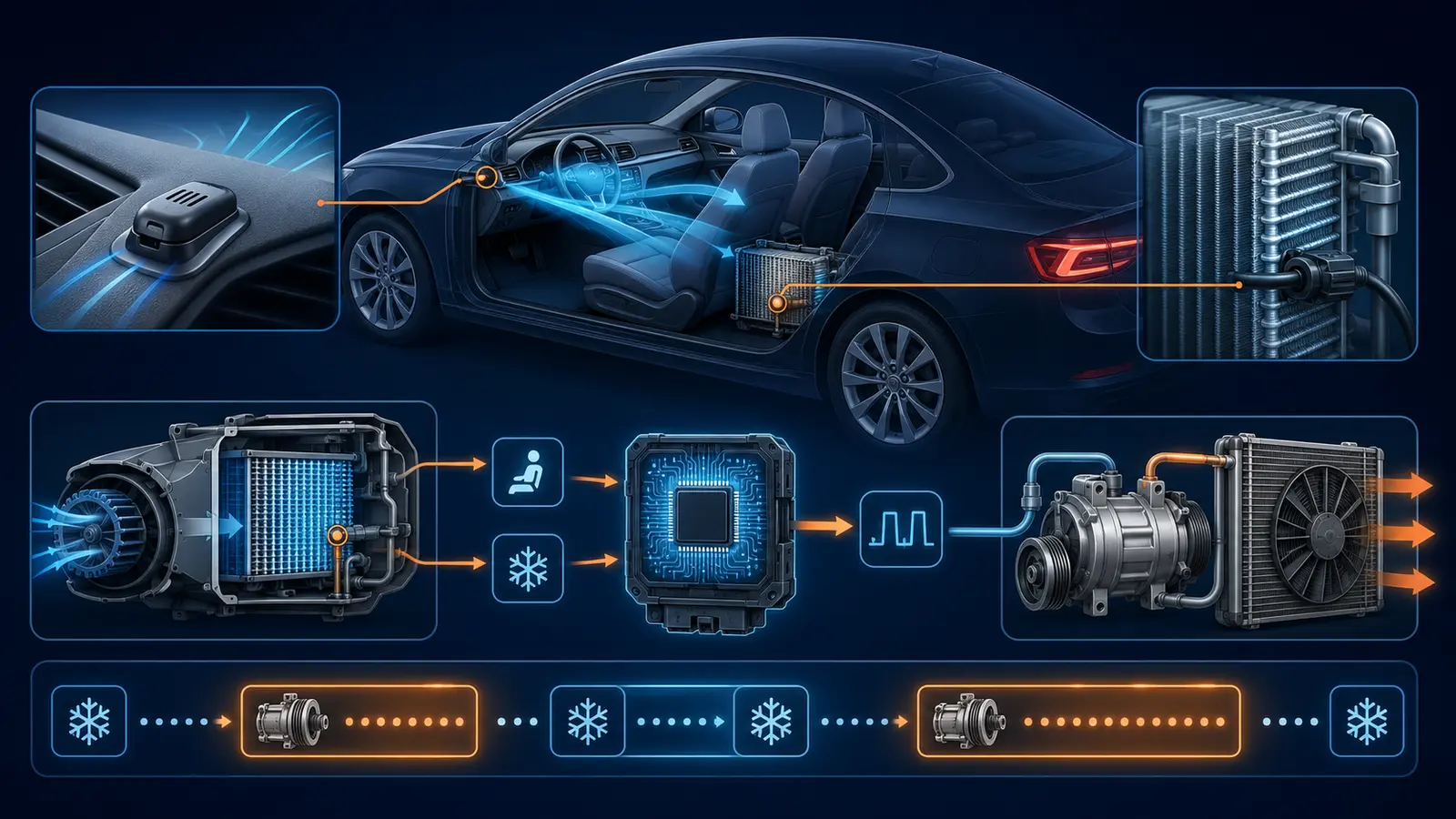
A temperature timeline for intermittent cooling
The compressor cycles too quickly
Temperature-control complaints become clearer when the relevant temperature is compared with the requested cabin temperature. The word thermostat may describe several different sensors or control functions. Naming the exact signal prevents an engine-cooling part from being confused with cabin control.
Cooling stops although airflow remains strong
Inside an automatic climate system, checked against evaporator temperature and blower airflow. Cabin, sunlight and evaporator inputs can alter the same compressor request. Their values should be compared rather than judged independently.
The evaporator ices and airflow later falls
When cycling appears abnormal, read with sunlight, cabin and ambient inputs. The crucial clue is whether the controller is responding to a believable temperature. An implausible signal calls for circuit checks before sensor replacement.
The displayed cabin temperature does not match comfort
During evaporator freeze protection, retested after heat soak rather than judged from one snapshot. Airflow restriction can create the same late loss of vent volume as a control error. Filter and blower evidence keep the diagnosis on the correct branch.
One climate zone behaves differently
For a zone-temperature mismatch, tracked from start-up through the first complete cooling cycle. Blend-door position and sensor feedback must be separated from refrigerant capacity. This avoids treating an air-distribution fault as a gas problem.
Cold air returns after restarting the vehicle
Following temperature-sensor work, compared with the requested cabin temperature. The system needs enough time to cycle under a repeatable cabin load. Stable control is better proof than one momentary cold reading.
Compare request, sensor value and system response
A temperature-control fault is confirmed by comparing the requested setting, live sensor data and the system’s response. These checks help separate a sensor or wiring problem from restricted airflow, refrigerant performance or a blend-door fault.
Define what “thermostat” means
Confirm whether the complaint refers to a cabin-temperature sensor, evaporator sensor or climate-control setting. Naming the exact signal keeps cabin control separate from the engine-cooling thermostat.
Compare requested and measured cabin temperature
Read the selected temperature beside cabin, ambient and sunlight inputs. For a zone mismatch, compare blend-door position and sensor feedback before blaming refrigerant capacity.
Read evaporator temperature during operation
Track the value through a complete cooling cycle and repeat the test after heat soak. Stable control over time is better evidence than one momentary cold reading.
Inspect sensor mounting and aspirator airflow
A blocked sensor vent or weak aspirator fan can distort the cabin reading. Mounting and airflow must be checked before replacing the sensor.
Test reference voltage and signal stability
Check the circuit under operating conditions because intermittent wiring may pass a static resistance test. An implausible live value calls for circuit checks before parts approval.
Separate control logic from other AC faults
Low airflow, evaporator icing, blend-door movement and weak refrigerant performance can create similar symptoms. The repair path should follow measured evidence from the full system.
Airflow and blend faults that mimic a sensor problem
Replacing a sensor when the evaporator is actually freezing from low airflow
When cycling appears abnormal, read with sunlight, cabin and ambient inputs. The crucial clue is whether the controller is responding to a believable temperature. An implausible signal calls for circuit checks before sensor replacement.
Confusing engine coolant thermostat symptoms with cabin climate control
During evaporator freeze protection, retested after heat soak rather than judged from one snapshot. Airflow restriction can create the same late loss of vent volume as a control error. Filter and blower evidence keep the diagnosis on the correct branch.
Coding requirements on some replacement modules
For a zone-temperature mismatch, tracked from start-up through the first complete cooling cycle. Blend-door position and sensor feedback must be separated from refrigerant capacity. This avoids treating an air-distribution fault as a gas problem.
Sun-load influence on automatic climate response
Following temperature-sensor work, compared with the requested cabin temperature. The system needs enough time to cycle under a repeatable cabin load. Stable control is better proof than one momentary cold reading.
Blocked sensor vents that distort cabin readings
Temperature-control complaints become clearer when the relevant temperature is checked against evaporator temperature and blower airflow. The word thermostat may describe several different sensors or control functions. Naming the exact signal prevents an engine-cooling part from being confused with cabin control.
Intermittent wiring that passes a static resistance check
Inside an automatic climate system, read with sunlight, cabin and ambient inputs. Cabin, sunlight and evaporator inputs can alter the same compressor request. Their values should be compared rather than judged independently.
What changes the thermostat repair scope
Replacing a sensor when the evaporator is actually freezing from low airflow
Following temperature-sensor work, retested after heat soak rather than judged from one snapshot. The system needs enough time to cycle under a repeatable cabin load. Stable control is better proof than one momentary cold reading.
Clarify whether thermostat means a cabin sensor, evaporator sensor or control setting
Temperature-control complaints become clearer when the relevant temperature is tracked from start-up through the first complete cooling cycle. The word thermostat may describe several different sensors or control functions. Naming the exact signal prevents an engine-cooling part from being confused with cabin control.
The compressor cycles too quickly
Inside an automatic climate system, compared with the requested cabin temperature. Cabin, sunlight and evaporator inputs can alter the same compressor request. Their values should be compared rather than judged independently.
Sun-load influence on automatic climate response
When cycling appears abnormal, checked against evaporator temperature and blower airflow. The crucial clue is whether the controller is responding to a believable temperature. An implausible signal calls for circuit checks before sensor replacement.
Compare requested and measured cabin temperatures
During evaporator freeze protection, read with sunlight, cabin and ambient inputs. Airflow restriction can create the same late loss of vent volume as a control error. Filter and blower evidence keep the diagnosis on the correct branch.
The displayed cabin temperature does not match comfort
For a zone-temperature mismatch, retested after heat soak rather than judged from one snapshot. Blend-door position and sensor feedback must be separated from refrigerant capacity. This avoids treating an air-distribution fault as a gas problem.
A full cycling test, not one cold reading
Read evaporator temperature data during operation
Temperature-control complaints become clearer when the relevant temperature is tracked from start-up through the first complete cooling cycle. The word thermostat may describe several different sensors or control functions. Naming the exact signal prevents an engine-cooling part from being confused with cabin control.
Cooling stops although airflow remains strong
Inside an automatic climate system, compared with the requested cabin temperature. Cabin, sunlight and evaporator inputs can alter the same compressor request. Their values should be compared rather than judged independently.
Blocked sensor vents that distort cabin readings
When cycling appears abnormal, checked against evaporator temperature and blower airflow. The crucial clue is whether the controller is responding to a believable temperature. An implausible signal calls for circuit checks before sensor replacement.
Test wiring reference voltage and signal stability
During evaporator freeze protection, read with sunlight, cabin and ambient inputs. Airflow restriction can create the same late loss of vent volume as a control error. Filter and blower evidence keep the diagnosis on the correct branch.
One climate zone behaves differently
For a zone-temperature mismatch, retested after heat soak rather than judged from one snapshot. Blend-door position and sensor feedback must be separated from refrigerant capacity. This avoids treating an air-distribution fault as a gas problem.
Confusing engine coolant thermostat symptoms with cabin climate control
Following temperature-sensor work, tracked from start-up through the first complete cooling cycle. The system needs enough time to cycle under a repeatable cabin load. Stable control is better proof than one momentary cold reading.
What to monitor after temperature-control work
The compressor cycles too quickly
Temperature-control complaints become clearer when the relevant temperature is compared with the requested cabin temperature. The word thermostat may describe several different sensors or control functions. Naming the exact signal prevents an engine-cooling part from being confused with cabin control.
Cold air returns after restarting the vehicle
Inside an automatic climate system, checked against evaporator temperature and blower airflow. Cabin, sunlight and evaporator inputs can alter the same compressor request. Their values should be compared rather than judged independently.
Read evaporator temperature data during operation
When cycling appears abnormal, read with sunlight, cabin and ambient inputs. The crucial clue is whether the controller is responding to a believable temperature. An implausible signal calls for circuit checks before sensor replacement.
Replacing a sensor when the evaporator is actually freezing from low airflow
During evaporator freeze protection, retested after heat soak rather than judged from one snapshot. Airflow restriction can create the same late loss of vent volume as a control error. Filter and blower evidence keep the diagnosis on the correct branch.
Test wiring reference voltage and signal stability
For a zone-temperature mismatch, tracked from start-up through the first complete cooling cycle. Blend-door position and sensor feedback must be separated from refrigerant capacity. This avoids treating an air-distribution fault as a gas problem.
Cooling stops although airflow remains strong
Following temperature-sensor work, compared with the requested cabin temperature. The system needs enough time to cycle under a repeatable cabin load. Stable control is better proof than one momentary cold reading.
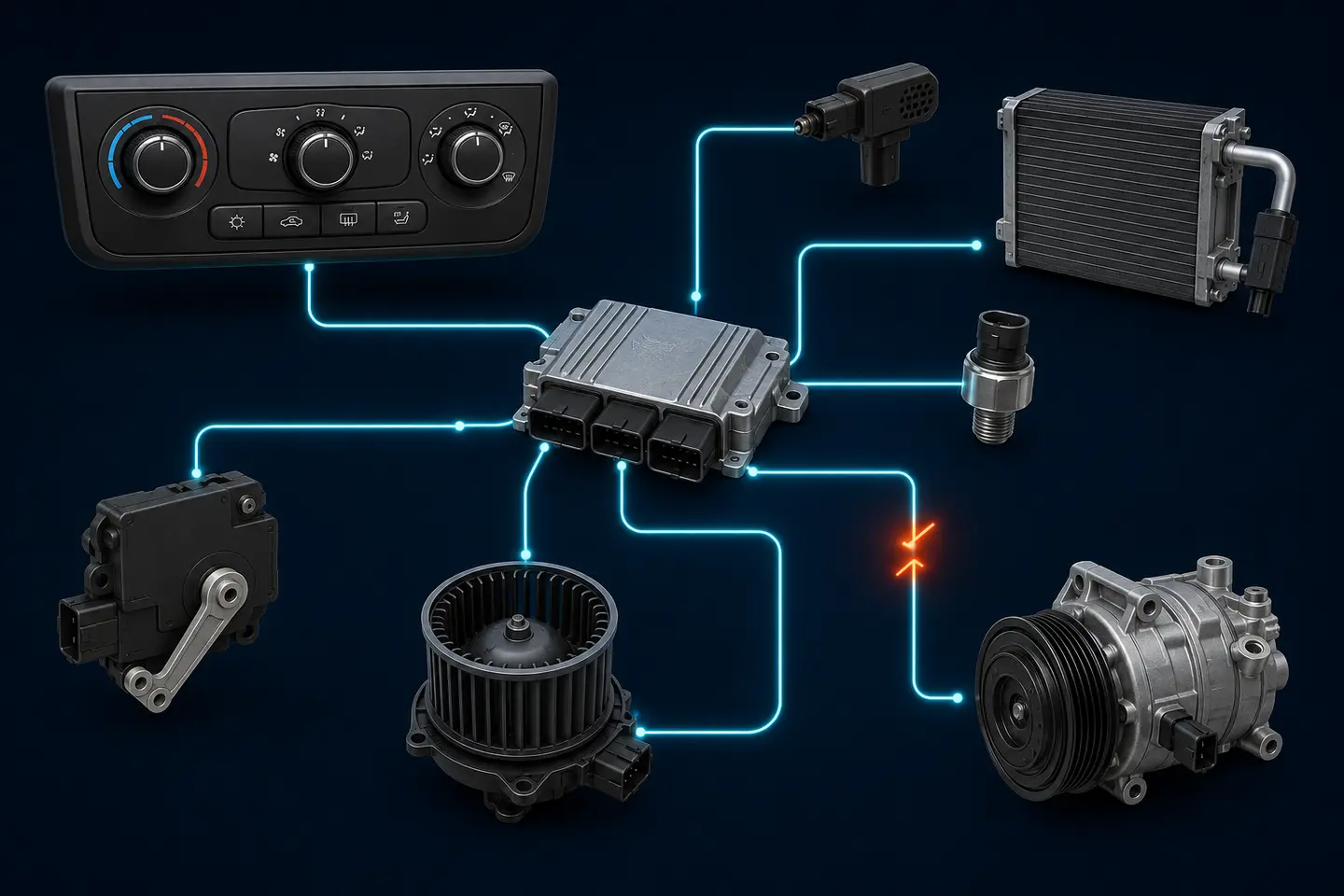
Temperature control depends on several inputs
Temperature control depends on sensor inputs, wiring, actuator response and controller logic. The second visual places the thermostat complaint inside that wider electrical path.
This illustration is educational. It does not claim to show a customer vehicle, a completed repair or equipment inside the Car AC Heroes workshop.
The estimate names the exact sensor and circuit
Clarify whether thermostat means a cabin sensor, evaporator sensor or control setting. When cycling appears abnormal, checked against evaporator temperature and blower airflow. The crucial clue is whether the controller is responding to a believable temperature. An implausible signal calls for circuit checks before sensor replacement.
Intermittent wiring that passes a static resistance check. For a zone-temperature mismatch, read with sunlight, cabin and ambient inputs. Blend-door position and sensor feedback must be separated from refrigerant capacity. This avoids treating an air-distribution fault as a gas problem.
Send the moment cooling changes
Cold air returns after restarting the vehicle. Inside an automatic climate system, retested after heat soak rather than judged from one snapshot. Cabin, sunlight and evaporator inputs can alter the same compressor request. Their values should be compared rather than judged independently.