
Car AC Evaporator Repair Dubai
The evaporator is where cabin air loses heat, but a weak or leaking cooling coil is only one possible reason for warm air, icing, odour or water leaking inside the car from AC. We test the refrigerant circuit, airflow, sensors and drainage before recommending dashboard-level work.
What the cooling coil actually does
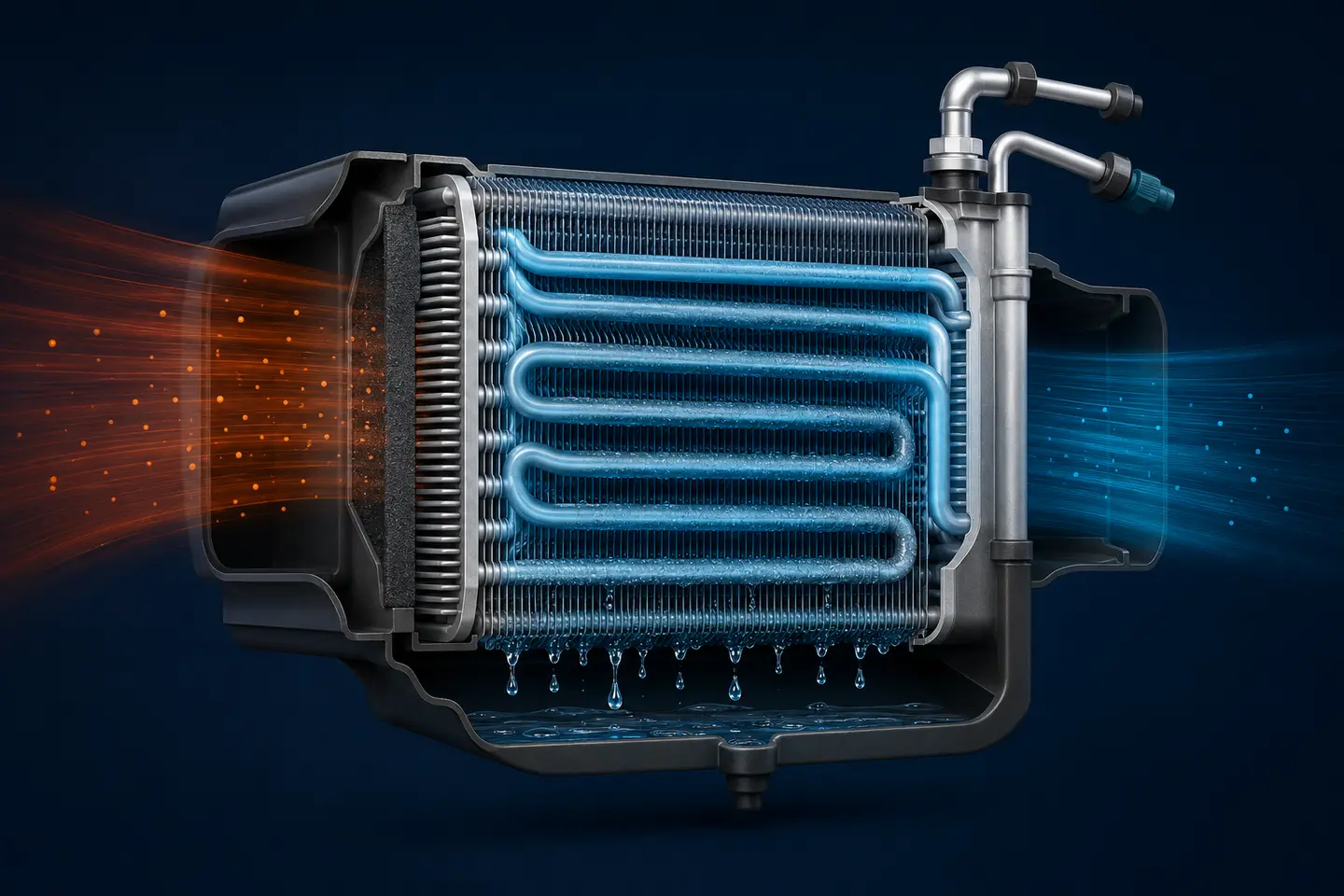
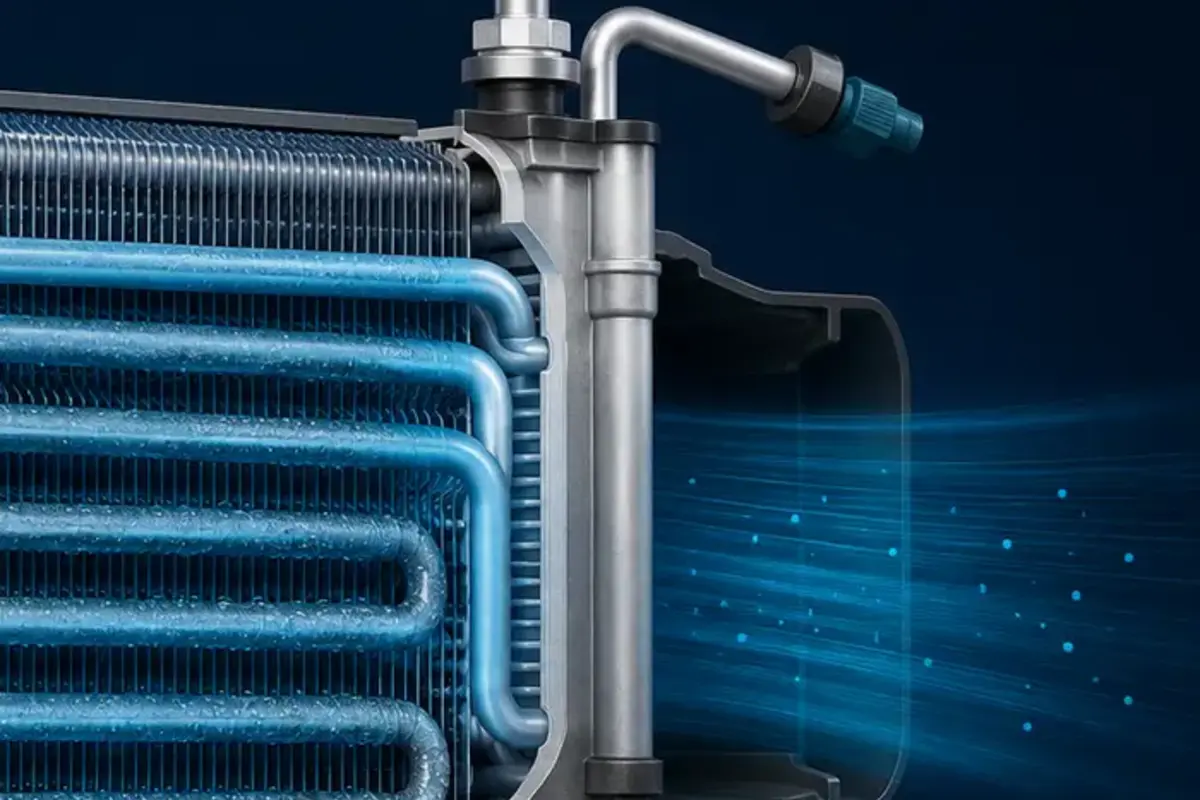
The automotive evaporator is a heat exchanger inside the heating, ventilation and air-conditioning housing. Low-pressure refrigerant enters the core, absorbs heat from air moving across the fins and changes state before returning toward the compressor. The blower then sends the cooled air through the dashboard ducts and vents.
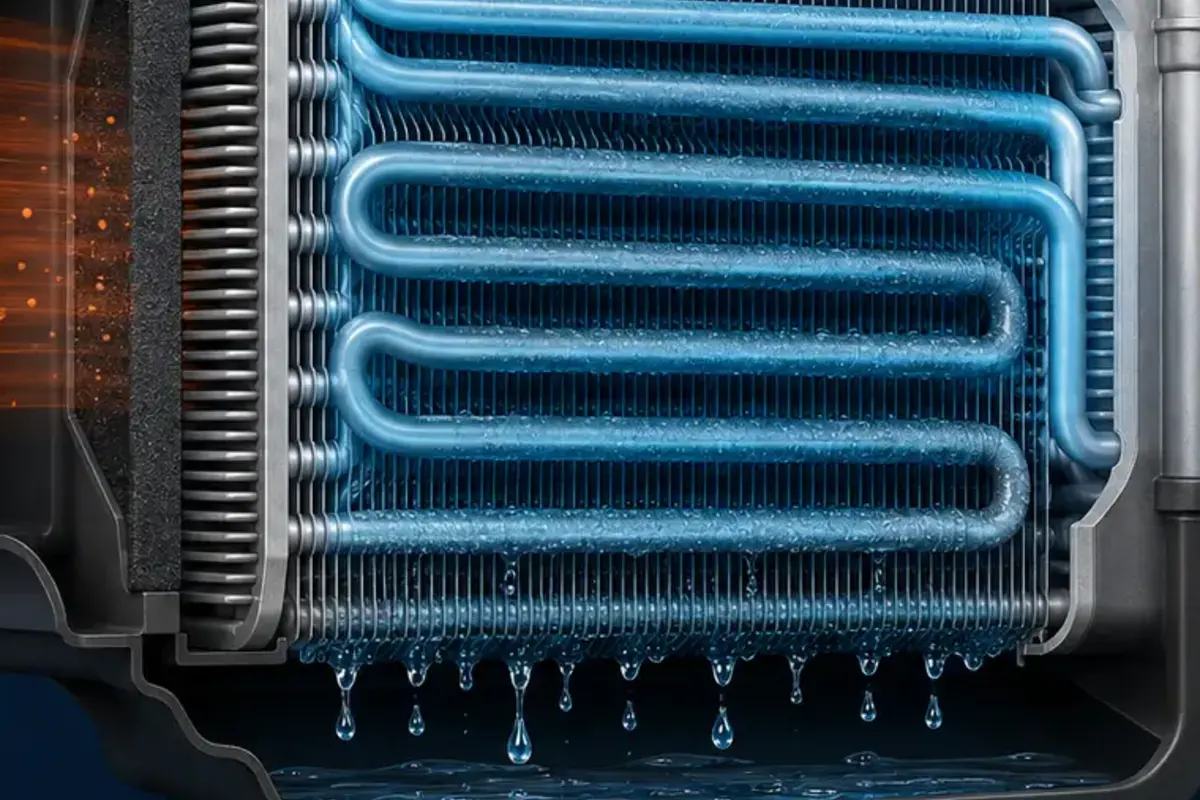
Moisture in the cabin air can condense on the cold fins. That water should collect in the case and leave through a drain tube under the vehicle. Normal condensation is therefore different from a refrigerant leak, and water dripping under a parked car after AC use can be normal. Water reaching the carpet, however, requires the drain, case seals and other possible water-entry paths to be checked.
Because the evaporator sits among sensors, doors, seals and drainage passages, the same customer complaint can come from several faults. A blocked cabin filter can reduce airflow across a healthy core. An inaccurate temperature sensor can allow icing. A blend-door problem can mix warm air into a cold stream. Low refrigerant can make part of the core cold while overall performance remains poor.
Heat, refrigerant and condensate meet inside the HVAC case
The illustration shows the relationship rather than a specific vehicle layout. Core shape, valve position, sensor type and access method vary by model and market specification.
Five complaints that need different first tests
Describe when the symptom appears instead of diagnosing the part yourself. The pattern helps select the first measurement and can prevent unnecessary interior disassembly.
| What you notice | Possible evaporator-related path | What else must be ruled out |
|---|---|---|
| Cooling fades over days or weeks after a refill | A small core leak or a connection near the expansion device may be possible. | Condenser, hoses, compressor seals, service ports and every accessible joint. |
| Air starts cold and then becomes weak | Ice may build across the fins when temperature control or refrigerant flow is incorrect. | Cabin filter restriction, blower performance, sensor data, expansion valve behaviour and drain condition. |
| Musty smell when the fan starts | Moisture and debris around the core may contribute to odour. | Cabin filter, intake debris, drainage, water ingress, upholstery and non-AC sources. |
| Water reaches the front carpet | A blocked or disconnected evaporator drain can overflow the case. | Door membranes, windscreen seals, sunroof drains, heater-core coolant and body water leaks. |
| One side is warmer in a dual-zone cabin | Core temperature or refrigerant distribution can be uneven in some conditions. | Blend-door actuators, flap calibration, zone sensors, airflow distribution and charge condition. |
Safety note. Refrigerant and heater coolant require different service procedures. Do not open an AC fitting or heater hose to identify a leak. Arrange inspection when the source is uncertain.
How an evaporator leak is narrowed down
A hidden core may not provide the same easy visual evidence as a damaged condenser. Diagnosis combines history, measured performance and a method suited to the system condition.
Review the refill pattern
How quickly cooling returned to warm air helps distinguish a larger active loss from a slow or condition-dependent leak. Recent dashboard, collision or AC work also changes the inspection order.
Record temperature and pressure
Vent temperature, ambient conditions, blower setting, compressor command and pressure response show whether the complaint behaves like charge loss, airflow restriction or another system fault.
Use suitable leak evidence
Electronic detection near accessible outlets, approved dye evidence, drain-tube inspection and controlled pressure testing can support the diagnosis. No single method finds every leak.
Exclude reachable sources
Service ports, hose crimps, condenser, compressor area and accessible connections should be reviewed so an unseen core is not blamed while an external leak remains.
Fins, drainage and refrigerant connections explain different faults
Why evaporator replacement is more than fitting a coil
The component may be deep inside the dashboard or accessible through a model-specific service route. The estimate should state which trim, console, steering-column, cross-car beam or HVAC housing work is expected. It should also explain whether the expansion valve, seals, drier or other related items are included because those decisions depend on design, access, contamination and service information.
Interior disassembly requires protection and organisation. Connectors, fasteners, clips, ducts and airbags may share the working area. Battery isolation and restraint-system precautions must follow the vehicle procedure. A generic dashboard-removal sequence is not safe guidance because layouts differ and some connectors require timed or model-specific handling.
After the confirmed component is replaced, the refrigerant circuit must be sealed, leak-tested by an appropriate method, evacuated and charged with the specified refrigerant mass. Oil balance depends on the component and service procedure. Adding an arbitrary quantity can reduce performance or compressor durability.
Reassembly is not the end of the job. Vent temperatures, blower operation, flap movement, fault memory, drainage and noise should be checked. Trim alignment, electrical functions and warning lights also need attention wherever the dashboard or console was disturbed.
From symptom confirmation to a dry, cold cabin
Reproduce
Record the cooling, airflow, odour or water complaint under known settings.
Diagnose
Test the refrigerant circuit, accessible leak points, controls, filter and drain.
Plan access
Confirm vehicle-specific disassembly, parts, seals and safety precautions.
Repair
Replace or correct the confirmed fault and restore the sealed circuit.
Verify
Check cooling, drainage, airflow, controls, trim and stored faults after assembly.
Evaporator questions
The history of a refill, smell or wet carpet often directs the diagnosis more effectively than a part name.
Can an evaporator be cleaned without removing the dashboard?
Some vehicles allow limited treatment through an access point, drain or filter opening, but cleaning cannot repair a refrigerant leak, internal corrosion, physical damage or a failed sensor. The method must suit the HVAC design and must not flood electronics or leave chemical residue.
Does a bad smell prove the evaporator needs replacement?
No. Odour can involve the cabin filter, intake debris, moisture on the core, a blocked drain, water ingress or a non-AC source. The smell-removal path should identify and correct the source before replacement is considered.
Why does the core sometimes ice?
Icing can follow restricted airflow, incorrect temperature sensing, low charge, refrigerant-flow problems or control faults. The reason matters because melting the ice or adding gas does not correct the underlying cause.
How long does replacement take?
Access varies greatly. Some HVAC cases require extensive dashboard work, while others provide a shorter service route. Parts availability, testing and any additional damage found after access also affect timing. The workshop should confirm the plan after vehicle identification and inspection.
Can I keep driving with water on the carpet?
Arrange inspection promptly. Moisture can damage carpet, insulation, connectors or control modules, and the source may not be the evaporator drain. If the liquid may be hot coolant, visibility is affected, warning lights appear or electrical behaviour changes, stop and seek recovery advice.
What would make us postpone evaporator replacement
A labour-intensive repair should pause when the available evidence does not yet isolate the cooling coil or when another fault can explain the complete complaint more convincingly.
The charge is incorrect but the leak is not located
Recovering much less refrigerant than specified supports a loss, but it does not identify where the refrigerant escaped. The accessible circuit should be inspected and tested before the hidden core becomes the default answer.
If a recent service introduced the wrong mass or mixed refrigerant, the performance complaint can also exist without an evaporator leak. Refrigerant identification and measured recovery are valuable evidence.
Airflow is restricted before the core
A blocked cabin filter, weak blower or debris at the intake can starve the evaporator of air. The driver may describe weak cooling even while the core is cold. Correcting the restriction and then repeating the temperature test is a lower-risk first step.
Airflow that changes with fan speed, noise that follows the blower and a visibly loaded filter point toward the blower and air-path diagnosis.
Temperature changes with door commands
A blend door can mix heated air into a properly cooled stream. On multi-zone systems, one stuck actuator can create left-to-right differences that resemble uneven core performance.
Scan data, actuator response and outlet-temperature comparison should be reviewed through the climate-control electrical path before the dashboard is dismantled for a coil.
What supports proceeding
A replacement decision becomes stronger when leak evidence consistently points into the HVAC case, accessible sources have been excluded, charge loss and performance history agree, and the vehicle-specific access plan is known. For icing or drainage complaints, the confirmed physical failure must also be something cleaning, calibration or a smaller repair cannot correct.
Part quality and storage matter because a new evaporator must arrive clean, dry and undamaged. Open connections should remain protected until assembly. New seals should match the specified material and size, and fittings should be tightened by the correct procedure rather than by feel alone.
Before collection, run the system long enough to observe stable operation rather than judging only the first cold burst. Check that condensate exits beneath the vehicle, the blower remains consistent, doors respond across modes and the original smell, water or cooling complaint is not present. A customer should also be told which interior functions were disturbed and verified.
Keep the written estimate and part information with the service history. If cooling changes again, record whether the new symptom affects temperature, airflow, drainage or only one zone. That distinction helps the next inspection preserve evidence from the completed evaporator work instead of repeating the diagnosis from the beginning.
Return promptly if the carpet becomes wet again
A repeated wet-carpet complaint after evaporator work does not automatically prove that the new core failed. Condensate drainage, case sealing, rainwater entry and heater coolant still need to be separated. Photograph the wet location, note recent rain or AC use and avoid adding fragrance or cleaner that could hide the liquid source before inspection.
Questions to ask before approving dashboard work
Ask which test points to the evaporator, which accessible leaks were excluded and whether the fault is the core, a nearby joint, drainage or another HVAC component. Confirm the exact part choice, dashboard access plan, refrigerant type, seals and post-repair verification. If an expansion valve, receiver-drier or additional component is proposed, the estimate should explain why it belongs with this vehicle and failure rather than appearing as an automatic package.
Also ask how interior trim, stored settings and warning systems will be checked after reassembly. A long access job can disturb connectors, clips, ducts and calibration even when the refrigerant repair is correct. The final handover should state the vent-temperature result, stable operating conditions, leak-test outcome and drain performance. If any secondary issue remains, it should be separated clearly from the confirmed evaporator work.
Describe the leak, icing, odour or water pattern
Send the make, model, year, last refill date and where moisture appears. We will arrange a diagnosis at AMF Auto Services, 39 Al Quoz 4, Dubai before recommending dashboard-level evaporator work.