
Car AC Smell Removal and Disinfection Dubai
A perfume can cover a smell without correcting damp debris, a blocked drain, a loaded filter or another source inside the car. We separate AC-related odour from coolant, electrical, fuel, exhaust and water-entry warnings before choosing a cleaning method.
Some smells belong in cleaning and others need urgent diagnosis
Words such as musty, sweet and burning are imperfect, but the operating pattern and related symptoms help choose a safe first action.
Moisture and organic debris
Inspect the cabin filter, air intake, evaporator surface, condensate drain and water-entry paths. A damp smell that is strongest at fan start often follows moisture remaining in the HVAC case.
Possible coolant source
Heater coolant can produce a sweet odour, window film, misting or damp carpet. This is not a disinfection job. The cooling system and heater core require leak diagnosis.
Electrical or mechanical heat
Switch the blower and AC off. A hot connector, blower motor, resistor, wiring fault, belt or compressor area may be involved. Smoke or repeated fuse failure needs prompt attention.
Do not mask it
Open windows safely, switch to fresh air only if it improves the condition and stop driving when fumes are strong or occupants feel unwell. Exhaust or fuel entry requires urgent diagnosis, not fragrance.
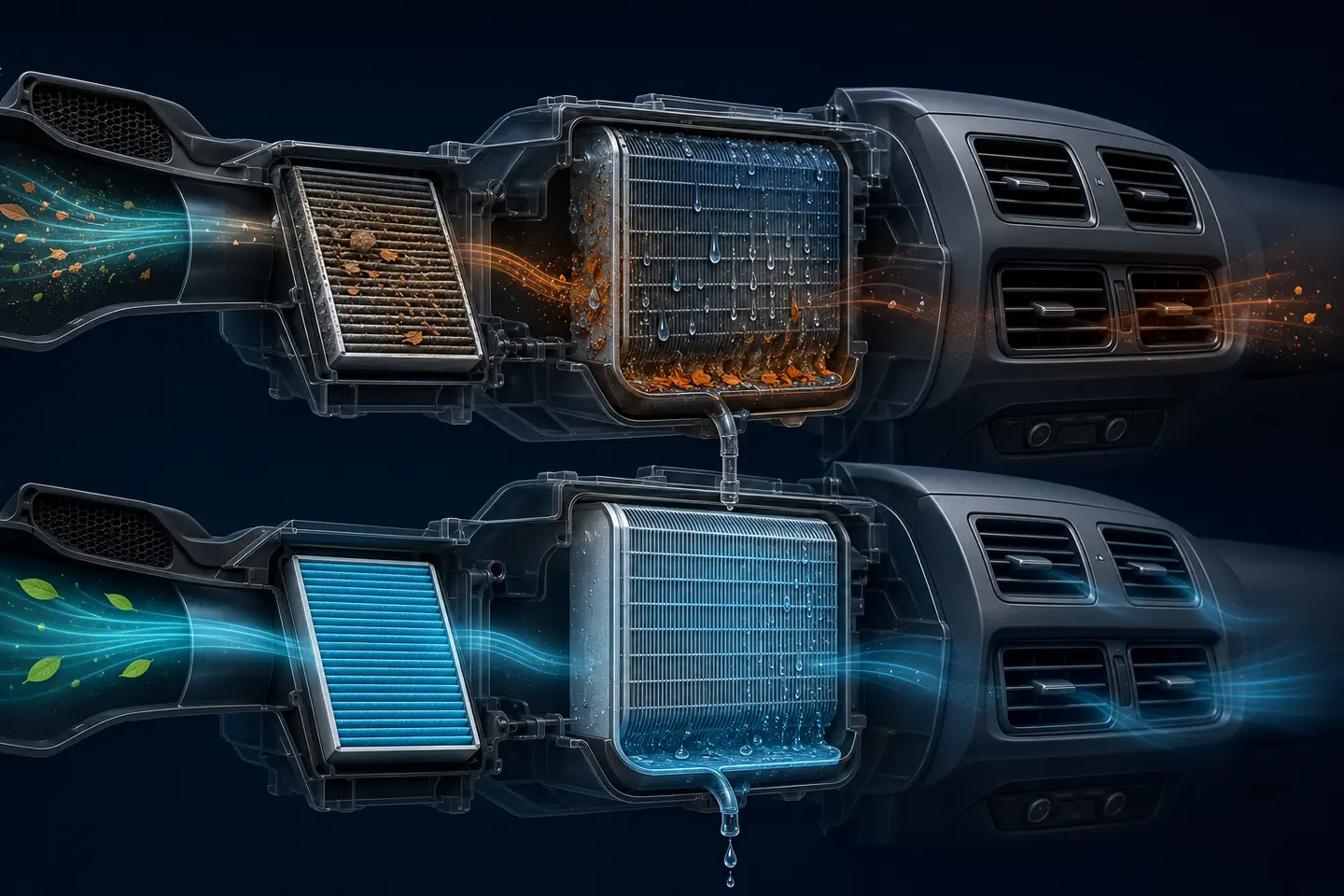
Air carries the odour from intake to filter, evaporator and vents
The before-and-after concept illustrates the areas that deserve inspection. It does not claim sterilisation and does not show a real customer vehicle.
Why the smell often returns after a quick spray
Aerosol fragrance changes what the occupants smell for a short time. It may not reach damp debris on the evaporator, clean a loaded filter, open a blocked drain or remove water from carpet insulation. If moisture and organic material remain, the same odour can return after the scent fades.
Application method matters. A product intended for a surface may need direct contact and a defined dwell time. A fog or air-path treatment may not physically remove thick deposits. Over-application can wet electronics, leave residue or introduce a new chemical odour. The product label and vehicle access route control the safe procedure.
Drying also matters. Condensate should leave the HVAC case, and the cabin should not have an unresolved rainwater or coolant leak. A clean filter installed into a wet or contaminated tray does not solve the whole problem. Likewise, cleaning the evaporator while leaves remain at the intake can allow the source to return.
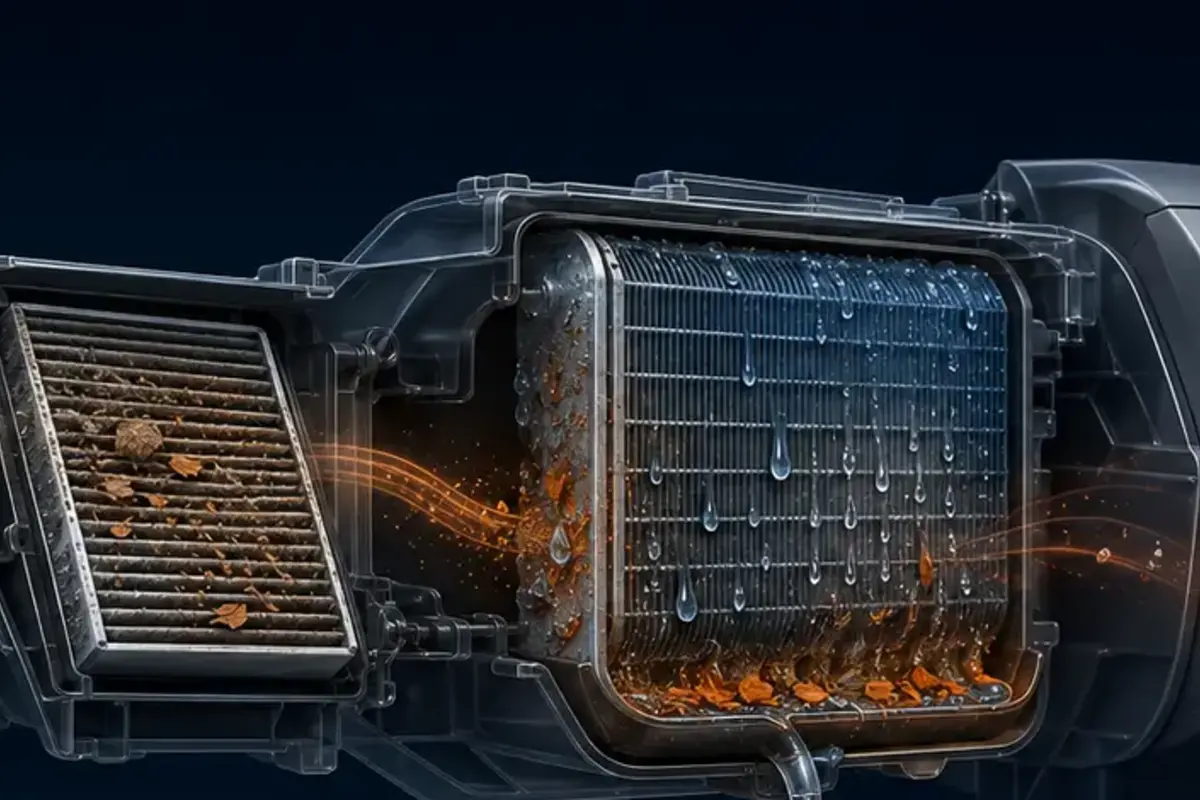
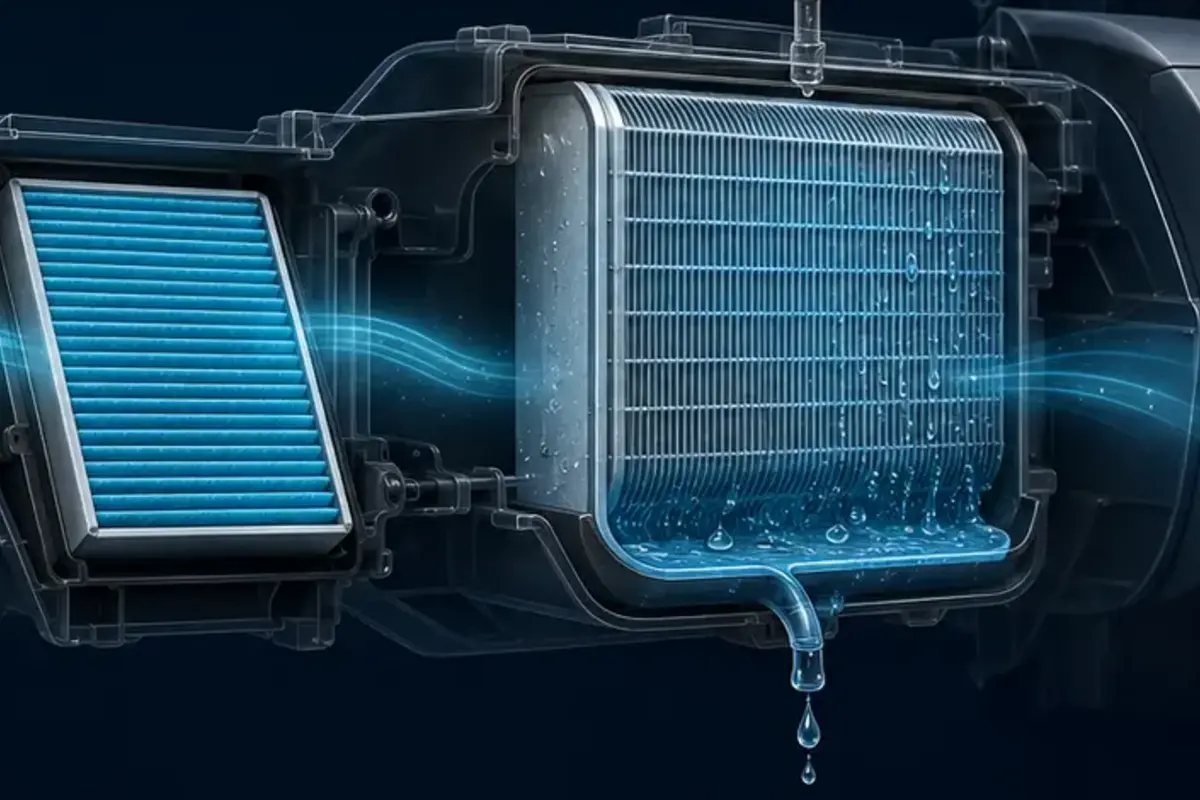
Inspect in the order air and water move
Intake
Check leaves, dust, standing water and plenum drainage at the fresh-air entry.
Filter
Inspect media loading, fit, dampness, housing seals and bypass marks.
Evaporator
Assess reachable fin condition, debris, moisture and whether icing is occurring.
Drain
Confirm condensate leaves the case without flooding carpet or connectors.
Cabin
Rule out upholstery, spills, water ingress, coolant and non-HVAC odour sources.
Cleaning should change a real condition, not only the scent
Match the method to the confirmed source
| Confirmed condition | Possible service scope | Important limitation |
|---|---|---|
| Loaded or damp cabin filter | Replace with the correct filter, clean loose debris from the tray and inspect why it became wet. | A new filter will not remove deposits already on the evaporator or in cabin materials. |
| Debris at fresh-air intake | Remove reachable leaves and dirt, inspect the screen, cover and water drains. | Do not push debris deeper into the blower or use water where electronics can be affected. |
| Reachable evaporator surface contamination | Apply a vehicle- and product-suitable cleaner with controlled contact and drainage. | Access may be limited, and a chemical treatment cannot repair corrosion, leakage or a blocked core. |
| Blocked condensate drain | Confirm the blockage location, restore drainage and inspect wet carpet or case overflow. | Blindly forcing pressure into a drain can damage or disconnect parts and can move debris into the case. |
| Dirty vent faces and accessible ducts | Detail surfaces and remove reachable dust without damaging coatings or displays. | Vent cleaning alone does not reach the evaporator or resolve a hidden water source. |
| Coolant, fuel, exhaust or electrical smell | Stop the cleaning pathway and diagnose the relevant leak or circuit. | Disinfectant, ozone or fragrance must not be used to hide a safety-related fault. |
Disinfection is not a promise of permanent sterilisation
Product claim
The selected chemical must be approved for the intended automotive surface and used according to its label. Contact time, concentration, ventilation and material compatibility affect what can be claimed.
Vehicle claim
The workshop can describe what was inspected, cleaned, replaced and dried. It should not claim that every hidden duct surface or microorganism was reached without evidence.
Health claim
An odour service can improve cabin freshness and remove a confirmed source. It is not medical treatment and should not promise prevention or cure of illness, allergy or infection.
Drying and drainage reduce the chance of a quick return
After cleaning, the HVAC case and cabin should be allowed to dry according to the product procedure. The condensate drain should remain clear, and the filter housing should be closed correctly. If carpets or insulation were wet, surface drying alone may leave moisture below.
Owners can reduce persistent dampness by keeping drains and intake areas clear and replacing the cabin filter according to the vehicle schedule and actual use. Running the blower briefly without maximum cooling before parking may help some systems dry, but it is not a repair for drainage, water ingress or heavy contamination.
If the smell returns only after rain, car washing or parking on a slope, record that pattern because it may expose a water-entry route. If it returns during hard acceleration or with open windows, exhaust or engine-bay sources may require attention. If it appears only in recirculation mode, inspect the cabin intake and recirculation door path.
Pricing depends on the confirmed source, access, filter choice, product, wet-carpet work and whether diagnosis reveals a non-cleaning repair. Any public range is indicative and non-binding. The final estimate follows vehicle inspection and the agreed scope.
Before treatment
The best clue is when the smell appears relative to fan, AC, rain and recirculation settings.
Why does the smell last only a few seconds at startup?
Air first passes across surfaces that stayed damp after the previous drive. Once airflow and temperature change, the odour can become less noticeable even though the source remains.
Will replacing the cabin filter remove a musty smell?
It can help when the filter is the source or is carrying odour, but smell can remain on the evaporator, in the intake, drain, ducts, carpet or upholstery. Inspect the full path.
Is ozone treatment always needed?
No. Treatment choice depends on the source, vehicle, product guidance and safety controls. Ozone does not remove physical debris or repair moisture entry, and people must not be exposed during inappropriate use.
Can I spray household disinfectant into the vents?
Do not. Household products may damage coatings, plastics, sensors or electronics and may leave unsuitable residue for occupants to inhale. Use an automotive method approved for the intended location.
Why is the carpet wet as well as smelly?
A blocked or disconnected condensate drain, rainwater entry, heater coolant or another body leak may be present. The liquid source must be identified and wet underlay may require deeper drying.
Five minutes of observation can prevent the wrong treatment
Before the visit, note the first moment the smell appears and the control change that makes it stronger or weaker. Do not perform this test when the odour is burning, fuel-like, exhaust-like or causes symptoms.
Fan on, AC cooling off
If the smell appears with the blower alone, the intake, filter, evaporator surface, ducts and cabin sources remain possible. The compressor does not need to be operating for air to carry an odour across damp surfaces.
If the smell is absent until recirculation is selected, inspect the cabin intake and recirculation path. If fresh air makes it worse, outside intake contamination or engine-bay fumes deserve attention.
Cooling on after the car has been parked
A brief musty smell can follow moisture left on the evaporator from the prior journey. Duration, outside humidity and whether condensate drains under the vehicle help explain the pattern.
If the smell grows during operation rather than fading, a continuing source, blocked drain, wet filter or other leak may be present. A treatment plan should not assume the same cause for both patterns.
Rain, washing or slope changes
Odour or wet carpet after rain can point to plenum, windscreen, sunroof, door or body drainage rather than normal AC condensate. Parking angle may expose an overflow route.
Photograph the wet area before drying it. The location and colour of staining can help trace water, but the source still needs physical confirmation.
What a post-treatment check should include
Run the blower through fresh-air and recirculation modes, then operate cooling long enough for condensate to form. Confirm that water exits the intended drain and does not reach the carpet. Check that the filter housing is closed, that fan noise has not changed and that no product residue is being sprayed from the vents.
The odour should be assessed after the added fragrance has dissipated, because perfume can mask the original complaint. Where practical, a follow-up after normal vehicle use is more meaningful than judging the cabin immediately after treatment.
If the smell persists, do not repeatedly increase chemical quantity. Where debris or residue is in the airflow path, the duct and vent cleaning service separates reachable outlet cleaning from deeper evaporator, drain or housing work. Reinspect inaccessible debris, wet underlay, water-entry paths and non-HVAC sources. A hidden heater-core leak belongs with cooling-system repair. An electrical odour belongs with the electrical and blower circuit diagnosis. Weak airflow belongs with the filter and blower path.
How to read a disinfection quotation
The quotation should name what will be inspected, which filter or parts are included, where the product will be applied, and whether evaporator access or drain work is possible on the vehicle. It should also explain drying and any area the method cannot reach.
A low-cost fog-only service is not equivalent to physical removal of debris or direct treatment of a reachable evaporator surface. A deeper service is not automatically better if it introduces unnecessary dashboard disassembly. Match access and method to confirmed contamination.
No workshop should promise permanent sterility. A truthful outcome describes source removal, replaced media, cleaned surfaces, restored drainage and the absence or reduction of the original odour at the verification point.
Ventilation after treatment is part of the service
Follow the product instructions before occupying the vehicle. Doors or windows may need to remain open and the blower may need to run in a defined mode. Children, pets and sensitive occupants should not enter early. If a strong chemical odour persists beyond the stated ventilation period, stop using the system and ask the workshop to reassess the treatment.
Judge the original odour after the added scent fades
Ask which source was found, what physical debris was removed, which surface or air path was treated and whether the cabin filter or drain required work. The product and ventilation instructions should be clear, including how long the vehicle should air before normal use. A strong perfume immediately after service is not proof that the original source has gone.
During the following drives, note whether the smell returns at fan start, in fresh-air mode, after rain or only while cooling. That pattern helps separate incomplete treatment from a water-entry, coolant, electrical or outside-air problem. If wet carpet, burning odour, fuel or exhaust fumes appear, stop the cleaning pathway and arrange the appropriate diagnosis promptly.
Tell us when the smell appears
Send the vehicle, odour description, fan and AC settings, recent rain or water entry, and whether the carpet is damp. We will choose the correct inspection at AMF Auto Services, 39 Al Quoz 4, Dubai.