
Car Cabin and AC Filter Replacement Dubai
A cabin filter is a service part, not a cure for every cooling or smell complaint. If the main symptom is odour rather than airflow, our bad smell from car AC guide explains the other moisture, evaporator and drainage causes that need to be separated. We check the correct filter specification, its installation direction, the housing seal and the airflow result so dust does not simply bypass a poorly fitted element.
What the cabin filter can and cannot do
The cabin air filter sits in the fresh-air or recirculated-air path before air reaches occupants. Depending on design, it can trap dust, pollen, soot and other particles. Activated-carbon and multi-layer products may also reduce some odours and gases when the filter is correctly specified and still within its useful life.
The filter does not create cold air. It cannot repair low refrigerant, a weak compressor, a fan-control fault, a blocked condensate drain or a damaged evaporator. It also cannot remove an odour source already established on a damp surface, inside a duct or within cabin materials. Replacing it is often part of an air-quality or airflow service, but it should not be sold as a universal AC repair.
A filter that is too restrictive, collapsed, incorrectly oriented or poorly seated can reduce airflow or allow bypass. The housing should close without crushing the element. Seals, access covers and clips matter because unfiltered air can move around the edge when the filter does not match the tray.
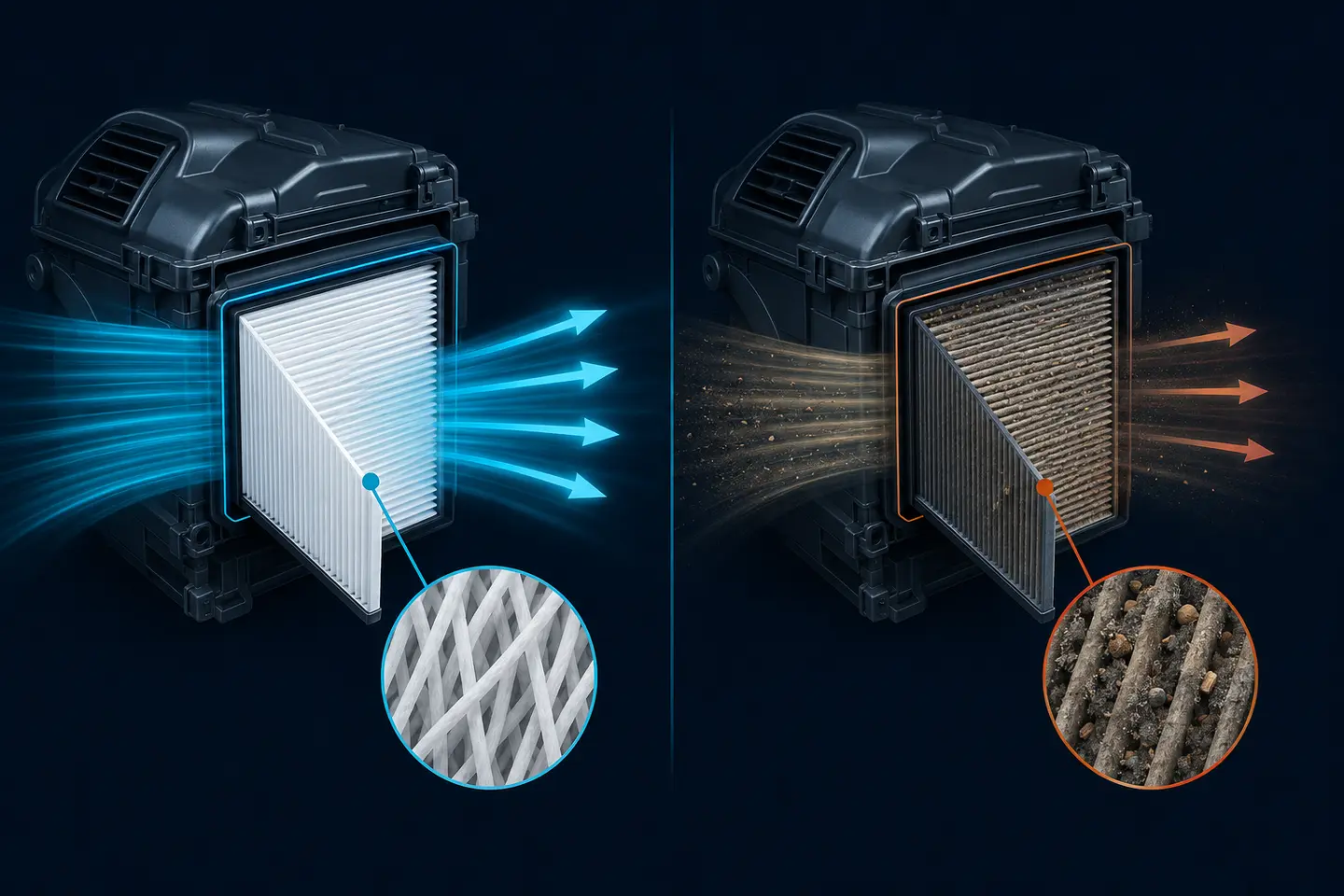
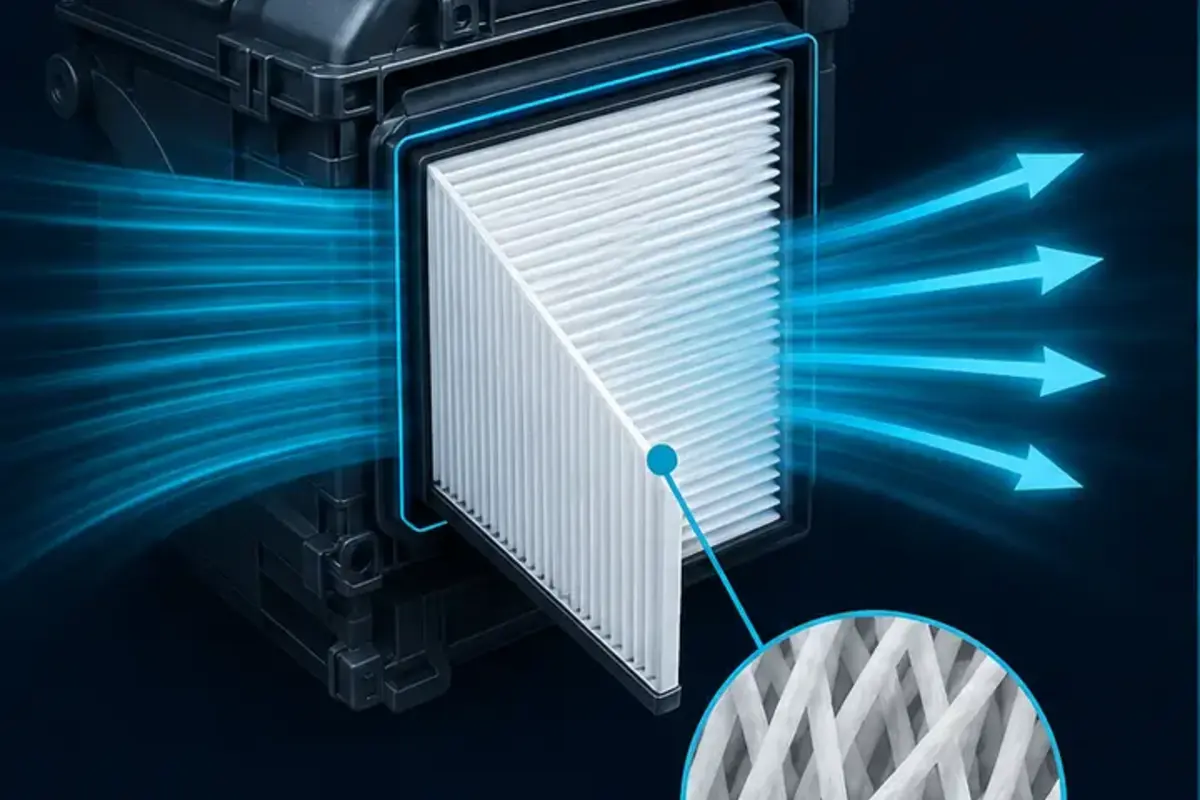
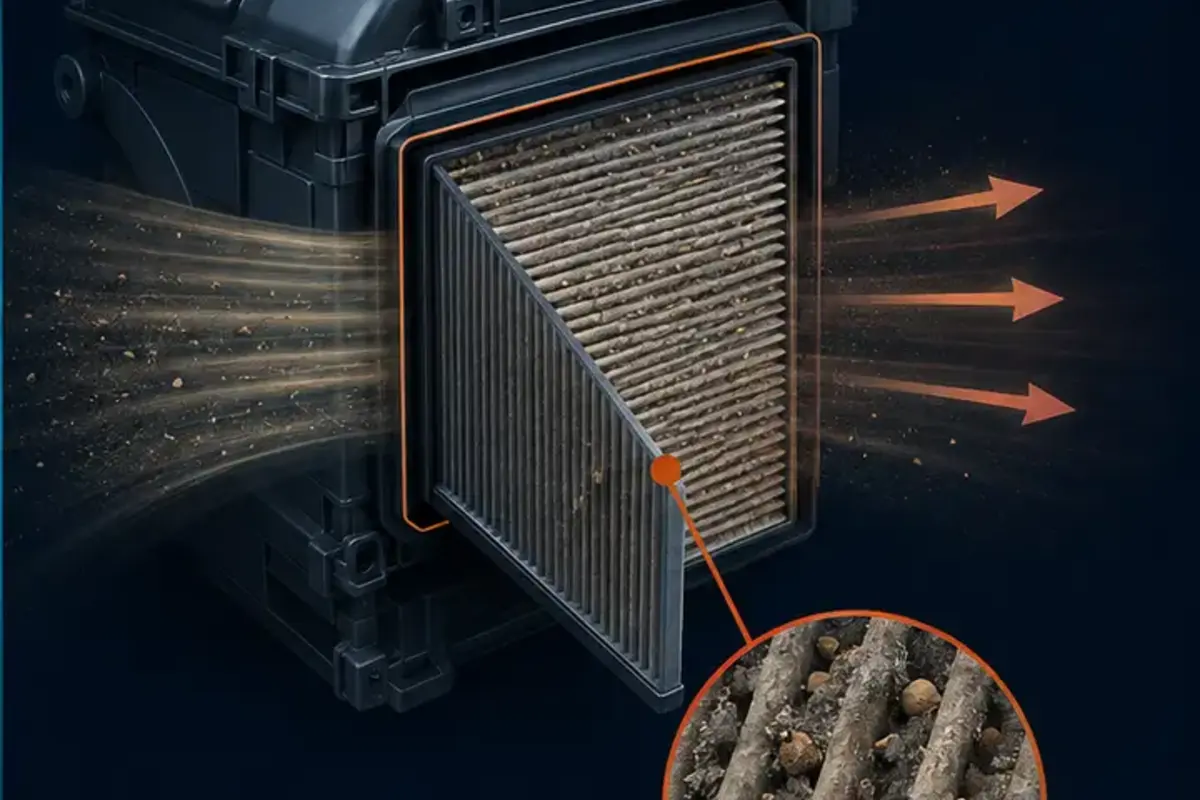
Restriction changes how much air reaches the evaporator and vents
The comparison illustrates airflow, not a universal replacement threshold. Real filter condition is judged from the actual element, service information and cabin complaint.
Particle, carbon and enhanced media solve different problems
Dust and pollen focus
A conventional pleated filter is intended to capture airborne particles while maintaining suitable airflow. Quality depends on media, pleat stability, sealing and correct fit, not only visible thickness.
This is often the straightforward replacement where the vehicle specifies a standard element and odour adsorption is not the main goal.
Additional odour and gas reduction
A carbon layer can reduce certain outside odours and gases for a period of use. It does not permanently neutralise every smell, and it cannot correct moisture or contamination inside the HVAC case.
The replacement must still match the dimensions and airflow requirement of the vehicle.
Broader filtration features
Some enhanced filters add fine-particle, anti-allergen or other functional layers. Claims differ by manufacturer and product, so the exact part specification matters.
A filter should not be advertised with health or sterilisation promises beyond verified manufacturer information.
Use the complaint and the element together
| Finding | What it can explain | What still needs checking |
|---|---|---|
| Pleats heavily loaded with fine dust | Reduced airflow, more blower noise at higher settings and dust release during handling. | Blower output, evaporator icing and whether the housing allowed bypass. |
| Leaves or large debris near the intake | Ticking noise, local blockage and renewed contamination after a filter change. | Screening, plenum drainage and safe removal of debris beyond the tray. |
| Filter damp or stained | Odour and reduced media performance. | Water-entry path, drain condition, housing seals and whether another leak is present. |
| Filter distorted or collapsed | Air bypass, fan contact or uneven restriction. | Correct part number, installation direction and access-cover condition. |
| Clean filter but weak airflow | The filter is unlikely to be the only cause. | Blower motor, controller, doors, duct separation, evaporator surface and icing. |
| New filter but smell remains | The old element was not the complete odour source. | Evaporator moisture, drain, intake contamination, ducts, upholstery and external sources. |
Six details make a small service meaningful
Identify
Confirm make, model, year, market and the correct filter option.
Access
Protect trim and open the housing without forcing clips or covers.
Inspect
Review the old element, tray, seals, debris and signs of moisture.
Fit
Follow airflow or top markings and seat the element without gaps.
Verify
Close the housing, compare airflow and listen for unusual fan noise.
Some vehicles place the filter behind the glove box, below the dashboard, under the bonnet or in more than one section. The arrow can indicate airflow direction on one product and installation orientation on another, so the filter and vehicle instructions must be read rather than guessed.
Media condition and sealing deserve separate attention
Dust exposure changes the inspection rhythm
Vehicles driven near construction, desert edges, unpaved parking or frequent heavy traffic may load a filter differently from a car used mainly in cleaner covered routes. Parking under trees can introduce leaves and organic debris at the fresh-air intake. Recirculation use also changes how much outside air passes through the system, although the exact route depends on vehicle design.
There is no honest universal replacement interval for every make and environment. The owner’s maintenance schedule provides the baseline, then severe use and inspected condition can justify earlier service. A filter that looks grey is not automatically blocked, while one with hidden fine-dust loading may restrict airflow more than its surface appearance suggests.
Changing the filter before peak summer can improve a restricted air path, but it does not increase refrigerant capacity. If cooling is weak only in traffic, if vent temperature stays warm or if the compressor cycles abnormally, the AC system requires a wider diagnosis. If the air is cold but the cabin takes too long to cool, both airflow and heat load should be considered.
A written estimate should state the filter type and part choice. Prices vary with access, multi-piece designs, filter media and whether housing cleaning or further airflow diagnosis is required. Any public amount is indicative and non-binding until the exact vehicle and requested scope are confirmed.
When the filter points to another service
Blower diagnosis
If the new filter does not restore fan-speed response or airflow, inspect the blower motor and controller.
Odour treatment
If smell remains after replacement, identify the moisture or contamination source before AC smell removal and cleaning.
Evaporator check
Icing, drainage or a hidden leak can require evaporator diagnosis rather than another filter.
Full AC diagnosis
Strong airflow with warm vents belongs in the broader cooling, pressure and control pathway, not a filter-only service.
Before replacement
Is the cabin filter the same as the engine air filter?
No. The cabin filter treats air entering the passenger HVAC system. The engine air filter protects the engine intake. They use different housings, specifications and service decisions.
Will a carbon filter remove every AC smell?
No. It may reduce some incoming odours, but it cannot repair a damp evaporator, blocked drain, water leak or contaminated cabin material. Persistent smell needs source diagnosis.
Can the wrong filter reduce airflow?
Yes. Incorrect dimensions, excessive restriction, collapsed pleats or poor fit can change airflow. A gap can also let dust bypass the media even when fan force feels normal.
Why is dust coming from the vents after replacement?
Loose material may remain in the tray, intake or ducts, the filter may not be sealed, or the dust may come from degraded foam inside the HVAC system. The source should be inspected rather than repeatedly replacing the element.
Should the filter be changed before summer?
A pre-summer condition check is sensible in dusty use, but follow the vehicle schedule and actual condition. Replacement helps only the filtration and airflow issues the old element was causing.
The removed filter can explain more than its colour
A useful filter service records how the element sat in the housing, what collected on each face and whether water or bypass marks are present before the old part is discarded.
Upstream debris
Leaves, insects and coarse dust on the intake side show what the filter intercepted. Heavy local deposits can also reveal that one area receives most of the incoming air.
Clean edge channels
Dust tracks around the perimeter can indicate air bypass caused by the wrong dimensions, a distorted tray, missing cover or incomplete seal.
Moisture pattern
A damp corner deserves investigation of plenum drainage, water entry and housing orientation. Installing another dry filter without correcting the water route can repeat the odour.
Material damage
Torn pleats, rodent damage, collapsed media or loose fibres can release debris beyond the filter and may require inspection of the blower and duct.
What the driver should notice after replacement
When the old element was genuinely restrictive, the driver may notice stronger airflow at the same fan setting, less blower effort or quicker cabin air circulation. The improvement should be compared under the same outlet mode and with the housing fully closed. A dramatic temperature claim is inappropriate because the filter does not change the specified refrigerant charge or compressor capacity.
If there is no airflow improvement, revisit the diagnosis. The blower motor, fan controller and duct path may be responsible. If the air is strong but warm, pressure, charge, compressor and condenser testing belong in the wider AC system. If a musty smell remains, the odour-source inspection should follow moisture from intake to drain.
How to compare filter quotations
Ask for the exact filter type, brand or specification, whether the vehicle uses one or multiple elements, and whether housing inspection is included. A low starting price can exclude difficult access or the media type the owner expects. A high price does not prove better filtration unless the product and verified functions are identified.
The technician should not claim that a filter protects against every pollutant, virus or odour. Product performance varies, and real-world sealing and replacement condition matter. The correct public promise is that the specified filter is installed properly and its intended filtration features are explained honestly.
Keep the invoice or part reference with the service history. It helps the next inspection compare time, use and condition rather than guessing what media was fitted. Owners who drive in unusually dusty conditions can ask to inspect the element between scheduled replacements without automatically discarding a serviceable part.
Check the cover after the first drive
Rattling near the glove box, a whistle that changes with fan speed or sudden dust release can indicate that the tray, cover or nearby trim is not seated correctly. Return for inspection rather than forcing the panel. A correctly completed filter service should leave the original clips secure, the housing sealed and every glove-box or dashboard function operating normally.
Keep the part choice and inspection result together
Record whether the fitted element is a particle, activated-carbon or enhanced multi-layer filter and keep its part reference with the invoice. The next service can then compare actual use and condition with the correct product rather than guessing what media was installed. If the removed filter was damp, distorted or showing bypass marks, the report should also state what was done about the housing, cover or water route.
After replacement, compare airflow at the same fan speed and outlet mode used before service. Check for whistles, rattles and dust release, and make sure nearby trim operates normally. If airflow remains weak or the smell returns, do not replace the new filter again without diagnosis. Use the original inspection finding to move toward the blower, evaporator, drain or odour source.
Send the vehicle details before choosing a filter
Share the make, model, year and whether the issue is dust, smell or weak airflow. We will confirm the suitable cabin filter path at AMF Auto Services, 39 Al Quoz 4, Dubai.