
Car AC Not Cold Enough in Dubai
Your AC may still blow cool air, yet fail to make the cabin comfortable after parking, in traffic or at the hottest part of the day. If the AC is cold at night but warm in daytime, that day-to-night contrast is a useful heat-load diagnostic clue. That is a performance fault worth testing, not a reason to guess at a refill.
Cool air is not the same as enough cooling
A car AC that is only mildly cool can be caused by restricted cabin airflow, low or incorrect refrigerant charge, poor condenser airflow, reduced compressor output, a metering restriction or climate-control inputs. In Dubai, an otherwise borderline system is often exposed by a hot cabin and high outside temperature.
Do not use vent air that feels “a bit cold” as proof that the system is healthy. The useful question is when the cooling becomes weak and what changes it.

What changes the cooling?
Cooling weakens while stationary, then improves at road speed. This raises the priority of condenser airflow, cooling fans, blocked fins and high-pressure control checks.
Heat rejection pathThe car takes an unusually long time to become comfortable after sitting in the sun, even with strong blower airflow. The test compares cabin load, recirculation, system output and the return to stable cooling.
Capacity under loadOne side is warmer, rear passengers are uncomfortable, or air volume is poor. The fault may sit in the cabin delivery side rather than the refrigerant circuit.
Airflow and controlWhy a car AC can be cool but not properly cold
The list below is ranked as a practical inspection path for a partial-cooling complaint. It is not a universal probability chart and it does not replace the vehicle’s exact test results.
Condenser airflow or cooling-fan performance
The condenser releases heat at the front of the car. If a fan is weak, a shroud is damaged, debris restricts airflow or the fan command is wrong, cooling often suffers most in traffic and improves at speed. High ambient heat makes the weakness much more obvious.
Restricted cabin airflow
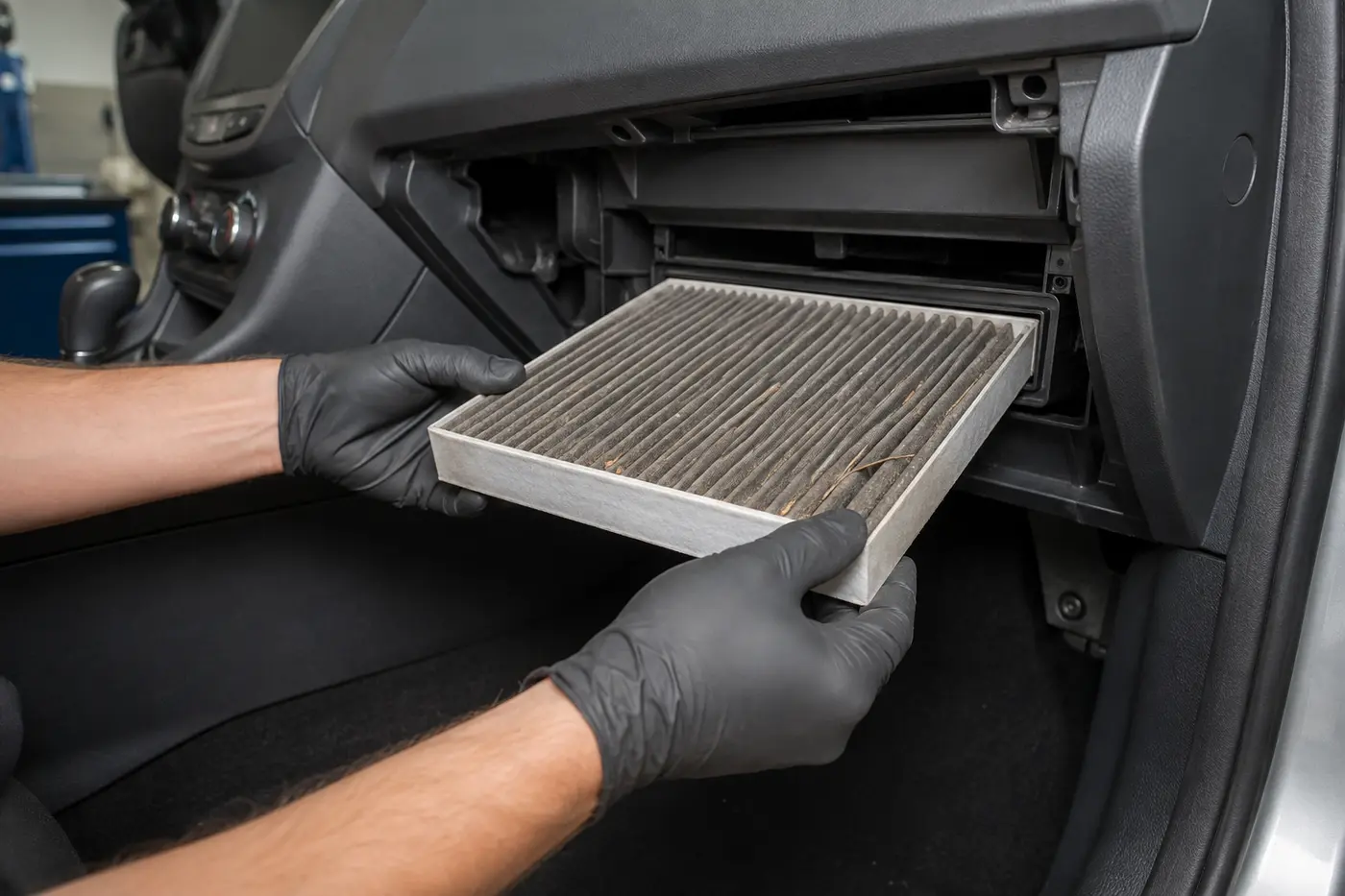
A blocked cabin filter, weak blower motor, debris around the intake, evaporator icing or an air-door issue can make cooling feel inadequate even if part of the refrigerant circuit is working. Air volume, vent distribution and zone behaviour must be separated from temperature.
Low charge or a refrigerant leak pattern
A gradual loss of refrigerant can reduce cooling capacity before it produces fully hot air. A recent recharge that helped briefly is useful history, but it is not proof of which component leaks. The exact gas, vehicle specification and leak evidence control the next action.
Compressor output or compressor-control fault
Some systems can command the compressor yet deliver insufficient pumping capacity, or alter output because of a control valve, sensor, electrical or internal compressor fault. The command, pressure response and line temperatures must be interpreted together.
Restriction, temperature input or climate-control decision
An expansion device restriction, evaporator-temperature issue, inaccurate sensor input, blend door or multi-zone control problem can create intermittent, uneven or persistent mild cooling. These are reasons to test inputs and outputs before approving an expensive part.

45°C weather reveals a system that was already borderline
Heat enters through glass, panels and the cabin air itself. After a car has been parked, the AC must first remove a much larger heat load before it can maintain a comfortable cabin. That can make a marginal system feel much worse in the afternoon than on a mild morning.
Why one vent reading is not enough
- Ambient temperature, sun load, humidity and cabin temperature change the result.
- Blower speed, recirculation, engine speed and whether the vehicle is moving also matter.
- Different vehicles use different control strategies, refrigerants and zone layouts.
- A cold vent can coexist with weak airflow, wrong air distribution or poor cooling capacity under load.
A useful diagnostic records conditions alongside the symptom, rather than promising a universal vent-temperature pass mark.
Planning ranges and the price factors behind them
Partial cooling can have a low-scope service path or require deeper component diagnosis. Only published site ranges are shown below. The fixed diagnostic fee is confirmed in writing before work begins.
| Possible path after testing | Indicative planning range | What changes the final estimate |
|---|---|---|
| Measured refrigerant service | AED 150 to 500 | Correct refrigerant, specified charge quantity, recovery process, vehicle design and any testing required. A recharge is not a substitute for leak repair. |
| Lower-scope leak detection and repair | AED 200 to 800 | Leak location, test time, access, repairable versus replacement component and recharge requirement. Condenser, evaporator or compressor jobs can fall outside this range. |
| Airflow, fan, compressor or climate-control fault | Quote after diagnosis | Confirmed fault, make, model, year, parts choice, electrical tracing, access, programming, refrigerant work and current availability. |
| Dashboard-access or multi-zone repair | Quote after diagnosis | Vehicle layout, evidence for the hidden component, required dismantling, replacement parts and verification time. |
Important price note. These ranges are indicative and non-binding, not a final quotation. The written estimate depends on inspection, exact vehicle specification, confirmed fault, parts choice, required labour, refrigerant type and current conditions. You can see the separate measured gas-refill route and leak-repair route when those are the confirmed next steps.
Five checks before a parts recommendation
Reproduce the complaint
Record the setting, blower speed, recirculation state, ambient conditions, engine running state and whether the problem is at idle, road speed, after parking or throughout the journey.
Separate air delivery from cooling output
Review cabin filter condition, blower strength, outlet distribution, zone difference and any evidence of icing or air-door trouble. Strong cold refrigerant lines do not automatically equal good cabin comfort.
Check heat rejection at the front of the vehicle
Inspect condenser airflow and observe relevant fan operation. In a traffic-only complaint, this may be a more useful first branch than adding refrigerant.
Interpret refrigerant and compressor behaviour together
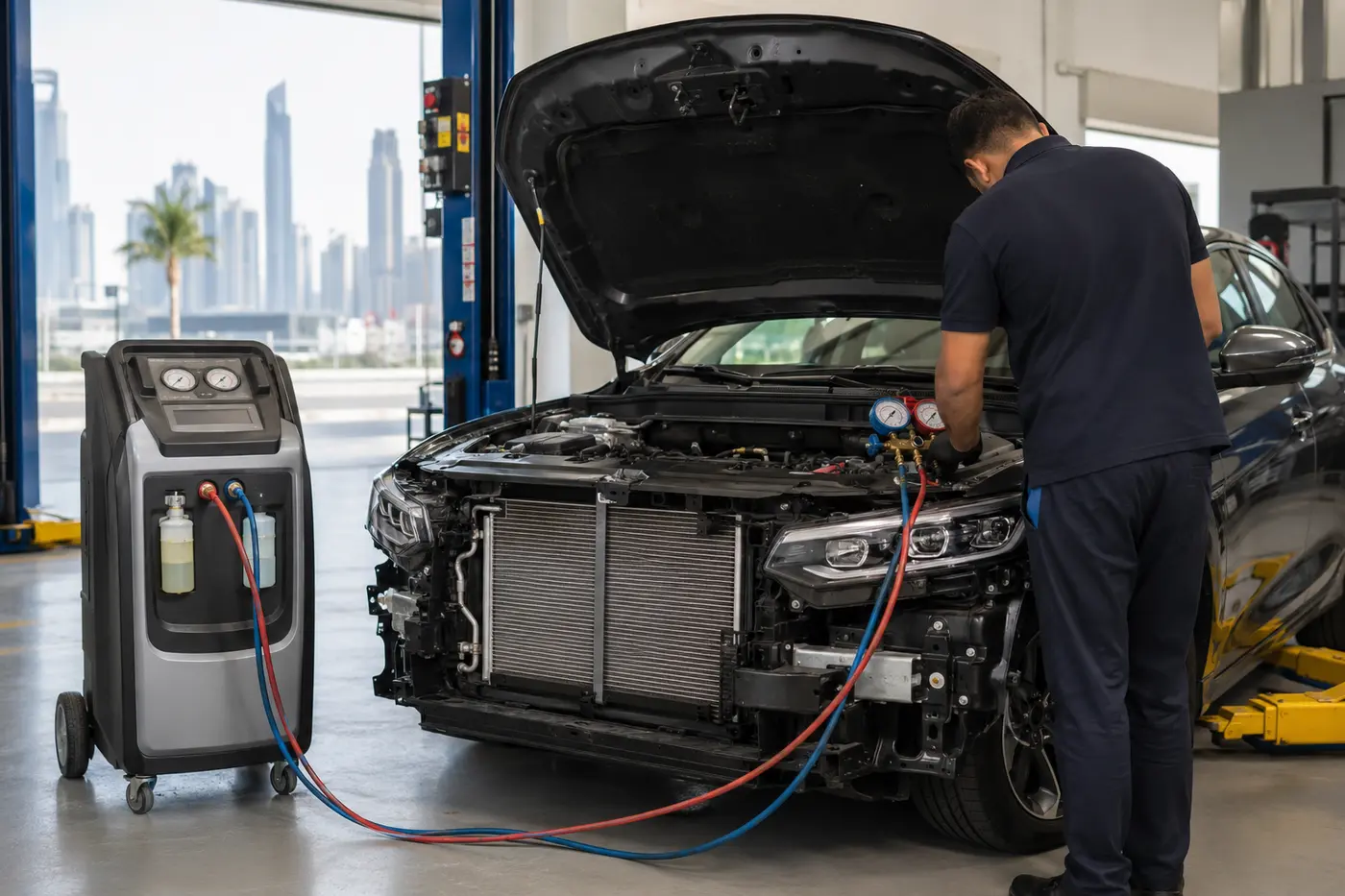
Refrigerant identification, history, pressure behaviour, line temperatures, compressor command and physical response are related evidence. A single gauge number cannot establish the exact repair by itself.
Verify the original condition after the repair
After work is approved and completed, cooling is checked against the original failure pattern where practical. If an intermittent issue cannot be reproduced, that limit should be stated instead of pretending certainty.
Partial cooling alone usually does not mean you must stop driving
If the car is mechanically normal and there are no warning messages or unusual smells, poor cabin cooling is generally a comfort and reliability issue rather than an immediate driveability emergency. However, leave time for diagnosis before the fault becomes a complete failure in peak heat.
- Book promptly when cooling has clearly worsened, needs repeated recharges or changes with traffic and road speed.
- Tell the workshop if cooling returns only after a restart, compressor cycling sounds different or one zone behaves differently.
- Do not use DIY refrigerant cans, leak sealers or improvised pressure tests. They can obscure evidence and complicate safe servicing.
Questions Dubai drivers ask when the AC is only mildly cold
The detail that matters most is the pattern, not a guessed component name.
Why is my car AC cool but not cold enough?
Partial cooling can come from poor condenser airflow, low refrigerant, reduced compressor capacity, cabin airflow restriction, a metering restriction or climate-control inputs. The condition that changes the symptom, such as traffic or road speed, helps choose the first test.
Does weak cooling always mean the AC gas is low?
No. A sealed system should not need routine top-ups. Low charge is one possibility, especially if a previous recharge helped only temporarily, but fan, condenser, compressor, sensor and airflow faults can feel similar.
Why is the AC colder while driving than in traffic?
Road speed increases airflow through the condenser. That pattern makes cooling-fan performance, condenser airflow and high-pressure behaviour important checks, although charge condition and other faults still need to be considered.
How long should an AC take to cool a hot car in Dubai?
There is no single time that applies to every vehicle. Cabin size, glass area, sun load, ambient temperature, recirculation and system design all affect pull-down. A proper test looks for stable performance under recorded conditions rather than an invented universal target.
Can a blocked cabin filter make the AC less cold?
It can make the cabin feel less comfortable by reducing air volume, and it may affect airflow balance. It does not by itself prove that the refrigerant side is healthy, so air delivery and cooling output should be assessed separately.
Tell us when the cooling feels weakest
Share the vehicle make, model and year, plus whether the AC is worse after parking, at idle, in traffic, at road speed, after a restart or on one side of the cabin. We will confirm the diagnostic scope and fee before testing at AMF Auto Services in Al Quoz 4.