
Windshield Fogging Inside the Car
Inside windshield fog forms when humid cabin air reaches glass that is cool enough for moisture to condense. The cause can be as simple as recirculation staying on in a humid cabin, but repeated or heavy fogging can also point to weak AC dehumidification, poor airflow, a blocked cabin filter, a stuck air door, water trapped in the HVAC case, a restricted evaporator drain or another source adding moisture inside the car.
Why the glass keeps fogging
If your windshield keeps fogging on the inside, the cabin is holding more moisture than the ventilation system can remove. Common causes include recirculation staying on, weak AC dehumidification, low airflow, a dirty cabin filter, a stuck fresh-air or mode door, moisture around the evaporator, a blocked drain, wet carpet from a leak or, less commonly, coolant vapour from the heater core. If visibility is affected, clear the glass before continuing to drive.
What happens before the glass fogs
The most useful clue is not only that the windshield fogs. It is whether the problem changes with passengers, rain, recirculation, AC operation, blower speed or the demist setting. These patterns help separate normal humidity from a system fault.
Fogs with several passengers or after entering a hot car
Breathing adds moisture to the cabin. If recirculation remains selected and the AC is not drying the air effectively, humidity can build quickly. Fresh outside air and AC-assisted demist should normally reduce the fog rather than let it continue.
Fogs after rain, washing or when carpets are damp
Water inside the cabin can keep releasing moisture long after the rain stops. Door seals, sunroof drains, evaporator drainage and wet carpet need checking if the fogging repeatedly returns even after the glass has been wiped.
Fogs even with demist selected
The demist mode should direct strong airflow toward the windshield and often uses AC dehumidification. If airflow is weak, the compressor is not drying the air or a mode door is not moving correctly, the windshield can stay fogged despite the correct button being pressed.
Most likely reasons the windshield fogs inside
The exact order changes with the weather and the car. Dubai is usually dry, so persistent inside fogging during humid mornings, rain, underground parking or strong temperature changes deserves attention when normal demist settings do not clear it.
Recirculation keeps humid cabin air trapped
Recirculation is useful for fast cooling, but it also reuses the air already inside the vehicle. With wet clothing, several passengers or moisture in the carpet, cabin humidity can build. Demist mode should normally bring in drier outside air or manage the recirculation door automatically. A stuck recirculation flap or actuator can keep the cabin sealed when the system is asking for fresh air.
Control and airflow clueAC system is not dehumidifying effectively
Air conditioning removes moisture as cabin air passes across a cold evaporator. If cooling is weak because of refrigerant, compressor, expansion-device, sensor or control problems, the air may not be dried enough for fast demisting. The test should compare vent temperature, evaporator behaviour and compressor command rather than assuming the glass itself is the problem.
Cooling and moisture overlapCabin filter or airflow path is restricted
A heavily loaded cabin filter, weak blower motor, evaporator icing or blocked air path can reduce the volume of dry air reaching the windshield. The air may be cold but too weak to clear a large glass area quickly. Airflow should be compared at the vents and demist outlets before a cleaning or blower repair is recommended.
Weak demist airflowEvaporator drain is restricted or water remains in the HVAC case
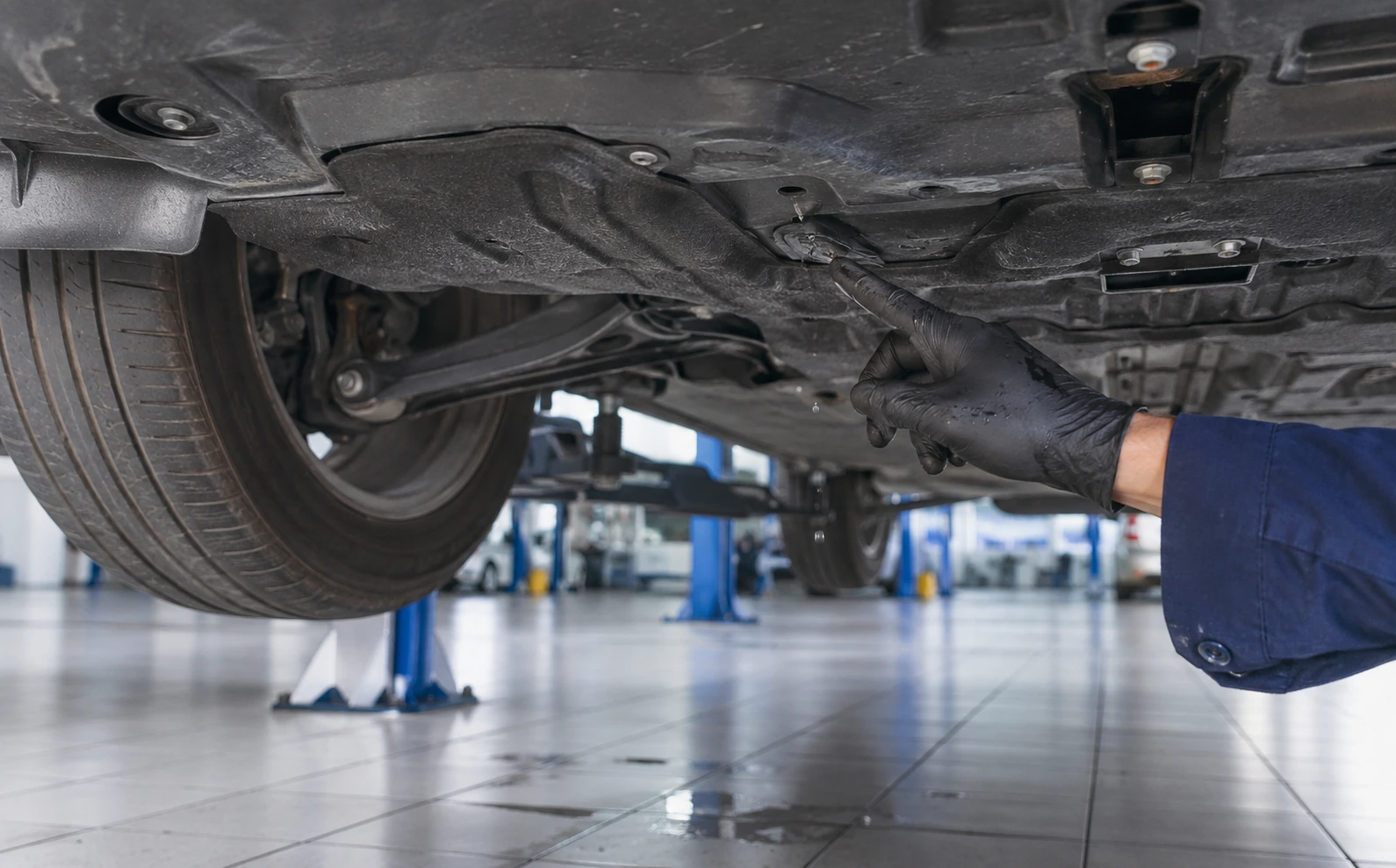
Condensation should leave the evaporator housing through a drain. A restricted drain can let water remain inside the case, increase humidity and sometimes leak into the passenger footwell. The drain should be inspected as part of the moisture path, especially when fogging comes with damp carpet or water inside the cabin.
Drain and moisture pathFresh-air, mode or blend door is not moving correctly
Modern HVAC systems use doors to choose outside air, recirculation and outlet direction. A stuck or uncalibrated actuator can leave recirculation closed or prevent enough air from reaching the windshield. The technician should command the doors and verify actual movement instead of assuming the dashboard setting is being followed.
Actuator or calibrationWater or coolant is entering the cabin
Rainwater from seals and drains can soak carpet and keep cabin humidity high. A heater-core leak is less common but important because it can create a sweet smell, greasy film on the glass and coolant loss. These signs need a different repair path from normal AC condensation or recirculation behaviour.
External moisture source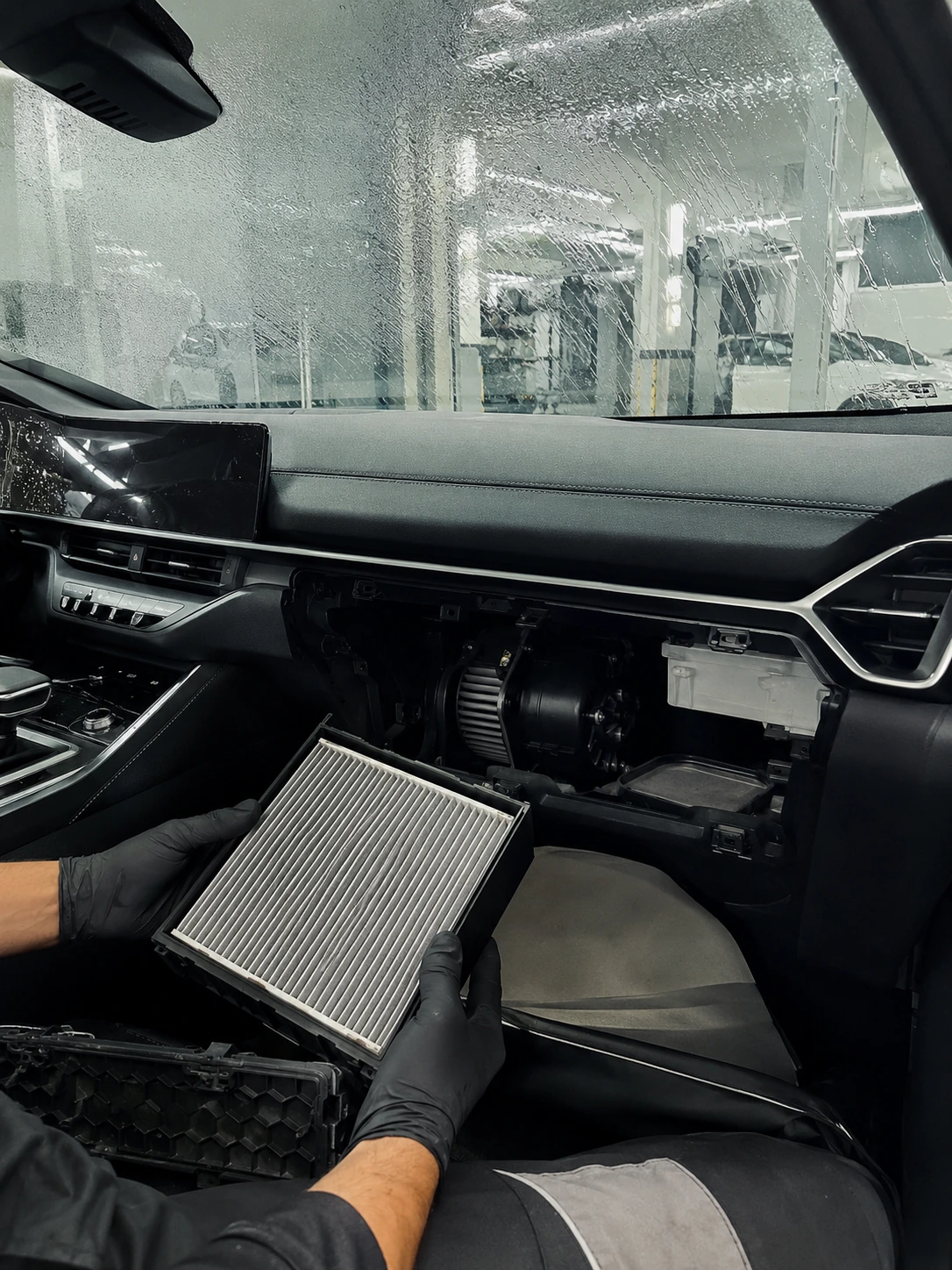
Use these settings to clear inside fog safely
If the glass starts fogging while you are driving, visibility matters more than cabin comfort. Use the vehicle’s demist or defrost mode and give the system time to move drier air across the windshield. The exact automatic strategy varies by vehicle, but these steps are generally useful.
Select windshield demist
Choose the setting that directs airflow to the windshield instead of relying only on face vents.
Allow fresh air in
Turn recirculation off if the car allows it. Outside air can reduce moisture buildup when the cabin is humid.
Use AC with useful blower speed
The AC can dehumidify the air even when you want warmer air. Use enough blower speed to move that dry air across the glass.
Stop if visibility does not recover
If you cannot see clearly, pull over safely rather than driving through heavy fogging. Persistent failure of the demist function needs diagnosis.
Wiping the inside of the glass may restore visibility for a moment, but it does not remove the moisture source. If the windshield fogs again quickly, inspect cabin humidity, airflow, AC drying and water entry rather than repeatedly cleaning the glass.
Two faults that are easy to confuse with normal humidity
A humid cabin after several passengers get in is normal. A recirculation flap that never opens or an evaporator drain that leaves water sitting in the HVAC case is not. Both faults can make the glass repeatedly fog even when the driver believes the correct climate setting is selected.
The button can change while the door stays stuck
The indicator lamp does not prove the physical flap moved. A broken actuator, linkage problem or calibration fault can leave the system reusing cabin air. The correct check commands fresh air and recirculation while confirming door movement or position data.
Condensation needs a clear exit
When the AC is working, water forms on the evaporator. A clear drain lets that water leave under the car. If the drain is restricted, moisture can remain in the case, create odour, raise cabin humidity and sometimes leak into the footwell.
Wet carpet can keep feeding the fog
Even after the original leak stops, soaked carpet and insulation can release moisture for days. Drying the cabin may be part of the repair after a door seal, sunroof drain, AC drain or another water-entry fault is corrected.
What it can cost to fix persistent inside windshield fogging
The repair depends on whether the problem is a settings and airflow issue, an AC dehumidification problem, a drain fault or water entering the cabin. These are broad planning ranges only and the final quote should follow the moisture-source diagnosis.
Cabin filter, vent or basic airflow correction
AED 100 to 700Filter replacement and simple airflow work can be lower. Blower or control faults move beyond a basic service.
Evaporator drain inspection and correction
AED 150 to 900+Accessible drain clearing can be straightforward. HVAC-case access or damage can increase the scope.
Recirculation, mode-door or actuator repair
AED 300 to 2,000+Cost depends on actuator access, calibration, linkage condition and whether dashboard or HVAC-case work is needed.
AC dehumidification or cabin leak repair
AED 300 to 3,500+Refrigerant faults, evaporator work, heater-core leaks, door seals and water-entry repairs vary significantly by vehicle.
Fog returns immediately after wiping
Use demist and fresh air. If the glass will not stay clear, stop safely and arrange diagnosis.
Sweet smell and greasy windshield film
A heater-core coolant leak may be involved. Check for coolant loss and avoid treating it as normal humidity.
Water is collecting in the footwell
Standing water can raise cabin humidity and may affect carpets, wiring or modules. Find the source rather than only drying the glass.
Blower or demist airflow is very weak
If the windshield cannot receive enough airflow, visibility may deteriorate quickly in humid weather or rain.
Electrical burning smell appears
Switch the HVAC system off if necessary and seek prompt inspection. A blower or resistor fault can be separate from the moisture problem.
AC does not cool and fogging is persistent
The system may not be dehumidifying. A cooling and airflow diagnosis should be performed together.
How we diagnose windshield fogging inside the car
The diagnostic aims to prove where the moisture comes from and why the HVAC system is not clearing it. We compare the cabin condition with recirculation, fresh air, AC operation, blower output, door movement and drain behaviour.

Confirm the fog is on the inside
Inside condensation follows cabin humidity. Outside condensation follows a different glass-temperature pattern and is not diagnosed the same way.
Record when the fog appears
Rain, passenger load, parking location, recirculation, AC use and damp carpets can change the likely source.
Check demist airflow and door movement
Verify that fresh-air, recirculation and mode doors respond to commands and that strong airflow reaches the windshield.
Check AC dehumidification
Measure cooling performance and confirm the evaporator is removing moisture when the system requests AC during demist.
Inspect the filter, evaporator drain and cabin for water
Look for airflow restriction, trapped condensate, damp carpet and external water-entry paths.
Verify the repair in the original condition
Repeat the demist test with the same humidity or cabin condition far enough to confirm the glass clears and stays clear.
Where the diagnosis may lead
Persistent fogging can sit at the intersection of AC cooling, airflow, cleaning and cabin water entry. These pages explain the relevant branches once the source is narrowed down.
Windshield fogging inside the car FAQ
Why does my windshield keep fogging on the inside
Inside fogging happens when humid cabin air condenses on cooler glass. Recirculation, passengers, wet carpet, weak AC dehumidification, low airflow, a dirty cabin filter, stuck air doors or drainage problems can all keep cabin humidity high.
Should I use hot or cold air to clear inside fog
Use the vehicle’s demist setting. Many cars combine AC dehumidification with suitable temperature and fresh-air control automatically. The key is moving drier air across the windshield, not simply choosing the hottest or coldest possible setting.
Should recirculation be on when the windshield is fogged
Usually fresh outside air helps reduce repeated inside fogging because recirculation can trap humid cabin air. Many vehicles automatically disable recirculation in demist mode. If the flap is stuck closed, the indicator may change without the airflow path actually changing.
Can low AC gas make the windows fog
Low refrigerant can reduce cooling and dehumidification if it prevents the evaporator from operating correctly. But fogging alone does not prove low refrigerant. Airflow, recirculation, drain condition and cabin moisture should be checked too.
Can a dirty cabin filter cause windshield fogging
Yes. A heavily restricted filter can reduce the amount of air reaching the windshield, making demist slower. It may be one part of the problem, especially if general vent airflow is also weak.
Can a blocked AC drain make the windows fog
It can contribute. If condensation cannot leave the evaporator case properly, moisture may remain in the HVAC housing and sometimes leak into the passenger footwell. That extra moisture can raise cabin humidity.
Why does the car fog after rain
Wet shoes, clothing and higher outside humidity can be enough to increase cabin moisture. If the problem is severe or persists long after the rain, inspect wet carpets, door and sunroof drains, the evaporator drain and water-entry paths.
What does a sweet smell with windshield fog mean
A sweet smell, greasy film on the inside of the glass and unexplained coolant loss can point to a heater-core coolant leak. That needs a different diagnosis from normal AC condensation or recirculation.
Is it safe to drive with a fogged windshield
Not if visibility is restricted. Use demist and fresh air to clear the glass. If you cannot restore a clear view, pull over safely before continuing.
What should I send before booking
Send the make, model and year, whether the fog is definitely inside, whether it happens after rain or with passengers, whether AC cooling is normal, whether demist airflow is strong, whether recirculation changes the problem and whether there is damp carpet, water leakage, odour or coolant loss.
Find the moisture source instead of wiping the glass again
Book a fixed-price diagnostic and tell us when the windshield fogs and what the climate controls are doing. We will separate cabin humidity, recirculation, AC dehumidification, weak airflow, drainage and water-entry faults before recommending repairs.