
AC Compressor Not Engaging
If the AC button is on but the compressor does not appear to engage, do not assume the compressor itself has failed. The system may be refusing engagement because of low refrigerant, pressure protection, a relay or wiring fault, a clutch problem, sensor data, engine-control logic or the design of a modern variable compressor that does not use a traditional on-off clutch.
Instant answer
An AC compressor may not engage because the system is low on refrigerant, seeing unsafe or incorrect pressure data, missing relay or electrical power, dealing with a clutch or coil fault, blocked by engine-control logic, or suffering an internal compressor or control-valve problem. On many newer vehicles, visible clutch engagement is not even the correct test. The diagnosis should prove whether the system is requesting compressor operation and whether the compressor responds correctly.
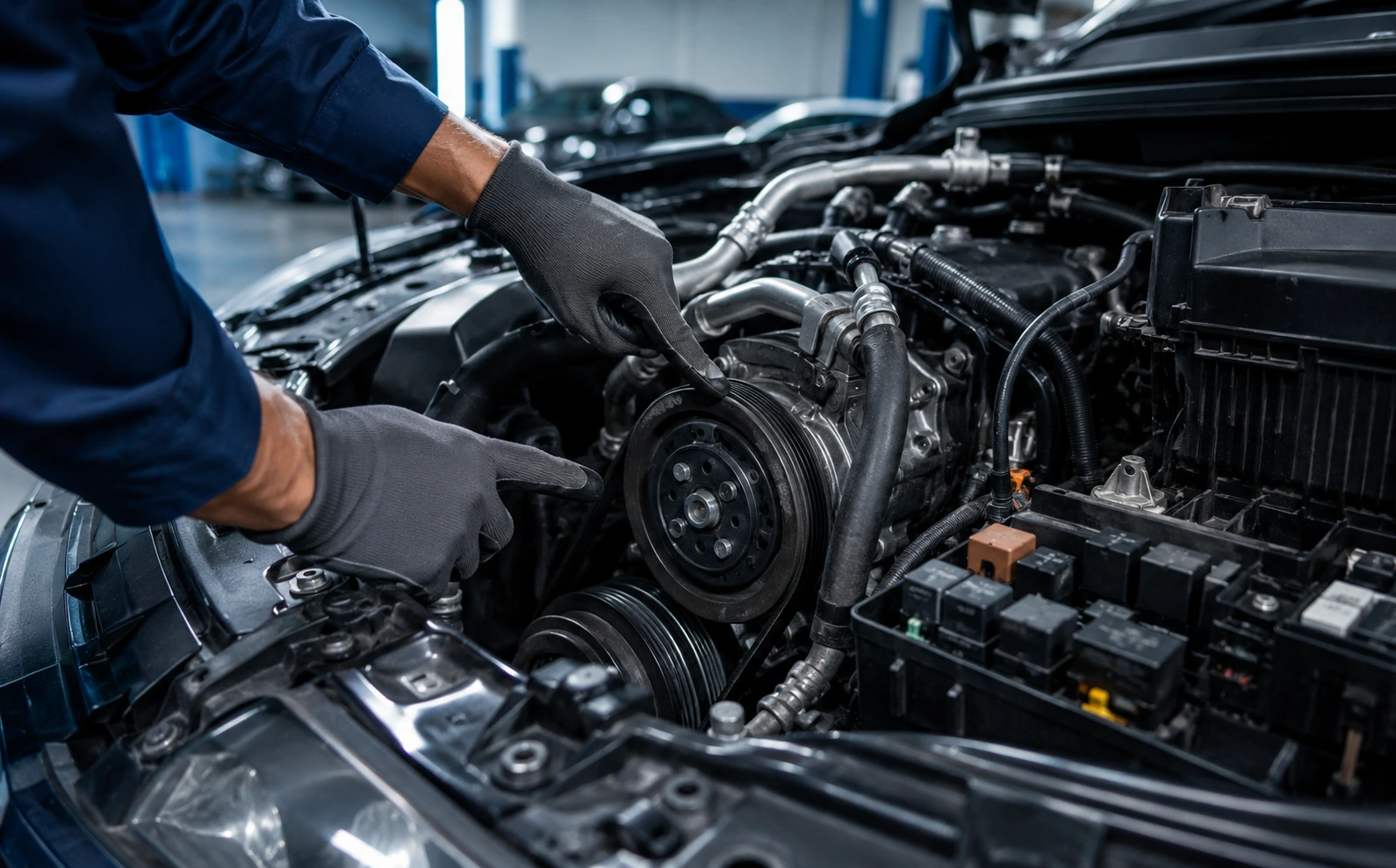
No click and warm air from start-up
On a vehicle that should use a clutch, no click can mean there is no command, no electrical supply, a failed clutch coil or a mechanical problem. It can also mean the system has deliberately locked the compressor out because pressure data is unsafe.
Clutch clicks but cooling stays warm
Engagement alone does not prove useful compression. The clutch may pull in while the compressor has poor internal performance, the control valve does not regulate correctly, the charge is wrong or condenser airflow is poor.
Compressor engages only after a restart
Intermittent relay, wiring, pressure input or control logic can recover after the ignition is cycled. Preserve fault codes and live data before disconnecting the battery or repeatedly restarting the vehicle.
Compressor engages and drops out quickly
Rapid cycling can be caused by pressure conditions, charge problems, sensor inputs, fan operation or protection logic. Replacing the clutch or relay without watching why the command disappears can miss the actual fault.
Most likely reasons the compressor does not engage
The exact ranking depends on vehicle design. A traditional clutch compressor, a variable-displacement compressor and an electric compressor are not diagnosed in the same way. The order below is a practical starting point for a vehicle where the customer reports no compressor engagement.
Low refrigerant or pressure protection
If refrigerant is low enough, pressure data can prevent compressor operation to protect the system. A genuine high-pressure condition can also cause lockout. Low pressure does not mean the correct repair is simply adding gas. The system should be checked for the reason the charge changed and for the actual pressure condition under the current temperature.
Common lockout pathPressure switch, pressure sensor or related wiring
The vehicle relies on pressure information to decide whether compressor operation is safe. A failed switch on older designs, an implausible sensor signal, damaged wiring or poor connection can make the control system believe the refrigerant pressure is unsafe. Compare scan data with real system behaviour before replacing the sensor.
Data must make senseRelay, fuse, power supply or ground fault
A failed relay or power circuit can stop a clutch coil or compressor command from receiving electricity. But a relay that is not being commanded may be doing nothing wrong. Test the command side and load side of the circuit instead of swapping parts blindly. Fuse failure also needs a reason, especially if a replacement fuse blows again.
Electrical branchCompressor clutch coil or clutch air-gap problem
Where a conventional electromagnetic clutch is fitted, a failed coil, poor electrical connection, excessive air gap, damaged hub or overheated clutch can prevent proper engagement. Some clutch faults appear only when hot. The technician should confirm supply voltage, coil behaviour and mechanical condition before condemning the whole compressor.
Applies to clutch systemsClimate-control, engine-control or sensor permission fault
The compressor request can be blocked because of engine temperature, throttle demand, ambient data, evaporator temperature, climate-control logic or another vehicle input. Modern AC is connected to more than the dashboard button. The technician should identify which condition is removing permission instead of forcing the compressor to run.
Command logic pathInternal compressor or control-valve fault
A variable compressor may be turning mechanically while producing little useful pressure change. A control valve can fail even though there is no obvious clutch problem. Electric compressors follow a different electrical and safety path again. Compressor replacement should come after the system proves the command, refrigerant condition and mechanical response.
Major component only after proofDo not force the compressor to run by jumping circuits
Online advice often suggests jumping a relay or pressure switch to see whether the compressor starts. That can remove a safety condition the vehicle is using to protect the compressor, wiring or refrigerant circuit. It can also create misleading evidence because the compressor may run even though the control system is correctly refusing operation.
- Do not bypass a pressure switch or pressure sensor circuit as a repair.
- Do not feed battery power to a clutch or compressor unless the vehicle procedure specifically calls for a controlled test.
- Do not keep replacing fuses if the circuit has a repeat short or overload.
- Do not add refrigerant only because engagement returns temporarily after a top-up.
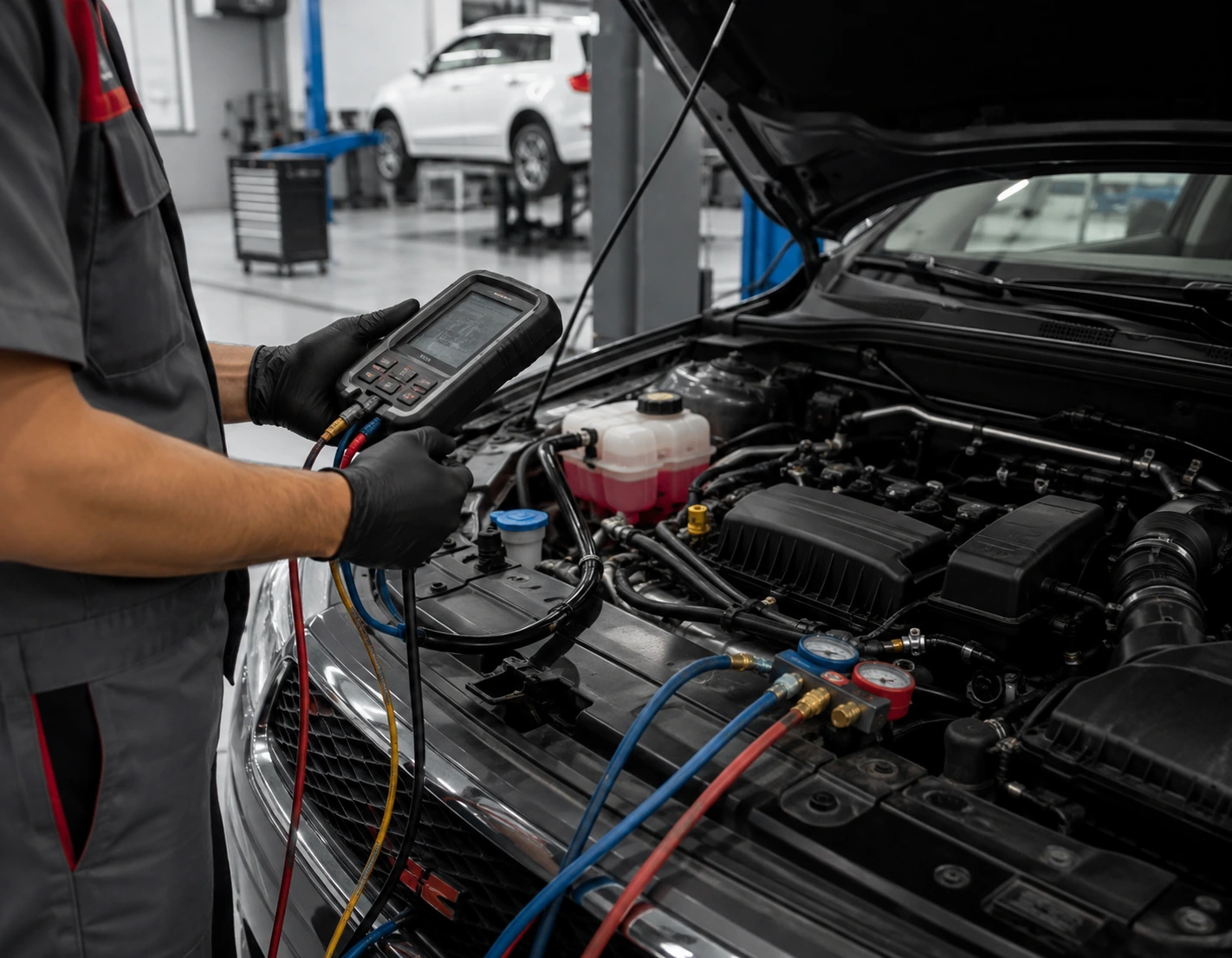
Modern compressor design changes what engagement means
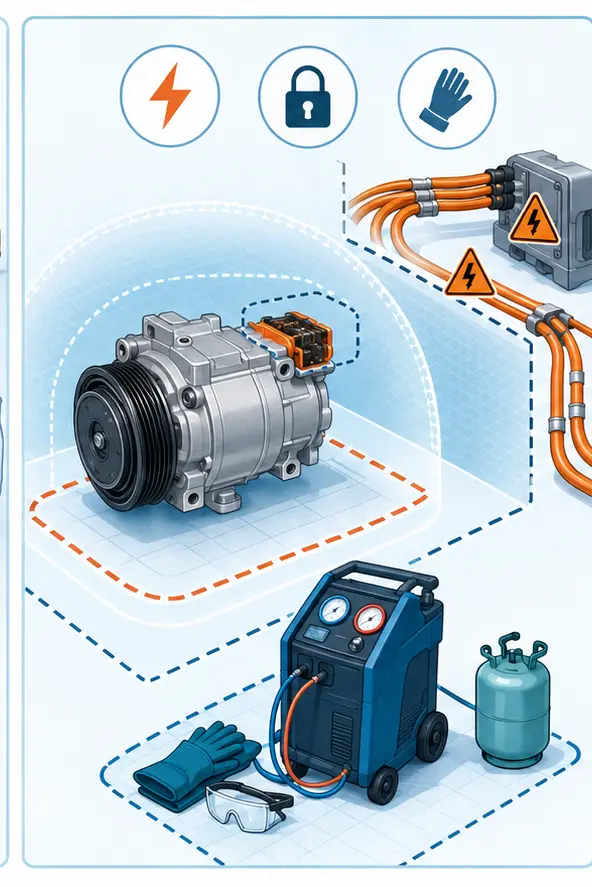
Older AC systems often make diagnosis look simple because an electromagnetic clutch visibly pulls in when cooling is requested. Many newer vehicles use variable-displacement compressors that may keep the pulley turning while internal control changes pumping capacity. Hybrids and EVs can use high-voltage electric compressors with no belt-driven clutch at all.
Visible clutch movement can be useful evidence. The test still needs command, supply voltage, clutch condition and pressure response.
The pulley may rotate continuously while a control valve changes output. Looking only for a click can lead to a false diagnosis.
Used on many hybrid and electric vehicles. High-voltage safety, inverter logic, refrigerant and oil compatibility make this a specialist diagnostic route.
Engine temperature, protection logic and other powertrain conditions can temporarily remove AC operation even when the cabin requests cooling.
What it can cost to fix a compressor that will not engage
Cost depends on whether the compressor is being prevented from running or whether the compressor itself has failed. These planning ranges are broad and the final quote should follow testing.
Relay, fuse, connector or lower-scope wiring repair
AED 150 to 1,000Simple relay replacement can be lower. Harness repair, difficult access or repeated electrical faults can cost more.
Pressure switch or pressure sensor repair
AED 250 to 1,200Final scope depends on sensor type, refrigerant handling, wiring condition and whether access requires additional work.
Clutch, coil or compressor-control repair
AED 500 to 2,000+Some vehicles allow separate clutch or control-valve work. Others require a larger compressor repair scope. When the choice is between keeping the existing unit and replacing it, use the AC compressor repair-versus-replacement guide to compare mechanical condition, contamination, warranty and total installed cost.
Compressor replacement
AED 1,500 to 4,500+Compressor type, contamination, oil, drier, flushing, refrigerant and supporting parts can change the job significantly.
When should you stop driving
A compressor that does not engage usually means loss of cabin cooling rather than an immediate driving hazard. Stop using the AC and seek prompt advice if the symptom comes with mechanical, electrical or engine-cooling warnings.
Engine temperature rising
If overheating appears with the AC complaint, switch the AC off and stop safely. Cooling-fan or engine-cooling faults may be involved.
Burning smell or smoke
Do not keep requesting AC. Overheated wiring, a clutch coil, relay or belt-driven component can become a wider electrical or fire risk.
Belt squeal or seized pulley
A compressor pulley or accessory drive problem can affect the belt system even when the AC itself is not cooling. Severe noise deserves prompt inspection.
Fuse keeps blowing
Repeated fuse failure means the circuit needs electrical diagnosis. Do not keep installing larger or repeated fuses to force operation.
How we diagnose a compressor that will not engage
The diagnostic follows the control chain instead of guessing the last visible component. This matters because the compressor may be perfectly capable of running while the vehicle is deliberately refusing to command it.

Confirm the compressor design
Identify whether the vehicle uses a conventional clutch, variable compressor or electric compressor before deciding what visible engagement should look like.
Confirm the cooling request
Check climate settings, relevant sensor values and whether the control system is actually asking for compressor operation.
Check pressure permission
Compare reported pressure with actual system behaviour and confirm whether the system is blocking operation for a valid reason.
Test relay, power and ground
Where applicable, verify command and load sides of the electrical circuit rather than replacing a relay because it is easy to reach.
Compare electrical command with physical response
If the command reaches the compressor, verify clutch movement, control-valve behaviour or pressure change to see whether the compressor actually responds.
Verify the repaired system under load
After repair, run the AC under the condition that caused the complaint and confirm stable cooling, pressure behaviour and compressor control.
Where the diagnosis may lead
You do not need to choose the failed part before testing. These pages explain the matching repair routes once the no-engagement cause is proven.
AC compressor not engaging FAQ
Why is my AC compressor not engaging
The system may be low on refrigerant, seeing unsafe pressure, missing electrical power, dealing with a failed clutch coil, blocked by control logic or suffering a compressor-control fault. The first step is to confirm whether the vehicle is actually requesting compressor operation.
Can low AC gas stop the compressor from engaging
Yes. Low refrigerant pressure can cause compressor lockout on many systems. But low charge usually means refrigerant has been lost, so the reason should be investigated. Adding gas without checking the system can produce only a temporary result.
Can a bad pressure switch stop the compressor
Yes. A failed pressure switch or pressure sensor can prevent operation, but the signal should be compared with the actual pressure condition and wiring. The system may also be correctly locking out because pressure really is unsafe.
How do I know if the AC relay is bad
Test whether the relay is being commanded and whether it can carry the required load. A relay that never receives a command is not automatically faulty. Swapping relays can be a clue on some vehicles but it is not a complete diagnosis.
Should I jump the AC relay to test the compressor
Do not bypass protection circuits casually. Forcing compressor operation can remove a safety condition and can damage the system or create misleading evidence. Use the vehicle test procedure and verify why the command is missing first.
Why does the clutch engage but the AC still blow warm
Clutch movement proves only that the clutch pulled in. It does not prove the compressor is pumping correctly, the refrigerant charge is correct, the condenser is rejecting heat or the expansion device is working. Pressure and temperature behaviour still need to be checked.
Does every modern compressor have a clutch
No. Many variable-displacement compressors do not behave like older on-off clutch systems, and electric compressors have a completely different operating path. The compressor design should be identified before engagement is judged visually.
Can a compressor fail only when hot
Yes. A clutch coil, relay, connector, control valve or compressor can change behaviour after heat builds. If engagement disappears only after driving or sitting in traffic, the fault should be reproduced under the same heat condition.
What should I send before booking
Send the make, model and year, whether the AC is always warm or intermittent, whether you hear a click, whether the compressor engages after restart, whether the car was recently regassed, and any warning lights or unusual belt noise.
Do not replace the compressor until the missing command is found
Book a fixed-price diagnostic and let us follow the engagement chain from cooling request to compressor response. We will separate low refrigerant, pressure protection, relay, clutch, wiring and compressor faults before parts are approved.