
Car AC Cold on One Side Only
When one side of the cabin is cold and the other is warm, the car may have a temperature-blend door problem, an actuator or HVAC-control issue, uneven refrigerant distribution, a restricted heat exchanger or a configuration-specific fault. It is common on dual-zone systems, including many German cars, but it is not automatically a gas refill problem.
One cold side does not automatically mean the car needs gas
With driver and passenger settings matched, a true left-to-right temperature split commonly points to an air-mix door, actuator or climate-control command. Some systems can also show it when refrigerant distribution or evaporator performance is uneven. The repair should follow measured vent temperatures, control commands and the exact HVAC layout, not a guess from one warm vent.
Is it a zone-control fault or a cooling-path fault?
Zone-control pattern
One side responds incorrectly when its temperature setting changes, makes clicking sounds behind the dashboard, remains warm at every fan speed, or fails after an actuator, battery or calibration event. Blend-door travel, actuator feedback and HVAC-control commands move higher on the list.
Cooling-path pattern
Both zones are affected in extreme heat, the cold side weakens as the system runs, cooling changed gradually, or testing shows an evaporator temperature distribution problem. Refrigerant quantity, restriction, compressor control and condenser performance may need assessment. If both zones are simply weak rather than split left-to-right, see car AC not cold enough.
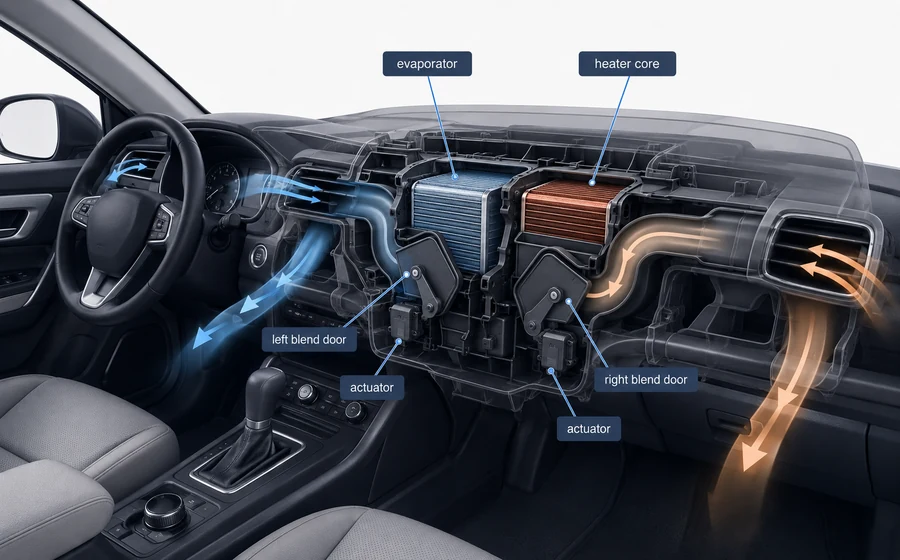
Why blend doors are often blamed first
Each side can mix air differently
Dual-zone systems use doors to blend cooled air, heated air and bypass air for each requested temperature. If a door sticks, breaks, loses position feedback or its actuator stops following commands, one side can stay too warm or too cold even while the refrigeration circuit is working.
Do not approve dashboard removal from the symptom alone
The fault may instead be calibration, control-module logic, wiring or a separate cooling-system issue. Access varies greatly by model, so the repair plan should state what has actually been confirmed before labour-intensive dismantling is approved.
What the workshop should separate
| Possible cause | Clues that support it | Useful confirmation |
|---|---|---|
| Blend-door actuator or door travel issue | One zone ignores its temperature setting, clicking is heard behind the dash, or the fault appeared after a battery event or control reset. | Read HVAC faults and live data, command actuator movement, check feedback and inspect linkage or door movement where access permits. |
| Low charge or uneven evaporator distribution | Cooling worsened gradually, one side is consistently warmer under heavy heat load, or the split changes with engine speed and ambient conditions. | Measure vent temperatures with matched settings, inspect pressure and temperature behaviour, and leak-test if the evidence supports a loss of charge. |
| Restriction or expansion-device issue | Temperature split is accompanied by intermittent cooling, unusual pressure behaviour or a pattern that changes after operating time. | Use appropriate pressure, temperature and sensor data. Do not diagnose a restriction from vent temperature alone. |
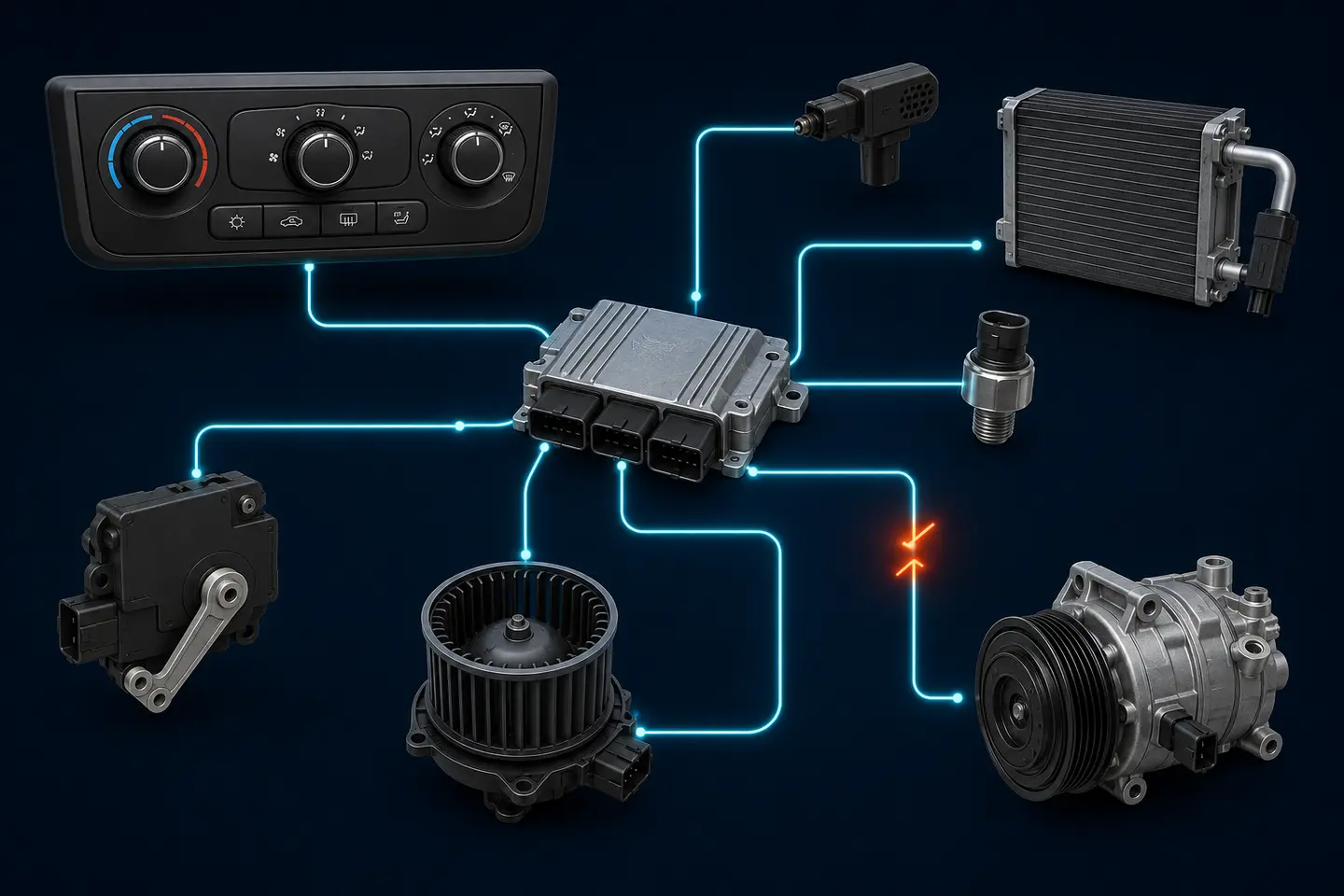
| HVAC control, sensor or wiring fault | Displayed temperatures, sun-load response, mode selection or actuator commands do not match the physical result. | Check faults, configuration, inputs, reference values, outputs and wiring using vehicle-specific information. |
| Local vent or duct problem | Only one outlet behaves differently while other vents in that zone are normal. | Inspect vent movement, duct connections and mode routing before assuming a central HVAC-system fault. |
How the test is set up matters
Match the controls first
Set driver and passenger zones to the same temperature, mode and fan speed. Then compare equivalent vents with actual temperature measurements instead of judging one side by hand.
Record the conditions
Cabin heat soak, sunlight, recirculation state, engine speed and ambient temperature all change system demand, so they need to be considered when the split is measured.
Make scan data agree with the physical result
Commanded door positions, actuator feedback, evaporator temperature and cabin inputs can help, but a code alone does not confirm a part. The command, feedback and measured vent-temperature result should tell the same story.
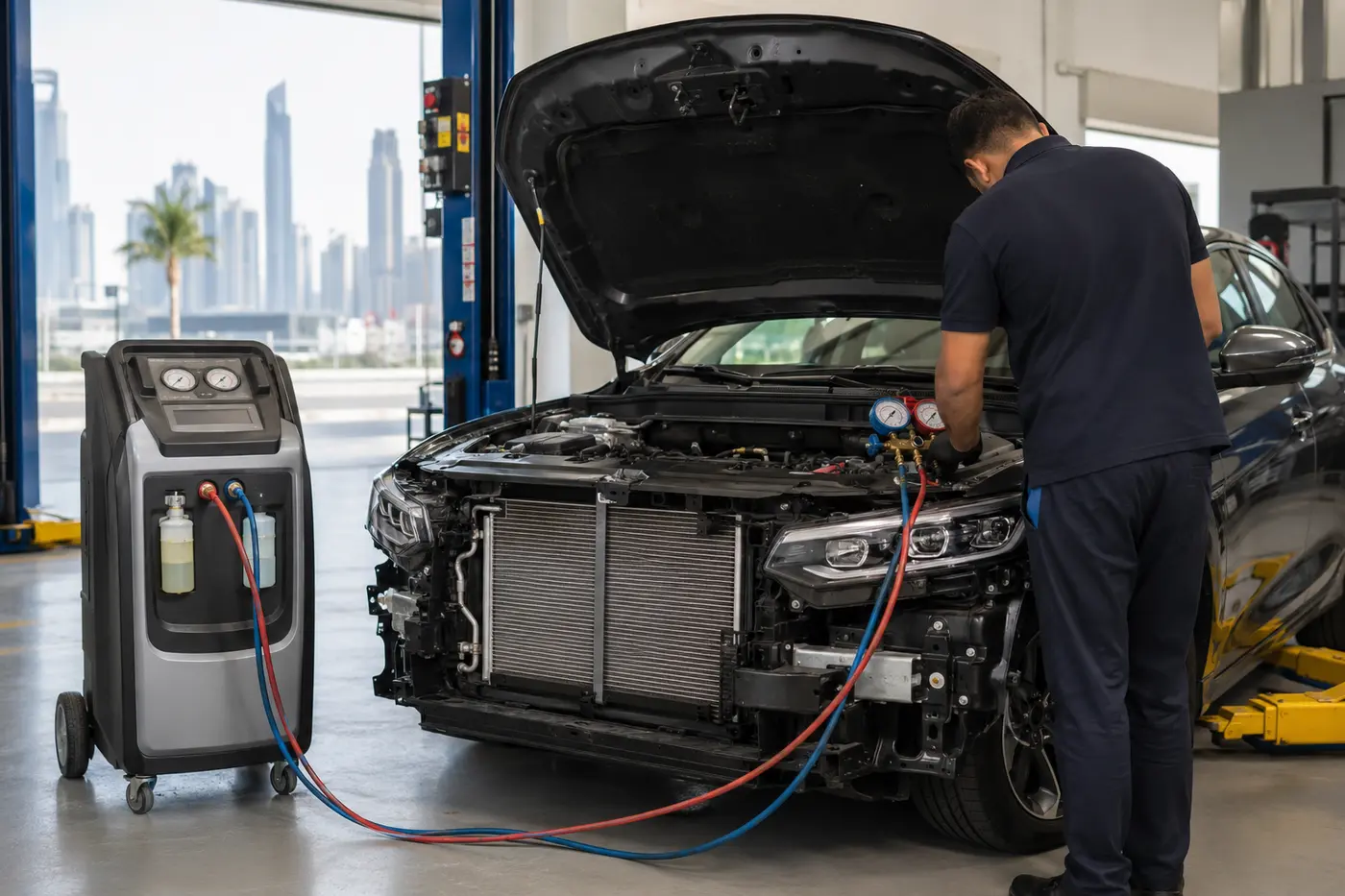
Repair route depends on what the test proves
Calibration or control correction
Some faults require correct adaptation, configuration, sensor-input diagnosis or wiring repair. This is not the same as replacing a physical blend door.
Actuator or door repair
Where movement or feedback is confirmed faulty, the repair may involve an actuator, linkage or internal door. Access can range from limited trim removal to substantial dashboard work.
Cooling-system repair
If tests show a refrigerant loss, restriction or performance problem, that fault is diagnosed and repaired on its own evidence. A refill is not a substitute for leak repair.
The access question that controls one-side cooling cost
Easy access and HVAC-case access are very different jobs
A scan, calibration or accessible actuator repair is not comparable with a failed door buried inside the HVAC case. Refrigerant work can also require leak detection, recovery, repair, evacuation and charging to specification.
Ask for diagnosis and repair to be separated
The quotation should show what has been confirmed, what labour is approved, what parts are included and what uncertainty remains until access is gained. Make, model, year, system layout and parts availability all affect the final amount.
Cooling on one side is not normally an emergency, but these signs change the priority
Arrange prompt inspection if an acrid odour, visible smoke, heat-damaged trim, repeated fuse failure, water leaking onto electronics, severe demisting loss in poor weather, loud grinding behind the dashboard, or an engine-cooling warning is present. Do not force vent controls repeatedly if an actuator is clicking or binding. A cabin temperature split can coexist with an electrical or cooling-system fault that needs more than a comfort repair.
Cold on one side and warm on the other
Does one cold side mean my car needs AC gas?
Not necessarily. It can be caused by blend doors, actuators, control inputs, uneven evaporator performance or refrigerant-related faults. Tests determine the correct route.
Why is this common on dual-zone German cars?
Many vehicles use multiple doors, actuators, sensors and climate-control logic. The additional control paths provide more ways for a temperature mismatch to appear, but the exact design varies by model.
Can I keep driving with one side warm?
It is often a comfort issue, but you should not ignore electrical smell, poor demisting, cooling-system warnings or signs of water reaching wiring. The safety context matters.
Will resetting the battery fix a blend door?
A reset can change module state but does not repair a failed actuator, broken linkage, incorrect sensor input or refrigerant fault. It may also remove useful fault information, so diagnosis is preferable.
Get the temperature split tested properly
Send your make, model and year, which side is cold, the control settings, whether the split changes after driving, and any clicking or warning lights. We will check the zone controls and cooling path in the order the evidence supports.
Why matching the climate settings is the first test
1. Match every control
Set both zones to the same temperature, fan speed, vent mode and recirculation state. Let the cabin stabilise and compare equivalent outlets. Sun load, heat soak and a partially closed vent can otherwise create a false left-right difference.
2. Watch how each zone responds
Move both zones through the same temperature change. A side that does not respond, clicks repeatedly or changes only after a restart points more toward air-mix control. A split that changes with engine speed or operating time can point toward refrigeration performance instead.
3. Check sensor plausibility
Sunlight, ambient and cabin-temperature sensors can influence door commands and compressor demand. A suspicious scan value is not enough to condemn a sensor; its reported value, requested output and measured vent temperature must agree.
4. Escalate only when the evidence supports it
If the split points beyond zone control, use broader car AC diagnostics for refrigerant performance, electrical inputs and leak testing. A recharge should follow measured evidence, not the symptom alone.
Questions that protect you from an unnecessary dashboard repair
Ask what proved the door itself is faulty
Before authorising major disassembly, ask what separated the blend door from its actuator, feedback signal, wiring or module command. Where appropriate, ask whether adaptation or calibration was attempted and whether actual door movement could be observed.
Low refrigerant still needs a cause
A low charge is not a complete diagnosis. If testing supports refrigerant loss, the plan should identify the leak route, required repair, evacuation and charge procedure, and the performance check afterward.
What to include in your booking message
Describe the split precisely
Send the make, model and year, whether the car has dual-zone or rear climate controls, which side is affected, the matched settings, whether the fault changes after 10 to 20 minutes, and any clicking or recent battery or dashboard work.
Repeat the same comparison after repair
Use the same settings and similar conditions. Measured temperatures and system response should match the commanded settings. Any remaining difference should be explained rather than hidden by moving the controls.