
Dodge and Jeep AC Repair Dubai
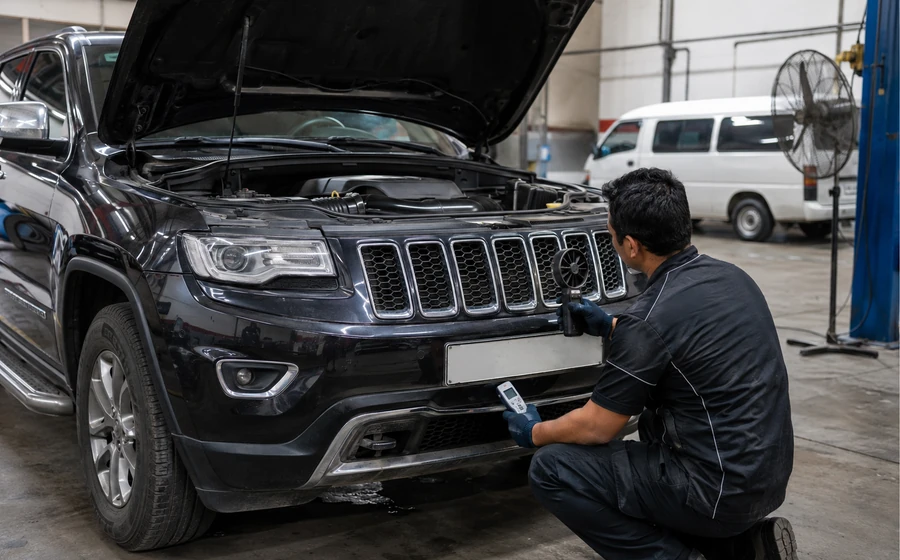
Wrangler, Grand Cherokee, Durango, Charger, Challenger and other Dodge or Jeep models can need very different AC repair even when the complaint sounds the same. Open-air Wrangler use, Charger heat soak and three-row Durango cabin load change what should be tested first. We diagnose the vehicle around its real use pattern, then quote the leak, blower, compressor, condenser or climate-control branch that testing proves.
Your Dodge or Jeep use pattern changes what we test first
A Wrangler used off road, a Charger that loses cooling after heat soak and a Durango with weak rear-cabin comfort should not start with the same generic AC check. We begin with the symptom and how the vehicle is actually used, then test the airflow, refrigerant, compressor, condenser, blower or climate-control branch most likely to be responsible.
Wrangler and off-road use
Dust, top-off driving and high ambient heat can make airflow, filter condition and condenser cleanliness especially relevant before low refrigerant is blamed.
- Inspect cabin and condenser airflow
- Reproduce stop-go heat load
- Separate open-air comfort expectations from an actual fault
Charger and enthusiast use
Cooling that changes after hot parking, long idle or a hard drive may need enough run time for compressor control or pressure protection to show the fault.
- Test fully heat-soaked
- Compare command with physical output
- Do not approve a compressor from a cold-start check
Durango and family SUV use
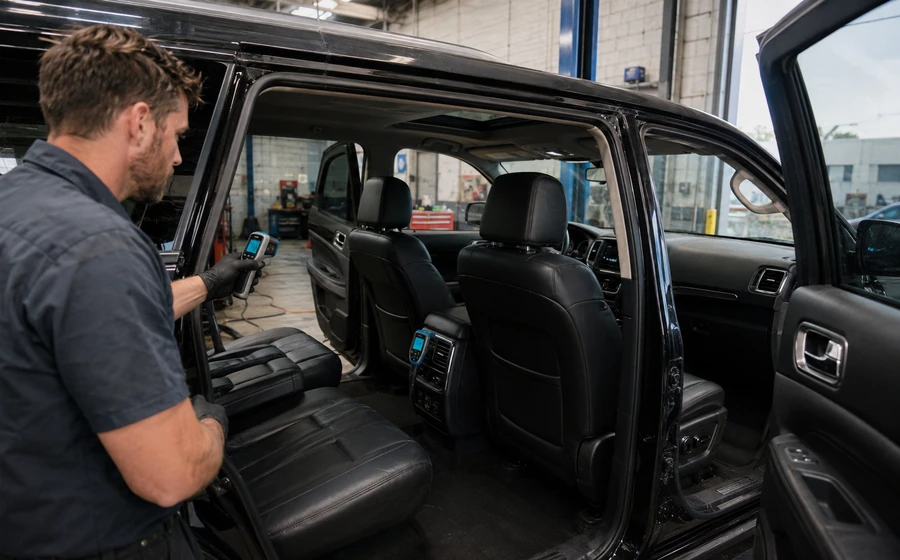
Front and rear cabin comfort, blower volume and three-row pull-down matter more than a single centre-vent number.
- Compare front and rear performance
- Check cabin load at idle
- Verify rear comfort after repair
What we prioritise on common Dodge and Jeep vehicles
Weak airflow after dusty or open-air use
Filter loading, blower output and air-path restriction deserve attention before another refrigerant service is added. Dust on the condenser can also hurt heat rejection in traffic.
Uneven zones or climate-control mismatch
Air-mix movement, sensor values, blower response and whole-system capacity need to agree before an actuator or electronic control part is ordered.
Rear rows take too long to cool
Rear airflow and whole-cabin pull-down should be checked as part of the commercial repair result. A cold front vent alone does not prove the SUV is fixed.
Cooling changes after hot parking
Traffic heat, condenser airflow and compressor response should be tested after the car is fully heat-soaked rather than only at first start.
Intermittent performance after long runs
Pressure protection, compressor command and heat-sensitive electrical behaviour may need enough operating time to reproduce.
Urban daily-driver cooling
Hot parking, repeated short trips and stop-go traffic can expose marginal charge or fan performance that looks acceptable on a quick road test.
Wrangler airflow and cooling sequence
Check filter restriction, blower volume and distribution before touching the refrigerant circuit.
Inspect airflow restriction and debris exposure that can reduce traffic cooling.
Confirm fan response once road airflow disappears.
Only after airflow is understood should charge and compressor performance be interpreted.
Verify the repair with the same roof, traffic and heat conditions the owner described.
Airflow complaints can masquerade as refrigerant problems
A Wrangler that spends time with the roof or doors off can see more dust and debris than a sealed daily driver. That does not automatically mean the AC system itself is faulty, but it makes the air side and condenser condition more important to inspect early.
If the vents are genuinely cold but the cabin never receives enough air, the relevant branch can be blower motor and fan repair rather than a gas refill. If cooling is strong while moving but weak at signals, the idle cooling symptom route helps describe the complaint.
For owners who modify tops, doors or cabin insulation, the workshop also needs a realistic baseline for what the AC system can achieve under the current vehicle configuration.
What usually brings these vehicles to the workshop
AC becomes weak again after a refill
Repeated charge loss supports AC leak detection and repair. The escaping point needs to be found before another recharge is treated as the solution.
Driver and passenger temperatures disagree
Blend-door movement, actuator command, sensor input and overall evaporator capacity are compared under matching settings.
AC is colder on the highway than at idle
Fan output, condenser condition and low-speed compressor performance are checked under stationary heat load.
Airflow is weak, noisy or intermittent
Filter, blower motor, controller, wiring and duct condition are separated from refrigerant-side cooling performance.
Cooling cuts in and out after heat soak
Command, pressure protection, electrical supply and mechanical output should support compressor repair before replacement is approved.
Durango front vents cool but rear comfort is poor
Rear airflow and whole-system cooling capacity are compared before a front-only vent result is accepted as complete repair proof.
Enthusiast use and family use do not justify the same parts decision
A Wrangler used off road, a daily Durango and a performance Charger may all need AC components, but access, duty cycle and future modification plans change what is sensible.
We identify the exact model and failed component first. The recommendation then balances fit, warranty, repeat access and parts availability rather than automatically choosing the cheapest or most expensive option.
Access-heavy HVAC parts
Evaporator, blend-door and deep dashboard work generally deserve stronger parts confidence because repeating labour is expensive.
Verified OE-supplier route
Useful when manufacturer, part number, control type and exact vehicle application are positively identified.
Off-road and daily-use components
Filters, selected hoses, blower parts and accessible electrical items can use quality alternatives when fit and service life are clear.
Modification-aware planning
On enthusiast vehicles, recent engine, cooling, electrical or cabin modifications should be considered before a factory part is blamed.
Typical Dodge and Jeep AC repair ranges in Dubai
These ranges help plan the likely repair route. Wrangler access, Durango rear-cabin work, performance-car heat-soak faults and exact refrigerant specification can move the final estimate.
The written quote should state the failed branch, part route, recharge work and how the original complaint will be verified.
For enthusiast vehicles, a second-opinion quote should also separate factory AC faults from changes introduced by modifications. A Wrangler with altered electrical accessories, cooling hardware or cabin configuration may need those changes documented before a factory actuator or compressor is blamed. On a Charger or Challenger, the estimate should state whether the failure was reproduced fully heat-soaked or only from a cold start. On a Durango, rear-cabin complaints should include rear verification in the repair scope. That makes the approval useful instead of turning a complex vehicle history into one large parts recommendation. It also gives the technician a defined condition to reproduce after the repair, which is especially important when the symptom is intermittent.
Complaint reproduction with traffic, heat-soak, zone and airflow checks chosen for the exact model.
External seals and hoses are different jobs from condenser or evaporator leaks.
Price depends on affected zone, access and whether calibration or deeper HVAC work is needed.
Fan assemblies, control hardware, debris damage and front-end access vary by vehicle.
Filter, blower motor, speed control and wiring create separate repair scopes.
Control, clutch where fitted, full compressor replacement and contamination work affect price.
Dashboard or rear access, seals and refrigerant work drive much of the labour.
Identify model and use pattern
Vehicle, year, cabin configuration, roof or modification context, refrigerant label and repair history are recorded.
Reproduce the complaint hot
Traffic, dusty use, rear-passenger load or performance heat soak are used when those conditions trigger the problem.
Check the air side first where relevant
Filter, blower, blend doors and distribution are measured before adding refrigerant work to an airflow complaint.
Test condenser heat rejection
Fan command and actual airflow are checked without relying on road speed.
Assess refrigerant and compressor response
Leak evidence, charge condition and compressor output are interpreted under the same hot condition.
Compare control commands
Actuators, sensors, blower controls and compressor requests are matched to physical operation.
Approve the repair boundary
The owner sees parts, access, recharge work and conditional findings before major dismantling.
Repeat the real-world trigger
The same open-air, heat-soak, zone or idle condition is used to verify the repair.
Service specification before parts
R134a or R1234yf is confirmed from the exact Dodge or Jeep refrigerant label before service.
Genuine, OEM, OE-supplier and quality aftermarket choices are considered by access, control compatibility and repeat-labour risk.
A reproducible diagnostic can often be completed during the first visit. Compressor, evaporator, rear HVAC and access-heavy actuator work can require more time.
Where qualifying Dodge or Jeep work uses original parts, six months of warranty cover is recorded with the approved repair scope.
Gas type and electrical architecture are identified before AC service
Dodge and Jeep models do not share one refrigerant specification across every year and configuration. If the vehicle label specifies R1234yf, the R1234yf service route applies. Other systems can use the measured gas refill route after any repeat-loss concern is investigated.
Hybrid or electric configurations may also use a different compressor and electrical safety procedure from a conventional vehicle. Where that applies, the vehicle can move into the EV and hybrid AC service route rather than being treated like a standard belt-driven system.
What owners ask before repair
These answers focus on Wrangler, Charger, Durango and common commercial decisions.
Why is my Jeep Wrangler AC not cold enough in Dubai?
Cabin airflow, condenser cleanliness, fan operation, refrigerant charge and compressor output can all affect comfort. Open-air use also changes the cabin heat load, so the actual vehicle configuration matters.
Why does my Dodge Charger AC get weak after a long drive?
Heat soak can expose pressure protection, compressor-control or electrical behaviour that a cold-start test misses. The car may need to be tested fully hot.
Can a Jeep have cold AC on one side and warm air on the other?
Yes. Blend-door operation, actuator command, sensors and overall cooling capacity should be compared under identical settings.
Does a Dodge or Jeep need AC gas every year?
No. Refrigerant should remain in a sealed circuit. Repeated low charge means the system needs leak diagnosis or review of earlier repair work.
Do you repair rear AC on Dodge Durango?
Yes, where fitted. Rear blower output, local controls and whole-system capacity are compared before rear access is approved.
Can modifications affect AC diagnosis?
Yes. Electrical changes, cooling-system modifications, engine work or altered cabin configuration can change the fault context and should be disclosed before testing.
How much can Dodge or Jeep compressor repair cost?
A planning range can start near AED 1,100 and rise above AED 4,000 depending on compressor design, control, contamination work and refrigerant service.
What should I send before visiting?
Send the make, model, year, exact symptom, whether it changes with heat, idle or zone selection, and any recent AC or vehicle modifications.
Send the model and how the vehicle is used
Tell us whether you have a Wrangler, Grand Cherokee, Durango, Charger, Challenger, Compass or another Dodge or Jeep, the year, exact symptom and the condition that triggers it. That lets us prepare the correct enthusiast, family-SUV or daily-driver repair route at Al Quoz 4.