
Toyota AC Repair Dubai
A Toyota AC complaint is best described as a change from its normal behaviour: slower pull-down after parking, warmer air at idle, reduced volume, unequal vents or cooling that fades after time. We use that change to choose the tests, then distinguish maintenance items from leaks, electrical faults and component failure. For another major Japanese make, see our Honda AC repair Dubai guide.

What can be serviced and what must be diagnosed
Air path
A loaded cabin filter or debris can reduce output. Filter replacement is maintenance when the filter is due or restricted, but it cannot repair a refrigerant leak or weak compressor.
Heat rejection
Condenser cleanliness and fan response influence traffic cooling. Cleaning is useful only when contamination is actually restricting airflow and the method does not damage fins or electrical parts.
Refrigerant integrity
Refrigerant is not consumed during normal operation. A low charge means loss, previous incorrect service or another condition that needs investigation before refill becomes the plan.
Electrical control
Relays, wiring, sensors, fan control, compressor command and climate controls require circuit testing. A service package cannot substitute for fault isolation.
Read cooling performance as a timeline
First five minutes after parking. A heat-soaked cabin and dashboard impose a heavy load. Record whether air begins cold and whether the system steadily removes heat. A hot cabin alone does not prove a fault, but an unusually slow pull-down compared with the vehicle’s normal performance is useful evidence.
After the cabin stabilises. Vent temperature, airflow and compressor behaviour should settle into a pattern. Cooling that starts correctly and then fades can direct testing toward icing, sensor drift, pressure protection or a heat-related electrical interruption.
While waiting in traffic. Loss of cooling at idle makes condenser airflow and pressure movement especially important. Road speed can conceal a weak fan or restricted heat exchanger.
After switching zones or fan speeds. A complaint that follows one outlet, one airflow level or one setting may belong to the cabin side rather than refrigerant capacity.
A test should eliminate the wrong repair
If airflow is weak
Check filter condition, blower speed, electrical supply, controller response, evaporator icing and air-door position. Refrigerant work is not the first answer when little air reaches the vents.
If airflow is strong but warm
Confirm compressor request and response, pressures, temperatures, refrigerant quantity, leak evidence and condenser airflow. Do not infer charge from pressure alone.
If cooling changes at idle
Compare fan command with actual movement and observe heat rejection. Check for condenser damage, debris and abnormal engine-cooling condition before blaming the compressor.
If cooling fails after time
Preserve the timeline. Look for icing, protection events, sensor plausibility, connector heat effects and compressor behaviour after the fault appears.
If one side differs
Measure outlets under identical settings. Check air-mix operation and sensor values while also confirming that the refrigerant circuit can support the whole evaporator.
Bench-cold is not the same as cabin comfort
A quick temperature reading in a shaded workshop can miss a traffic or heat-soak complaint. A meaningful verification notes ambient conditions, starting cabin heat, settings, elapsed time and whether the vehicle is stationary or moving.
Pressure readings are interpreted alongside airflow and temperatures. Scan data is compared with physical response. If the complaint cannot be reproduced, that limitation should be stated instead of converted into a confident parts recommendation.
This is especially important after previous refill or repair. The test should determine whether the system is low again, whether a leak remains, whether the earlier charge was correct and whether a second fault is affecting airflow or control.
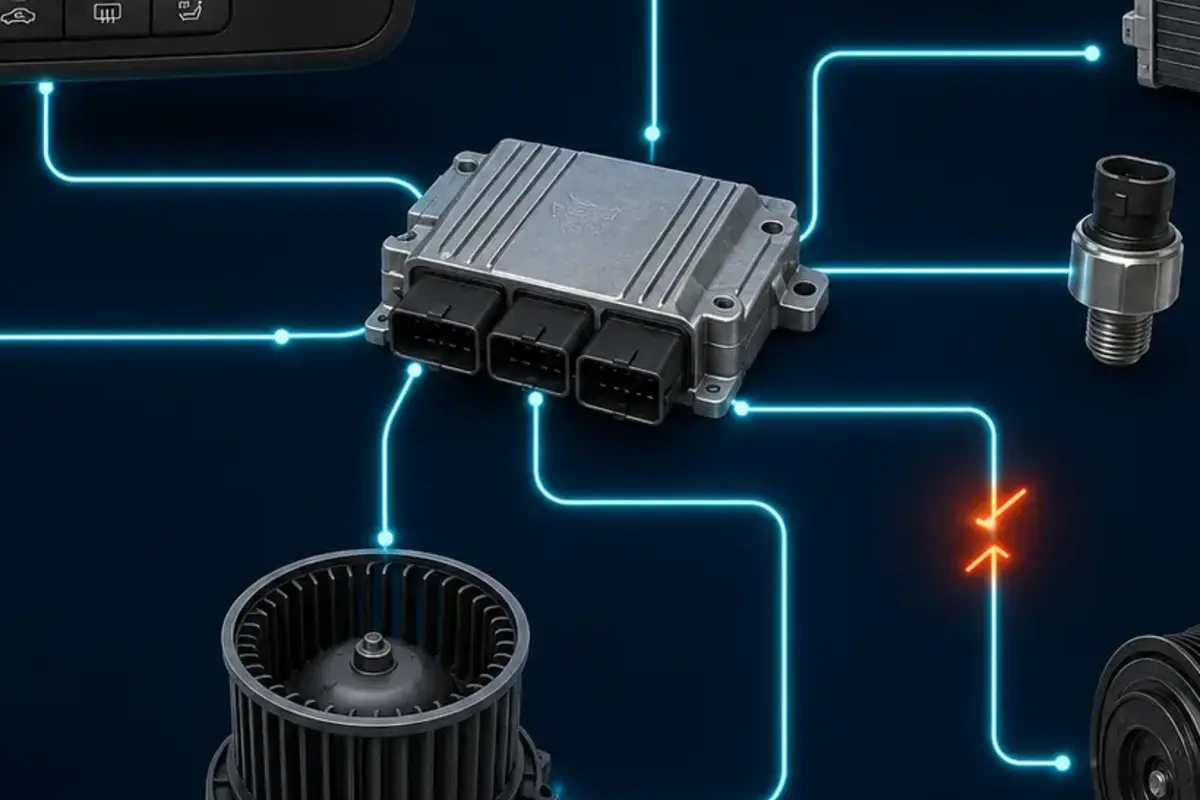
Repair scope can stay small when the finding is precise
Targeted maintenance
Cabin filter replacement or careful condenser cleaning may restore lost airflow or heat transfer when inspection proves restriction. The outcome should still be measured, because maintenance can coexist with another fault.
Focused electrical repair
A confirmed relay, connector, wiring, sensor, fan or blower-control issue may allow circuit-level work. The fitted diagram and component specification matter across model years and imported vehicles.
Leak repair
Seals, hoses, condenser, evaporator and service connections have different access and labour. The system should be repaired, evacuated, charged to the correct specification and checked rather than repeatedly topped up.
Major component replacement
Compressor, evaporator, condenser or HVAC-housing work needs stronger evidence because cost, access and contamination risk are higher. Supporting parts and post-work verification should be explained before approval.
Toyota hybrid caution
Hybrid and electric configurations can use electrically driven compressors and configuration-specific lubricant and safety procedures. Identify the vehicle and refrigerant label before service. A high-voltage warning, smoke, unusual heat or collision damage requires qualified safety handling, not DIY diagnosis.
Do not approve a badge-level promise
Toyota covers many vehicles, engines, cabin sizes and hybrid configurations. Price and completion time depend on the exact model, diagnosis, access, damage, parts choice and availability.
A written estimate should distinguish inspection from repair and a refill from leak correction. It should not imply that every warm-air complaint needs gas or that every unusual compressor reading needs replacement.
After work, the vehicle should be tested against the original timeline. Traffic weakness needs an idle check, delayed failure needs sufficient run time, and uneven output needs comparable vent measurements.
Book a Toyota AC performance inspection
Send the model, year and a short cooling timeline. Include whether the problem appears after parking, in traffic, at one fan speed or after a previous refill.