
Car AC Stops Working After a While
If the AC starts cold and then loses cooling after 10, 20 or 40 minutes, the time pattern is diagnostic evidence. Evaporator freeze-up, pressure protection, a heat-soaked compressor or control component, condenser airflow and sensor faults can all behave normally at first and fail only after the system has been running.
Instant answer
When a car AC works and then stops after a while, the cause is often something that changes with time, temperature, pressure or ice formation. Common examples are an evaporator that freezes, a pressure sensor or protection event that cuts compressor operation, a compressor or control valve that fails when hot, poor condenser airflow, low or incorrect refrigerant charge, or an electrical component that drops out after heat soak. The correct test is to reproduce the failure, not just inspect the car while the AC is still cold.
What happens after the AC stops cooling?
The way cooling returns can narrow the test order. None of these patterns proves a component by itself, but each one changes what should be measured while the complaint is active.
Airflow becomes weak too
If the fan still sounds normal but less air comes from the vents, evaporator icing moves higher on the list. Ice can physically restrict air through the evaporator core.
Airflow stays strong but turns warm
This points more toward loss of refrigeration, compressor control, pressure protection or a temperature/control input than a physically blocked evaporator.
A restart brings it back
If switching the engine or AC off and on restores cooling, record how quickly. Electrical protection, sensor logic, compressor command and intermittent control faults deserve attention.
It returns only after a long rest
A long recovery period can fit ice melting or a heat-sensitive component cooling down. The technician should reproduce the same time and temperature condition.
Quick diagnostic clue
Choose what most closely matches the moment cooling disappears.
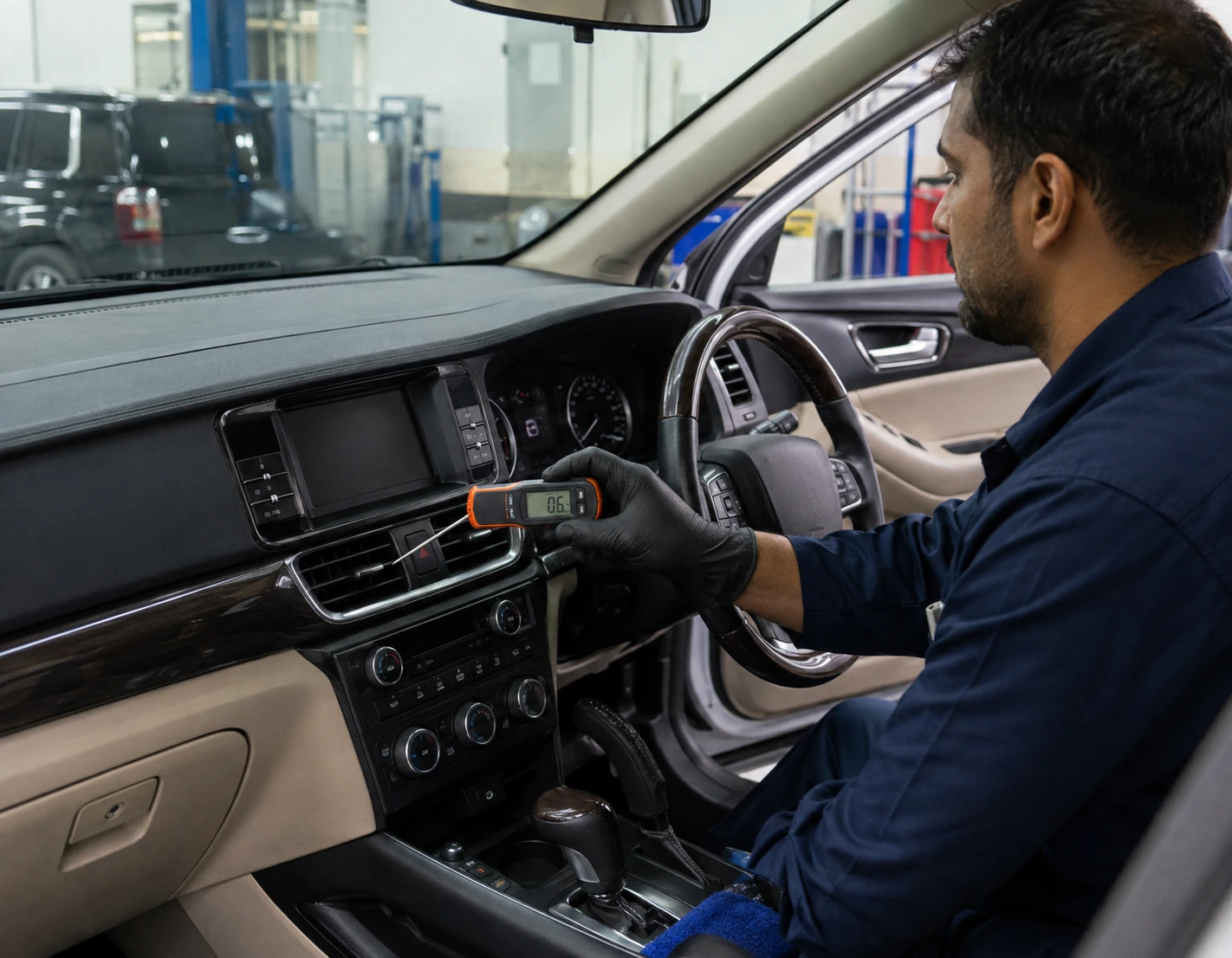
Most likely reasons the AC works then stops
The order below is designed around this specific time-related symptom. Vehicle design, recent repairs and the exact failure pattern can move a cause higher or lower.
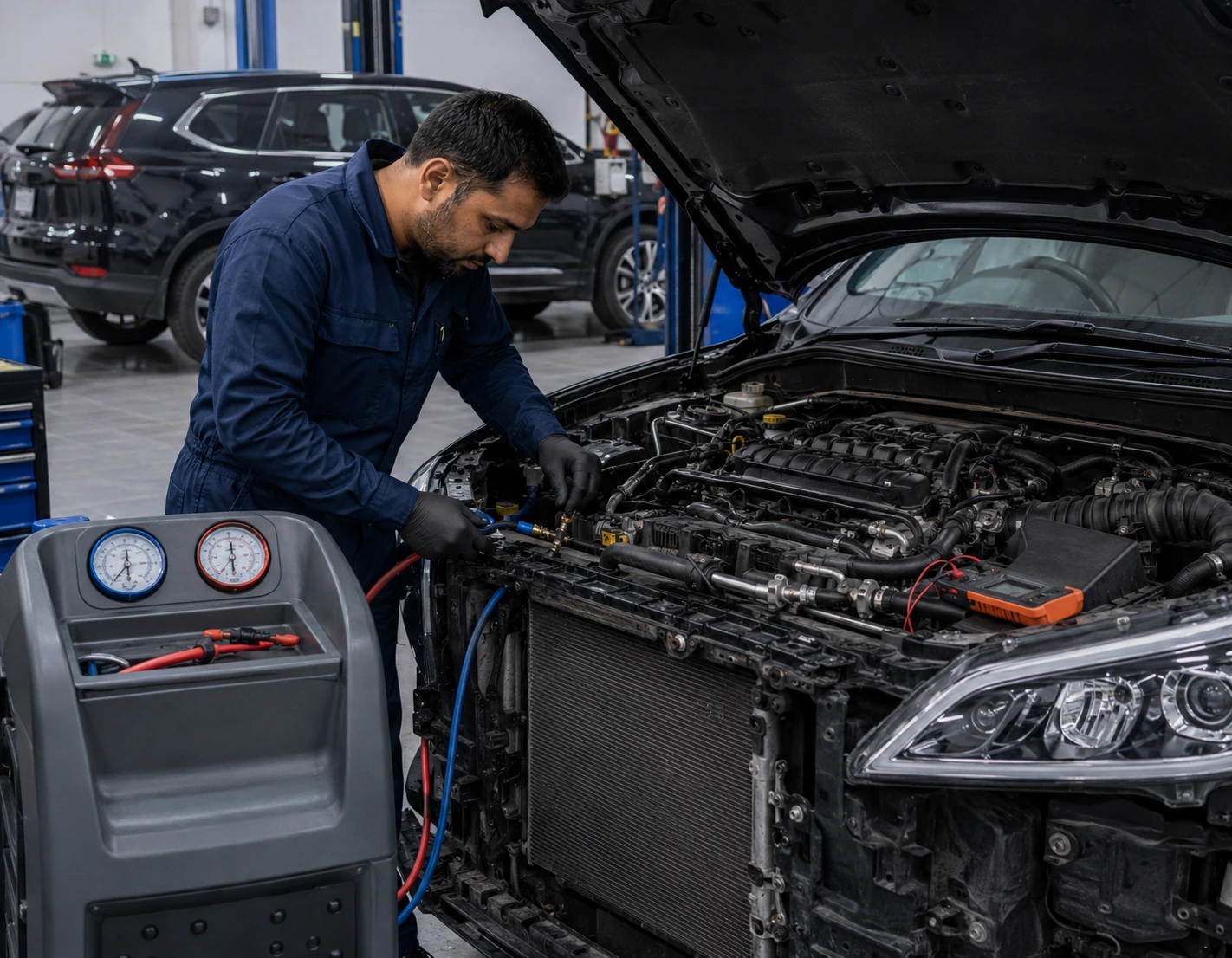
Evaporator freeze-up or incorrect evaporator temperature control
The evaporator should become cold without turning into a block of ice. If airflow, charge, metering or temperature sensing allows the core to freeze, the system may cool very well at first and then gradually lose airflow or cooling. After the AC is switched off, the ice can melt and the system may work again. Checking vent airflow, evaporator temperature data, line temperatures and frost evidence during the failure is more useful than replacing a sensor from a static reading.
Strong fit when airflow fades
Pressure switch or pressure sensor protection
Modern AC systems may stop compressor operation when pressure data is unsafe or implausible. The trigger can be genuine high pressure from weak condenser airflow, low-side conditions, a sensor or wiring fault, or control logic responding to bad data. A scan code is only part of the evidence. The technician should compare reported pressure with system behaviour and verify whether compressor command disappears at the same moment cooling stops.
Strong fit when airflow stays normal
Compressor or compressor-control fault when hot
A compressor can perform normally when cold and lose pumping ability after heat builds. Variable-displacement compressors may also suffer control-valve behaviour that changes with temperature. Electrical compressor clutches, relays, control circuits or electric compressors can show heat-related faults too. For Peugeot and Renault vehicles that fail only after long stop-go use or later in the working day, the Peugeot and Renault AC repair in Dubai page adds model and high-mileage service context. The key question is whether the system is still requesting compressor operation when the cooling disappears and whether physical pressure response matches that command.
Heat-soak pattern
Condenser fan or heat-rejection problem
Dubai heat places a heavy load on the condenser. A weak fan, intermittent fan module, blocked condenser or airflow problem can allow pressure to rise as the vehicle sits in traffic or operates under high thermal load. Cooling may start correctly in a cooler workshop and fail later outdoors. This is why the complaint should be reproduced under the condition where the customer actually experiences it.
Often worse at idle or in traffic
Low, incorrect or unstable refrigerant charge
Low refrigerant can change evaporator temperature distribution and pressure behaviour. An incorrect charge after previous service can also create poor performance under load. A refill is not the first answer simply because cooling is intermittent. Refrigerant identity, specified mass, leak evidence, pressure response and temperature measurements should support the decision.
Charge must be proven
Expansion valve, sensor, relay, wiring or climate-control fault
A metering restriction can create unstable evaporator conditions. Temperature sensors can drift, wiring can open with heat, relays can drop out, and climate-control modules can remove compressor request because of another input. Time-related electrical faults are easiest to identify when data is captured before the vehicle cools down or the battery is disconnected.
Needs live data during failure
When condenser heat rejection is the trigger
If cooling drops out as pressure rises, the test needs to separate a genuine high-pressure condition from a bad pressure signal. Fan operation, condenser airflow and live pressure data should be captured together while the complaint is active.
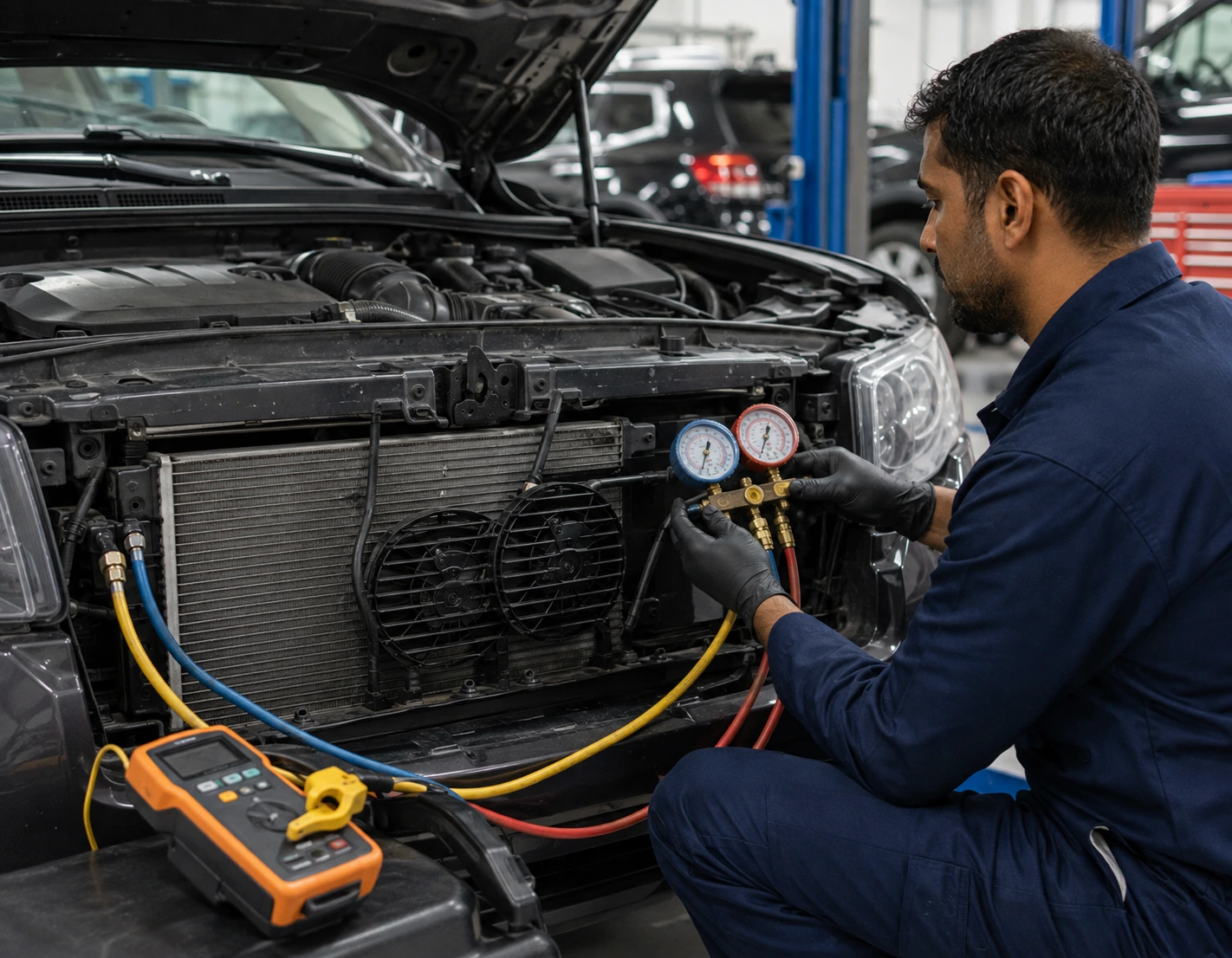
What it can cost to fix an AC that stops after a while
Exact cost depends on the vehicle, refrigerant, access and the confirmed fault. The figures below are broad planning bands, not a diagnosis or final quotation. A dashboard-access repair, electric compressor, luxury vehicle or unusual parts route can sit outside them.
Sensor, switch or accessible electrical repair
AED 250 to 1,200
Can include an accessible pressure or temperature sensor, connector, relay or limited wiring repair. Programming or deeper harness work can cost more.
Gas service or lower-scope leak repair
AED 150 to 800
Gas refill planning commonly starts around AED 150 to 500. Accessible leak repairs may sit higher. The reason for refrigerant loss still needs diagnosis.
Fan, expansion valve or related repair
AED 400 to 2,000+
Access and vehicle design matter heavily. Dashboard or refrigerant-circuit work can increase labour and required recovery/recharge steps.
Compressor replacement
AED 1,500 to 4,500+
Final scope depends on compressor type, contamination, related parts, oil, refrigerant and whether flushing or additional circuit work is required.
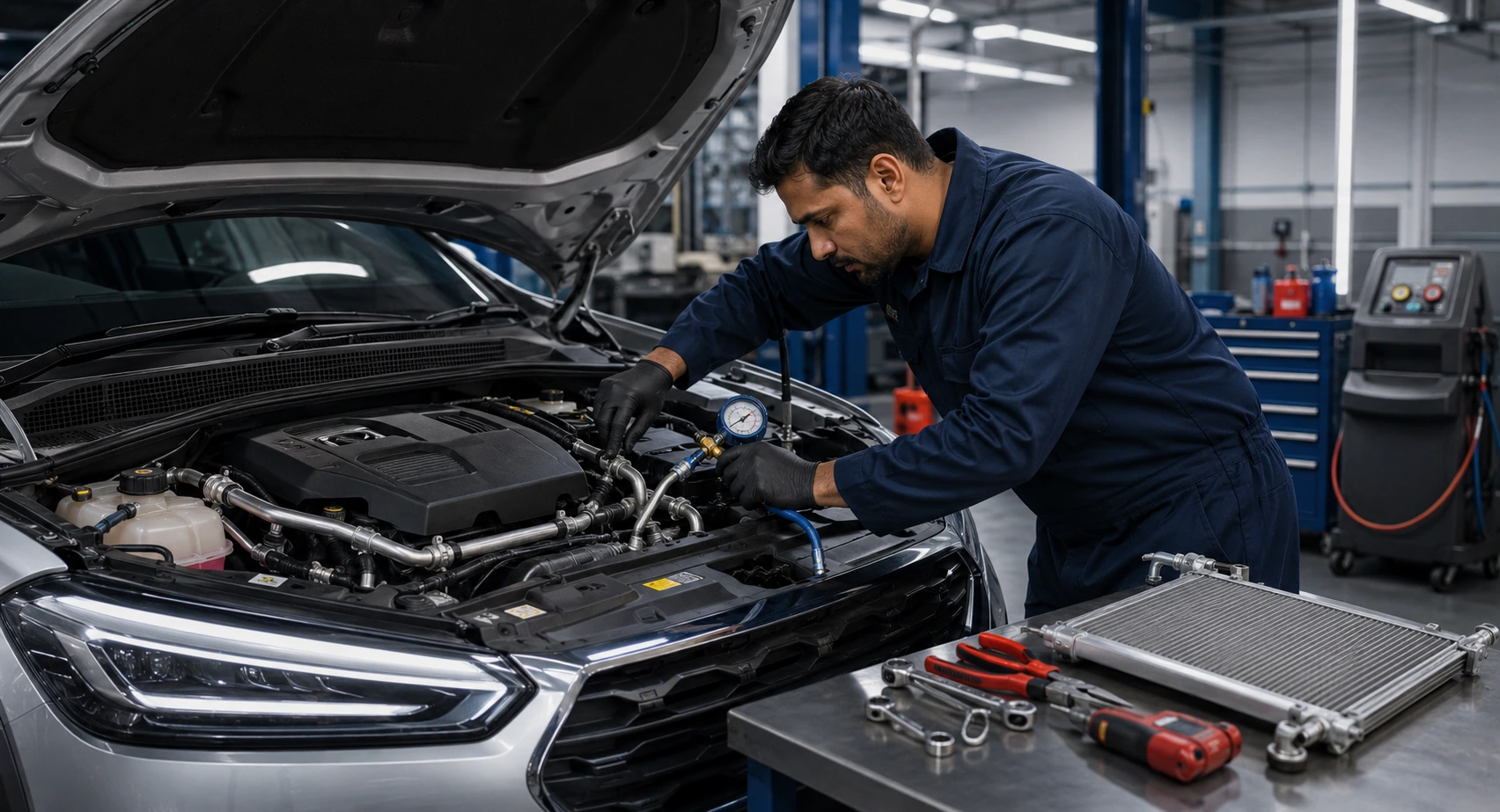
When should you stop driving?
An AC that stops cooling is often a comfort problem, but some accompanying signs can indicate a wider mechanical or electrical issue. The AC symptom alone does not prove the vehicle is unsafe. These warning signs change the advice.
Engine temperature rising
If engine temperature is climbing or an overheating warning appears, stop safely and address the cooling-system risk. A condenser or fan problem can sometimes overlap with engine heat rejection.
Burning smell or smoke
Switch the AC off and stop if safe when there is smoke, a strong burning smell or evidence of an electrical problem. Do not keep cycling the system to see whether cooling returns.
Severe belt or compressor noise
Grinding, seizure-like noise or belt distress can indicate a mechanical problem beyond normal AC cycling. Continuing to run the AC may worsen damage on some belt-driven systems.
Repeated electrical warnings
If warning messages, charging issues or other electrical symptoms appear with the AC failure, treat the combined symptom as a broader vehicle diagnostic rather than an isolated comfort complaint.
How we diagnose a time-related AC failure
A five-minute check can miss this complaint completely. The diagnostic should continue long enough to capture what changes at the moment cooling disappears.
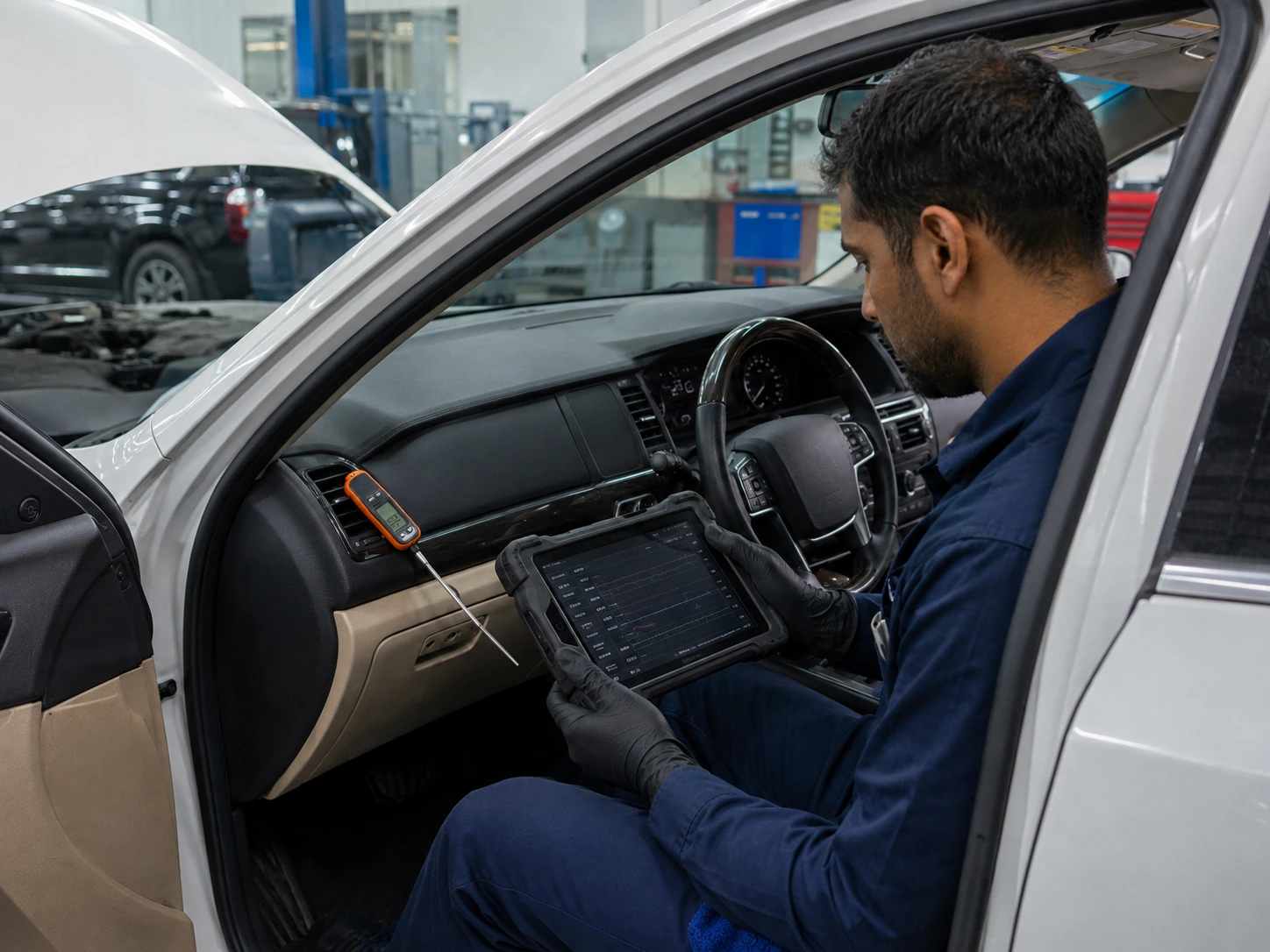
Record the timing
How long does the AC work? Is the car moving, idling or heat soaked? Does outside temperature change the failure time?
Measure vent temperature and airflow
We separate “air gets warm” from “airflow becomes weak.” That distinction is especially useful for evaporator freeze-up.
Watch evaporator, ambient and pressure data
Sensor values are checked for plausibility as the fault develops, rather than judged only from a cold start.
Compare compressor command with physical response
If command remains but cooling disappears, the path differs from a system that deliberately removes compressor request.
Check fan and heat rejection under load
Condenser airflow and pressure behaviour are observed under the condition that produces the complaint.
Repeat the original condition after repair
The job is not verified by cold air for two minutes. The original time window should be repeated far enough to show the failure no longer returns.
Where the diagnosis may lead
You do not need to choose the repair before testing. These service pages explain the component paths once the intermittent failure has been narrowed down.
AC works then stops FAQ
Why does my car AC stop working after 20 or 30 minutes?
A repeatable delay usually means the system changes as temperature, pressure or ice builds. Evaporator freeze-up, pressure protection, condenser airflow, compressor heat soak and electrical components are common paths. The useful test is to capture readings when cooling actually disappears.
Why does the AC work again after I switch the car off?
A restart can reset control logic or allow a heat-sensitive component to recover. A longer rest can also allow evaporator ice to melt. Note whether cooling returns immediately after restart or only after 10 to 30 minutes, because those are different diagnostic clues.
Can low AC gas cause cooling to stop after a while?
It can contribute, but low refrigerant should be proven rather than assumed. Charge affects pressure and evaporator behaviour, and a leak may be the reason the charge is low. Repeated top-ups without finding the cause can hide the useful failure pattern.
How do I know if the evaporator is freezing?
One strong clue is that airflow from the vents gradually becomes weak even though the blower still sounds active. Cooling may return after the AC is switched off long enough for ice to melt. Temperature data and physical evidence should confirm the diagnosis.
Can a pressure switch make the AC stop intermittently?
Yes. A pressure sensor or related circuit can cause compressor lockout if the signal is implausible or if the system is genuinely outside its permitted range. The sensor should not be replaced until the actual pressure condition, wiring and command logic are checked.
Can a compressor work when cold and fail when hot?
Yes. Mechanical performance, a control valve, clutch, relay, electrical connection or electric-compressor electronics can change after heat builds. The diagnostic must compare compressor command and physical pressure response at the moment cooling stops.
Should I refill the gas first and see what happens?
No. This symptom has several high-probability causes that a refill cannot fix. If the system is low, the diagnosis should identify that evidence and then determine why refrigerant was lost. If the charge is correct, adding more can create a new problem.
Is it safe to keep restarting the AC when it stops?
If there is no overheating, smoke, burning smell, severe mechanical noise or wider electrical warning, switching the AC off is generally more sensible than repeatedly forcing it to restart. If any wider warning appears, stop safely and have the vehicle assessed.
What should I send on WhatsApp before booking?
Send the vehicle make, model and year, how many minutes the AC works, whether airflow gets weaker or simply warmer, whether the fault happens more at idle or while driving, whether a restart helps, how long recovery takes, and any recent refill or repair history.
Do not diagnose a 30-minute failure with a five-minute check
Book a fixed-price diagnostic and tell us exactly how long the AC works before it stops. We will reproduce the symptom, capture the evidence during failure and quote the repair path after the cause is separated.