
Peugeot and Renault AC Repair Dubai
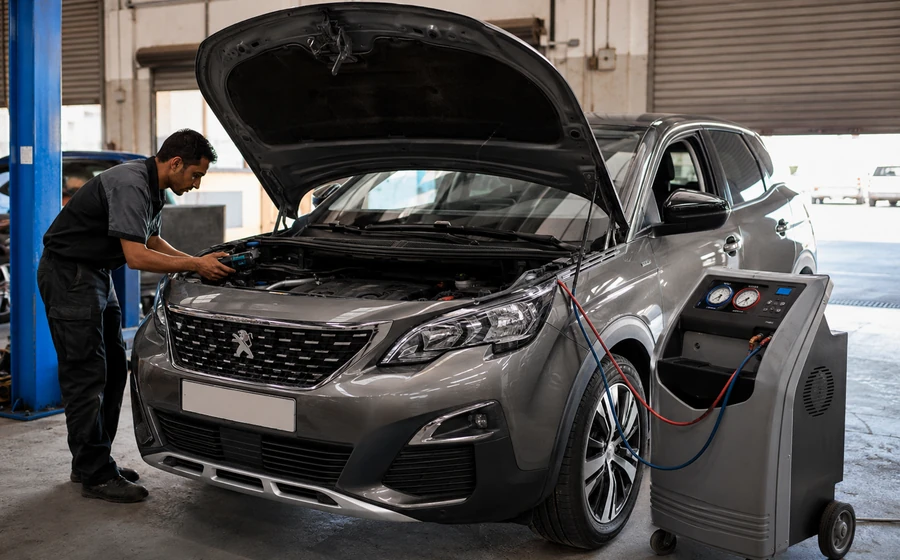
Peugeot 208, 3008, 5008 and Renault Duster, Koleos, Captur, Megane and other models can develop weak cooling, refrigerant leaks, blower faults and compressor problems. High-mileage private, fleet and taxi-style use adds another layer because the complaint may only appear after hours of stop-go driving or long idling. We diagnose the actual duty cycle, then quote the repair branch that explains it.
Private car and high-use vehicle owners need different approval priorities
The workshop can repair the same underlying AC components, but the service decision changes when daily mileage, downtime and repeat access matter. The first section therefore focuses on how the car is used rather than repeating a generic six-service menu.
Private Peugeot or Renault
For a normal private vehicle, the priority is restoring reliable cabin cooling without converting maintenance wear into an oversized repair list.
- Reproduce the owner’s exact symptom
- Separate airflow from refrigeration faults
- Offer parts choices based on access and value
- Verify the same traffic or heat-soak condition after repair
High-mileage or fleet-style use
Long daily operation changes the commercial decision. Downtime, repeatability and whether the fault only appears late in the shift become more important.
- Test after sufficient run time
- Check idle-load and voltage response
- Distinguish current repair from future maintenance
- Prioritise parts availability and predictable service life
What changes across common Peugeot and Renault bookings
Compact cabin but frequent urban heat soak
Repeated short trips and hot parking can expose weak fan performance or marginal refrigerant charge even when the car cools well on a morning drive.
Family crossover pull-down
Whole-cabin comfort after parking in the sun is more useful than one cold vent reading. Blower volume and condenser performance are checked with the cabin fully hot.
Larger cabin and passenger load
Cooling reserve and airflow distribution matter more with a longer cabin and more occupants. The repair result should match how the family actually uses the car.
High-use SUV and traffic operation
Long idling, dusty conditions and daily mileage can make airflow and condenser cleanliness more relevant before another gas service is recommended.
Family comfort and cabin balance
Uneven vent temperature, slow pull-down and blower performance should be compared with whole-system cooling capacity.
Urban stop-go cooling
Traffic performance and heat soak can reveal fan, compressor or electrical problems that are less obvious at road speed.
High-use diagnostic sequence
Record initial cooling, vent temperature and blower output before the vehicle is heat-soaked.
Check fan and condenser performance once ambient and engine-bay temperature rise.
Remove road airflow and see whether cooling or voltage response changes.
Continue long enough to reproduce delayed compressor, icing or electrical faults.
Repeat the same duty point after repair, not only a short cool-start check.
A fault that appears after six hours cannot be diagnosed in six minutes
High-mileage vehicles often arrive at the workshop after the symptom has disappeared or after the car has cooled down. That can make intermittent electrical, compressor-control, icing and heat-rejection problems difficult to see unless the operating pattern is recreated.
For cars that spend long periods idling, the AC stops at idle symptom page is useful context. If the system begins cold and fails later, the AC stops after a while page helps describe the timing.
Fleet-style service also benefits from a quote that separates the urgent fault causing downtime from maintenance items that can be scheduled later instead of bundling every worn part into one job.
What usually brings these vehicles to the workshop
AC improves after gas then becomes weak again
Repeated charge loss moves the job toward AC leak detection and repair. The escaping point must be identified before another refill is sold as the repair.
AC gets warmer in stop-go driving
Fan command, condenser airflow, refrigerant condition and compressor response are checked without the benefit of road speed.
Vent airflow is weak or inconsistent
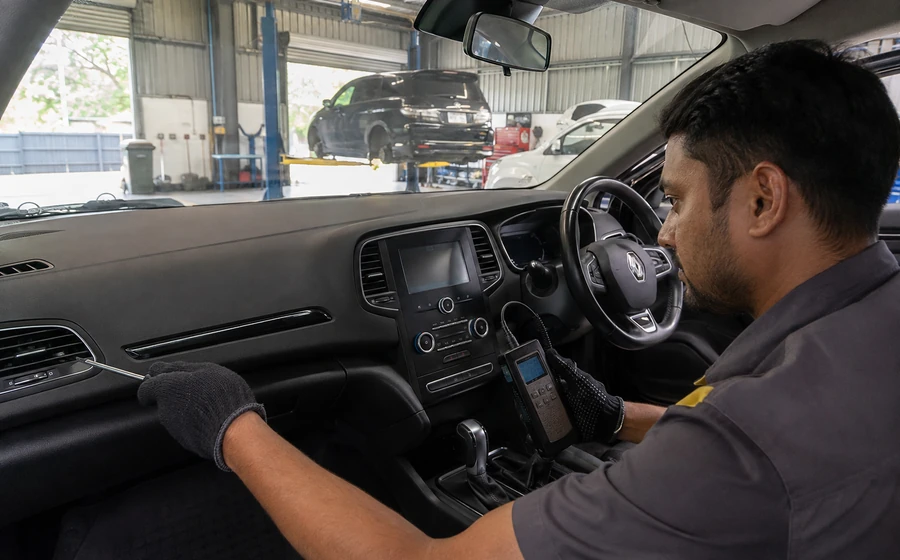
Cabin filter, blower motor, speed controller, wiring and air path are tested before refrigerant work is added.
Cooling fails late in the day
Heat-sensitive electrical behaviour, icing, pressure protection and compressor control may need extended run time to reproduce.
Cooling is intermittent or compressor output is poor
Control command, refrigerant state and physical output should support compressor repair before a major component is approved.
Selected settings do not match vent result
Sensor inputs, actuators and blower commands are compared with actual cabin response before electronics are replaced.
High-use vehicles need a parts decision that considers tomorrow’s shift
For private owners, the balance may be purchase price versus expected life. For high-mileage use, downtime and parts availability can matter just as much. A repair that saves a little today but repeats difficult labour quickly is poor fleet value.
We identify the actual failed component first, then discuss genuine, OEM, OE-supplier or quality aftermarket options where a meaningful choice exists.
Access-heavy repair
Evaporator, dashboard and difficult HVAC work should prioritise reliable fit because repeating labour costs time as well as money.
High-mileage component
For blowers, fans and other heavily used parts, service life and availability can be more important than the lowest invoice price.
Verified OE-supplier option
Can be strong value when the supplier, part number and exact Peugeot or Renault application are confirmed.
Accessible service item
Filters, selected hoses, relays and seals can allow a broader quality range when specification and warranty are clear.
Typical Peugeot and Renault AC repair planning ranges
These figures are for budgeting, not fixed quotes. Exact model, daily use, refrigerant specification, access and the selected part affect the final written estimate.
For fleet or high-mileage vehicles, the quote should also separate the immediate downtime fault from optional maintenance that can be planned later.
For a high-use Peugeot or Renault, approval should be practical enough for the next working day. The estimate should identify which failure is stopping reliable cooling now, whether the car can return to service after that repair, and which wear items can be scheduled separately. If the fault only appears after several hours, verification should include enough operating time to prove the repair rather than a short workshop run. This gives private owners and fleet operators a clearer cost decision and avoids replacing several age-related parts simply because the vehicle has high mileage. It also makes future maintenance easier to schedule around actual vehicle availability.
Short private-use complaints and long-run fleet faults need different reproduction time.
Seal and hose work differs greatly from condenser or evaporator access.
Fan motor, controller, condenser condition and front-end access drive the scope.
Filter, blower motor, speed control and wiring create separate jobs.
Control, complete compressor work and contamination findings can change the total.
Interior access and refrigerant work make labour a major variable.
Relay and connector faults differ from actuator, module and network diagnosis.
Record model and daily use
Vehicle, year, private or high-mileage operation, refrigerant label and previous AC work are documented.
Reproduce the correct duty point
Cold start, midday traffic, long idle or end-of-shift operation is chosen from the owner’s complaint.
Separate airflow from refrigeration
Filter, blower and distribution are checked before low gas is blamed for a low-airflow complaint.
Measure idle heat rejection
Fan command and condenser airflow are checked without road speed hiding a weakness.
Assess refrigerant and compressor output
Leak evidence, charge condition, temperatures and compressor behaviour are interpreted together.
Check heat-sensitive electrical operation
Relays, wiring, sensors and control commands are tested when the complaint appears only after long use.
Quote repair versus maintenance separately
The owner or fleet operator sees what must be fixed now and what can be scheduled later.
Verify at the same duty point
The vehicle is checked again under the operating condition that originally caused the failure.
Service specification before approval
R134a or R1234yf is confirmed from the exact Peugeot or Renault vehicle label before recovery or recharge.
Genuine, OEM, OE-supplier and quality aftermarket options are matched to access, daily mileage, availability and repeat-labour risk.
A reproducible diagnostic may be completed during the first visit. Compressor, evaporator and delayed heat-sensitive faults can require more workshop time.
For eligible Peugeot or Renault work using original parts, six months of warranty cover is documented before the repair is approved.
Gas type and electrified configuration are identified before service
Peugeot and Renault models do not all use one refrigerant across every generation. If the label specifies R1234yf, the R1234yf service route applies. Other systems can use the measured gas refill route after any leak concern is investigated.
Where a Peugeot or Renault has an electrified climate system, electric-compressor and high-voltage procedures can change the service boundary. Those vehicles are identified before work and can move into the EV and hybrid AC service route where required.
What owners and high-use drivers ask before booking
These answers focus on practical repair, downtime and repeated cooling complaints.
Why is my Peugeot AC not cold in Dubai traffic?
Fan performance, condenser heat rejection, refrigerant charge and compressor output can all contribute. The fault should be reproduced at idle rather than judged only at road speed.
Why does my Renault AC work in the morning but fail later?
Heat-sensitive electrical faults, pressure protection, compressor control or icing may only appear after enough run time. The car needs an extended test.
Does a Peugeot or Renault need gas every year?
No. Refrigerant should remain in a sealed circuit. Repeated low charge means the escape path should be diagnosed.
Can fleet use make AC faults appear sooner?
High mileage, long idling and repeated hot-soak cycles can expose marginal fans, blowers and electrical components more often because the system works for longer periods.
Can a weak blower feel like low refrigerant?
Yes. If vent air is cold but the volume is poor, filter, blower and controller faults may be more relevant than the refrigerant circuit.
Do you offer OEM and aftermarket parts?
Yes where appropriate. Access, daily mileage, downtime, specification and warranty determine which parts route makes commercial sense.
How much can Peugeot or Renault compressor repair cost?
Planning can start around AED 950 and rise above AED 3,500 depending on compressor type, access, contamination work and refrigerant service.
What should I send before visiting?
Send the make, model, year, approximate daily use, when the fault appears and any recent refill, fan, blower or compressor work.
Send the model and when in the day the cooling fails
Tell us the Peugeot or Renault model, year, private or high-mileage use, and whether the problem appears at cold start, in traffic, after long idling or late in the day. We can prepare the right private-car or duty-cycle repair route at our Al Quoz 4 workshop.