
Bad Smell From Car AC
A musty smell from the vents often appears when moisture and organic buildup remain around the evaporator, drain or cabin filter. It can also come from outside the HVAC system. The timing of the smell matters more than masking it with fragrance. If the odour is distinctly sour or vinegar-like, use the car AC smells like vinegar guide to narrow the air and water path. If it appears mainly for the first seconds or minute after switching the system on, see why your car AC smells only at startup.
Cool, damp surfaces can hold the source of a musty smell
The evaporator cools and dehumidifies air inside the HVAC housing. After the AC is switched off, moisture can remain on its surfaces. Dust and organic material can then collect in the same area. When airflow begins again, that trapped odour can move into the cabin.
This does not mean every car with a stale smell has the same contamination level or needs the same work. A cabin filter, a slow drain, an exterior intake, a wet interior, animal or food contamination and even a non-AC electrical or fluid smell all lead to different next steps. The treatment must match the source and access required.
When the bad smell appears can change the first check
A stale or earthy smell that fades after airflow starts can fit moisture and buildup around the evaporator or HVAC housing. It is still worth checking drainage and filter condition instead of relying on a scent product.
If the smell continues with the fan on, even without strong cooling, the intake path, cabin filter, blower area, ducts or an interior source may be more relevant. The AC button alone may not be the trigger.
Water entry and damp carpet can create a smell that resembles an AC odour. Previous wet-footwell events, window fogging or visible dampness should be included in the inspection story.
Outside air can carry odours from traffic, nearby construction or the vehicle surroundings. A change between recirculation and fresh-air mode is useful evidence and can prevent unnecessary evaporator treatment.
Those odours are not a routine hygiene concern. Switch off the AC if the smell is strong or accompanied by smoke, warning lights, overheating or unusual engine behaviour, then arrange assessment promptly.
What helps without pretending to be a cure
Keep the cabin dry after a water event
Remove wet items and arrange inspection when carpet, mats or trim have been soaked. Surface drying may not reach underlay, and leaving moisture sealed in the cabin can allow odour to persist.
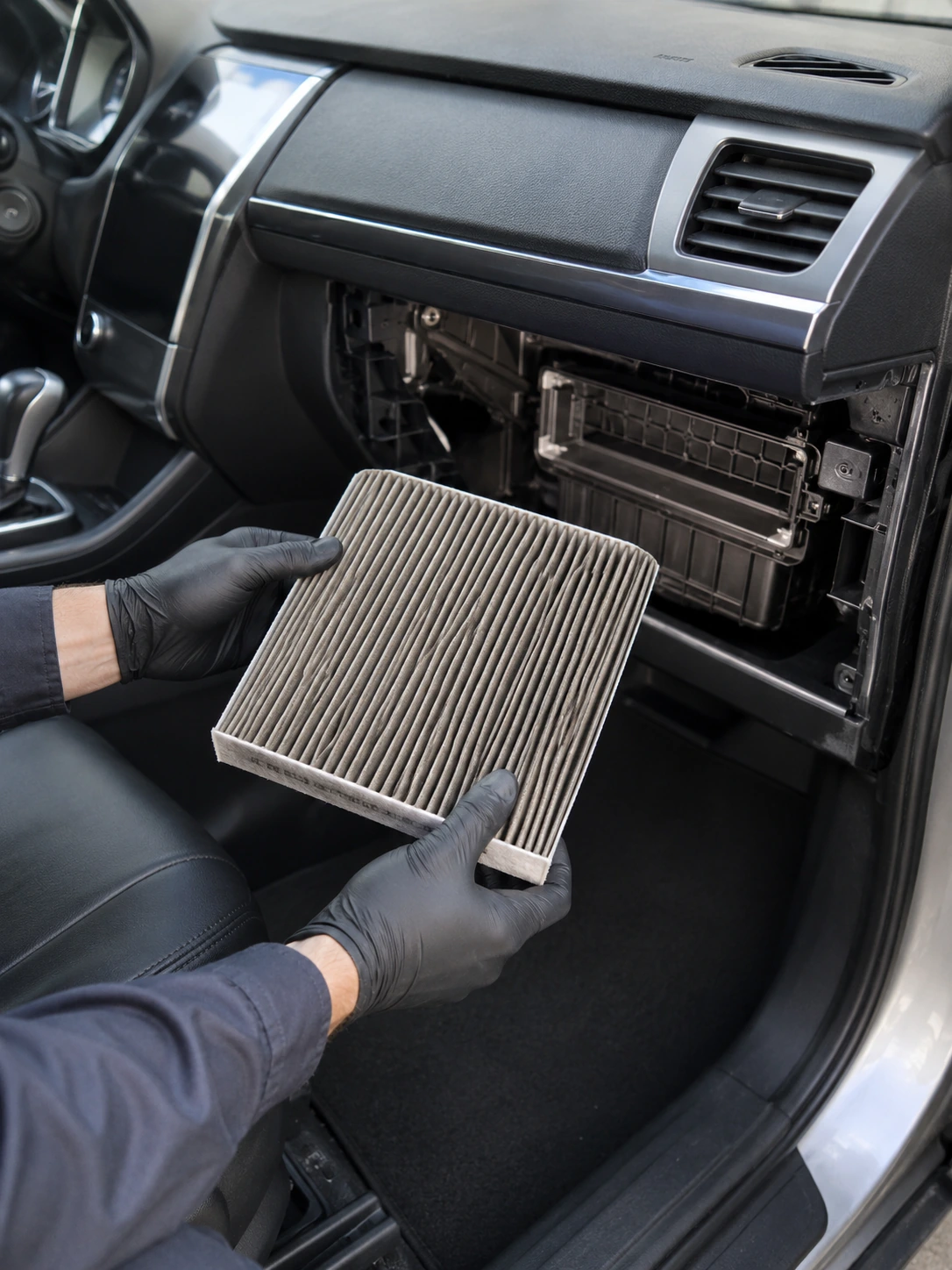
Use the correct cabin filter specification
Filters have fitting direction and vehicle-specific requirements. A suitable filter supports air quality and airflow, but it should not be sold as a substitute for checking a smell that clearly begins in the HVAC system.
Report the original smell before using fragrance
Fragrance can obscure the source during assessment. If you have already used it, say so and describe what the cabin smelled like before. That is still helpful evidence.
Return if the same pattern comes back
A smell returning in the same conditions matters. It may indicate a missed source, a continuing moisture problem or a service scope that needs to change. It should not be dismissed as normal.
What a proper smell inspection needs to separate
Evaporator surface and HVAC housing
Moisture, fine dust and organic buildup can create an odour that is released as cooling airflow begins. The correct cleaning approach depends on access and on what can actually be reached.
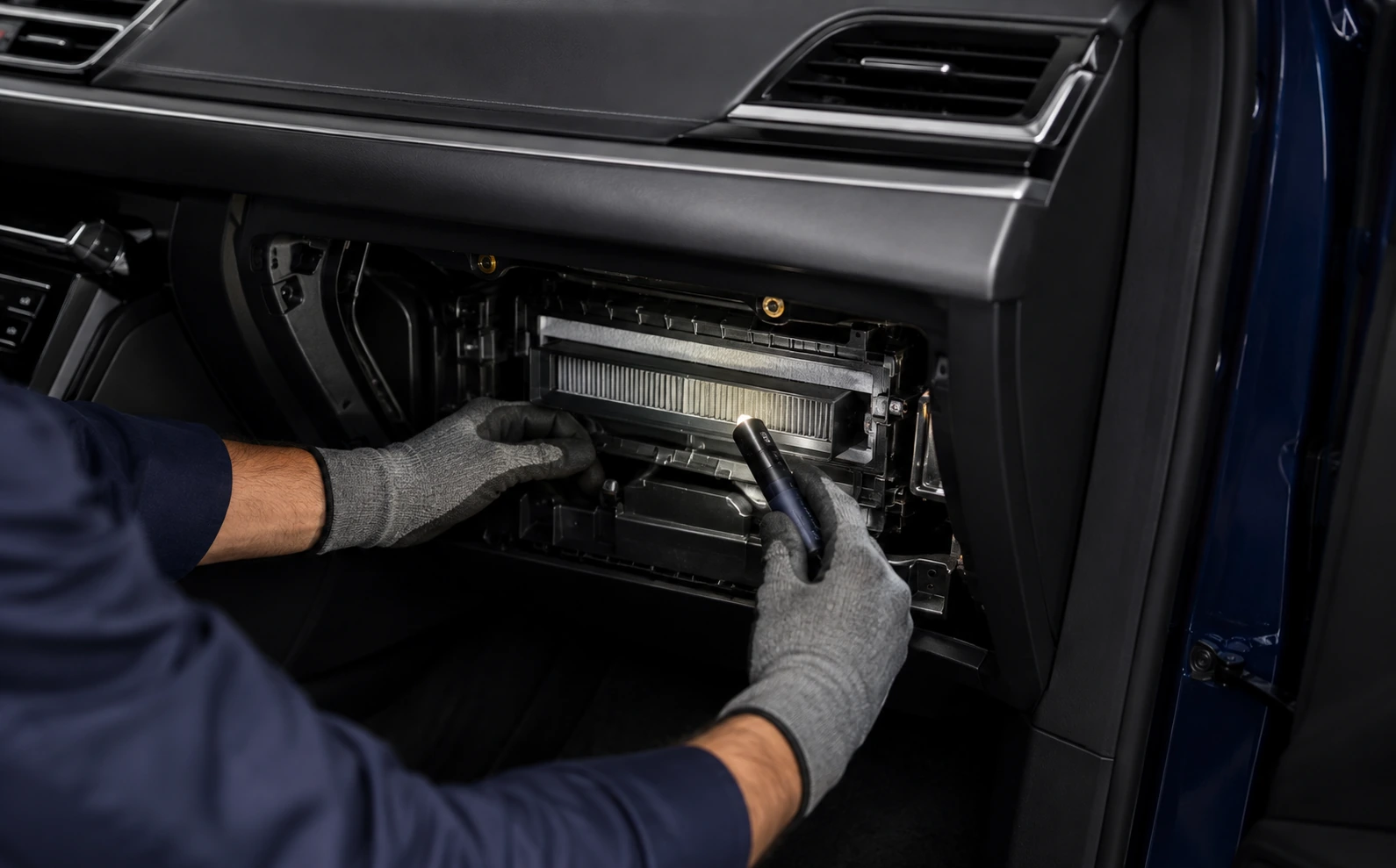
Cabin filter and filter housing
A loaded, damp, wrongly fitted or poor-quality filter can affect airflow and carry odour. Filter replacement alone may not solve an evaporator or drain issue, but it can be part of a defined service scope. See the cabin air filter replacement service when the filter is part of the confirmed cause.
Drainage and retained moisture
Slow drainage can leave the HVAC area wetter for longer. A cabin water leak or damp interior can also contribute. This is why smell treatment and drainage assessment sometimes need to be connected.
Exterior intake and cabin source
Leaves, debris, damp items, spilled material, pets, smoke residue or another cabin source can be drawn through the air path. The source must be identified before any claim that the AC system is at fault.
Fragrance and targeted treatment do different jobs
Temporary cover-up
Strong fragrance, random aerosol sprays or repeatedly changing the filter can make the cabin smell different for a short time. They may not reach the source, can leave residue and make the original pattern harder to describe.
Source-led service
A proper approach starts with smell timing, cooling behaviour, filter and drain condition, accessible HVAC areas and cabin moisture. Treatment is then chosen for the confirmed or most-supported source, with limits explained where deeper access would be required.
If you are booking AC smell removal and disinfection, tell the workshop whether the odour is musty, smoky, chemical, sweet, sewage-like or food-related. The description changes the safety and inspection branch.
From inspection to a verifiable result
Describe and reproduce the odour
Confirm when the smell occurs, which vents or settings affect it, and whether the complaint changes with cooling, fan-only mode, recirculation or recent rain.
Check accessible source areas
Inspect the cabin filter area, drainage clues, intake path and accessible cabin condition. This prevents treating the evaporator when an obvious external source is present.
Set the cleaning scope
Choose a suitable process for the source and explain what it reaches. Do not promise that a surface treatment fixes contamination hidden behind parts that have not been accessed.
Verify using the original conditions
Run the system under the conditions that produced the complaint and check for a remaining smell. If the pattern changes but continues, the next diagnostic branch should be clear.
A recurring smell is often information, not failed cleaning
Odour can return when the original source was outside the treated area, when moisture remains because a drain problem was missed, or when a separate cabin-water issue is still active. That is why a service should not be judged only by how it smells on the day. If the source is uncertain or the smell keeps returning, a full AC diagnostic is the better next step.
The workshop should explain the limits of the initial treatment and when further access, drainage repair, filter work or interior drying is justified. That is more useful than offering a universal result for every car.
On vehicles where evaporator access is restricted, a cleaning process can still be helpful when correctly selected, but the scope should be honest about what was and was not physically reached.
That matters when comparing offers. A low-cost odour treatment may be appropriate as a limited service, but it should not be described as complete evaporator cleaning if the method cannot reach or inspect the relevant area. Ask what area is being treated, what condition is being checked, and what would make the workshop recommend a broader inspection. A clear answer is more valuable than an impressive sounding service name.
After any treatment, use the same setting that originally produced the smell. If it was strongest after a hot restart, test a hot restart. If it appeared in fan-only mode, test fan-only mode. Matching the original condition is how the result becomes meaningful.
When the smell needs prompt inspection instead of routine cleaning
Arrange a prompt check if there is a burning smell, visible smoke, a fuel-like odour, coolant smell, sudden window fogging, engine-temperature warning, electrical warning or a smell that becomes much stronger with the AC on. These can point to a source outside normal hygiene treatment.
- Do not spray chemicals into the vents while the engine is running.
- Do not mix cleaners or use unknown products around electrical connections.
- Do not continue driving normally if a burning odour, smoke or warning light is present.
Before you book smell removal
The best description is the one that says when the smell appears and what else changes with it. Note whether the car was parked in the heat, whether the windows were closed, and whether the same odour appears with fan-only mode. These small distinctions can make the first inspection more efficient.
Why does my car AC smell musty when I first turn it on?
Moisture and buildup around the evaporator or HVAC housing are common possibilities. A cabin filter, drain condition, intake debris or damp interior can also contribute, so the source should be checked before treatment.
Can a dirty cabin filter cause a bad AC smell?
It can contribute, especially if it is damp, contaminated or incorrectly fitted. Replacing it may be part of the service, but it does not prove that the filter is the only source.
Will AC disinfection remove the smell permanently?
It can help when it is matched to the actual source and the conditions that caused moisture are addressed. A return of the smell can indicate a drain issue, hidden source or cabin-water problem that needs more diagnosis.
Is a bad smell from car AC harmful?
Odour alone does not identify a health risk remotely. Persistent damp or mould-like smells are worth addressing for cabin comfort and hygiene. Burning, fuel-like, chemical or coolant smells need a different and more urgent inspection path.
Can I use an air freshener instead?
It may cover the odour temporarily but does not remove the cause. It can also make it harder to assess the original smell when the vehicle is inspected.
Send the smell pattern before you visit
Share the make, model and year, the smell description, when it begins, whether it fades, any cabin water or window-fogging symptoms, and what work has already been tried. We will confirm the diagnostic or cleaning scope and fee before work starts at AMF Auto Services in Al Quoz 4.