
Clicking Noise When AC Is On
One small click when the AC starts can be normal. Repeated clicking, rapid cycling, clicking with warm air, or a click followed by a rattle needs a proper check. The source can be a relay, compressor control, clutch, fan, blend door or another part that changes when the AC is asked to work.
A one-time click and repeated clicking need different answers
Many cars make a faint click when a relay, clutch, fan command or air-control actuator changes state. That alone does not prove a failed part. The concern becomes more important when the sound is new, loud, repeated, rapid, paired with weak cooling, or followed by a rattle, squeal or vibration.
Do not keep switching the AC on and off to listen for it. Note when it starts, how often it repeats, whether the cooling changes, and whether it seems to be behind the dashboard or in the engine bay. Those details make the first diagnostic safer and more useful.
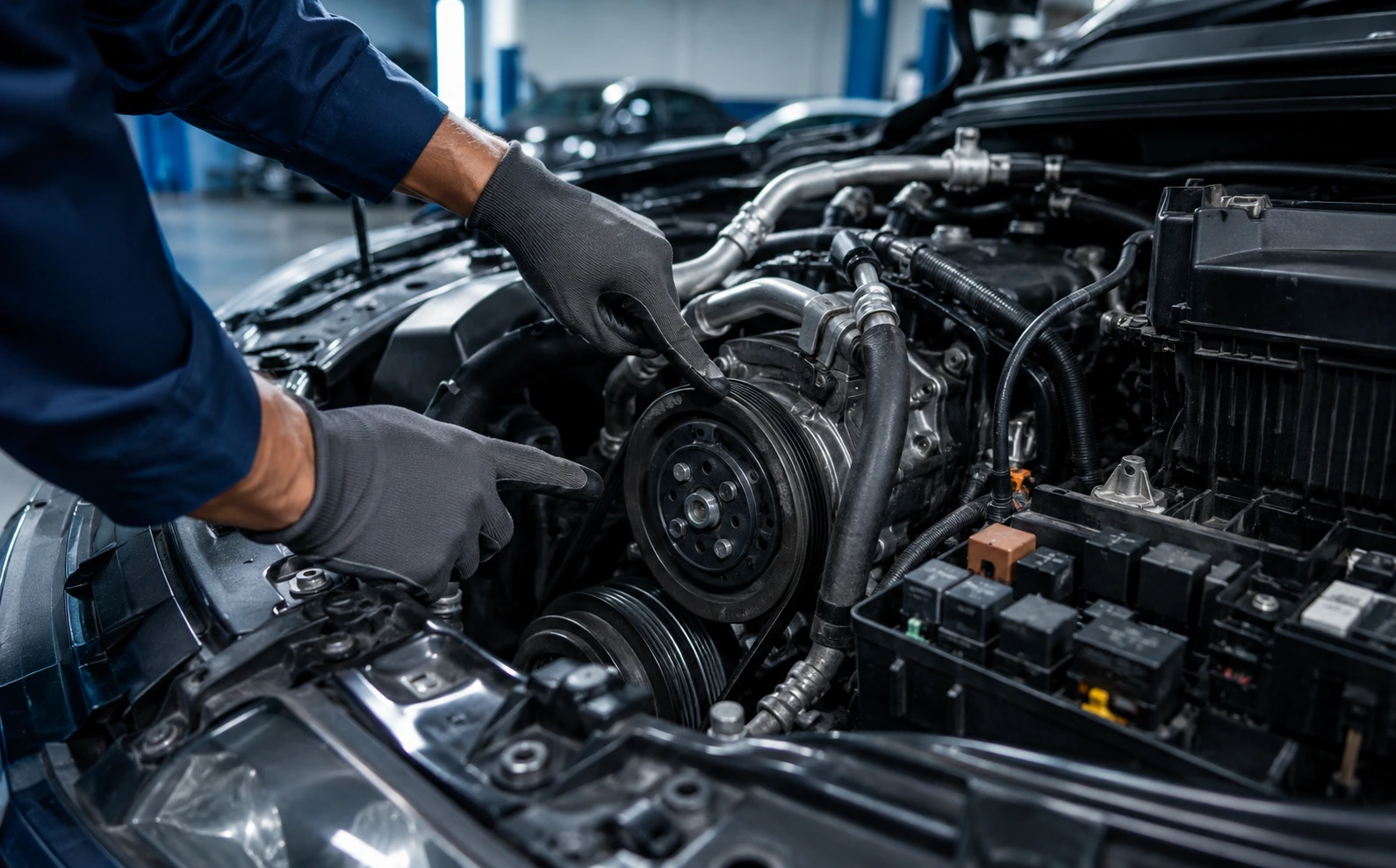
Four click patterns that change the first check
May be normal engagement. Mention it if it is new, if cooling is weak, or if the AC turns on and off far more often than it used to.
Can point to repeated compressor command, relay operation, pressure protection, fan behaviour or electrical control. The system should be tested while the pattern is happening.
May relate to a blend door or actuator inside the climate-control system. Vent temperature, air direction and cabin-zone behaviour help separate it from engine-bay sound.
Can involve clutch engagement, pulley movement, belt drive, mounting or a nearby part reacting to AC load. Do not call it a relay issue without locating the sound.
What can make an AC click while it is running
Compressor clutch or control change
Some systems use a clutch and some do not. A normal engagement change is different from repeated engagement, harsh clicking, loss of cooling or a sound that changes with engine speed. The vehicle design decides what needs inspection.
Relay, pressure or electrical command
A relay can click when it is commanded, but frequent clicking may be a symptom rather than the failed part. Relevant pressure behaviour, fan operation, electrical inputs and compressor response must be considered together.
Cabin blend-door actuator
Clicking behind the dash, a temperature mismatch between vents, or a sound that changes when temperature or vent mode is changed can move the cabin-air control branch higher on the list.
Fan, belt or nearby component
AC request adds load and may switch fans. It can expose a loose shroud, a tired belt system, a mounting issue or another part that only makes a sound when cooling demand begins.
A clicking noise can also appear alongside a separate cooling complaint. If the air is cold at first but the system keeps changing state, say so. That may be more useful than the word click by itself.
Why changing the obvious part first can miss the fault
A relay is easy to see, a clutch is easy to name, and a clicking sound makes both sound convincing. But the part that can be heard may simply be following an instruction from another system. Replacing it without evidence can leave the repeated clicking, the cooling fault and the original cost unresolved.
The same principle applies to refrigerant. Adding gas because the system cycles does not establish why it is cycling or whether the charge is correct. An AC circuit is sealed. If refrigerant quantity is genuinely wrong, the reason and the rest of the system response matter before any corrective procedure.
Good diagnosis does not mean testing every component at random. It means using the symptom pattern to choose the most relevant checks first, then stopping once the evidence supports the repair path.
Repeatedly turning the AC on and off, tapping relays, adding refrigerant by guesswork, or treating a rattle as an electrical noise.
Whether the click began suddenly or gradually, which conditions make it repeat, and what cooling or driving symptoms occur at the same time.
A clear explanation of the observed pattern, what was tested, what was confirmed, and what work is optional or required before repair starts.
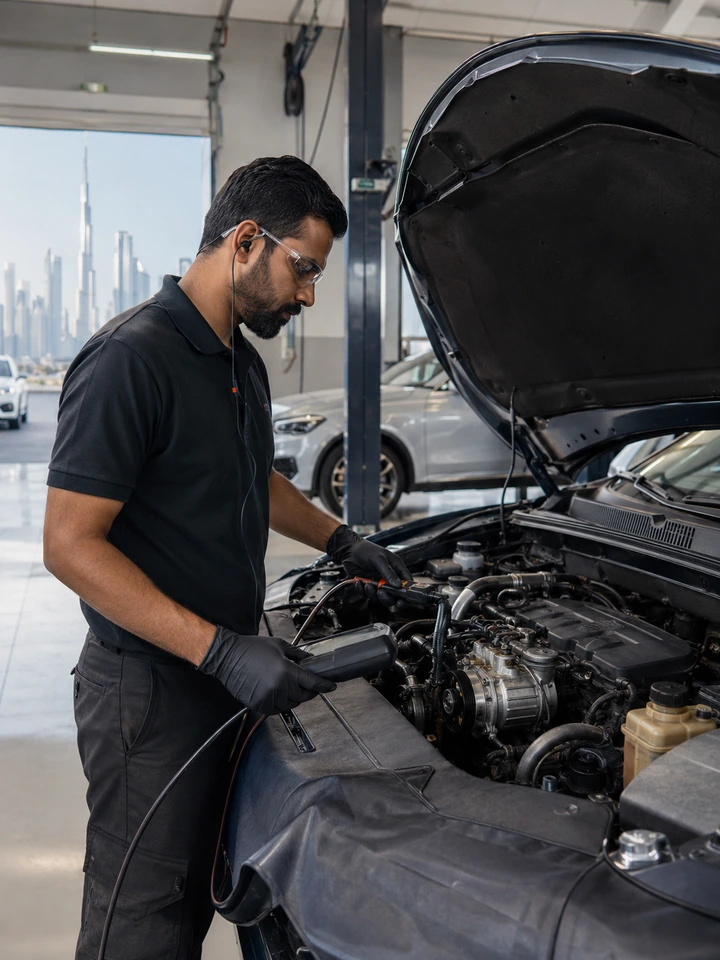
A diagnostic should reproduce and isolate the sound
Record the trigger
Confirm whether the click follows the AC button, blower speed, temperature setting, engine speed, idle, traffic, road speed or a change in cabin cooling.
Locate the sound area
Separate dashboard noise from engine-bay noise. Sound travels through the car, so the nearest audible component is not automatically the cause.
Read cooling and command together
Cooling output, fan operation, relevant pressure behaviour, control signals and physical response create a more reliable picture than listening to one click alone.
Inspect the related mechanical path
Where the sound is load-related, belt condition, pulleys, supports, mounts and visible movement should be checked before authorising compressor work.
Repeat the original condition after work
The repair is verified against the same trigger that caused the complaint, not only by confirming that the AC turns on for a short time.
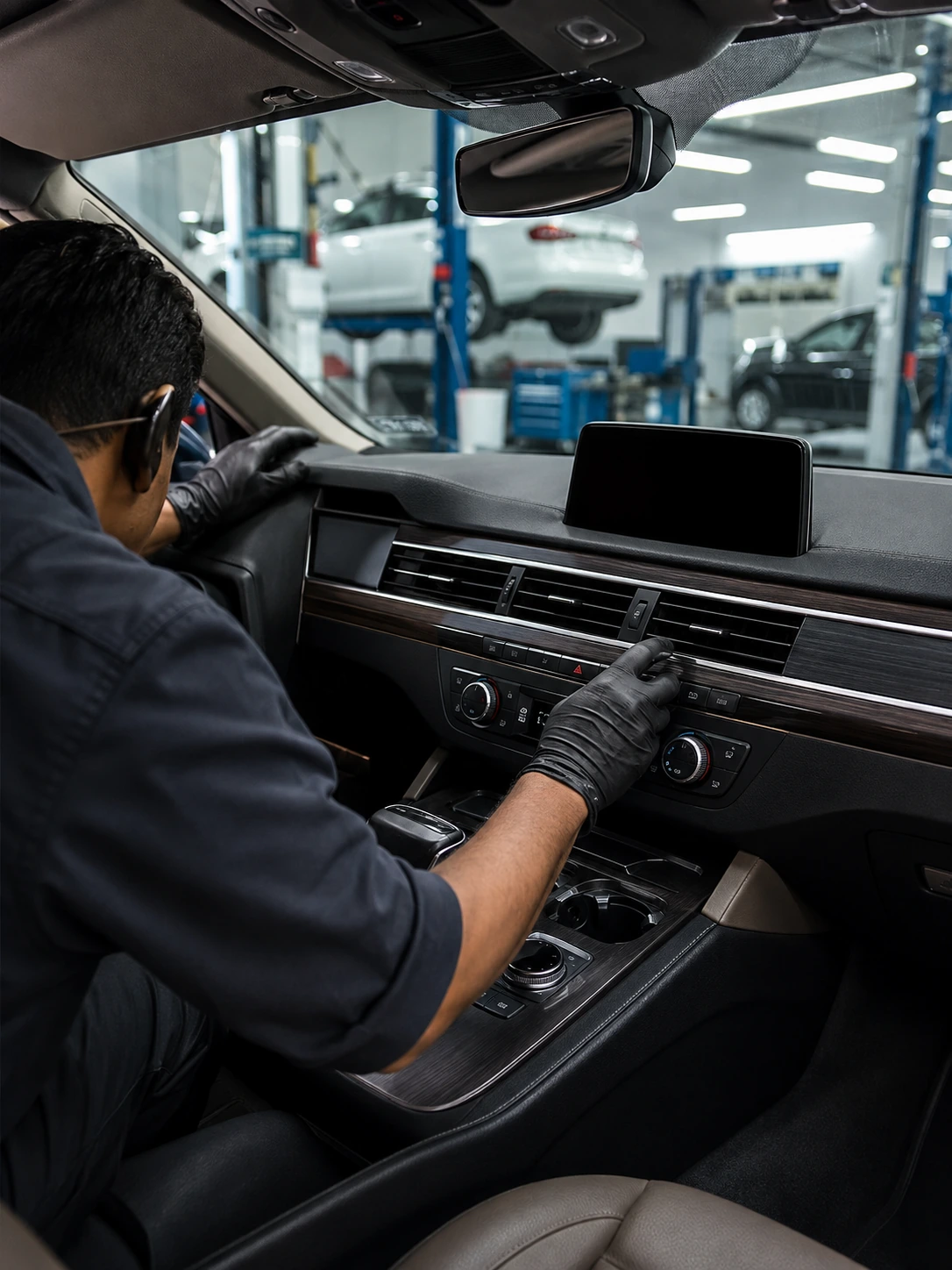
What the click is doing when the conditions change
After a hot start
When the cabin is very hot, the system may command stronger cooling and fan activity. A new repeated click during this heavy load matters more if the air stays warm, the engine bay vibrates, or the sound quickly develops into a rattle. If the sound happens only once and cooling settles normally, it still deserves a note rather than an immediate parts conclusion.
At idle or in traffic
Road speed can improve airflow through the condenser. At idle, the fan and the rest of the system have to do more of that work. Repeated clicking in traffic, followed by better cooling on the move, can point the first checks toward airflow, fan command, pressure behaviour or compressor control. It is not proof of any one of them.
When engine speed changes
A click that appears with a change in engine speed can be connected to drive load, pulley movement, a belt-path issue or a control response that becomes audible under different demand. It is useful to mention whether the sound remains at a steady cruise, comes only at idle, or changes when the engine is lightly revved while parked. Do not attempt that test near moving components yourself.
When changing temperature or vent mode
Climate-control doors move air through the cabin. A dashboard-area click that follows a change from face vents to windscreen, or from cool to warm, may be a different branch from the refrigerant system entirely. Uneven temperatures between vents, an airflow-direction problem, or a sound that continues after the AC button is off makes that distinction more likely.
After recent work
Battery work, engine-bay work, belt work or previous AC repair can be relevant because connectors, relays, covers, fasteners and control settings may have been disturbed. That does not establish a cause. It tells the workshop where to compare the current condition with the original complaint and what work history needs checking.
Control or relay finding
Scope depends on circuit design, evidence from the vehicle and whether the relay is the cause or only responding to a different issue.
Cabin actuator finding
Price is affected by dash access, calibration needs and whether temperature or airflow behaviour points to more than one control issue.
Drive or compressor-system finding
May involve belt-path work, compressor assessment, refrigerant procedure, related parts and verification. See the compressor repair service once that branch is confirmed.
Written estimate after diagnosis
The estimate should separate the confirmed repair from optional work and explain what is moving the price.
Do not keep testing a severe click, rattle or mechanical noise
Stop using the AC and arrange assessment promptly if clicking comes with grinding, a strong rattle, smoke, burning smell, visible belt damage, fluid leakage, unusual vibration, charging warning, engine-temperature warning or another symptom that affects safe driving.
- Do not put hands near belts, fans or pulleys while the engine is running.
- Do not spray belt dressing or unknown lubricant around the engine bay.
- Do not treat repeated clicking with poor cooling as a gas refill request.
What to notice before booking
The exact sound and its trigger are more useful than a guessed component name.
Is one click when the AC starts normal?
It can be normal on some vehicles. It should be checked if it is new, loud, repeated often, or paired with weak cooling, vibration, warm air or another mechanical sound.
Why does my AC click on and off every few seconds?
Rapid cycling can involve control commands, pressure protection, fan behaviour, refrigerant condition, compressor response or another system issue. The pattern must be tested rather than assigned to one part.
Can low refrigerant cause clicking?
Low refrigerant can affect system behaviour, but a click does not prove that charge is low. A sealed system should not need repeated top-ups and measured diagnosis is safer than guessing.
Can a blend door make a clicking noise?
Yes. A dash-area click that changes with temperature or vent-mode settings can point to an actuator or air-door issue. It should be separated from compressor or engine-bay sound.
Tell us when the clicking starts
Send the make, model and year, whether the sound is behind the dash or in the engine bay, when it occurs, and whether cooling changes with it. The diagnostic scope and fee are confirmed before testing at AMF Auto Services in Al Quoz 4.