
Volvo AC Repair Dubai
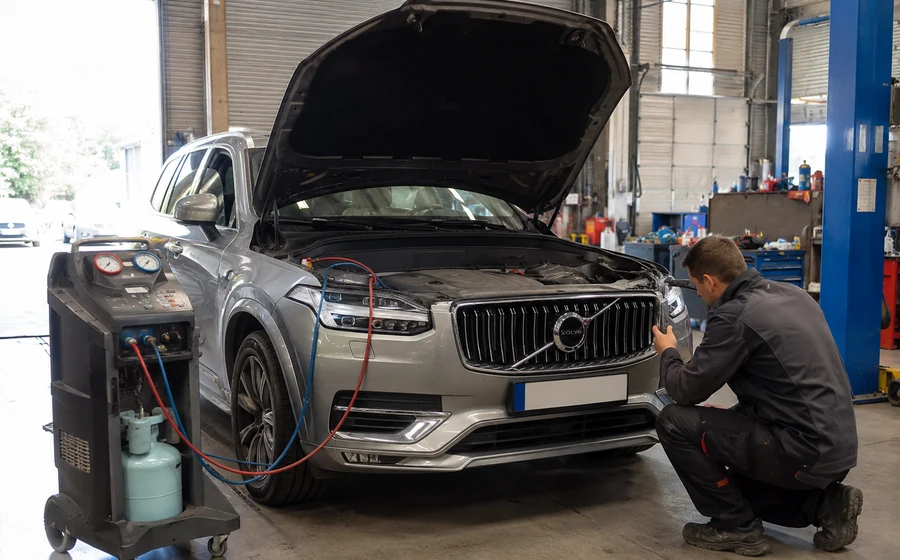
XC90, XC60, S90, S60 and other Volvo models can develop weak cooling, refrigerant leaks, blower faults, compressor problems and climate-control issues. The repair path now also depends on powertrain because conventional, mild-hybrid, plug-in hybrid and battery-electric Volvos can use different compressor, safety and service procedures. We identify the exact car first, then repair the branch that testing proves.
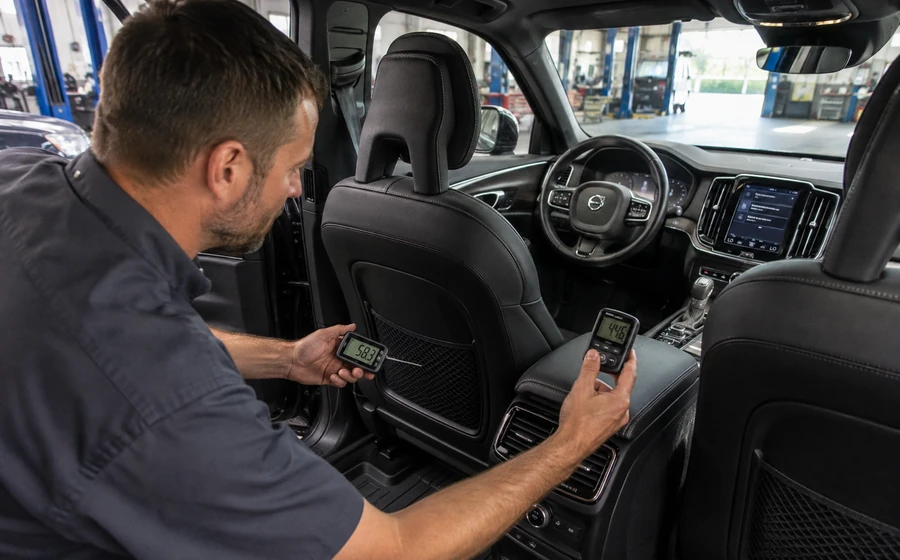
When the whole cabin is weak, we measure airflow, charge condition, condenser heat rejection and compressor response before recommending a refill or major component.
If cooling returns after service and fades again, the job moves toward leak detection and repair. The escaping point sets the real repair scope.
When selected temperature, zone or blower response does not match the cabin result, sensors, actuators and electrical commands are compared with physical operation.
Where high-voltage climate hardware is involved, the exact powertrain and approved service procedure are identified before refrigerant or compressor work begins.
Cabin size and comfort expectations change the repair test
Large cabin and multi-row pull-down
Whole-cabin performance matters more than a single front vent. After hot parking, the system should be judged on how the occupied cabin cools and whether the result stays stable in traffic.
Family SUV heat load
Traffic performance, hot-soak pull-down and blower volume are useful checks when the complaint is that the vehicle is technically cool but remains uncomfortable.
Executive comfort and climate control
Uneven temperatures, quiet airflow expectations and electronic climate requests should be compared with physical vent response before actuator or module work is approved.
Daily-use cooling and idle stability
Road-speed differences, compressor response and fan performance can be reproduced efficiently when the owner explains exactly when the cooling changes.
Powertrain identification before compressor service
Electric compressor and thermal-system procedures can differ from conventional vehicles, so the EV and hybrid AC service route may apply.
The AC system can support more than passenger comfort on an electrified vehicle
On conventional cars, owners mainly think of AC as cabin cooling. On electrified vehicles, climate hardware can also interact with wider thermal-management strategies depending on the exact design. That makes correct vehicle identification more important before parts are disconnected or refrigerant service starts.
This does not mean every weak-cooling complaint is a complex high-voltage problem. A blocked cabin filter, a refrigerant leak or a sensor fault can still be straightforward. The point is that the workshop must know which architecture it is working on before applying a familiar procedure.
If the issue is clearly electrical or climate-control related, the AC electrical and climate-control diagnostics route provides the deeper service path.
Evidence sequence for electrified Volvo AC
Model, powertrain and fitted climate system are confirmed before service.
Cabin cooling, blower, refrigerant loss and vehicle thermal warnings are separated.
Vent temperature, airflow, fan response, refrigerant behaviour and electronic commands are compared.
Where high-voltage equipment is involved, the correct safety boundary is maintained.
The same cabin or operating condition is reproduced after repair.
What usually brings Volvo owners to the workshop
AC is cool but not enough in Dubai heat
Vent output, condenser airflow, refrigerant condition and compressor capacity are checked under real cabin load before a refill is recommended.
Cooling fades again after previous service
Repeated loss supports leak diagnosis rather than another blind top-up. Oil residue and test evidence help locate the actual escape point.
Cooling drops at idle but improves moving
Fan response and heat rejection move higher when road airflow makes the system look better. The idle cooling symptom page helps describe this pattern.
Air volume is low or inconsistent
Filter, blower motor, speed control, wiring and air distribution are checked before refrigerant work is added.
Selected setting and cabin result disagree
Sensor values, actuator commands and physical vent response are compared so a data value is not turned directly into a parts order.
Cooling cuts in and out or output is weak
Control strategy, refrigerant condition and physical output must support compressor repair before a major component is approved.
Volvo parts decisions should reflect access, electronics and powertrain
An accessible filter, an integrated climate-control actuator and an electrified compressor are not the same buying decision. We identify the exact failed branch and system architecture before recommending the component route.
Genuine, OEM, OE-supplier and quality aftermarket parts can all have a place when fit, control compatibility, safety and repeat labour are considered.
Integrated and access-heavy parts
Dashboard HVAC and difficult climate-control work should prioritise dependable fit because repeating access can be expensive.
Verified OE-supplier route
Can provide strong value when the original manufacturer, part number and exact Volvo application are confirmed.
Accessible airflow and service parts
Filters, selected hoses, blower items and some sensors can use quality alternatives when specification and warranty are clear.
Electrified compressor and thermal hardware
Powertrain and approved service specification take priority over price comparison when high-voltage climate components are involved.
What Volvo AC repair may cost
Planning ranges vary with model, cabin size, powertrain, refrigerant system, access and the confirmed fault. Electrified climate work is quoted after the exact system and safety requirements are identified.
Diagnostic and climate test
AED 250 to 550Cabin, airflow, refrigerant and control branches are separated under the condition that causes the complaint.
Leak repair and recharge
AED 400 to 1,900+Accessible seals and hoses differ from condenser or evaporator repairs.
Fan or condenser work
AED 750 to 2,700+Fan assembly, module, condenser condition and front-end access set the scope.
Blower or airflow repair
AED 350 to 2,000+Filter, motor, control electronics and wiring create separate repair paths.
Conventional compressor route
AED 1,300 to 4,500+Control, complete compressor work and contamination findings affect price.
Evaporator repair path
AED 1,800 to 5,500+Interior access, seals and refrigerant procedure create much of the labour.
Climate sensor or actuator
AED 400 to 1,900+Access, calibration and integration into larger assemblies can change the total.
Electrified climate system
After identificationHigh-voltage safety, compressor specification and system architecture must be confirmed first.
The final estimate should identify the exact Volvo, failed branch, applicable parts route and how the repair will be verified under the original complaint.
On an electrified Volvo, the quote should also state whether the job is ordinary cabin-AC work or whether high-voltage climate hardware changes the service boundary. That prevents a simple refrigerant leak or blower fault from being presented as a more complex thermal-management repair, while still protecting the vehicle when electric compressor or high-voltage procedures genuinely apply. The owner should see which system was tested, which component is being approved and whether any additional safety or refrigerant procedure is required before the vehicle is dismantled. That clarity is particularly useful when a cabin-cooling complaint sits beside a wider vehicle warning or previous thermal-system work.
Identify model and powertrain
Vehicle, year, conventional or electrified configuration, refrigerant information and previous AC work are recorded.
Reproduce the cabin complaint
Traffic, hot parking, long drive, blower setting and affected zones are used to make the real weakness appear.
Check airflow and cabin response
Filter, blower and distribution are measured before a cooling-capacity complaint becomes a refrigerant repair.
Measure condenser and refrigerant performance
Fan airflow, heat rejection, leak evidence and refrigerant behaviour are interpreted together.
Compare compressor command with output
Control strategy and physical cooling result are checked using the correct architecture for the powertrain.
Test sensors and actuators where needed
Electronic commands must agree with actual air-mix, blower and cabin response.
Approve parts and safety boundary
The quote states the failed component, access, refrigerant work and any high-voltage procedure relevant to the job.
Verify the original condition
The same heat, traffic, zone or run-time trigger is checked after repair.
Refrigerant and parts planning stay tied to the exact Volvo
Volvo models do not all use one refrigerant across every year and powertrain. We confirm the vehicle label before recovery or recharge. If the car specifies R1234yf, the correct path is the R1234yf gas refill service. Other systems can use the measured gas refill service once any repeat-loss concern is understood.
Electrified Volvos already require powertrain-aware compressor and high-voltage procedures. The same principle applies to parts selection, where genuine, OEM, OE-supplier and quality aftermarket choices are considered only when they match the exact configuration and repair risk.
Approval and workshop planning
R134a or R1234yf comes from the exact vehicle specification rather than the model badge alone.
A reproducible cabin or electrical diagnostic may be completed on the first visit. Compressor, evaporator and high-voltage climate work can require more time.
Access, control integration, safety and repeat labour determine whether genuine, OEM, OE-supplier or quality aftermarket makes sense.
Qualifying Volvo repairs using original parts receive six months of warranty cover within the documented repair scope.
What Volvo owners ask before booking
These answers cover conventional and electrified Volvo repair decisions.
Why is my Volvo AC not cold enough in Dubai?
Refrigerant condition, condenser airflow, compressor capacity and blower performance can all reduce cooling. The vehicle should be tested under the hot condition that causes the complaint.
Does a Volvo need AC gas every year?
No. Refrigerant should stay in a sealed circuit. Repeated low charge indicates a leak or earlier service issue that needs diagnosis.
Can you service hybrid or electric Volvo AC systems?
Yes where the exact vehicle and workshop procedure are supported. Powertrain, refrigerant and high-voltage climate hardware are identified before service begins.
Why does my Volvo AC cool better while driving?
Road airflow can hide a weak fan or condenser heat-rejection problem. Idle testing is needed when the symptom appears in traffic.
Can climate-control electronics cause uneven temperature?
Yes. Sensor input, actuator movement and control commands can create zone differences, but whole-system cooling capacity should also be checked.
Do you fit aftermarket Volvo AC parts?
Quality alternatives can make sense for selected accessible parts. Integrated, access-heavy or electrified components need a more exact parts decision.
How much can Volvo compressor repair cost?
For conventional systems, planning can start around AED 1,300 and rise above AED 4,500. Electrified compressor work is quoted after the exact architecture is identified.
What should I send before visiting?
Send the Volvo model, year, powertrain if known, exact symptom, when it appears and any recent refill, fan, blower or compressor work.
Send the model, powertrain and cabin symptom
Tell us whether you have an XC90, XC60, S90, S60 or another Volvo, the year, whether it is conventional or electrified if known, and when the cooling changes. We can prepare the correct service route at our Al Quoz 4 workshop.