
Car AC Fuse Keeps Blowing
If the AC fuse blows again after replacement, the fuse is usually doing its job. Something in the circuit is drawing too much current or touching ground. The fault can sit in a compressor clutch coil, blower motor, cooling fan, relay, wiring harness, connector, control module or a component that only overloads when it gets hot. The safe repair is to find the overload or short before another fuse is installed.
Why the fuse keeps opening
If your car AC fuse keeps blowing, there is usually an electrical short, overloaded motor or coil, damaged wiring, overheated connector, seized component, failing relay circuit or a fault that appears only when the AC system is commanded on. Do not install a higher-rated fuse. A fuse that repeatedly opens needs electrical diagnosis because replacing it without finding the cause can overheat wiring or damage a module.
When does the fuse blow
A technician can narrow the circuit faster when the exact trigger is known. The phrase keeps blowing does not describe whether the fault is immediate, heat related, vibration related or tied to one AC component.
Blows as soon as AC is switched on
This moves compressor clutch, control solenoid, relay output, fan command and wiring that becomes live with the AC request higher on the list. An immediate fuse failure often points to a hard short or a load that is already far above normal.
Blows only after several minutes
Heat can change resistance, expand damaged insulation or push a weak motor and clutch coil into excessive current draw. The fault should be reproduced long enough to see which component gets hot or which current value climbs.
Blows when fan speed changes
If the fuse fails when the blower is moved to a higher speed, the blower motor, controller, resistor path, connector or related wiring becomes more relevant. Current draw should be measured instead of replacing the switch or fuse.
Blows after bumps or engine movement
A harness can rub through against a bracket, compressor pipe, fan shroud or body edge. Movement can make the exposed conductor touch ground only sometimes, which is why the problem may disappear in the workshop unless the harness is inspected under the same movement.
Most likely reasons an AC fuse keeps blowing
The ranking changes by vehicle and by which fuse actually fails. A compressor fuse, blower fuse and condenser-fan fuse protect different branches. The first job is to identify the exact fuse and what loads are supplied through it.
Damaged wiring shorting to ground
Insulation can rub through near the compressor, front cooling fans, battery tray, firewall, HVAC case or previous repair areas. Heat, vibration and water entry can make the short intermittent. A visual inspection helps, but a proper test may need the circuit divided into branches until the short disappears.
Common electrical faultCompressor clutch coil or control circuit overload
On systems with an electromagnetic clutch, a failing coil can draw too much current, especially when hot. On variable compressors, a control-valve circuit or connector can be the electrical load instead. The technician should identify the compressor design before deciding what should be powered.
AC-on trigger clueBlower motor drawing excessive current
A worn or partially seized blower motor can keep spinning while using more current than the circuit is designed to carry. Debris in the fan wheel, damaged bearings, heat in the connector or a failing controller can make the problem worse. Motor current is more useful than judging only by fan sound.
Cabin airflow branchCooling fan motor or fan-control fault
The AC can command front cooling fans as soon as pressure rises. A fan motor with worn bearings, a damaged fan controller, shorted wiring or water inside a connector can overload the protected circuit. If the fuse blows mainly in traffic or hot conditions, fan demand deserves close attention.
Front fan branchRelay, fuse-box terminal or connector damage
A relay can fail internally, but heat-damaged terminals and loose fuse-box connections can also create resistance, melting and intermittent shorts. Replacing only the relay may leave the overheated socket behind. The fuse holder, terminal tension and surrounding plastic should be inspected for heat marks.
Heat at the power centreAftermarket wiring or previous repair damage
Alarm systems, remote starters, audio wiring, accessory taps, non-standard fan repairs and previous AC work can change the original circuit. A splice that is poorly insulated or a wire routed against a sharp edge can create a fault months later. Recent repair history is important evidence.
History matters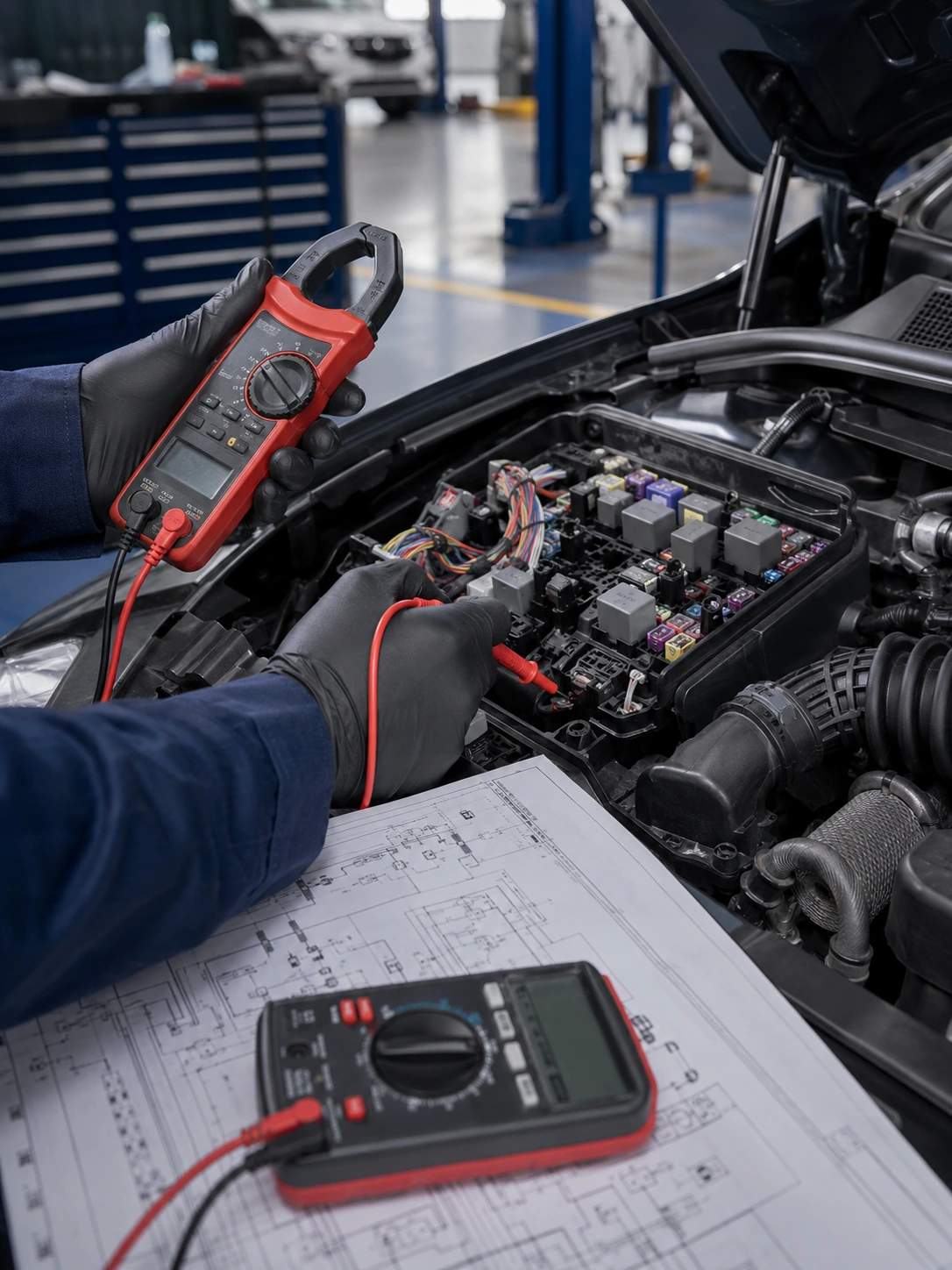
Why fitting a larger fuse is dangerous
A fuse rating is chosen to protect the wiring and components in that circuit. Installing a higher-rated fuse can allow the wire to carry more current than it was designed for. Instead of the fuse opening first, the wire, connector, module or motor winding may overheat. That can melt insulation, damage a fuse box or create a fire risk.
The same rule applies to bypassing a fuse with wire, foil or another improvised conductor. It removes the designed protection. If a correct fuse blows repeatedly, the electrical fault is already giving useful information. Preserve that evidence and diagnose the circuit instead of defeating the protection.
Installing a fuse with a higher amp rating
This can move the failure point from a cheap protective fuse to expensive wiring or a control module.
Replacing the fuse again and again
Repeated current surges can heat a connector or wire before each fuse opens. It also wastes the timing clue that helps locate the short.
Jumping the relay to force AC operation
Bypassing command logic can energise the shorted branch directly and remove protection the vehicle is using for another fault.
Use the failure trigger as diagnostic evidence
Note whether the fuse fails with compressor request, blower speed, fan operation, heat or movement. That pattern can save hours of blind parts replacement.
What it can cost to fix an AC fuse that keeps blowing
The cost depends less on the fuse itself and more on where the short or overload is located. A simple relay or accessible wire repair is very different from a harness fault behind the dashboard or a failed compressor clutch circuit.
Fuse, relay, connector or accessible wire repair
AED 150 to 900Applies when the damaged part is easy to reach and the surrounding harness or fuse box is still healthy.
Blower or cooling-fan electrical repair
AED 400 to 1,800+Motor, controller, resistor, fan module, connector and access can change the final repair substantially.
Electrical short tracing and harness repair
AED 300 to 2,000+Intermittent faults, dashboard access, front-end harness work and previous modifications can increase diagnostic time.
Clutch, control or compressor-related repair
AED 500 to 4,500+Some vehicles allow separate clutch or control-valve work. Others require a larger compressor repair after the electrical fault is proven.
Burning smell or smoke
Switch the AC off. If smoke continues or wiring is visibly hot, stop safely and arrange assistance.
Melted fuse box or connector
Do not keep cycling the circuit. Heat damage can spread to terminals and neighbouring circuits.
Fuse failure affects cooling fans
If the same electrical problem stops engine cooling fans and temperature begins to rise, treat it as an overheating risk.
Severe belt or compressor noise
A mechanically damaged compressor can overload its clutch or belt system. Turn the AC off and inspect promptly.
Battery or charging warning appears
A wider power-supply or short-circuit issue may be present. Do not assume the problem is limited to cabin cooling.
Fuse blows immediately every time
Do not use repeated fuses as a test tool. A hard short can heat wiring very quickly.
How we diagnose an AC fuse that keeps blowing
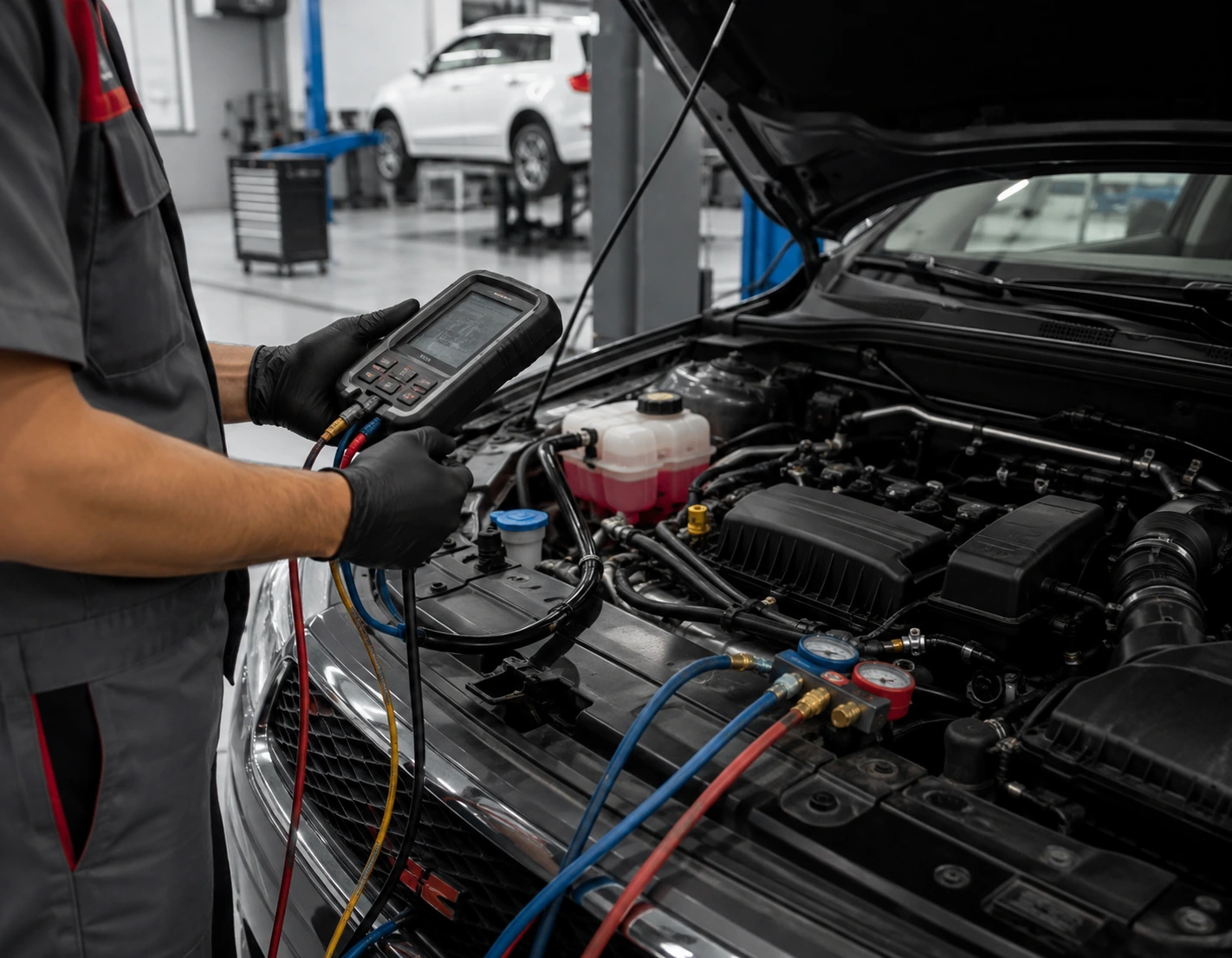
The diagnostic follows the protected circuit from the fuse to each load. We want to know exactly when current rises, which branch causes it and whether the problem is a short to ground, excessive component draw or a heat-damaged connection.
Confirm the correct fuse and rating
Identify the exact circuit and verify that a previous repair has not installed the wrong fuse size.
Read fault codes and operating requests
Control-module information can show when the compressor, fan or blower was commanded and whether related faults were recorded.
Reproduce the failure safely
We match the customer pattern, such as AC on, high blower speed, hot engine bay or road vibration, without repeatedly sacrificing fuses.
Measure current and isolate branches
Current draw or short condition is checked while suspected loads are separated from the circuit one by one.
Inspect the proven component and harness
Once the fault disappears with one branch disconnected, the component, connector and wiring on that branch are inspected in detail.
Verify the repair under the original trigger
The AC is run through the condition that used to blow the fuse and current draw is checked again before the vehicle is released.
Where the diagnosis may lead
You do not need to guess which AC part is faulty before booking. The repeat fuse failure feeds into these service paths after the overloaded branch is identified.
Car AC fuse keeps blowing FAQ
Why does my car AC fuse keep blowing
The circuit is usually drawing too much current or shorting to ground. Common causes include damaged wiring, a failing compressor clutch coil, blower motor, cooling fan, relay circuit, overheated connector or previous wiring repair. The exact fuse and the moment it blows determine the next test.
Can I put a bigger fuse in the AC circuit
No. A larger fuse can allow the wiring to carry more current than it was designed for and move the failure from the fuse to the harness, connector or control module. Use only the specified fuse rating.
Why does the fuse blow only when I turn the AC on
The AC request energises specific loads such as a compressor clutch, control solenoid, cooling fan, relay or related wiring. If the fuse fails at that moment, the technician should follow the circuit that becomes active with the request.
Can a bad compressor blow the AC fuse
Yes, but the compressor should not be condemned from the blown fuse alone. A clutch coil, control circuit, connector or wiring near the compressor can create the same symptom. Current draw and circuit isolation should identify which part is responsible.
Can a blower motor blow a fuse even if it still spins
Yes. A worn motor can continue spinning while drawing excessive current, especially at high speed or when hot. Debris, bearing drag, controller faults and overheated connectors can also raise current.
Can a relay make a fuse blow
A relay can fail internally, but the socket, terminals and wiring around it can also overheat or short. The relay command side and load side should be tested rather than replacing the relay only because it is easy to access.
Why does the AC fuse blow after driving for a while
Heat can increase motor or clutch current, soften damaged insulation, expand a rubbed wire against ground or worsen a loose connection. A heat-related fault needs to be reproduced after the engine bay and AC components are hot.
Is it safe to drive with the AC fuse removed
If the car otherwise operates normally and the fuse protects only the AC comfort circuit, leaving the AC off may allow you to drive to a workshop. If the fuse also affects cooling fans, engine temperature, charging or another safety-related system, seek advice before driving.
What should I send before booking
Send the make, model and year, the exact fuse name or number if known, whether it blows immediately or after time, the blower speed, whether the compressor clicks, whether the car was recently repaired and whether there is any burning smell, smoke or melted connector.
Find the overload before another fuse goes in
Book a fixed-price diagnostic and tell us exactly when the fuse fails. We will trace the protected circuit, measure the load and separate wiring, blower, fan, relay, clutch and control faults before parts are approved.