
Porsche AC Repair Dubai
Porsche AC testing must begin with the exact model, generation and powertrain because packaging, front heat-exchanger layout, compressor control and thermal-management interactions vary. A weak-cooling complaint should be proven under the load that creates it before access-heavy work or parts replacement is approved.
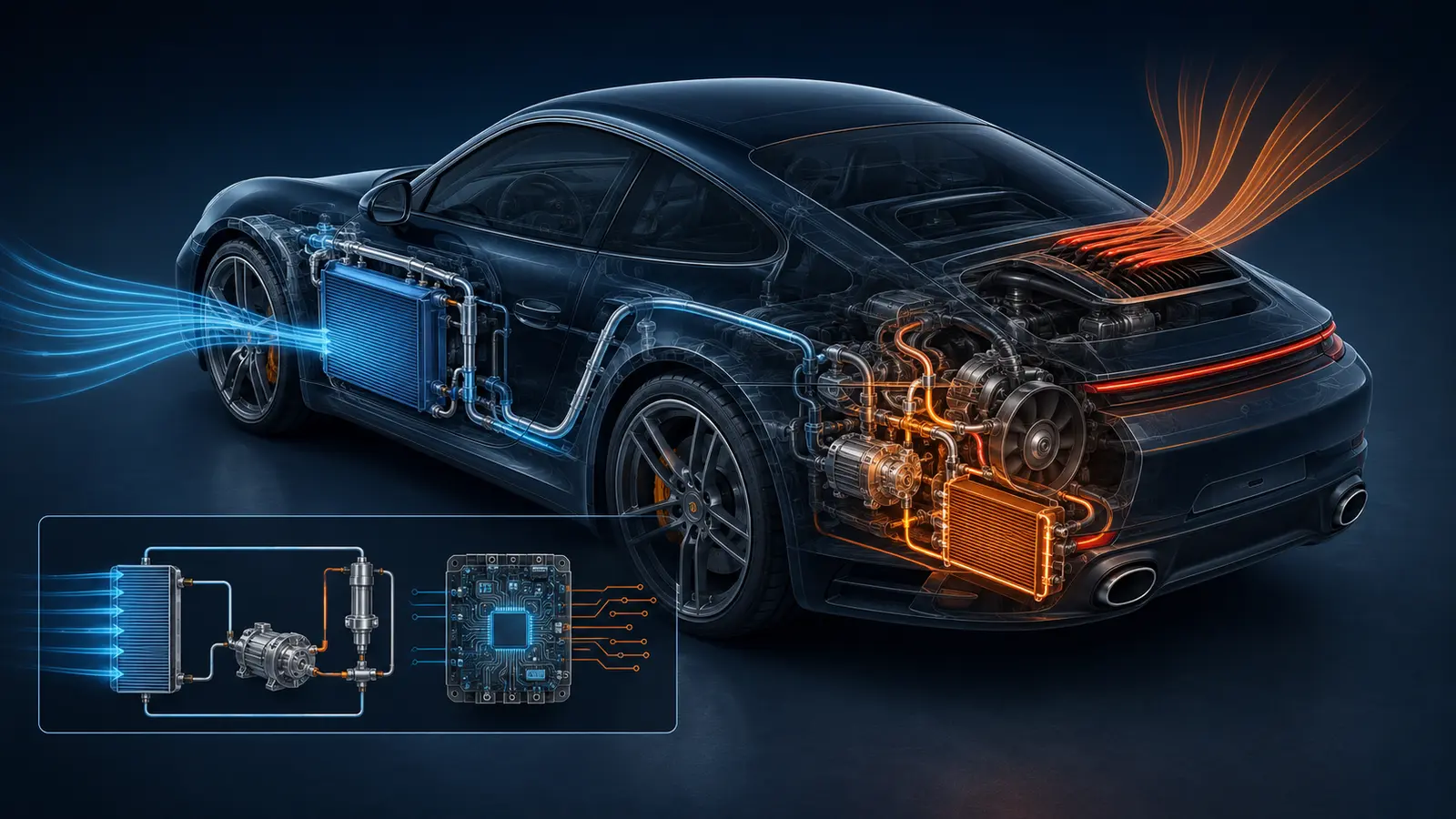
The vehicle layout changes the first inspection
Air must move through the cooling stack
Debris, damaged fins, blocked ducts or a fan problem can weaken heat rejection, especially at low road speed. Pressure and temperature response should be measured while actual fan behaviour is observed. A road-speed improvement is a clue, not proof of one failed part.
Temperature and volume are separate measurements
A restricted filter, blower-control issue, evaporator icing or air-distribution fault can leave the cabin uncomfortable even if the refrigerant circuit is producing cooling. Each outlet should be compared under the same settings.
Command must agree with physical output
Compressor request, regulation, pressure movement, temperature change, leak evidence and electrical supply form one evidence set. A scan message or pressure value alone is not enough for replacement.
Powertrain configuration matters
On hybrid or electric vehicles, cabin cooling can interact with battery or power-electronics temperature control. The correct equipment, lubricant, isolation and high-voltage procedure depend on the actual configuration.
Where does cooling performance fall away?
Record pull-down time, starting cabin heat, vent temperature and airflow. Heavy heat load is expected; failure to recover toward stable comfort is the relevant pattern.
Compare front heat-exchanger airflow, fan command, pressure response and engine or powertrain temperature information. Do not treat motorway cooling as proof of correct operation.
A delayed change can expose evaporator icing, sensor drift, electrical heat effects, compressor regulation or pressure protection. Preserve the timing and module data before clearing faults.
Measure like for like. Air-mix control, sensor feedback, distribution and refrigerant performance can overlap; unequal vents are not automatically an actuator diagnosis.
The evidence chain before disassembly
- Identity. Model, generation, VIN or production detail, engine or electric powertrain, market specification and refrigerant label.
- Complaint. Settings, ambient heat, elapsed time, idle or road condition, affected vents, messages and recent repairs.
- Electronic evidence. Relevant climate and thermal-management faults, requests, sensor values and actuator information where supported.
- Physical evidence. Vent temperature and airflow, electrical supply, fan response, refrigerant pressures and temperatures, and leak inspection.
- Isolation. A repeatable test that identifies the failed component, circuit or leak rather than a list of possibilities.
- Verification. The same load or operating condition repeated after approved work.
Access level should follow certainty
External checks first
Filter, visible condenser condition, fan behaviour, accessible electrical supply, scan information and refrigerant performance can often be evaluated before trim or major components are removed.
Open only the confirmed area
A known connector, sensor, actuator, hose or leak location can justify focused access. The estimate should identify what evidence led there and what remains conditional.
Require a stronger approval point
Evaporator, HVAC-housing, compressor or buried-line work can involve substantial labour. The diagnostic basis, related parts, contamination risk and verification plan should be clear before approval.
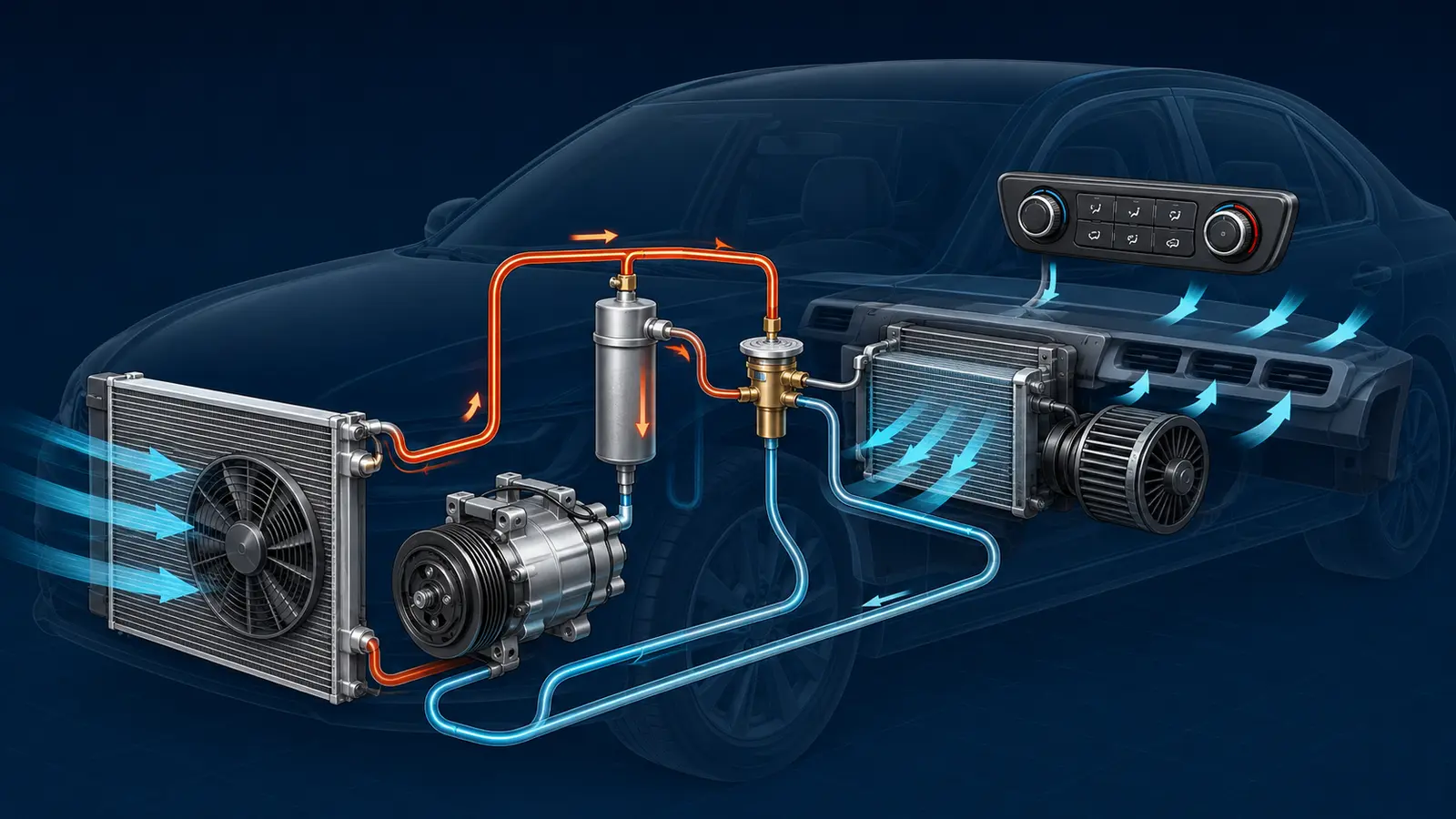
Leak, control fault or component damage?
Leak evidence may include loss of charge, visible residue at a confirmed point or a positive test using an appropriate method. Refrigerant should not be repeatedly added without investigating why it left the circuit.
Control evidence connects an incorrect request or response to a sensor, circuit, connector, actuator or module path. A stored fault is useful, but wiring and physical behaviour still need confirmation.
Mechanical evidence can include abnormal noise, inadequate pumping, seizure, contamination or visible damage. Supporting components must be considered when failure material may have travelled through the system.
More than one fault can exist. A blocked airflow path can coexist with low refrigerant, and a previous repair can introduce a connector or charge issue.
What the Porsche repair decision should explain
Why this scope
The finding should connect the reproduced symptom to measured evidence and explain why the recommended repair is more appropriate than a recharge, adjustment or smaller circuit repair.
What is included
Part specification, access, seals, refrigerant and lubricant work, cleaning or related components, electrical repair and any coding or calibration only when genuinely required.
What can change
Hidden damage, contamination, connector condition and additional parts discovered after access should be listed as conditional, not silently added.
How it will be checked
Verification should repeat the relevant heat load, elapsed time, vent comparison or traffic-like condition and recheck related faults after the system performs physically.
Price and turnaround depend on model, generation, powertrain, diagnosis, access, parts choice and availability. Final estimates should follow inspection.
Arrange a Porsche AC diagnostic visit
Send the exact model, year or generation, powertrain and the operating condition that reveals the fault. Include any warning message and recent front-end, battery or AC work.