
Car AC Blower Motor Repair Dubai
If the air is cold but barely reaches the cabin, the problem may be the blower motor, fan wheel, speed controller, power supply, filter, duct or an airflow door. We trace what changes with fan speed before ordering a motor.
First decide whether the cabin lacks air or lacks cooling
A blower fault changes the volume of air. A refrigerant or heat-exchange fault changes how cold that air becomes. The two can happen together, but the distinction prevents the wrong first repair.
Cold air with weak force
The vent feels cool close up, but little air reaches the cabin. Inspect the filter, blower, controller, duct restriction, evaporator icing and door position. If the problem is limited to the second or third row of a large SUV, use our rear AC not working SUV guide to separate a rear blower fault from a rear cooling fault.
First measurement: compare airflow and motor command across every speed.
Strong air that stays warm
The fan changes speed normally, yet temperature remains high. Refrigerant charge, compressor operation, condenser airflow and blend doors deserve priority.
First measurement: record vent temperature and system response under known settings.
Air comes from the wrong vents
Good airflow may be diverted to the windscreen, footwell or one side because a flap, actuator, linkage or calibration is not following the requested mode.
First measurement: command each outlet and observe door data or movement.
The fan is one part of the path
The motor turns a centrifugal fan wheel inside the HVAC housing. Air still needs a clear intake, a suitable filter, open passages and correctly positioned doors to reach the vents.
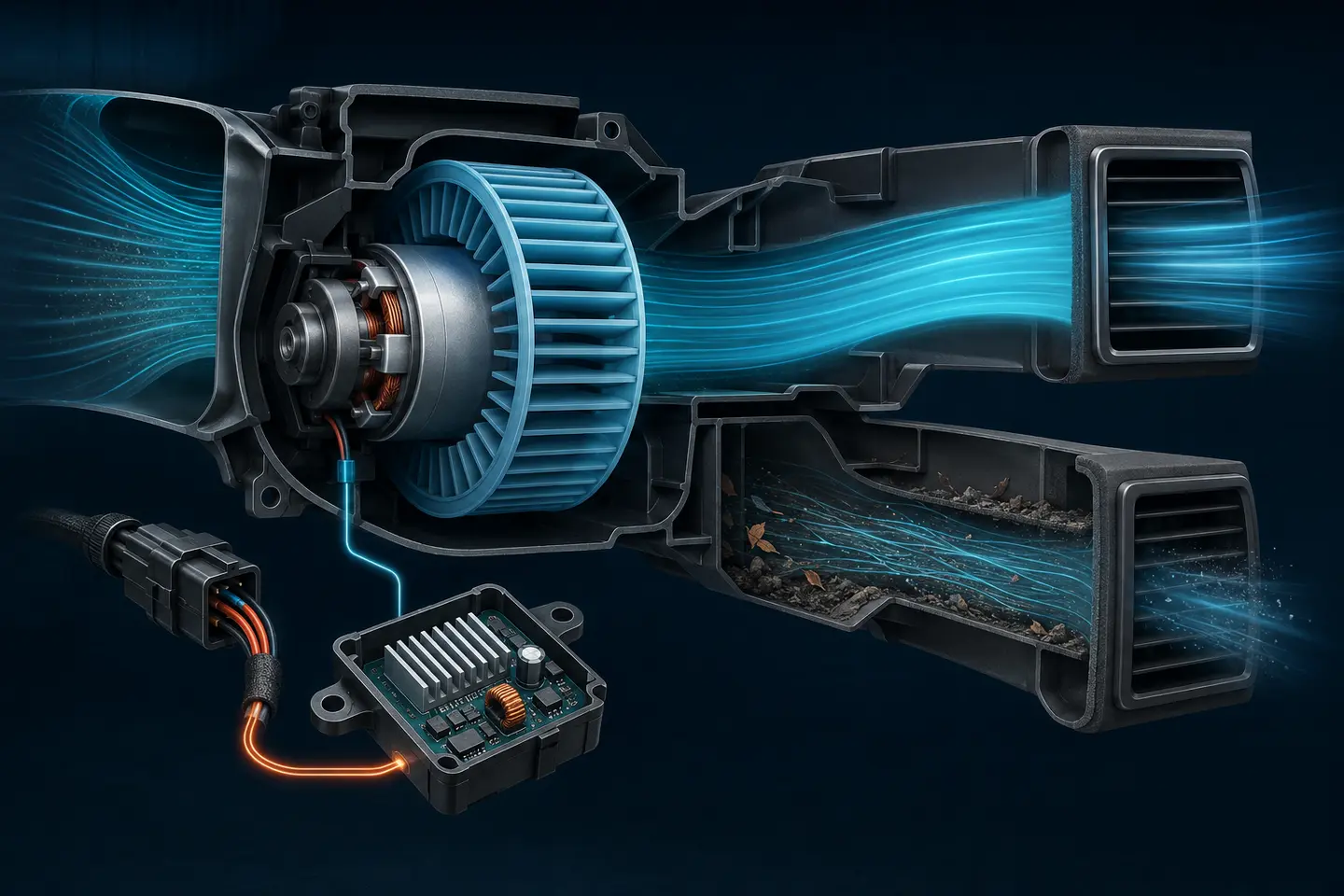
What the fan behaviour suggests testing next
| Observed behaviour | Useful first checks | Why replacement may be premature |
|---|---|---|
| No airflow on any speed | Fuse, supply, ground, motor command, controller, motor current and seized fan wheel. | A healthy motor cannot run without power, ground or a valid control path. |
| Only one speed or only maximum speed works | Resistor or electronic speed controller, connector heat damage, wiring and control signal. | The motor may still operate normally when it receives full power. |
| Fan is intermittent | Worn motor brushes where applicable, connector tension, controller temperature, relay, wiring movement and module command. | An intermittent open circuit can imitate a failing motor and may damage a connector if ignored. |
| Scraping, ticking or vibration | Leaves or debris in the wheel, cracked fins, loose mounting, bearing wear and contact with the housing. | Removing debris or correcting the housing may solve a noise without replacing every electrical component. |
| Motor sound is strong but vent flow is weak | Cabin filter, evaporator icing, blocked intake, duct separation and flap position. | The blower may be producing air that cannot pass through or reach the selected outlets. |
| Burning smell or hot connector | Motor current, resistance at terminals, controller heat dissipation and damaged wiring. | Replacing only the motor can leave a high-resistance connection that overheats again. |
Power, ground and command must agree
Compare each stage before blaming the motor
A mismatch between two stages narrows the fault without guessing which part to replace.
The motor circuit and the duct restriction leave different clues
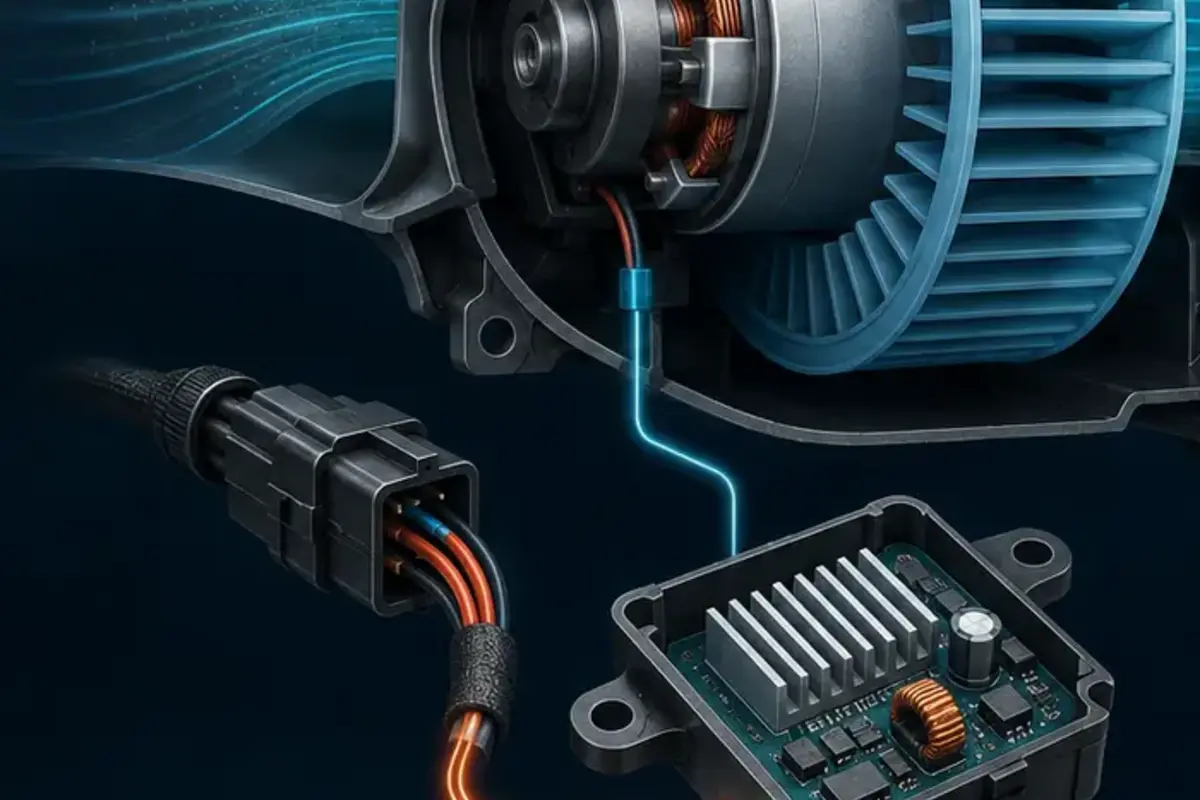
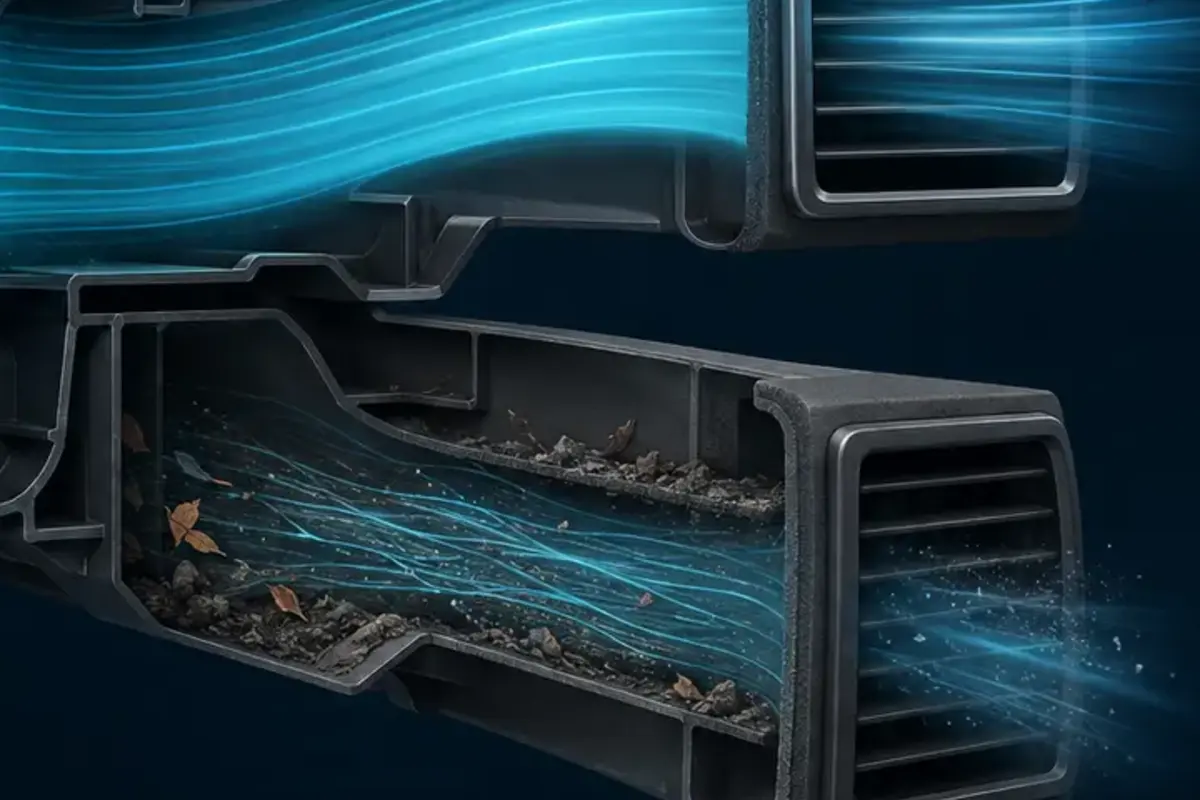
When cleaning, wiring work, control repair or motor replacement makes sense
Clean the wheel and housing
Suitable when leaves or fragments cause ticking, imbalance or restriction and the wheel, motor and electrical circuit remain serviceable. The intake source should be corrected so debris does not return.
Repair the damaged circuit
A loose terminal, corroded ground or heat-damaged connector needs a reliable electrical repair. The cause of heat must be identified, including excessive motor current or controller load.
Replace or repair the speed device
Appropriate when the resistor or electronic controller fails its command and load tests. Some units require coding, calibration or integration with the HVAC module.
Replace a worn or seized blower
Chosen when mechanical drag, bearing noise, worn brushes, damaged windings or abnormal current confirms motor failure. The fan wheel may be supplied separately or as an assembly.
Follow the airflow complaint in the order it occurs
Listen
Compare sound, vibration and vent force at each requested speed.
Inspect
Check the filter, intake, visible debris, fuse and connector condition.
Measure
Test command, loaded voltage, ground quality and motor current.
Separate
Distinguish motor, controller, wiring, restriction and door faults.
Verify
Recheck every speed, outlet mode, noise level and cabin airflow.
Automatic climate control changes the diagnostic picture
A manual fan switch may use stepped resistance, while an automatic system can vary blower output continuously according to cabin temperature, sunlight, evaporator temperature, battery condition and programmed comfort logic. A fan that slows by itself is not automatically faulty. Scan data and requested-versus-actual behaviour help show whether the system is following a valid command.
Some modern controllers communicate digitally and may store faults in the climate module. Others fail without a useful code. A scan result therefore begins the test rather than ending it. A code for a blower circuit can describe a detected electrical condition, but it does not prove which wire, connector, controller or motor caused that condition.
Access also varies. A blower can sit below the glove box, behind trim, in the engine-bay plenum or deep in the HVAC case. Vehicle identification is necessary before promising labour time or a part. Right-hand-drive and left-hand-drive layouts may use different housings even within the same model family.
Pricing depends on access, component supply, controller integration, connector damage and whether the air path requires additional cleaning. Any public range is indicative and non-binding. The final written estimate should follow inspection of the exact vehicle and confirmed fault.
Blower motor answers
Fan noise, speed behaviour and airflow location are the most useful details to share.
Why does the blower work after I hit a bump?
Movement can temporarily restore contact in worn motor brushes, a loose connector, relay or damaged wire. The fault remains and may worsen. Diagnosis should reproduce the interruption safely and check the circuit under load.
Why does only the highest fan speed work?
Many systems bypass part of the lower-speed control path at maximum output, so a failed resistor or electronic controller is possible. The wiring, connector and motor current still need checking because a high-current motor can damage a new controller.
Can a dirty cabin filter damage the blower?
A heavily restricted filter can reduce airflow and change cooling around some components. It can also make the driver use higher fan settings. Whether it directly caused motor failure requires evidence, but filter condition is an important part of the inspection.
Does a noisy fan always need replacement?
No. Leaves, a loose label, broken plastic, a distorted wheel or housing contact can create noise. Bearing wear or electrical motor damage may require replacement, but the noise source should be seen or isolated first.
Can the AC still cool with a failed blower?
The refrigerant circuit may produce a cold evaporator, but without controlled airflow the cabin will not cool properly and the core may ice. Do not rely on vehicle movement to force air through the vents as a substitute for repair.
Use the sound location to avoid blaming the compressor
The blower sits inside the cabin air path, while the compressor and cooling fans are normally heard from the engine bay. Switching one control at a time helps separate them without approaching moving parts.
Sound follows cabin fan speed
A tick that becomes faster as the dashboard fan setting rises usually points toward the blower wheel or debris near it. A low rumble or vibration that follows the same pattern can involve balance, mounting or bearing wear.
Change the fan speed with the compressor request off, if the vehicle permits it. If the noise remains and follows cabin fan speed, the blower path becomes more likely. Do not remove a filter or access cover while the fan can operate.
Leaves, broken foam and labels can touch the wheel. A replacement motor will not solve the source if the debris route or damaged housing remains.
Sound follows engine speed or AC engagement
A squeal, grind or knock from the engine bay may involve the compressor, clutch, pulley, belt, tensioner or cooling fan. The cabin blower should not be condemned because the sound begins when the AC button is pressed.
Record the sound from a safe position with the bonnet closed if necessary. Smoke, a burning smell, a damaged belt or a seized pulley requires the AC to be switched off and may require recovery advice.
For this pattern, use the compressor diagnostic route rather than ordering an interior fan.
Why repeat failures happen
A new speed controller can fail when an old motor draws excessive current. A new motor can run poorly when a heat-damaged connector creates voltage loss. A cleaned wheel can become noisy again when leaves continue to enter through a damaged intake screen. The root cause should therefore be included in the job, not left for the replacement part to absorb.
Post-repair testing should cover more than maximum speed. Every manual step or automatic speed request should be checked, including low-output operation where some controller faults are easiest to notice. The fan should start consistently after heat soak, and the connector should not develop abnormal heat or odour.
Vent force should also be compared across outlet modes. If the motor now runs correctly but the windscreen or footwell receives little air, a mode-door problem may remain. If airflow drops after several minutes of cooling, evaporator icing becomes relevant. A clean handover explains whether the repaired fault restored the full complaint or whether a second authorised diagnosis is still needed.
Protect the repair during later filter service
When the cabin filter is removed in the future, keep loose leaves and clips away from the fan opening. A small object dropped into the housing can recreate ticking or imbalance even though the motor remains healthy. If a new noise starts immediately after filter work, switch the blower off and inspect the access area before extended operation damages the wheel.
What to verify before leaving the workshop
Operate every fan speed rather than checking only maximum output. Listen at low and medium speed for ticking, bearing noise or vibration, then change between face, footwell and windscreen outlets. Confirm that automatic mode changes speed smoothly where fitted and that the glove box, trim panels and filter cover close correctly after access.
Ask whether the repaired cause was the motor, controller, resistor, wiring, connector, debris or a combined fault. If a heat-damaged connector was replaced, the report should explain whether motor current was checked. If debris was removed, ask where it entered and whether the intake or filter also needed attention. This record helps distinguish a repeat electrical fault from a new object entering the fan later.
Show us which fan speeds still work
Send the make, model, year and a short video showing the climate panel, fan sound and vent airflow. We will arrange blower, controller and air-path diagnosis at AMF Auto Services, 39 Al Quoz 4, Dubai.