
Honda AC Repair Dubai
A Honda that cools on the road but turns warm in traffic, cycles repeatedly, loses airflow or behaves differently after heat soak needs the complaint mapped to the conditions that trigger it. We compare fan operation, compressor response, refrigerant behaviour and cabin airflow before recommending parts.
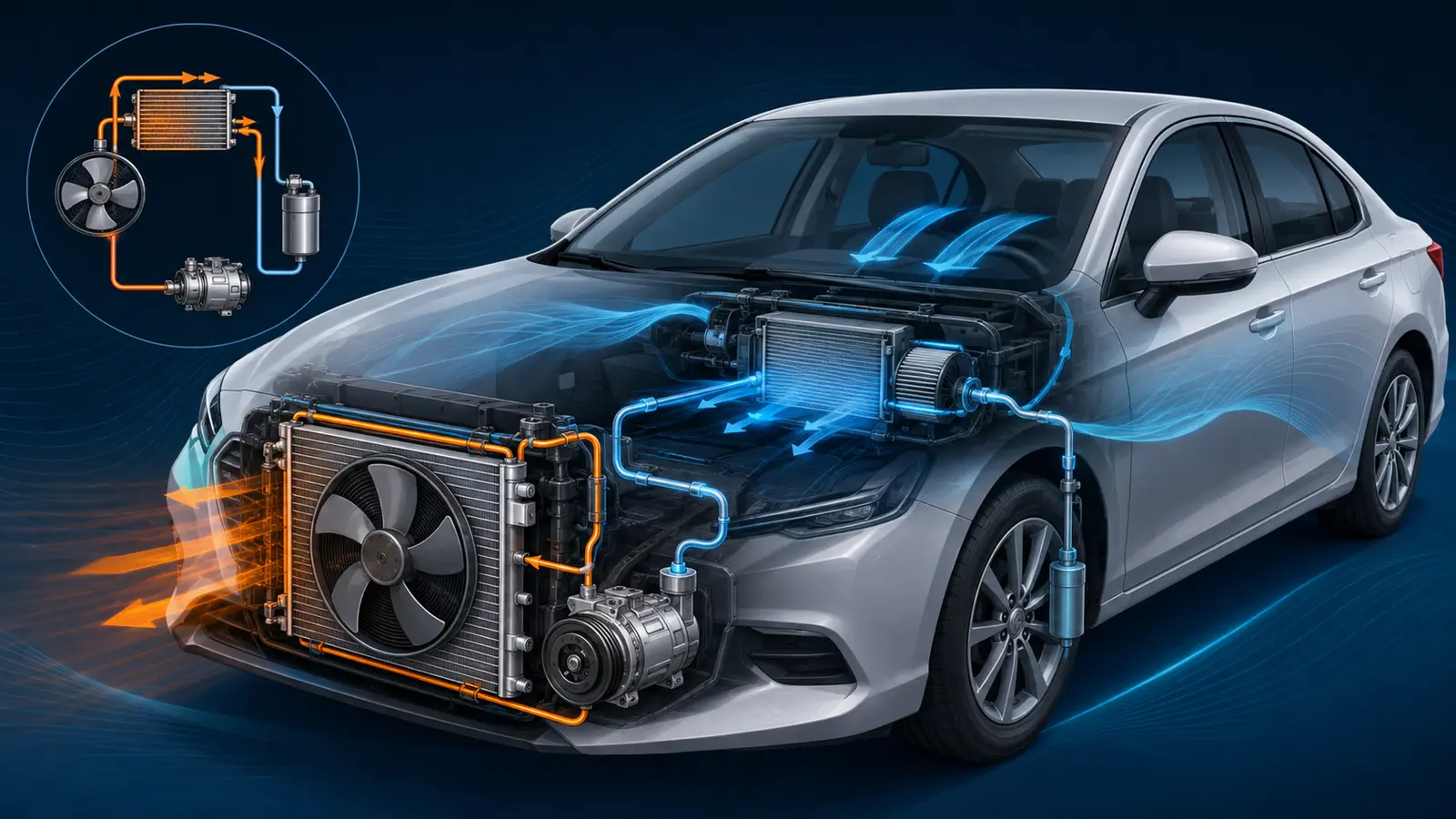
Match the symptom to the operating condition
Road speed can mask weak condenser airflow. Fan command, actual fan movement, condenser condition, pressure response and engine-cooling behaviour need to be compared at idle before a refrigerant or compressor conclusion is made.
Cycling can reflect normal control, low charge, pressure protection, evaporator temperature control, an electrical interruption or compressor regulation. Timing, pressure movement and vent temperature determine which explanation fits.
A restricted cabin filter, blower problem, evaporator icing or air-door position can reduce useful airflow even when the refrigerant circuit is producing a cold evaporator.
Harsh belt, bearing or compressor noise should not be ignored. Switch the AC off and arrange inspection if the sound is severe. Smoke, burning odour or overheating requires safety-first handling.
A Honda diagnostic route follows the complaint
The first record should include model, year, engine or hybrid configuration, market specification, refrigerant label, recent battery or AC work, and the exact sequence of events. This prevents an imported part, an incorrect refrigerant assumption or a different circuit design from steering the repair.
- Reproduce it. Use the fan setting, recirculation choice, idle time and road condition that reveal the weakness.
- Separate airflow from cooling capacity. Measure vent output while checking filter condition, blower response and signs of icing.
- Compare command with response. Confirm whether the condenser fan and compressor are requested and whether they physically respond.
- Measure the refrigerant circuit. Interpret pressure and temperature only after airflow and ambient load are known.
- Verify the repair. Repeat the original conditions, not merely a brief cold-start test.
Idle-to-road comparison
This comparison is especially useful when the complaint appears in Dubai traffic. It is a test framework, not a remote verdict.
At stable idle
Record ambient temperature, vent temperature, fan speed, compressor request, condenser-fan behaviour and pressure movement. Look for debris, airflow restriction and abnormal engine temperature.
At controlled raised speed
Observe whether cooling and pressure behaviour change as compressor speed and heat rejection change. Improvement is evidence for the next test, not permission to replace a fan or compressor without confirmation.
After heat soak
Repeat the settings after the vehicle has absorbed heat. Intermittent relays, connectors, sensors and regulated compressors can behave differently once under-hood temperature rises.
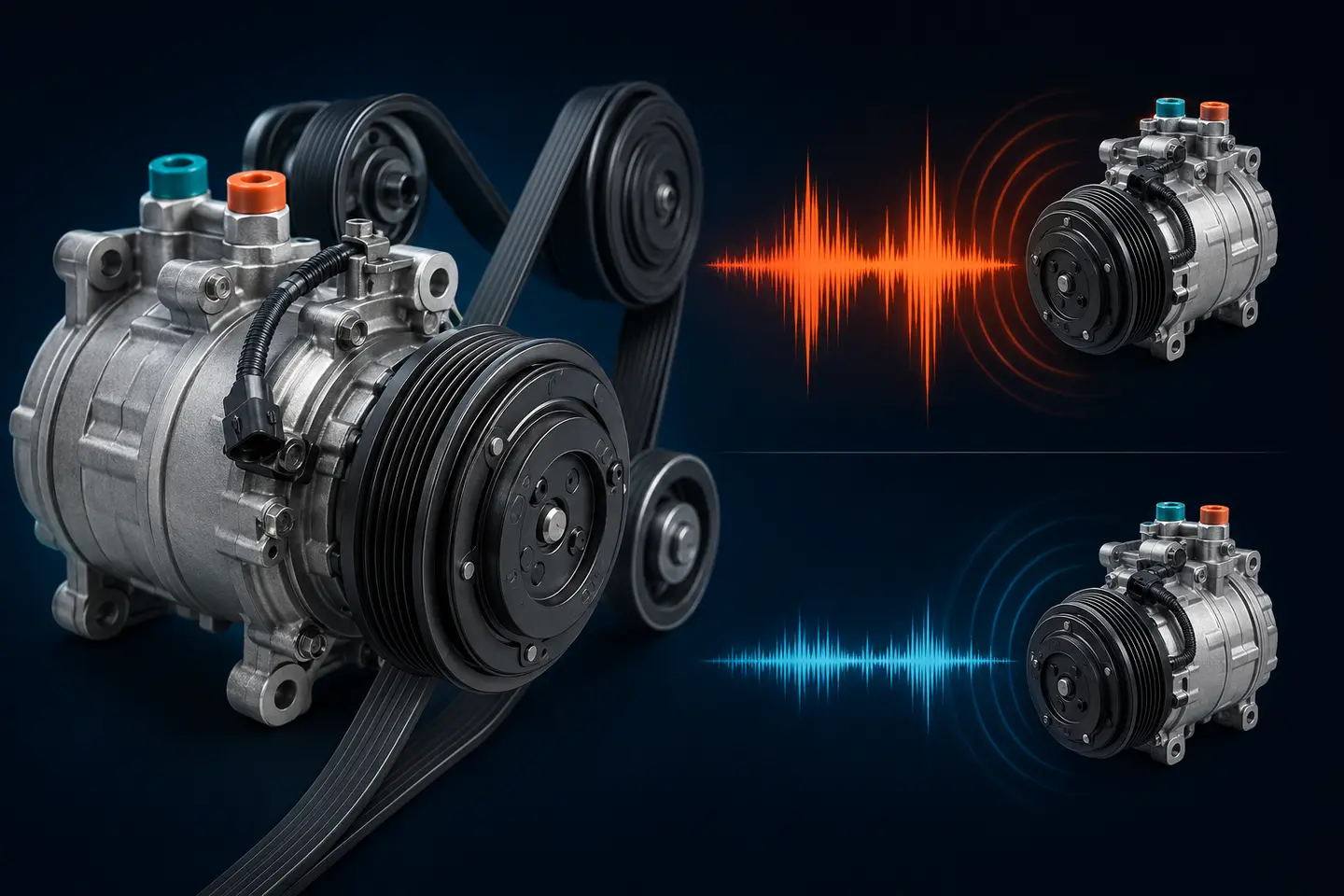
Compressor response must be read inside the complete system
A compressor can be mechanically damaged, incorrectly commanded, protected by an abnormal pressure condition, affected by low refrigerant or unable to reject heat because condenser airflow is weak. The external symptom can look similar.
On a conventional system, clutch engagement alone does not confirm useful pumping. On a variable or electrically driven design, the relevant commands and safety procedures differ. Hybrid identification is essential because compressor oil and electrical precautions can be configuration-specific.
If internal damage or contamination is confirmed, the repair scope may extend beyond the compressor. The estimate should explain associated cleaning, condenser or expansion-device considerations, refrigerant and lubricant handling, and the verification method.
Repair choices after evidence
Airflow-side repair
A filter, blower circuit, fan circuit, connector, relay or air-distribution fault can sometimes be repaired without opening the refrigerant system. The exact circuit must still be confirmed because model-year designs vary.
Leak and refrigerant repair
Low charge needs a leak investigation. Accessible seals or hoses may allow a focused repair; condenser or evaporator damage changes access and labour. Refrigerant should not be repeatedly added without addressing the loss.
Control or sensor repair
A plausible scan code must be checked against wiring, supply, ground, live data and physical response. Clearing codes without reproducing and verifying the complaint is not a repair.
Compressor or major-component work
Replacement is considered when testing proves inadequate pumping, internal noise, seizure, electrical failure or another non-repairable condition. Contamination and connected-component risk determine the supporting scope.
For Honda hybrid vehicles
Do not assume conventional compressor service materials or procedures apply. Vehicle identification, refrigerant label, compressor type and high-voltage safety requirements must be confirmed. A high-voltage warning, smoke, unusual heat or collision damage needs qualified safety assessment rather than DIY AC work.
What to approve in writing
A useful estimate connects the complaint to the confirmed finding. It identifies the component or circuit, required access, parts choice, refrigerant work, supporting materials and any items that remain conditional after disassembly.
It should also state how the outcome will be checked. For a traffic-only complaint, verification at stable idle matters. For intermittent shutdown, sufficient run time matters. For low airflow, blower volume and distribution matter as much as temperature.
Price and timing depend on the exact Honda, diagnosis, access and parts availability. A badge-level quote before inspection cannot reliably cover those variables.
Arrange a Honda AC inspection
Tell us when the cooling changes and whether the issue follows traffic, road speed, fan setting or time. That sequence gives the inspection a useful starting point.