
Ford AC Repair Dubai
Explorer, Expedition, F-150, Ranger, Mustang, Edge and other Ford models can develop weak cooling, refrigerant leaks, condenser fan problems, blower faults and dual-zone temperature issues. We match the repair plan to the vehicle’s actual use, cabin size and symptom instead of treating a pickup, large SUV and performance coupe as the same AC job.
The commercial repair route should match the vehicle type first
A large family SUV with rear passengers, a work pickup that idles for long periods and a Mustang that loses cooling after heat soak can all need Ford AC repair, but they should not receive the same opening service menu.
Whole-cabin cooling and dual-zone repair
Front and rear comfort, blower volume, blend-door response and complete-cabin pull-down matter more than a single vent temperature.
- Compare driver and passenger zones
- Check rear passenger cooling where fitted
- Test traffic performance under full cabin load
Idle cooling and work-use repair
Long stationary periods can expose condenser fan weakness, heat rejection and electrical behaviour that road speed hides.
- Reproduce the complaint at idle
- Check fan airflow and voltage response
- Separate cabin airflow from refrigeration
Heat-soak and compact cabin repair
Cooling can feel strong at first yet fail later. Compressor control, pressure protection and heat-sensitive faults may need enough run time to appear.
- Test after hot parking
- Compare command with compressor response
- Verify the same condition after repair
Explorer F-150 and Mustang complaints should not enter the workshop through the same door
Large-cabin cooling needs a complete-zone check
Rear passenger comfort, front-zone balance and idle performance are checked together so a rear complaint is not judged from one dashboard vent.
Work-use vehicles need stationary-load proof
Long idling, daytime heat and work cycles can expose fan or compressor weaknesses that road airflow hides.
Heat soak can change an otherwise strong cold start
If cooling fades after the car is fully hot, the test needs enough run time to reproduce the condition before a major component is condemned.
Urban use puts traffic cooling and airflow in focus
Hot parking, stop-go driving and cabin pull-down are used to separate fan, charge, blower and temperature-control branches.
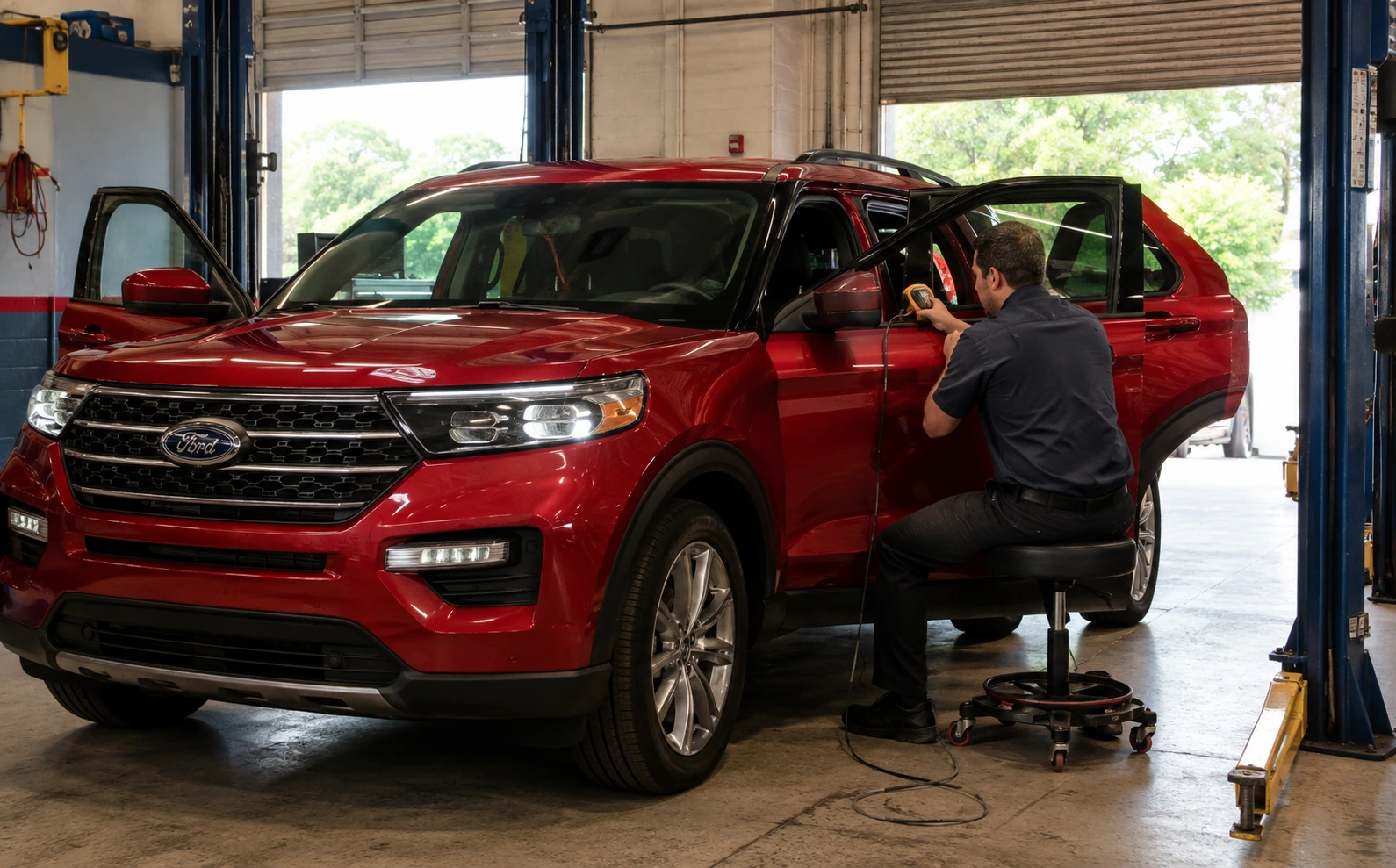
What usually brings Ford owners to the workshop
AC gets warm at idle
Condenser fan command and actual airflow, heat rejection, charge and compressor output should be checked in stationary conditions. The idle cooling symptom page can help describe the pattern.
Driver and passenger temperatures disagree
Blend-door movement, actuator command, sensor inputs and evaporator capacity should be compared under the same settings.
Cooling fades after a refill
Repeated low charge supports AC leak detection and repair rather than another blind recharge.
Airflow is weak or inconsistent
Cabin filter, blower motor, controller, wiring and air path can reduce useful cooling even when the refrigeration circuit is cold.
Cooling is intermittent or compressor noise is present
Command, pressure protection and physical output need to agree before compressor repair or replacement is approved.
AC works then stops after time
Heat-sensitive electrical behaviour, icing and pressure protection may need extended run time. The AC stops after a while page helps describe that timing.
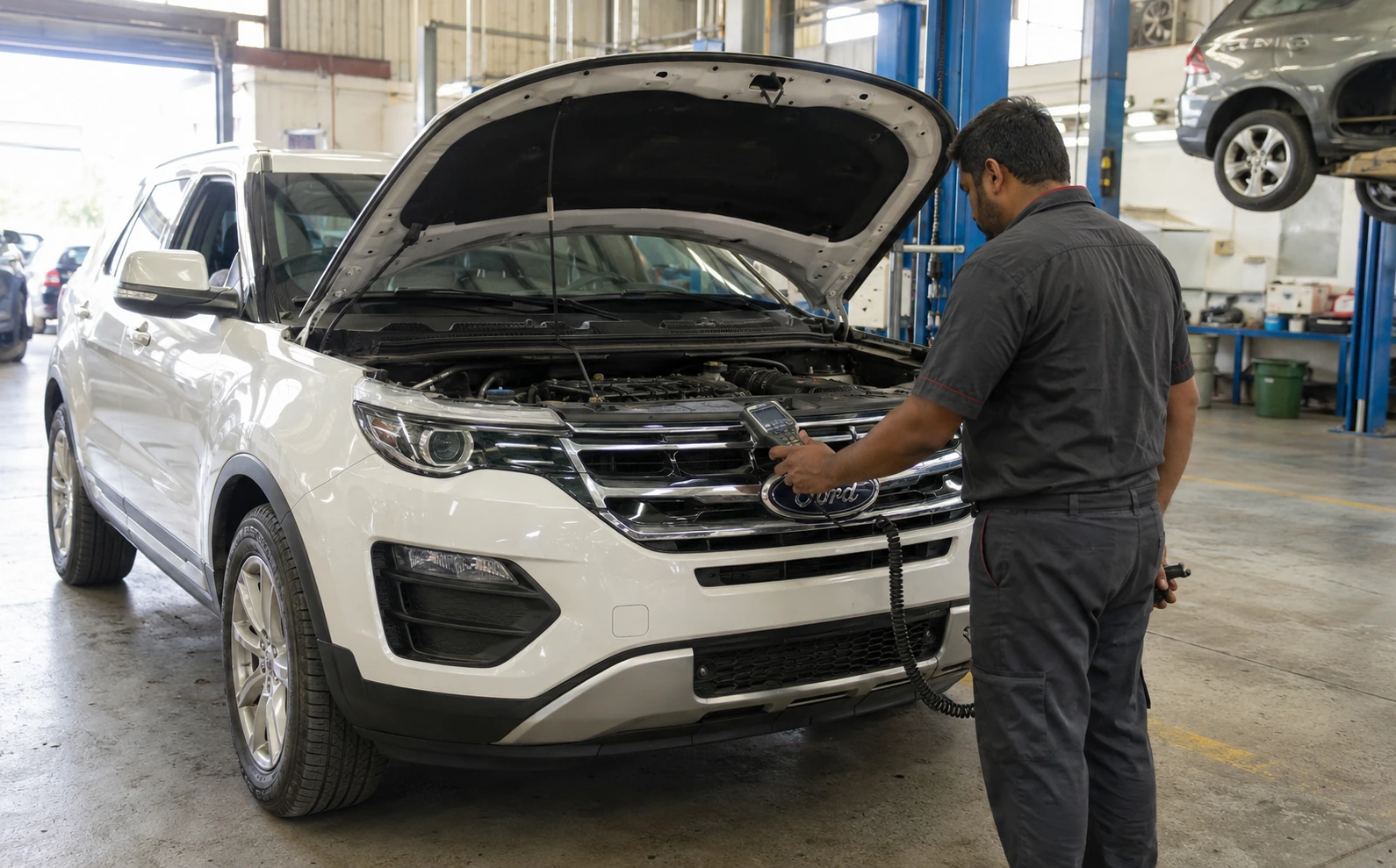
A Ranger at idle and an electrified Ford do not enter the same AC test
Ford AC diagnosis starts by identifying the exact vehicle and how it is used. F-150 and Ranger complaints that appear during long stationary periods need condenser airflow, fan command and electrical response tested without road speed masking the fault. Explorer and Expedition complaints can require front and rear cabin comparison before a whole-system repair is approved.
The refrigerant label is checked before service because Ford applications can differ by model year and market. R134a and R1234yf require the correct recovery, oil and measured-charge procedure. See the standard AC gas service and R1234yf service for those separate routes.
Hybrid and electric Ford configurations can use electrically driven compressors and thermal-management logic that should not be handled as a conventional belt-driven system. Those vehicles move to the EV and hybrid AC service when the powertrain configuration makes that necessary.
Ford repair planning
Pickup complaints are reproduced under stationary load so fan and heat-rejection weaknesses are not hidden by road airflow.
The vehicle label decides R134a or R1234yf service rather than the Ford badge or model name alone.
Accessible electrical, blower and service work can be shorter, while compressor, condenser and evaporator repairs require parts and verification time.
Eligible Ford repairs using original parts include six months of warranty cover within the approved repair boundary.
The right part choice depends on where the Ford is used and how hard the job is to repeat
An Explorer dashboard repair, an F-150 that spends hours idling and an easy-access cabin filter have very different risk. We first identify what failed, then weigh access, daily use, availability and warranty before recommending the component route.
That keeps the parts conversation tied to the actual repair instead of turning every Ford AC job into the same OEM-versus-aftermarket argument.
Access-heavy cabin hardware
For evaporator, blend-door and buried HVAC work, repeat labour matters heavily. Exact fit and dependable operation usually outweigh a small saving on the component.
Pickup and fleet uptime
On F-150, Ranger and high-use vehicles, stock availability and predictable service life can matter more than choosing the lowest purchase price.
Electronic control components
Actuators, blower controls, sensors and related parts are matched to the fitted system only after command, supply and physical movement have been checked.
Routine and accessible items
Filters, selected hoses, seals and other easy-access parts can allow a wider quality range when specification, fit and warranty are clear.
Plan the spend around the failure route, not the badge
A Ford AC estimate becomes useful when it shows which complaint was reproduced and what work is needed to correct that branch. Prices below are planning bands for Dubai and can move with model, access, refrigerant type and the chosen part.
Explorer and Expedition quotes should state whether rear-zone or blend-door checks are included. F-150 and Ranger jobs should be verified under the stationary or work-use condition that exposed the problem.
Road-speed, idle-load, front-rear and zone behaviour are used to decide which system needs deeper testing.
An accessible seal is a different job from a leaking condenser, hose assembly or evaporator hidden inside the HVAC case.
Price depends on the failed actuator or door, calibration needs and how much trim must be removed to reach it.
Fan motor, control hardware, condenser condition and front-end access shape the final scope.
Filter, blower motor, electronic speed control and wiring create very different repair paths.
The figure changes depending on control, clutch where fitted, complete compressor replacement and contamination findings.
Interior access, seals and recharge procedure make labour a major part of this route.
Define the trigger
We record whether the complaint belongs to idling, road speed, one climate zone, rear passengers, hot parking or extended run time.
Set a cabin baseline
Vent temperature and useful airflow are compared across the affected outlets before the refrigeration circuit is blamed.
Challenge the air-control side
Blower output, distribution and blend-door behaviour are checked under the exact settings that produced the complaint.
Load the front cooling stack
At stationary load, fan airflow and condenser heat rejection are observed without the masking effect of road speed.
Judge compressor reserve
Refrigerant condition, compressor response and the change between idle and driving conditions are read as one picture.
Prove electrical involvement only where needed
Power, command, sensors or actuator circuits are tested when the physical symptom points to that branch.
Build the repair boundary
The quote identifies the failed system, any access-heavy work and what remains maintenance rather than mixing every worn item together.
Repeat the trigger after repair
An idle fault is retested at idle, a zone fault is compared by zone, and a heat-soak fault is given enough time to become meaningful.
Questions that help narrow a Ford AC repair before the visit
The useful detail is not only that the AC feels warm. Model, cabin zone and operating condition can change the first workshop test.
My F-150 cools while moving but struggles when parked. What should be checked?
That pattern puts low-speed heat rejection, condenser fan output and compressor reserve near the front of the test. It should be reproduced without road airflow before parts are priced.
Why does my Explorer have different temperatures on the driver and passenger sides?
Blend-door position, actuator response, sensor input and evaporator cooling capacity can all create a split result. Matching settings on both sides are the starting point.
My Ford was recently recharged and is warm again. Is another refill sensible?
Not as the first response. A system that has lost charge again needs the escape path located so the next service corrects the reason the refrigerant disappeared.
Can an Expedition have good front cooling but weak rear comfort?
Yes. Rear airflow, rear HVAC operation where fitted and total system capacity need to be compared before assuming the compressor cannot cool the vehicle.
How do you confirm a Ford blend-door problem?
We compare selected temperature, actuator command and actual air-temperature change. Access is justified only when the door or actuator branch is supported by the test.
Which Ford AC parts are worth spending more on?
Parts hidden behind major trim or carrying high repeat-labour cost usually justify a stronger emphasis on exact fit and durability. Easy-access items allow more flexibility.
What affects the price of Ford compressor work?
Control type, clutch arrangement where fitted, contamination, refrigerant service and the exact model all influence whether the job is a smaller repair or complete compressor route.
What information should I send with a Ford booking?
Send the model, year, whether the vehicle is mainly family or work use, the exact trigger, affected climate zone and any recent recharge, fan, blower or compressor work.
Send the model plus the condition that makes the cooling fail
An Explorer with uneven zones, an Expedition with rear-passenger complaints and an F-150 that warms while idling need different preparation. Send the year, exact trigger and any recent AC work so the visit can start with the right test rather than a generic inspection.