
Loud Noise or Rattle When AC Turns On
A car AC compressor noise can be a loud click, rattle, chirp, scrape or grind when the system engages. The source may be the clutch, pulley bearing, belt drive, mounting, compressor internals or a nearby part reacting to the extra engine load. The job is to identify the source before it expands into a wider mechanical repair.
The AC changes engine load. That is why the source can be deceptive.
When the system is asked to cool, its compressor, pulley or control system changes state. That extra load can expose a problem in the compressor assembly, but it can also make a tired belt, tensioner, mount, fan shroud or nearby support announce itself.
The useful question is not simply “is it the compressor?” It is what moves, loads or changes when the noise begins, and whether cooling performance supports that conclusion.
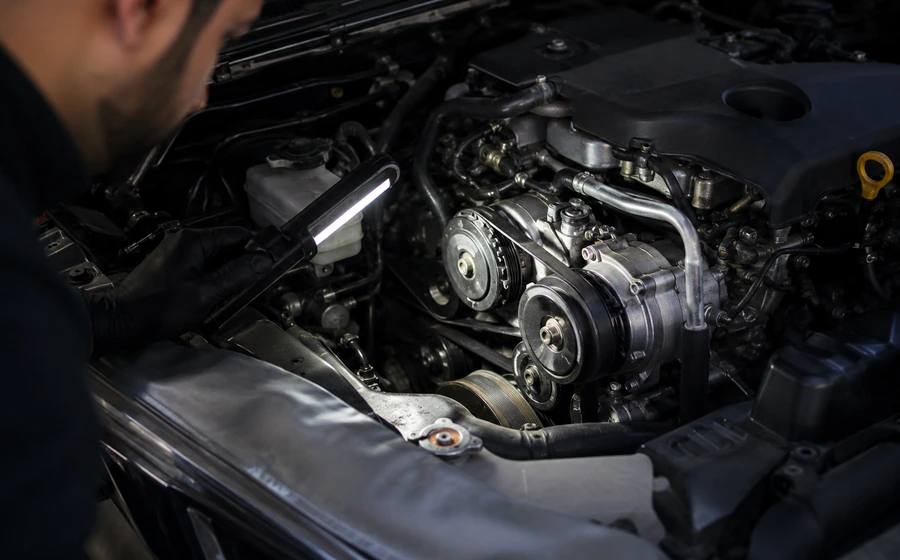
Follow the noise through the moment the system is switched on
Before the AC request
Listen for any baseline tick, rattle or bearing sound with the system off. Existing engine-bay noise helps prevent a false association later.
At the change of state
Note whether the sound occurs when the compressor command changes, when a clutch moves where fitted, or when another relevant component begins to run.
As the load settles
Check whether the noise follows engine speed, remains at idle, worsens in traffic, changes at road speed or comes with a cooling-performance shift.
After the system has run
Heat, vibration and pressure behaviour can change the sound. The final finding should be based on the condition that actually reproduces the concern.
Contained drive repair or compressor-system fault
The sound alone is not enough to choose parts. These branches guide inspection; they are not a remote diagnosis.
External drive, pulley, clutch or mounting branch
The noise is isolated to a belt-path component, clutch-related hardware, mount or nearby item that changes under AC load.
- Look for belt condition, tension, alignment, pulley movement, rubbing and support hardware.
- Confirm whether cooling performance and refrigerant evidence point away from internal compressor damage.
- Scope the repair around the confirmed external source, then repeat the original test condition.
Compressor-system repair branch
Mechanical and performance evidence point to the compressor itself, its control response or a system condition that affects its operation.
- Assess output, command data, line temperatures and relevant refrigerant behaviour together.
- Consider contamination risk, related restrictions, supporting parts and the cause, not simply the replacement unit.
- Use the dedicated compressor repair and replacement service once this branch is confirmed.
Five checks before authorising compressor work
Reproduce the concern safely
Capture the exact engine speed, AC setting, blower condition, cabin temperature and operating situation that brings the sound on.
Inspect the visible drive path
Review belt wear, tension, pulley condition, alignment, supports, mounts, dust, leaks and evidence of contact.
Rule out neighbouring movement
Fan operation, shrouds, brackets and hoses can respond to AC request. The sound must be traced rather than assigned by proximity.
Read cooling behaviour beside the sound
System pressures, relevant temperatures, controls and cooling performance help distinguish a mechanical drive issue from a compressor-system concern.
Verify the repair against the original trigger
After authorised work, the same operating condition should be repeated so the original engagement noise is checked, not assumed resolved.
Three repair scopes that should not be blurred together
Belt, tensioner, pulley, mount or external component
Cost depends on the confirmed part, access, alignment and whether the AC system requires separate performance testing. A noise located near the compressor may still fall here.
Compressor control or electrical tracing
Scope varies with vehicle architecture, data interpretation, circuit access, the confirmed command issue and whether a physical compressor response supports the conclusion.
Compressor-system repair
This may include component choice, refrigerant recovery and charging, contamination handling, related components, labour and testing. It should be presented as a system repair when evidence requires it.
No invented price bands here. A written estimate follows inspection and reflects the exact vehicle, confirmed fault, parts, access, refrigerant work and current conditions.
Three common reactions that make a compressor-noise diagnosis harder
It can add heat and movement around a fault while producing an inconsistent version of the original sound. Record the pattern once and use a safe diagnostic route.
Refrigerant is not a treatment for belt, pulley, clutch, mount or internal mechanical noise. Unmeasured charging can also obscure the system behaviour the technician needs to read.
Because the compressor sits in the belt path, nearby components are often blamed or overlooked by proximity. Source isolation and cooling evidence protect against unnecessary scope.
Stop using the AC if the noise is severe.
Arrange assessment promptly if there is grinding, scraping, hard vibration, smoke, burning smell, visible belt damage, fluid leakage, charging warning, temperature warning or a condition that affects safe operation.
- Do not spray belt dressing or unknown lubricant around the drive system.
- Do not keep cycling the system to “see if it settles.”
- Do not treat persistent mechanical noise as a refrigerant refill request.
A clearer description shortens the diagnostic route.
Note whether it is click, rattle, chirp, grind or vibration; whether it occurs only at engagement; whether it changes with engine speed, road speed, heat, traffic or cooling output; and whether recent AC or engine-bay work took place.
Those details help recreate the actual complaint without guessing the failed part before the inspection begins.
Before the car is inspected
The sound and the conditions that trigger it are more useful than a guessed component name.
Is a click when the AC turns on normal?
Some vehicles make a brief engagement click. It needs assessment if it is new, loud, repeated rapidly or paired with weak cooling, vibration or another mechanical noise.
Can a bad compressor make a rattling noise?
It can, but a rattle at AC engagement can also come from the clutch, pulley, belt, tensioner, mounting, fan or nearby parts. The source needs isolating before compressor work is approved.
Can I drive with a noisy AC compressor?
A mild sound without other symptoms may allow careful travel to a diagnostic appointment. Stop using the AC and arrange suitable help if the noise is severe or comes with smoke, burning smell, belt damage, vibration or vehicle warnings.
Will an AC gas refill stop compressor noise?
No. Refrigerant service is appropriate only when measured system findings support it. It does not repair a mechanical drive, clutch, pulley or internal compressor fault.
Tell us what happens the moment the AC engages.
Send the vehicle make, model and year, sound type, when it begins and whether cooling changes with it. The diagnostic scope and fee are confirmed before testing at AMF Auto Services in Al Quoz 4.