
Rear AC Not Working in Your SUV
If the front vents are cold but passengers in the second or third row stay warm, the fault may be in the rear blower, rear evaporator, refrigerant line, expansion valve, temperature door or rear climate controls. Large SUVs often use a longer and more complex air-conditioning layout than a small car, so the first job is to separate a rear-only fault from a whole-system cooling problem.
Instant answer
If the rear AC in an SUV is not working while the front AC still cools, the most likely causes are a rear blower problem, rear evaporator or expansion-valve fault, refrigerant loss in the rear circuit, a stuck rear temperature door, a control or electrical fault, or a restriction that reduces cooling at the rear unit. If both front and rear are weak, the problem may be the main refrigerant charge, compressor, condenser airflow or another whole-system fault rather than the rear unit alone.
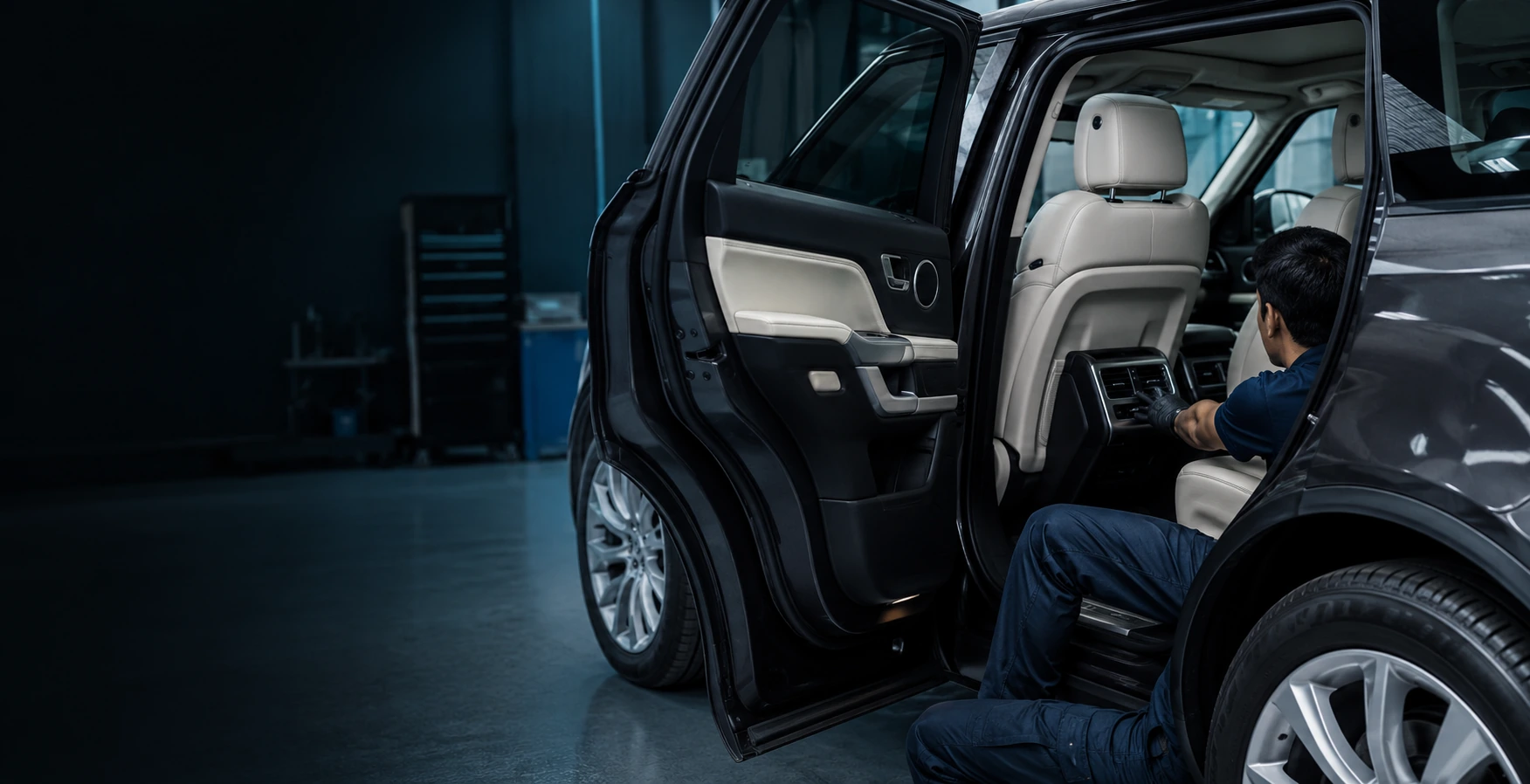
Rear vents blow little or no air
A rear blower motor, blower controller, wiring, fuse, connector or local air-path restriction can stop the rear cabin from receiving enough air even when the front system is cooling normally. If the blower can be heard but almost no air comes from the rear vents, icing or a blocked path may also need checking.
Rear vents blow strongly but the air is warm
This is more likely to be a temperature problem than a blower problem. The rear evaporator may not be receiving the correct refrigerant flow, a rear expansion valve can be restricted, a rear temperature door may be sending warm air into the duct, or the rear circuit may be affected by a leak.
Rear is cold at first and then turns warm
A time-related rear failure can involve evaporator icing, a temperature sensor, an electrical component that changes when hot, or refrigerant behaviour that becomes unstable under load. The rear system needs to be tested long enough to reproduce the complaint.
Rear AC is worse in traffic or peak heat
Large cabins create a heavy heat load. If the whole SUV struggles at idle, condenser airflow, fan operation, charge and compressor output should be checked before blaming the rear unit. A rear-only fault should remain rear-only when the front continues to perform normally.
Most likely reasons the rear AC stops cooling
The ranking below assumes the front AC is still doing useful work. If the front is also warm or weak, the diagnostic order changes and the main refrigeration system moves higher on the list.
Rear blower motor or blower-control fault
Many three-row SUVs use a dedicated rear blower to move air through the rear HVAC case. If the blower motor, resistor, electronic controller, fuse, connector or wiring fails, the rear vents may have little airflow or none at all. Some faults affect only certain fan speeds. The first check should confirm rear blower command and actual blower response rather than replacing the motor because the rear feels warm.
Best fit when airflow is weakRear evaporator or expansion-valve problem
On vehicles with a separate rear evaporator, the rear unit needs the correct refrigerant flow and air movement to make cold air. A restricted expansion valve, evaporator problem or icing condition can reduce cooling while the front stays acceptable. Line temperatures, rear vent temperature and refrigerant behaviour should be compared rather than assuming the entire vehicle is low on gas.
Strong airflow but poor temperatureRefrigerant leak in the rear AC lines or rear unit
Long refrigerant lines running toward the back of an SUV create more joints, brackets and exposed routing than a simple front-only system. Corrosion, vibration, impact, seals or a rear evaporator leak can reduce charge. A system that has been refilled before and becomes weak again needs leak evidence, not another blind top-up. The leak method should match the suspected location and vehicle design.
Important after repeat regasRear temperature door, actuator or calibration fault
The rear refrigeration circuit can be cold while a temperature door mixes warm air into the vents. Clicking from the rear quarter panel, temperature that changes incorrectly with the control setting, or a one-side rear difference can move an actuator or air-door problem higher on the list. Commands and physical movement should be compared before trim is removed.
Zone-control clueRear climate-control panel, sensor or wiring fault
Rear controls may communicate with the front climate system, body electronics or a separate rear module. A failed input can leave the blower running at the wrong speed, prevent temperature-door movement or remove cooling request from the rear unit. Fault codes can help, but live data and actual temperatures are needed to prove the failed branch.
Electrical pathWhole-system capacity problem exposed first in the rear cabin
A low charge, weak compressor, poor condenser airflow or blocked condenser can reduce total cooling capacity. The front passengers may still feel acceptable because they sit close to the strongest vents while the rear of a large cabin never catches up. Front and rear vent temperatures should be compared under the same heat load before a rear component is condemned.
Check when both zones are marginalA rear AC system can have its own cooling hardware
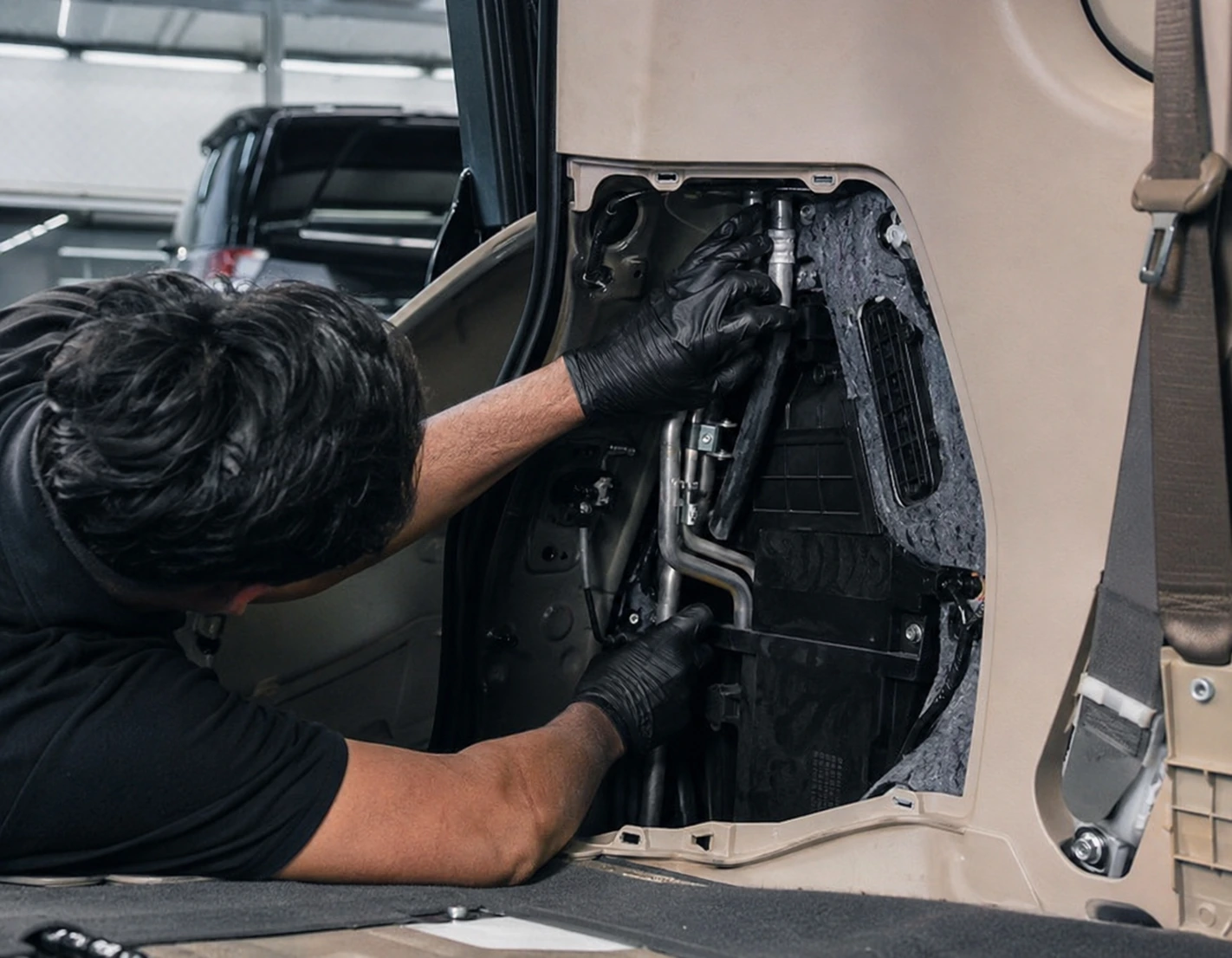
Many large SUVs and people carriers use more than simple ducting from the dashboard. Depending on the model and trim, the vehicle may have a rear evaporator, a rear blower, rear expansion valve, separate temperature doors, dedicated controls and long refrigerant lines running through the body. That changes both diagnosis and repair access.
Moves air through the rear HVAC case. A blower fault creates weak or missing airflow even if the rear evaporator is cold.
Provides cooling for the rear cabin on systems that use a second evaporator. Leakage, icing or poor refrigerant flow can create a rear-only temperature problem.
Carry refrigerant between the engine-bay circuit and the rear unit. Their length and routing can introduce leak points that do not exist on a front-only system.
Control temperature and sometimes vent direction. A door fault can make warm air even when the rear cooling coil itself is cold.
Patrol, Land Cruiser and Tahoe owners should describe the zone, not just the model
Nissan Patrol, Infiniti QX80, GMC Yukon, Toyota Land Cruiser and Chevrolet Tahoe families are common examples of large SUVs in the UAE, but their AC layouts vary by generation, engine, trim and market. The model name is useful for parts and access planning, but it does not replace the symptom pattern. Tell the workshop which rows are affected, whether the rear fan works, whether the problem changes with fan speed, and whether the rear becomes colder at night.
Report whether the rear control panel responds, whether the rear blower changes speed and whether the front cabin stays cold. Do not assume a rear actuator or evaporator without confirming the exact generation and rear HVAC layout.
Note whether the complaint affects second row, third row or both. A large cabin that cools poorly everywhere under midday load is different from a rear-only failure with strong front cooling.
Rear blower, rear air doors, rear HVAC housing and refrigerant routing can all matter. Clicking, weak airflow or a temperature that ignores the rear control setting are especially useful clues to report.
What rear AC repair can cost in Dubai
Rear AC repair cost changes sharply with vehicle design and access. A blower controller behind an interior panel is a different job from a leaking rear evaporator that requires substantial trim removal and refrigerant work. These are broad planning ranges only and not final quotations.
Rear blower, controller or accessible wiring
AED 300 to 1,500Depends on whether the fault is the motor, controller, connector, fuse, wiring or the access required to reach it.
Rear actuator, sensor or control fault
AED 250 to 1,500Access, calibration, module diagnosis and whether trim removal is required can change labour significantly.
Rear line, valve or lower-scope leak repair
AED 500 to 2,500+Long line routing, corrosion, fittings, refrigerant recovery and recharge can move the repair outside a simple leak range.
Rear evaporator or deep-access repair
AED 1,200 to 4,000+Interior access, refrigerant work, seals, valve replacement and the exact SUV layout have a large effect on final cost.
When should you stop driving
A rear AC fault by itself is usually a comfort issue. The advice changes when the same event includes engine overheating, a burning smell, smoke, severe mechanical noise or electrical symptoms that affect more than the rear cabin.
Engine temperature rises
If the SUV begins overheating with the AC on, switch the AC off and stop safely. Cooling-fan or heat-rejection faults can affect both engine temperature and AC performance.
Burning smell or smoke
Turn the AC off and stop if safe. A rear blower circuit, wiring fault or engine-bay accessory problem should not be repeatedly powered to see if it clears.
Severe compressor or belt noise
Grinding, squealing or belt distress means the complaint may be bigger than a rear-zone issue. Continuing to run the AC can worsen mechanical damage.
Water reaches electrical areas
If rear carpet or trim is wet around connectors or modules, arrange prompt assessment. A blocked rear drain or another water source can create electrical problems if ignored.
How we test rear AC on a large SUV
The useful test compares the front and rear systems at the same time. A rear-only fault should produce evidence that is different from the front. If both zones lose capacity together, the test moves toward the main refrigeration circuit.
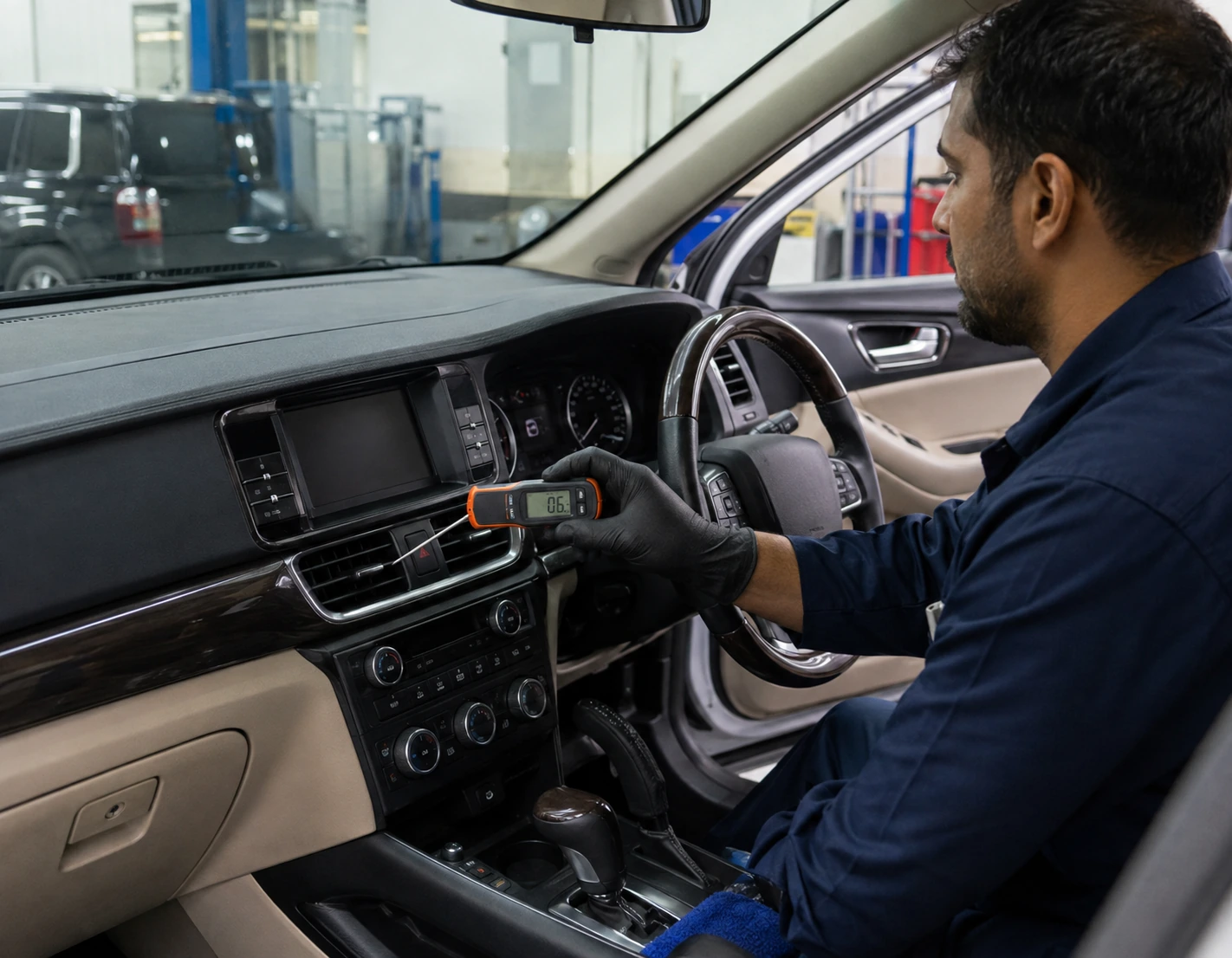
Map every vent zone
Measure front, second-row and third-row outlet temperatures with matching settings. Record airflow strength as well as temperature.
Check rear blower command and response
Confirm that the rear fan changes speed when requested and that the electrical supply matches what the climate system is commanding.
Compare rear temperature-door movement
Change the rear temperature setting and verify that the relevant actuator and air door respond physically, not only on the control display.
Read refrigerant and evaporator evidence
Use line temperatures, pressure behaviour and rear evaporator clues to decide whether the rear unit is receiving useful refrigerant flow.
Inspect rear lines and drain route
Look for leak evidence, damaged routing, corrosion, previous repair marks and any rear drain problem that could affect the HVAC housing.
Repeat the cabin heat-load condition
Verify the repair under a realistic hot-cabin condition. A large SUV needs enough test time for the second and third rows to show whether the repair actually restored capacity.
Useful service pages after the fault is narrowed down
You do not need to choose the repair before testing. These service pages explain the component routes once the rear AC complaint has been separated.
Rear AC not working FAQ
Why is the front AC cold but the rear AC warm
The rear system can have its own blower, evaporator, expansion valve, air doors and controls. A rear-only fault can therefore exist while the front works normally. Strong rear airflow with warm air points toward a different test path from weak or missing rear airflow.
Can low AC gas affect only the rear vents first
It can make the rear of a large cabin feel weak before the front because the rear unit and long lines may expose reduced system capacity. But low refrigerant should be measured and the reason for loss should be investigated. A rear-only leak or restriction can also create a rear-first complaint.
Why is there no air from the rear vents
A rear blower motor, blower controller, fuse, wiring fault or air-path restriction can cause very weak or missing airflow. If the blower can be heard but air output is low, evaporator icing or a duct restriction may also need checking.
Why does the rear AC blow warm even though the rear fan works
Strong airflow with warm air makes rear refrigerant flow, the rear evaporator, expansion valve and temperature-door control more important. The rear unit should be checked for useful cooling before an actuator or evaporator is approved.
Can a rear AC line leak be repaired
Yes, depending on the location, line condition and vehicle design. Some leaks are at fittings or accessible sections while others involve long line assemblies or corrosion. The repair should include the leak source, correct refrigerant procedure and final front-to-rear cooling verification.
Does a Patrol or Land Cruiser always have a separate rear evaporator
Do not assume it from the badge alone. HVAC design can vary by generation, trim and market. The workshop should identify the exact vehicle configuration before deciding which rear components exist and how they are accessed.
Why does the rear AC work better at night
A large SUV has a high cabin heat load in direct Dubai sun. If the system is marginal because of low charge, weak condenser airflow or reduced compressor output, the rear may struggle first during the hottest part of the day. A true rear-only fault can also become more obvious under heat load.
How long does rear AC diagnosis take
It depends on the symptom. A dead rear blower may be quick to isolate. A temperature problem can require front and rear vent measurements, live data, refrigerant testing and enough run time to reproduce the complaint. Access to rear trim or the HVAC case may add time.
What should I send before booking
Send the make, model, year and whether the front AC is cold. Tell us which rear rows are warm, whether the rear fan blows strongly, whether fan speed changes, whether the problem is worse in traffic or daytime heat, and whether the car has been regassed or repaired recently.
Do not replace rear AC parts until the failing zone is proven
Book a fixed-price diagnostic and tell us exactly what the front, second row and third row are doing. We will separate rear airflow, refrigerant, evaporator and climate-control causes, then explain the repair scope before parts are approved.