
Car AC Smells Like Vinegar
A vinegar or sour smell from the vents is usually an odour carried by the HVAC air path, not proof that the refrigerant itself has gone bad. Our guide to musty AC, mould concerns and cabin health explains when moisture deserves closer attention. Damp debris around the cabin filter, an evaporator that stays wet, poor condensate drainage, or a non-AC liquid source can all create it. The timing of the smell tells us where to look first.
A sour vent smell usually starts where moisture stays behind
In most cases, the smell is carried into the cabin by damp material around the intake, cabin filter, evaporator case or condensate drain. It is not a diagnosis of the refrigerant. If the smell began after rain, comes with wet carpet, or resembles coolant, fuel or burning plastic, the check must follow that different clue instead of treating the vents with fragrance.
Follow the smell through air and water
This is a practical inspection sequence, not a remote diagnosis. It prevents a fragrance treatment from hiding the only clue to an underlying water-entry or electrical problem.
1. Intake and filter tray
Leaves, dust and water can sit at the fresh-air entry. A cabin filter can absorb odour and then release it each time the blower starts. Inspect its condition, fit, housing seals and whether it is damp.
2. Evaporator and drain
The evaporator removes humidity from cabin air. If the surface remains damp with debris present, odour can develop. The drain must allow condensate to leave the HVAC case rather than overflow into insulation or electrical areas.
3. Cabin and non-AC sources
Spilled food, wet carpet, rainwater, coolant, an engine-bay smell or outside fumes can be pulled into the vents. The source is not always inside the air-conditioning system.
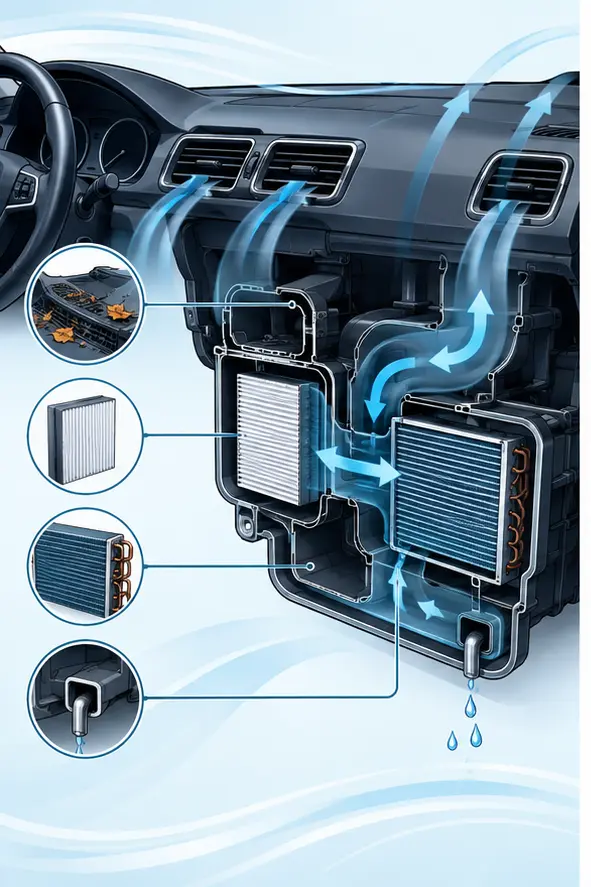
A sour odour needs a condition, not a perfume
The smell name is only a clue
Airflow can pick up odour from damp dust, leaf fragments, filter fibres and residue on the evaporator surface. One person may call it vinegar while another calls it sour socks or damp laundry, so the description helps identify a pattern rather than a chemical.
Refrigerant is a different diagnosis
Refrigerant normally circulates in a sealed system and is not the usual source of a vinegar smell in the cabin. Cooling trouble can coexist with an odour, but the air path and water path should be inspected before the smell is blamed on refrigerant.
What we normally rule out first
| Likely cause | Pattern that supports it | What confirms or changes the plan |
|---|---|---|
| Loaded or damp cabin filter | Smell appears immediately with blower operation, especially after the car has been parked. | Inspect filter media, tray, sealing and moisture source. Replace only with the correct size and orientation after the housing is cleaned. |
| Evaporator moisture and surface contamination | Odour is strongest when cooling starts and then becomes less noticeable after a few minutes. | Check drainage, accessible surfaces, cooling behaviour and suitable treatment access. A spray at the vents may not reach the source. |
| Restricted or displaced condensate drain | Smell follows humidity, long AC use, rain or a wet passenger footwell. | Confirm where water exits, inspect carpet and case overflow. Do not force pressure blindly into a drain line. |
| Fresh-air intake debris or water entry | Smell is worse in fresh-air mode, after washing, rain or parking beneath trees. | Inspect cowl, intake screen, plenum drainage and the surrounding seals. A cabin-only treatment will not correct an external entry route. |
| Coolant, fuel, exhaust or electrical source | Sweet smell with coolant loss, exhaust-like fumes, fuel smell, smoke or burning plastic. | Stop the odour-cleaning route and inspect the relevant cooling, fuel, exhaust or electrical system promptly. |
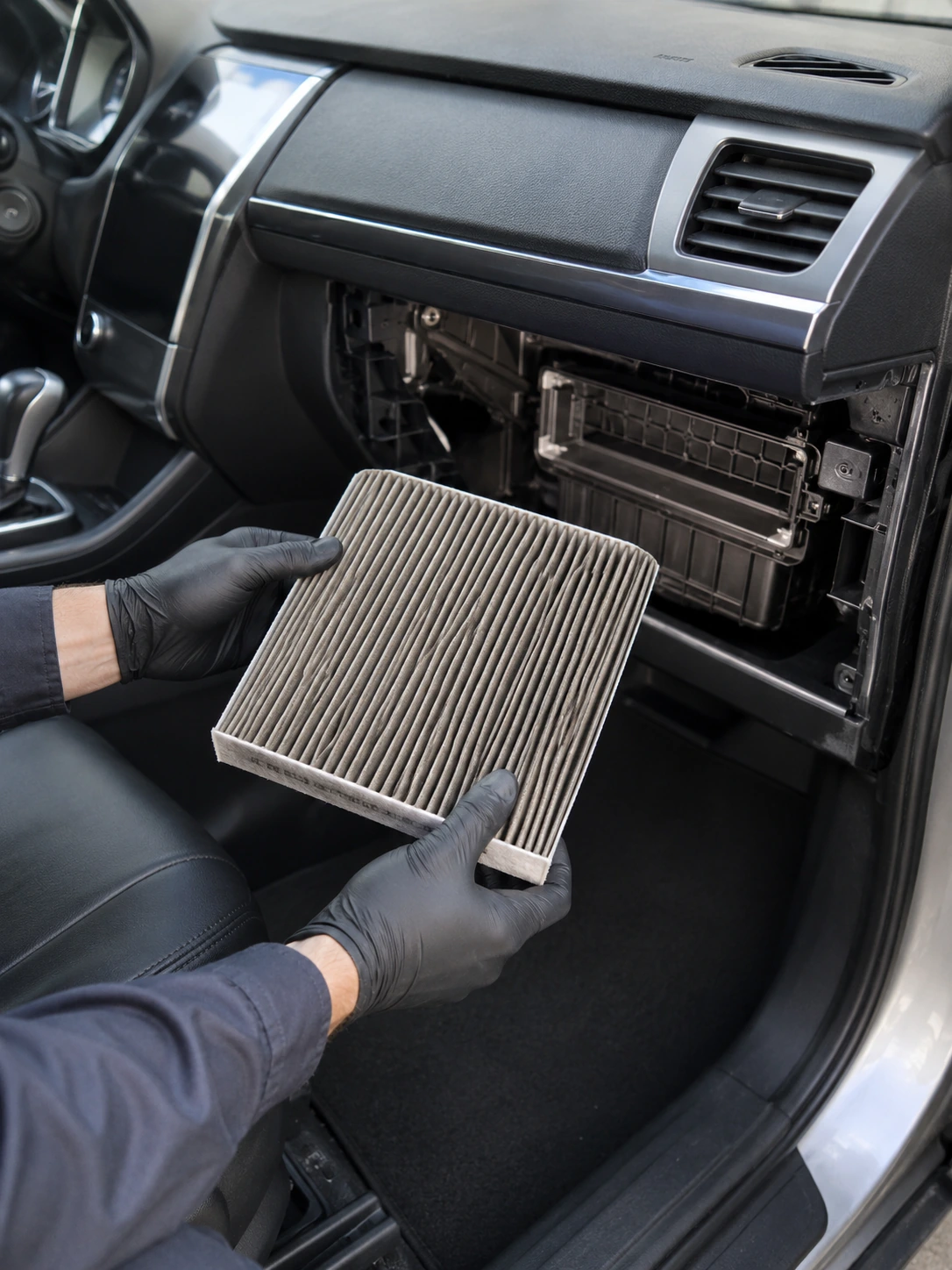
Why a quick deodoriser can make the diagnosis worse
Masking the smell can hide the best clue
Fragrance can make a same-day check inconclusive while doing nothing for leaf debris, wet underlay, a restricted drain, a damp filter housing or a water-entry route. Extra product can also leave residue and create a second odour.
Cleaning should follow source confirmation
Once the source is identified, the work may include removing reachable debris, fitting the correct filter, treating an appropriate surface, confirming drainage and ventilating the cabin. The exact method depends on access and product instructions.
Choose the inspection depth before discussing cost
Simple filter and intake clean
Lower-cost work may be suitable when inspection finds a dirty or damp filter and accessible debris, with no evidence of drain or cabin water damage. Filter type and vehicle packaging affect the final amount.
Evaporator, drain or housing work
Cost increases when the correct method requires deeper access, drain restoration, drying or inspection of the HVAC case. The solution should be based on the confirmed condition, not on the smell name alone.
Water-entry or non-HVAC diagnosis
Wet carpet, coolant loss, exhaust fumes, fuel odour or electrical signs change the scope entirely. These require the relevant source to be identified before any cabin-cleaning quotation is meaningful.
Any price is indicative and non-binding until the vehicle, exact source, access, required parts, treatment method and current condition are inspected. Ask for the scope, limitations and verification step in writing.
Do not keep using the AC simply to mask the smell if you notice any of these
Move to fresh air and arrange prompt inspection if there is smoke, heat-damaged plastic, repeated fuse failure, visible melted material, strong fuel smell, exhaust-like fumes, dizziness, headache, breathing irritation, a sweet smell with coolant loss, or wet carpet near electrical connections. A normal damp odour is unpleasant, but these patterns may point beyond routine HVAC cleaning.
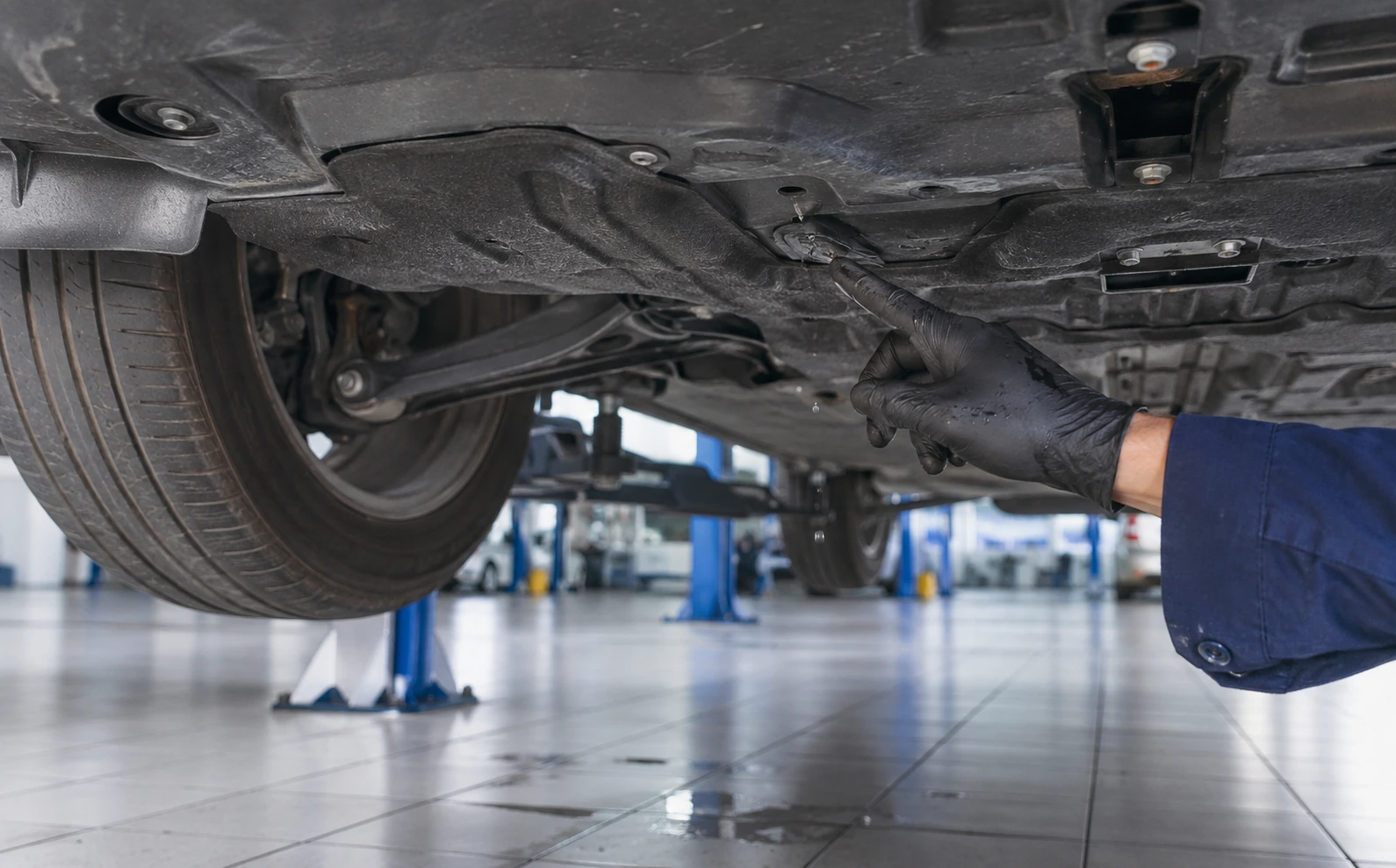
What a proper check should verify
Recreate the original conditions
Run the blower in fresh-air and recirculation modes, operate cooling long enough for normal condensate to form, and inspect the drain and filter housing where access permits. Added fragrance should not be allowed to become the test result.
Use repeatable triggers
If the odour returns after rain, a car wash, parking on a slope, changes in road speed or a switch between fresh air and recirculation, record that pattern. The goal is to confirm that the original smell is reduced or absent under the same conditions that produced it.
Before you treat a vinegar smell from the vents
Can a cabin filter cause a vinegar smell?
Yes. A loaded, damp or poorly seated filter can carry odour. It is only one part of the path, so the tray, intake, evaporator and drain should also be considered.
Will an AC gas refill remove the smell?
No. Refrigerant service addresses a cooling-system issue when testing supports it. It does not remove moisture, debris or odour sources in the cabin air path.
Why does the smell disappear after a few minutes?
Changing airflow and temperature can make an odour less noticeable. The source may still remain on a damp surface or in the intake path, particularly if it returns at the next start.
Is it safe to use household disinfectant in the vents?
No. Household products can damage materials, leave unsuitable residue and fail to reach the source. The method and product must be suitable for the vehicle and application area.
Tell us exactly when the sour smell starts
Send the vehicle make, model and year, whether the odour happens at startup or while driving, the fresh-air or recirculation setting, rain or wash history, and any damp carpet. That lets us start with the right diagnostic path.
Small changes in the odour pattern can point to the source
Fan on, cooling off
If the smell appears with the blower running before cooling starts, the source can still be the filter, intake, evaporator surface or cabin. If it begins only after the AC has cooled for a while, check whether condensate is draining normally and whether airflow weakens at the same time.
Fresh air vs recirculation
A smell that is clearly worse on fresh air points more toward the outside intake, plenum water or an engine-bay source. A smell that becomes stronger only on recirculation moves the cabin filter housing or recirculation door higher on the inspection list.
Rain, washing or parking angle
A sour smell after rain, washing or parking on a slope should trigger a water-entry check as well as an AC-drain check. Carpet can feel dry on top while the underlay remains wet, so a new filter can improve the smell briefly without fixing the moisture source.
Smell plus weak airflow
If the complaint includes weak airflow after the AC runs, mention it. Evaporator icing can change both airflow and moisture conditions. For confirmed HVAC-surface or drainage odours, see the car AC smell removal and disinfection service.
What not to do before inspection
Do not pour or spray blindly
Avoid pouring liquid into vents, using unapproved household disinfectant, repeatedly adding fragrance, or pushing wires and tools through dashboard outlets. These actions can wet electronics, disturb vent vanes, leave residue or remove useful clues.
Do not force an unknown drain
Compressed air or high pressure can send debris or water into the HVAC case if the drain is displaced or disconnected. If the smell comes with warning lights, coolant loss, fogging glass, wet carpet, burning, fuel or exhaust odours, the investigation must move beyond routine cabin cleaning.
How to prepare a useful booking
Send the pattern, not just the smell
Include the make, model and year, when the odour first appears, whether cooling must be on, fresh-air or recirculation mode, recent rain or washing, and whether water is present under the car or inside the cabin. A damp-footwell photo is more useful than a photo of a vent.
Verify after the treatment scent fades
After the source is corrected, repeat the same fan mode and conditions that produced the complaint. Judge the original odour only after any approved treatment scent has dissipated. A strong perfume at collection is not a verification result.