
Car Overheats When AC Is On
If the engine temperature rises when you switch the AC on, treat it as more than a comfort problem. The AC condenser and engine radiator rely on the same front airflow, and the compressor adds load to the engine. A weak cooling fan, blocked condenser, marginal engine-cooling system or mechanical compressor problem can become obvious only when the AC increases heat and load.
Instant answer
If your car overheats when the AC is on, common causes include a weak or failed cooling fan, poor condenser or radiator airflow, a marginal engine-cooling system, a fan-control or electrical fault, excessive compressor load, or an AC pressure condition that makes the front heat exchanger work harder. Switch the AC off if engine temperature rises. If the temperature continues climbing, stop safely and do not drive the vehicle as though it is only an AC problem.
Three overheating patterns that point in different directions
The phrase overheats with AC on covers several different behaviours. The most useful detail is when the temperature starts to climb and whether vehicle speed changes it.
Overheats mainly at idle or in traffic
This makes cooling-fan performance and front heat-exchanger airflow a high priority. Road speed can hide a weak fan by forcing air through the condenser and radiator. When the vehicle stops, the electric or engine-driven fans must create that airflow themselves.
Overheats even while driving
A broader engine-cooling problem becomes more likely. Coolant circulation, radiator condition, thermostat operation, water-pump performance, combustion issues and severe condenser blockage may need attention alongside the AC load. This pattern should not be treated as an AC-only fault.
Temperature rises immediately with AC request
An immediate change can point toward fan command, a severe compressor or belt load, an electrical fan-control issue or a cooling system already operating very close to its limit. Listen for fan operation and unusual mechanical noise, but do not keep cycling the AC if the engine temperature is climbing.
Most likely reasons the engine temperature rises
The ranking below is a starting point for a vehicle that remains stable with the AC off but becomes hot when the AC adds load. The exact order changes with the vehicle, temperature pattern and any existing engine-cooling symptoms.
Cooling fan not running or not moving enough air
The condenser and radiator need strong airflow at low road speed. A failed fan motor, weak fan, damaged blade, fan clutch, relay, controller, fuse, resistor or wiring problem can let temperatures rise in traffic. The fan should be checked for actual airflow and commanded speed, not only for whether it spins at all.
Very common at idleCondenser or radiator airflow is restricted
Sand, debris, bent fins, a damaged shroud or blockage between heat exchangers can reduce the amount of air reaching the radiator. In Dubai, a dirty or damaged condenser face can increase AC pressure and add heat directly in front of the radiator. Cleaning or repair should match the actual restriction rather than using aggressive pressure that damages fins.
Dubai heat and sand clueEngine cooling system is already marginal
A weak radiator, low coolant, thermostat fault, water-pump problem, air pocket or other engine-cooling issue may remain hidden until the AC adds compressor load and condenser heat. If the car also runs hotter on hills, in traffic or during heavy acceleration with the AC off, the engine-cooling system deserves equal or greater priority than the AC system.
Not an AC-only pathFan control, relay or electrical command fault
Some vehicles use multiple fan speeds or variable fan control. A fan may operate slowly but fail to reach the higher speed requested when AC pressure or engine temperature rises. Relays, modules, resistors, wiring and sensor inputs should be checked against commanded and actual fan operation.
High-speed fan clueCompressor or belt drive creates excessive load
A compressor with internal mechanical damage, poor pulley bearing, clutch problem or abnormal belt load can make the engine work harder when the AC engages. Severe drag may come with noise, vibration or belt smell. Compressor replacement should be based on mechanical and refrigerant evidence, not the temperature gauge alone.
Look for noise and dragHigh AC pressure or incorrect refrigerant condition
Overcharge, poor condenser airflow, contamination or another refrigeration fault can increase high-side pressure and heat rejection. The control system may respond by demanding more fan speed or cycling the compressor. Pressure should be interpreted with ambient temperature, airflow and the correct refrigerant specification rather than judged from one gauge reading.
Pressure follows airflow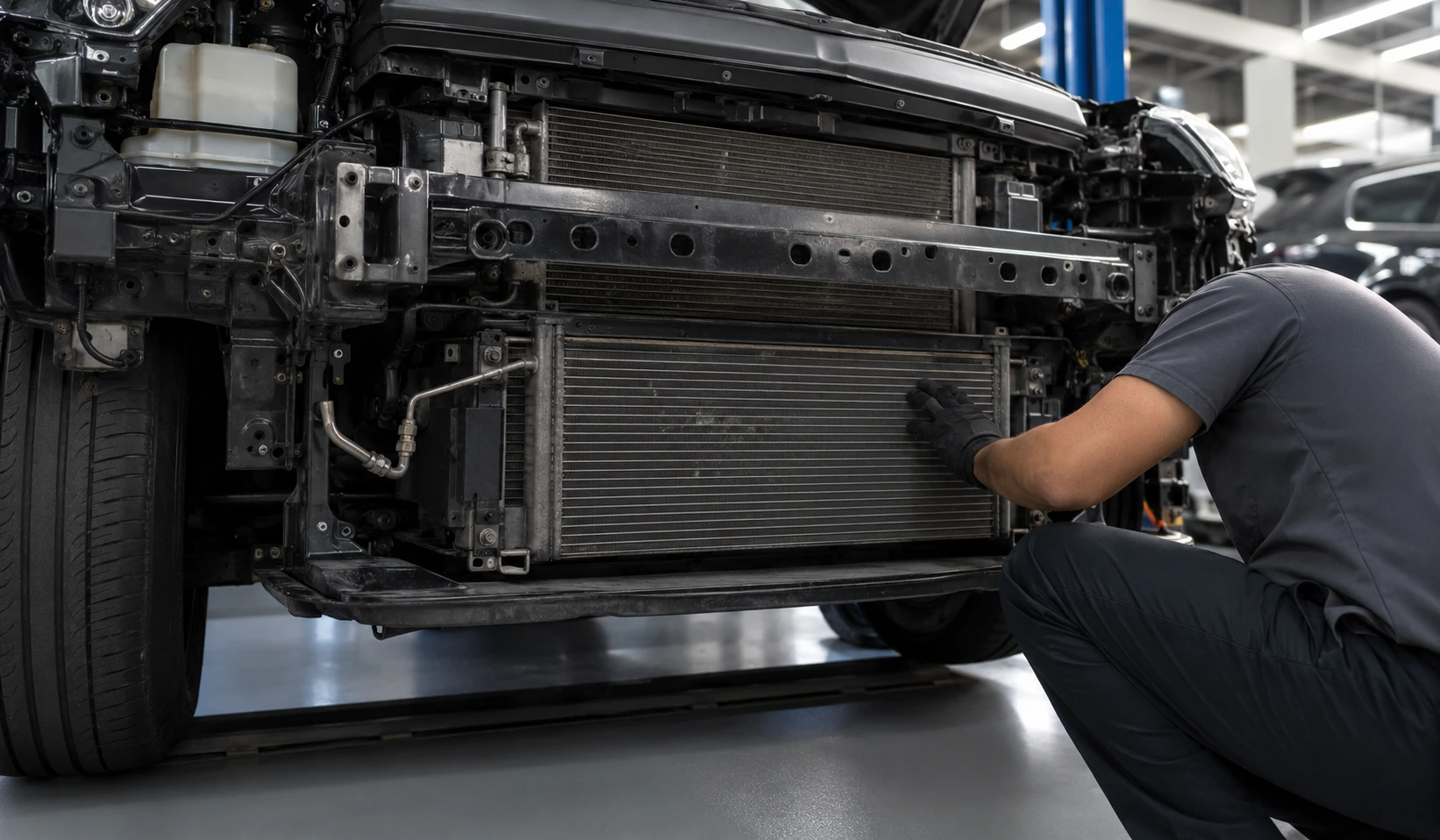
A spinning fan is not automatically a healthy fan
A common mistake is to see the fan rotating and declare the airflow system good. Modern vehicles may use two fans, multiple speeds or variable electronic control. A fan can spin too slowly, operate only one speed, turn in the wrong direction after incorrect repair, have a damaged shroud, or fail only when hot. The correct test compares what the vehicle is commanding with the airflow and speed the fan actually produces.
If overheating happens only in traffic, the fan should be observed when AC pressure and engine temperature are rising. If the fan is commanded to high speed but stays slow, the fault is different from a system that never requests high speed because of a sensor or control issue. If the fan works correctly and airflow is strong, attention moves toward radiator capacity, coolant circulation, compressor load and AC pressure behaviour.
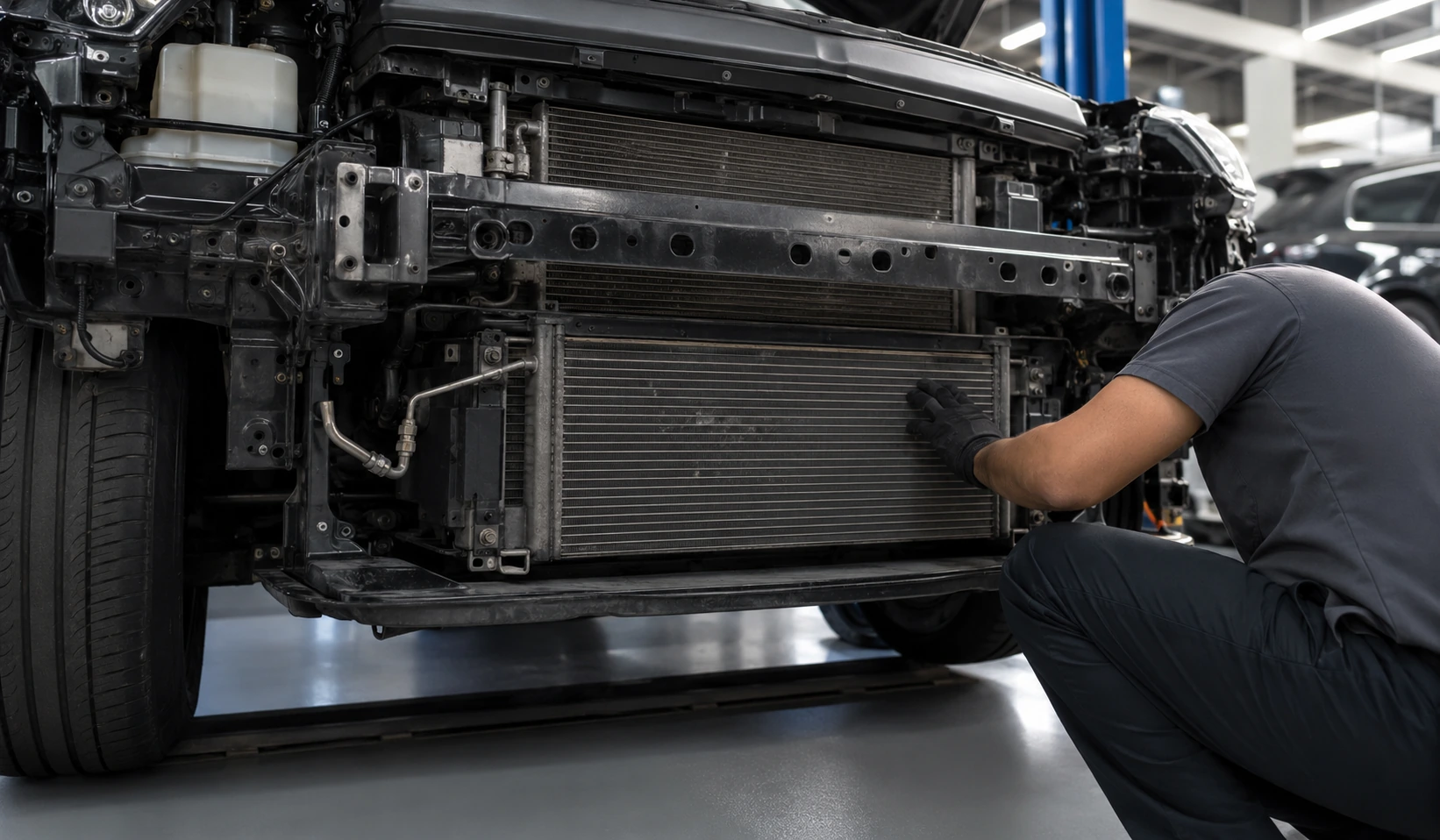
What it can cost to fix overheating with the AC on
The final repair may belong mainly to the AC system, mainly to the engine-cooling system, or to both. These are broad planning ranges only. The exact quote should follow a diagnosis that reproduces the temperature rise.
Cooling fan, relay or fan-control repair
AED 350 to 1,800+Cost varies by fan assembly, controller, wiring, relay arrangement and whether the vehicle uses multiple or variable-speed fans.
Condenser cleaning or repair
AED 200 to 3,500+Careful cleaning can be lower. Condenser replacement, fan damage or front-end access can move the job much higher.
Cooling-system repair after diagnosis
AED 300 to 2,500+Thermostat, radiator, coolant circulation and other engine-cooling repairs vary too much by vehicle for one fixed price.
Compressor or belt-drive repair
AED 500 to 4,500+A belt or pulley issue can be lower. Confirmed compressor replacement is a major component repair and may require supporting AC work.
Temperature enters the hot zone
Do not keep driving to see whether it comes back down. Severe overheating can damage the engine.
Steam or coolant smell appears
Stop safely. Do not open the cooling system while hot or pressurised.
Fan does not run and temperature climbs
Switch the AC off and avoid extended idling. If temperature keeps rising, stop the engine when safe.
Compressor or belt makes severe noise
Turn the AC off. A seized or heavily loaded accessory can damage the belt drive.
Warning light appears with power loss
Treat it as a broader vehicle fault rather than continuing to focus on AC comfort.
Coolant level is visibly low when cold
A coolant leak or engine-cooling fault needs diagnosis. Do not assume the AC caused the loss.
How we diagnose overheating that appears with AC
The diagnostic needs to determine what changes first when the AC is switched on. Does fan command increase but airflow stay weak, does AC pressure rise too quickly, does coolant temperature climb despite good fan operation, or does the compressor create abnormal mechanical load.
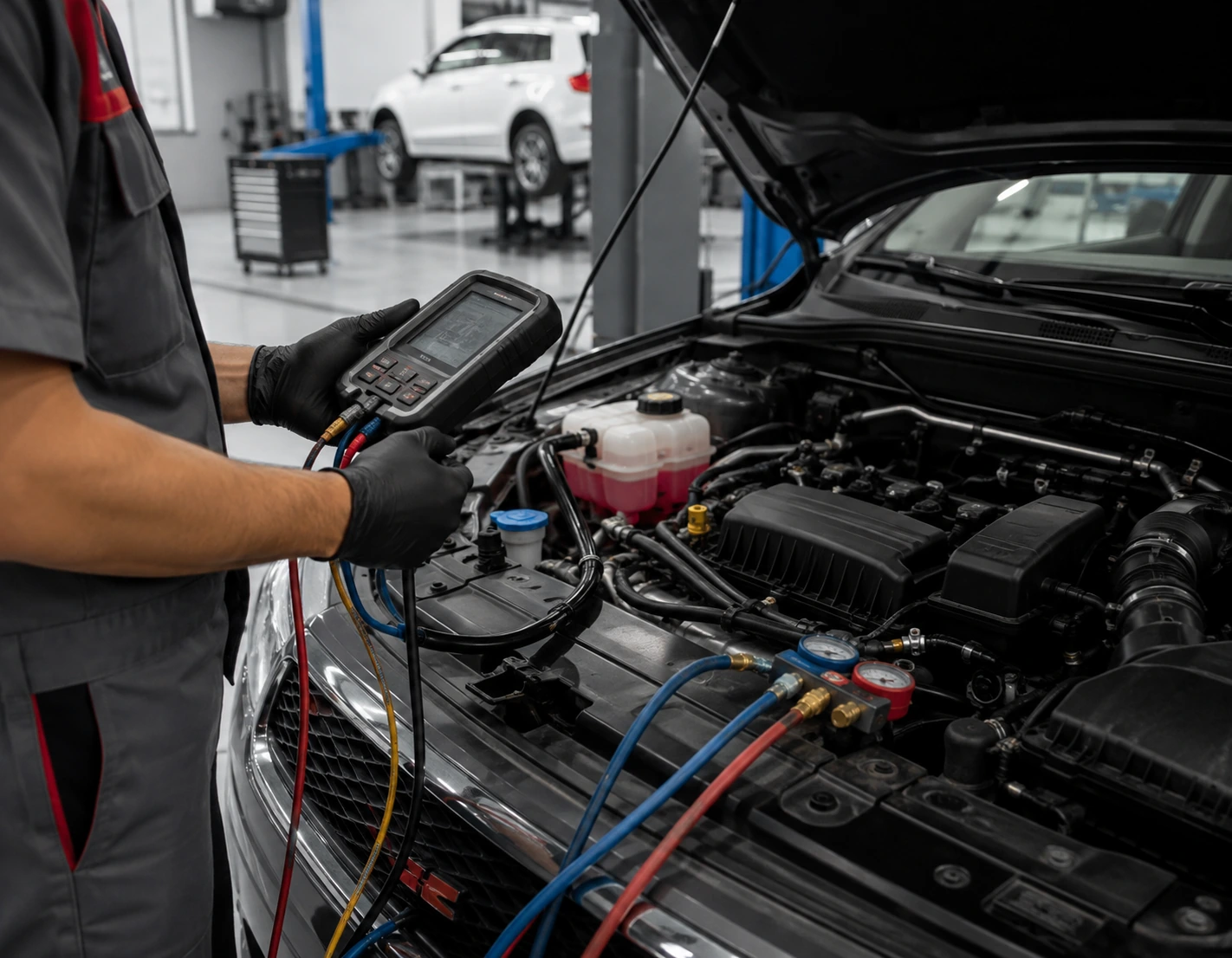
Record the temperature pattern
Confirm whether overheating happens only at idle, only with AC, during road driving, after heat soak or under another load.
Check cooling fan command and real airflow
Observe fan speed, direction and airflow while AC pressure and engine temperature change.
Inspect condenser and radiator condition
Look for debris, sand blockage, bent fins, shroud problems and restrictions between the heat exchangers.
Compare AC pressure with engine temperature
If AC pressure rises first, condenser airflow may be driving the problem. If coolant temperature rises despite normal AC behaviour, the engine-cooling system moves higher on the list.
Check compressor and belt load
Listen for abnormal noise, belt distress and excessive mechanical drag when AC operation begins.
Verify the repair in the original condition
Repeat the idle or heat-load condition far enough to confirm stable engine temperature and stable AC operation.
Three things not to do when the car overheats with AC
If the temperature gauge is climbing, the priority is preventing engine damage. A workshop can reproduce the condition while watching temperatures, fan command and pressure data.
Hot coolant can be pressurised and cause serious burns. Coolant level checks should be performed only when the vehicle is cold and according to the vehicle procedure.
Adding refrigerant cannot fix a failed cooling fan, blocked radiator, weak water pump or compressor drag. The crossover between AC and engine cooling has to be tested.
Where the diagnosis may lead
The page is about a crossover symptom. The final repair may sit in AC airflow, compressor work, electrical control or the vehicle cooling system. These AC service pages explain the relevant branches once the cause is narrowed down.
Car overheats with AC on FAQ
Why does my car overheat only when the AC is on
The AC adds compressor load and the condenser adds heat in front of the radiator. A weak cooling fan, blocked airflow or marginal engine-cooling system may cope with the AC off and fail when that extra heat and load appear.
Why does the car overheat in traffic with the AC on
At low road speed, the cooling fans become responsible for pulling air through the condenser and radiator. A weak fan, missing high-speed fan operation or blocked front heat exchanger often becomes much more obvious in traffic.
Can a bad AC compressor make the engine overheat
Excessive compressor drag can add mechanical load, especially if there is internal damage, clutch trouble or belt distress. But a compressor should not be blamed until fan airflow, engine cooling and AC pressure behaviour are also checked.
Can low AC gas cause engine overheating
Low refrigerant itself is not a normal cause of engine overheating. The more important crossover issues are condenser airflow, cooling-fan operation, high AC pressure, compressor load and the condition of the engine-cooling system.
Can too much AC gas cause overheating
An incorrect overcharge can raise AC pressure and increase heat rejection, especially if condenser airflow is weak. It should be confirmed with the correct refrigerant specification and measured service procedure rather than guessed from pressure alone.
Is it safe to drive if the temperature rises only with AC on
Switch the AC off. If engine temperature returns to normal and stays stable, drive only as needed to arrange diagnosis. If temperature continues rising, a warning light appears, steam is visible or coolant is being lost, stop safely and arrange assistance.
Should both cooling fans run when the AC is on
Fan strategy varies by vehicle. Some use two fans, some one variable-speed fan and some stage fan speeds differently. The correct test is whether commanded airflow is achieved under the current AC pressure and engine temperature.
Why does the temperature drop when I start moving
Road speed forces more air through the condenser and radiator. If the temperature falls while moving and rises again at idle, fan capacity and front airflow become strong diagnostic clues.
What should I send before booking
Send the make, model and year, whether the temperature rises only at idle or also while driving, whether the AC remains cold, whether the fans can be heard, whether there is coolant loss, and any warning lights, belt noise or recent cooling-system repair.
Overheating comes before cabin cooling
Book a fixed-price diagnostic and tell us exactly when engine temperature rises. We will compare cooling-fan airflow, condenser pressure, compressor load and the engine-cooling response so the repair is based on the system that actually loses control first.