
Tesla AC Repair Dubai
Tesla cabin cooling belongs to a wider thermal system, so a weak AC complaint should not be reduced to a routine gas refill. Model 3, Model Y, Model S and Model X can show similar cabin symptoms for very different reasons including airflow restriction, refrigerant loss, electric-compressor performance, heat rejection, sensor input and thermal-routing behaviour where fitted. We identify the exact Tesla and the operating state that exposes the fault before approving expensive components.
Cabin is weak everywhere
Start with airflow, vent temperature, refrigerant performance, electric-compressor response and external heat rejection. When all vents are affected, the problem is less likely to be one local air-distribution fault.
Cooling changes with heat or run time
Hot-soak and extended-run behaviour need to be reproduced. A short workshop test while the vehicle and cabin are still cool can miss the actual fault.
Heat-pump or valve-routing concern
Where the exact Tesla uses a heat pump or complex thermal routing, commanded operation must be compared with real temperature and refrigerant response. The owner guide to Tesla AC and heat-pump behaviour in Dubai explains the normal patterns and warning signs. A named valve should not be replaced from internet familiarity alone.
Major component was already quoted
For electric-compressor, evaporator or thermal-control estimates, bring the earlier quote. We retest the original complaint and verify whether that branch actually explains it.
Model name alone does not define the thermal system
Model 3 and Model Y
Hot-soak recovery, airflow, refrigerant performance, electric-compressor response and heat-pump operation where fitted are interpreted together. Model Y cabin volume can make marginal cooling more obvious after outdoor parking.
Model S
Premium cabin expectations make whole-cabin pull-down and stable sustained cooling more useful than one brief vent reading.
Model X
Large cabin and passenger load mean front-vent temperature alone is not enough. Airflow and sustained cooling across the occupied cabin matter.
Older and newer configurations
Vehicle year, fitted thermal architecture, refrigerant specification and exact part identification remain important before heat-pump or valve terminology is used to choose a repair.
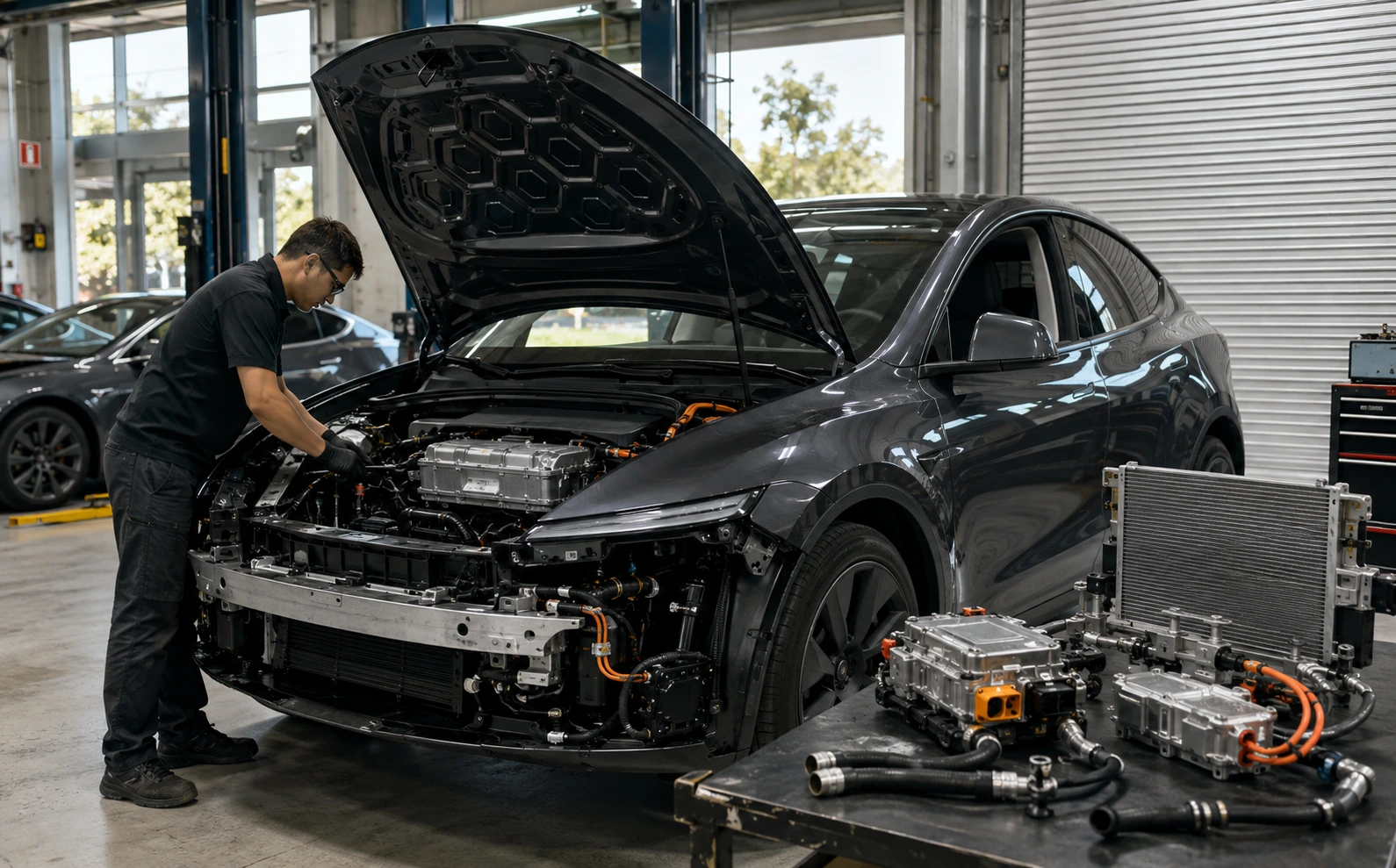
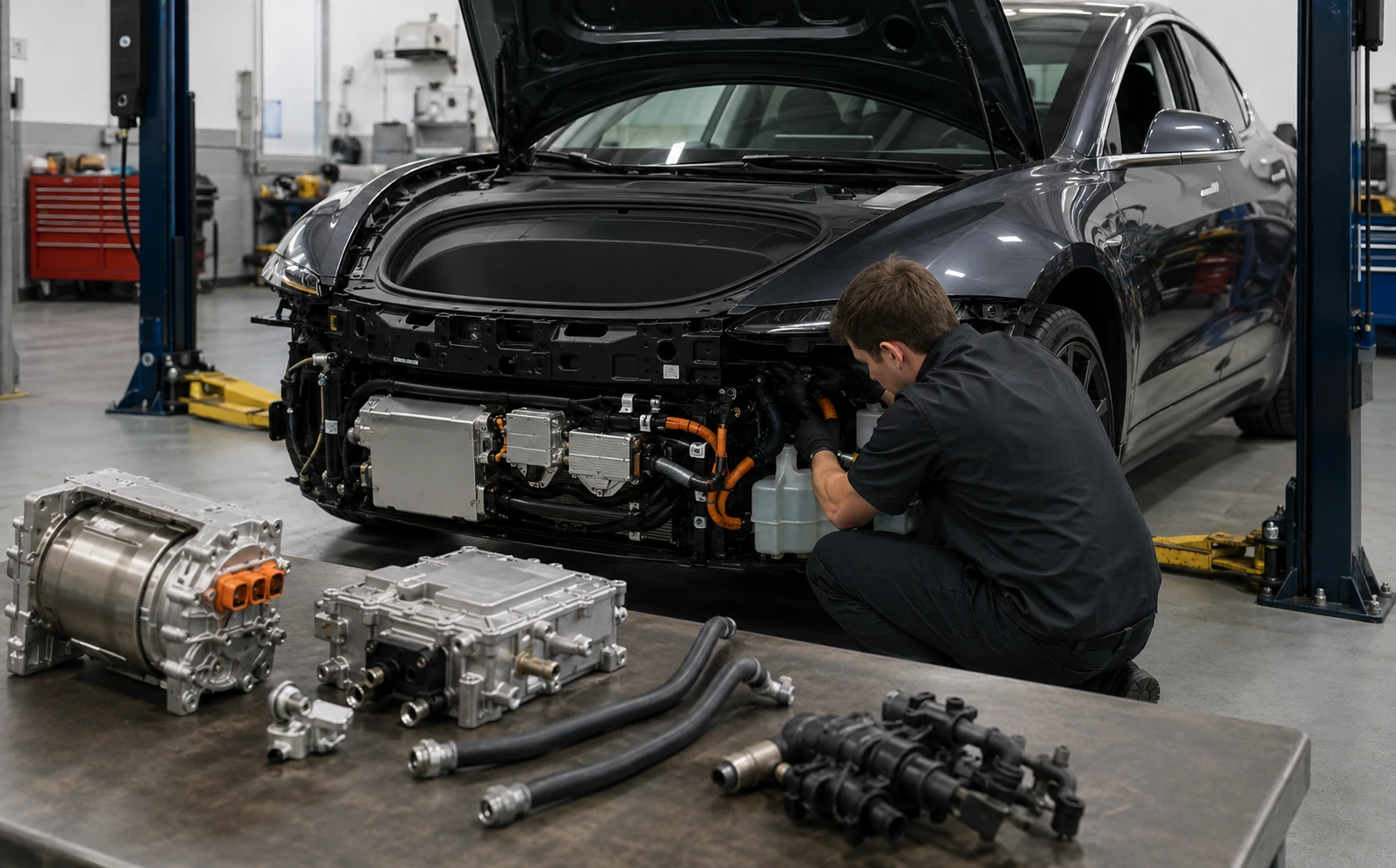
Heat-pump and valve language needs configuration-level proof
Tesla is one of the clearest examples of why EV climate diagnosis should connect software-visible requests to physical temperatures. On configurations with a heat pump and more complex refrigerant routing, heating and cooling can share components that do not exist on a simple belt-driven AC layout.
That complexity should make the diagnosis more disciplined, not more speculative. Low refrigerant, weak heat rejection, airflow restriction, sensor plausibility, electric-compressor performance and electrical control can create overlapping symptoms. A familiar component name is not evidence by itself.
The refrigerant and lubricant procedure also depends on the exact vehicle. Service information and the vehicle specification control the recovery, charging and cleanliness requirements. Repeated refrigerant loss moves the repair toward leak detection, not repeated top-ups.
Command and result check
Requested temperature, fan level and the actual vent and cabin result are documented.
Hot-soak, vehicle heat load, charging state where relevant and current operating temperature are considered.
Electric compressor, fans, sensors and thermal-routing commands are assessed where diagnostic access supports it.
Temperature change, airflow, refrigerant behaviour and actual component operation must support the proposed repair.
Accessible airflow or electrical work can be shorter. Compressor, refrigerant and access-heavy thermal repairs need parts and enough run time to verify the original condition.
For eligible Tesla work using original parts, six months of warranty cover is recorded against the approved repair.
Symptoms that decide what gets measured first
Tesla-specific diagnosis is not a list of famous component names. It is a comparison between the cabin complaint, the vehicle state and the thermal branch that fails to produce the expected result.
Cabin stays warmer than expected
Vent temperature, refrigerant performance, electric-compressor response, airflow and external heat rejection are separated before a recharge is assumed to be the fix.
AC struggles after outdoor parking
The car should be tested during actual pull-down. A marginal system can look normal after the cabin is already cool.
Cooling changes after run time
Thermal protection, sensor behaviour, electrical control and refrigerant-side operation may need enough time to reproduce. The AC stops after a while page helps describe the timing.
Air is cold but cabin flow is weak
Cabin filters, blower output and air-path restriction can reduce comfort even when refrigerant cooling is present.
Cooling improves after recharge then fades
Repeated low charge supports leak detection and a review of prior refrigerant work rather than another blind refill.
Climate commands and physical result disagree
Sensor plausibility, wiring, controls and component response are compared before a thermal or electronic component is replaced.
Use the failed thermal branch to decide the parts route
Electric compressors, thermal valves, sensors and access-heavy HVAC components carry different compatibility and repeat-labour risks. Parts should be identified from the exact Tesla rather than selected because another owner reported a similar symptom.
For high-value thermal work, specification, cleanliness and component identity matter. A cheap part that creates a second diagnostic problem is not a saving.
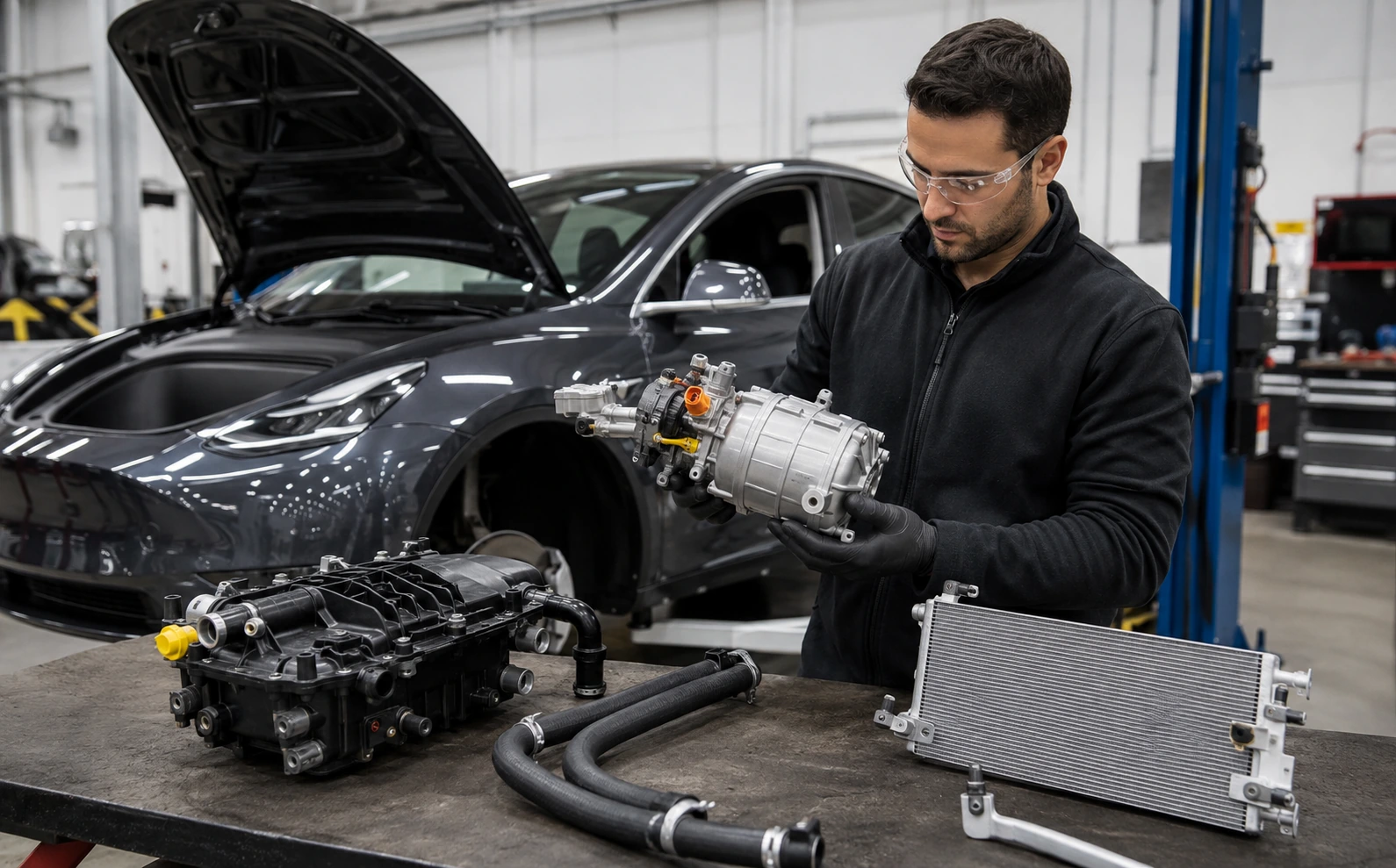
Configuration-specific components
Electric compressor, thermal-control hardware and integrated parts are matched to the exact vehicle and verified failure mode.
High-consequence thermal parts
Where heat-pump or valve-routing hardware is involved, fitted part, control type and system condition receive stronger verification before replacement.
Accessible service items
Filters, selected seals and lower-risk items can allow broader quality options when specification and warranty are clear.
Repair before module replacement
Power, ground, connector and wiring faults should be corrected when proven instead of being converted into an unnecessary control-unit purchase.
What Tesla AC repair may cost
These are broad planning ranges rather than quotations. Exact configuration, thermal architecture, refrigerant work, access and parts availability determine the written estimate.
A useful high-value quote should connect the part to the original cabin complaint. If the proposal names a heat-pump valve, electric compressor or integrated thermal component, it should explain what command or physical response failed and what supporting refrigerant or electrical work is included.
Separate cabin airflow, refrigerant, electric-compressor, heat-rejection and thermal-control branches.
External seals, heat exchangers, hoses and access-heavy leak sources create different scopes.
Filter, blower and control issues vary from simple service work to electrical diagnosis.
Exact component, refrigerant cleanliness, electrical diagnosis and supporting work affect the total.
Configuration and failed component need to be proven before a meaningful quote can be produced.
Interior access, refrigerant procedure and supporting seals make labour a major variable.
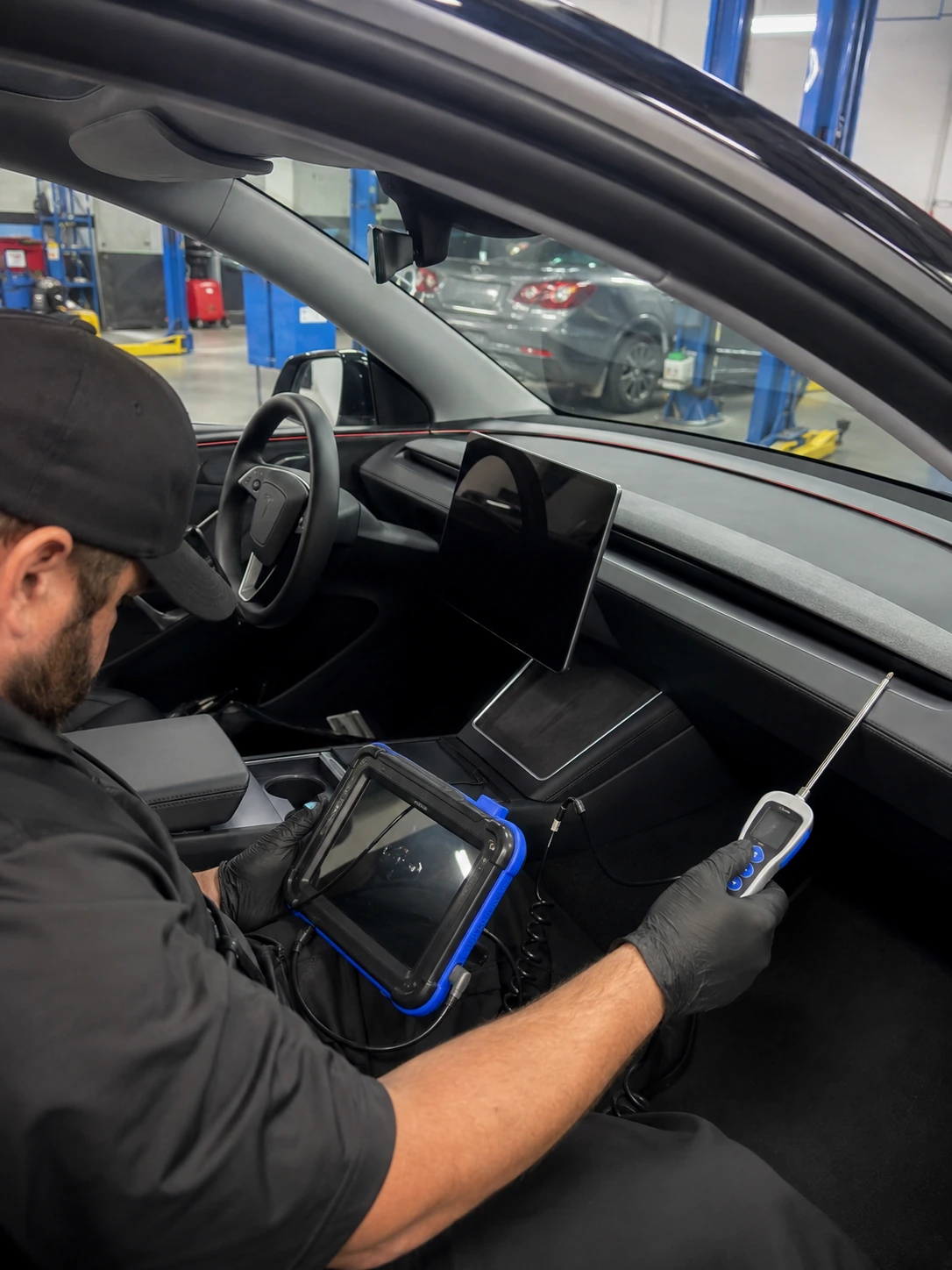
Software-visible commands only matter when physical cooling agrees
Identify the exact Tesla configuration
Model, year, thermal architecture where known, recent work and the precise cabin complaint are recorded.
Reproduce the operating state
Hot-soak, extended run time, stationary operation, charging or other conditions are used when they make the symptom appear.
Measure the cabin result first
Vent temperature, airflow and whole-cabin pull-down establish what is actually failing before a thermal component is named.
Check refrigerant and heat rejection
Cooling output and external heat exchange are assessed before a valve or control part is blamed.
Compare command and response
Electric compressor, sensor, fan and thermal commands are matched to physical operation where applicable.
Confirm the failed branch
Mechanical, refrigerant or electrical evidence has to support the repair recommendation.
Quote the exact repair boundary
Parts, labour, refrigerant procedure, warranty and conditional work are explained before major dismantling.
Retest the same thermal condition
The car is checked under the original heat or run-time condition after repair where practical.
What Tesla owners ask before booking
These answers focus on practical Dubai repair decisions without assuming every Tesla uses the same thermal hardware.
Why is my Tesla AC not cold enough in Dubai
Cabin heat load, airflow, refrigerant performance, electric-compressor output, fans and thermal-control operation can all contribute. The car should be tested under the condition that makes cooling weak.
Does every Tesla use the same heat-pump system
No. Thermal architecture varies by model and configuration. The exact vehicle should be identified before heat-pump or valve terminology is used to choose parts.
Can valve-routing faults cause cabin cooling problems
On applicable configurations they can, but similar symptoms can come from refrigerant, sensors, compressor performance, airflow or heat rejection. The failed path should be proven first.
Can Tesla refrigerant simply be topped up
A low charge should prompt a leak and service-history check. Repeated topping up without locating the reason for the loss is not a complete repair.
Do you repair Tesla electric compressor faults
We diagnose the compressor branch and quote repair or replacement when electrical, refrigerant and physical-output evidence supports it.
Can wider vehicle thermal demand affect cabin AC
It can interact on some configurations and operating states. That is why the cabin complaint should be tested as part of the wider thermal picture without assuming every thermal event is an AC component failure.
How long can Tesla AC repair take
Airflow, accessible electrical and basic refrigerant diagnosis can be shorter. Electric-compressor, thermal-control and access-heavy repairs need parts confirmation and post-repair verification, so completion time is confirmed after diagnosis.
What should I send on WhatsApp
Send the Tesla model, year, exact cabin symptom, when it appears, whether heating is also affected and any recent AC or thermal-system work or estimate.
Send the model and the exact thermal symptom
Tell us whether you have a Model 3, Model Y, Model S, Model X or another Tesla, the year, what the cabin does and when the fault appears. That lets us prepare the correct EV climate and thermal diagnostic route at our Al Quoz 4 workshop.