
BYD MG Geely and Chinese EV AC Repair Dubai
BYD, MG, Geely, Zeekr and other Chinese electric vehicles need cabin-cooling diagnosis that respects the wider thermal system. Electric compressors, refrigerant condition, cabin airflow, heat exchangers, sensors, pumps and valves can create overlapping symptoms, while the vehicle may also be managing battery or power-electronics temperature. We identify the exact EV and its operating state first, then test the thermal branch that explains the complaint instead of reducing every weak-cooling problem to a gas refill or compressor replacement.
Cabin airflow, refrigerant performance, electric-compressor response and external heat rejection are separated before a recharge or compressor is recommended.
The car is tested during actual cabin pull-down because a marginal system can appear normal once the interior is already cool.
Where charging or battery thermal demand coincides with the complaint, that operating state is documented rather than assuming the cabin circuit alone is faulty.
Sensor values, compressor commands, pump or valve commands and actual thermal response need to agree before integrated control hardware is blamed.
If another workshop has quoted an electric compressor or thermal-control component, we retest the original symptom and verify that branch before expensive parts are approved.
Fast-growing EV ranges need platform-specific identification
The Chinese EV market changes quickly. That makes the exact model, year and fitted thermal hardware more important, not less. A component that looks related across brands is not automatically compatible.
BYD
Atto 3, Seal, Dolphin and other BYD EVs can present cabin-cooling, airflow and thermal-demand complaints. The test starts with the exact model and operating state rather than assuming one architecture across the range.
MG electric
MG4, ZS EV and related electric models can develop hot-soak, intermittent-cooling and airflow complaints that need to be separated into cabin, refrigerant and electrical-control branches.
Geely and related EV platforms
Vehicle identification, refrigerant specification and fitted thermal components come before parts selection. Similar platform language is diagnostic context, not proof that hardware is interchangeable.
Zeekr and emerging premium EVs
More complex thermal strategies increase the value of measured temperatures, command data and component identification before a repair is proposed.
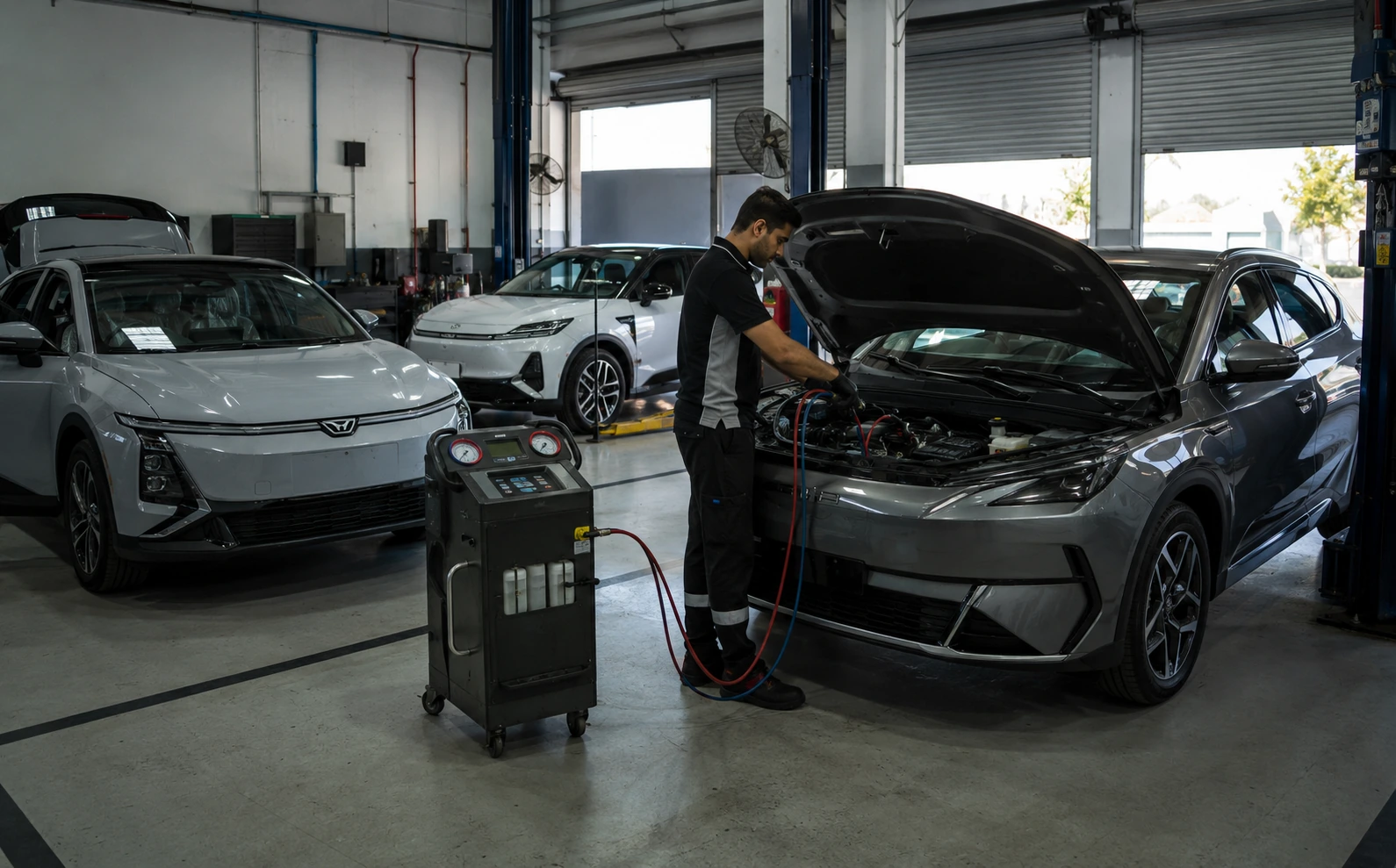
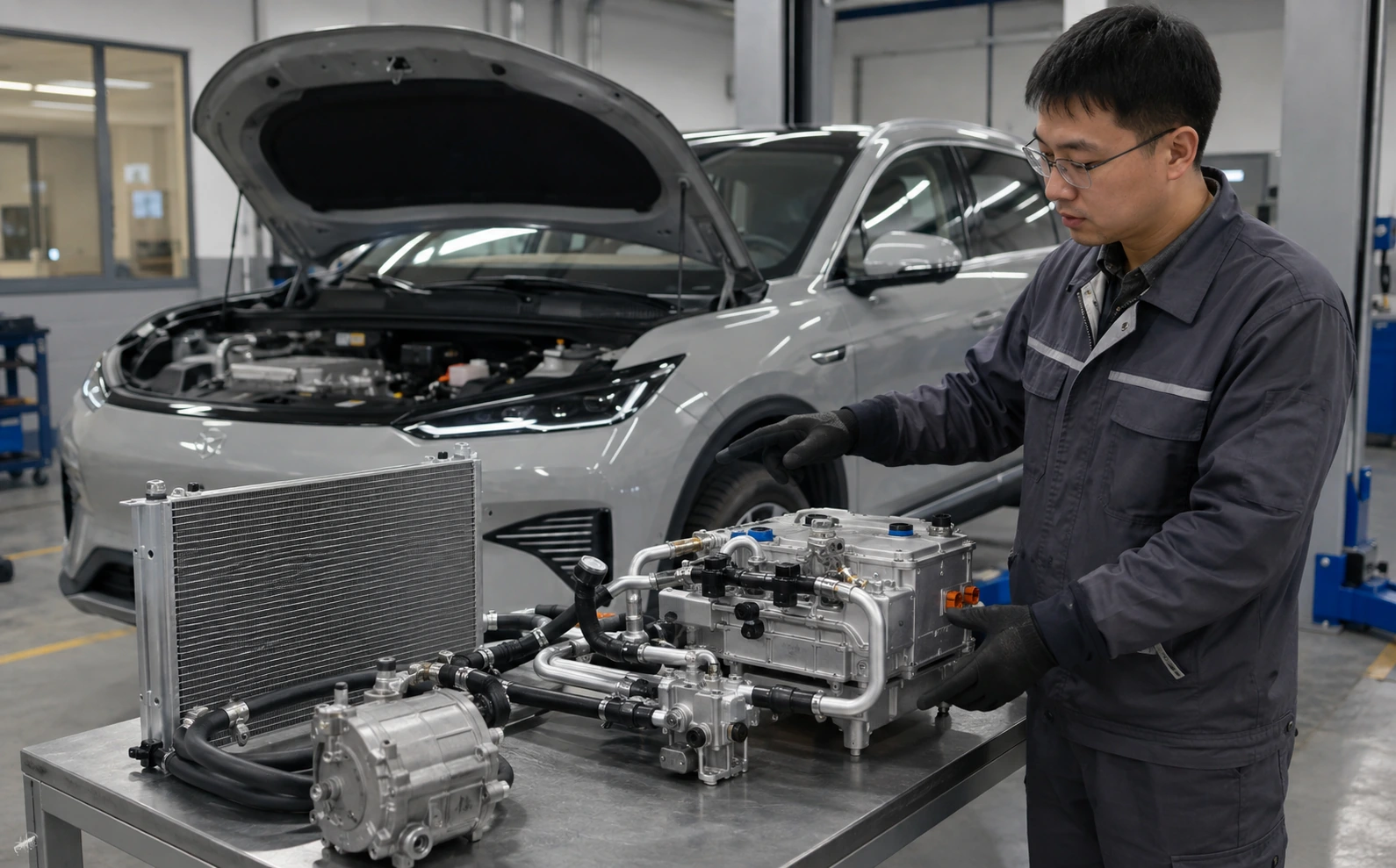
Cabin cooling is one thermal demand among several
Many electric vehicles use an electrically driven compressor rather than a conventional engine-belt compressor. That removes familiar clues such as clutch cycling and engine-speed dependence. The vehicle can request cooling even when there is no combustion engine running.
Depending on the platform, refrigerant or coolant circuits can also support battery or power-electronics temperature. That does not mean every cabin complaint is caused by battery cooling. It means the technician should understand the vehicle state before interpreting compressor, valve, pump or heat-exchanger behaviour.
Refrigerant remains vehicle-specific. The label determines whether R134a, R1234yf or another approved specification applies, and the service procedure must also use the correct lubricant and contamination controls. The R1234yf service applies only when the exact vehicle requires it.
Five branches read together
Vent temperature, blower volume and whole-cabin pull-down establish what the occupants actually experience.
Electric-compressor response, charge condition and heat-exchanger performance are interpreted together.
Pumps and valves are considered only where the exact architecture makes them relevant to the complaint.
Charging, battery temperature and other thermal loads are recorded when they coincide with the fault state.
Electronic commands are useful only when they are matched to real component and temperature behaviour.
The same cabin symptom can mean different things at different EV states
| What the driver notices | What the workshop compares | What should not be assumed |
|---|---|---|
| Cabin is weak immediately after hot parking | Airflow, refrigerant output, compressor response and heat rejection during initial pull-down | That high ambient temperature alone explains poor sustained cooling |
| Cooling changes during charging | Cabin result, thermal demand, fans and relevant command data in the same charging state | That refrigerant is low because the symptom appears while plugged in |
| Cold air is present but comfort remains poor | Blower volume, filter restriction, distribution and total cabin heat load | That an electric compressor or thermal valve has failed |
| Cooling improves after a recharge then fades again | Leak evidence, service history, charge accuracy and exact refrigerant specification | That repeated top-ups are normal EV maintenance |
| Heating and cooling both behave incorrectly | Exact heat-pump or thermal-routing configuration where fitted, sensor plausibility and component response | That one famous online failure applies to every Chinese EV |
| A major thermal component has already been quoted | Failure evidence, fitted part number, connector, role and original symptom | That visual similarity proves compatibility |
What usually brings BYD MG Geely and other EV owners in
These are symptom routes rather than a generic list of parts. The operating state and physical cabin result determine which branch is opened first.
AC is cool but not strong enough
High cabin heat load, blower output, refrigerant performance, electric-compressor output and heat rejection are judged together.
Cabin takes too long to pull down
The vehicle is tested while the interior is genuinely hot rather than only after the cabin has already reached a comfortable temperature.
Cooling changes after driving or charging
Thermal demand, sensors, protection logic and electrical operation may need the exact operating state to reproduce.
Vent air is cold but cabin flow is weak
Filter, blower and distribution can reduce comfort without a refrigerant or electric-compressor fault.
Cooling improves after recharge then fades
Repeated low charge supports leak detection rather than treating refrigerant as routine consumption.
Commands and physical temperature disagree
Sensor plausibility, wiring, control units and component response are compared before replacement.
Electric compressors and thermal hardware need exact application
New EV platforms can have several revisions, suppliers or control strategies within a relatively short model cycle. A visually similar electric compressor, valve, pump or sensor may still differ electrically, mechanically or in the role it plays in the thermal system.
For that reason, diagnosis and ordering are separate decisions. The failed branch is proven first. The fitted component is then identified before stock availability is allowed to influence the repair.
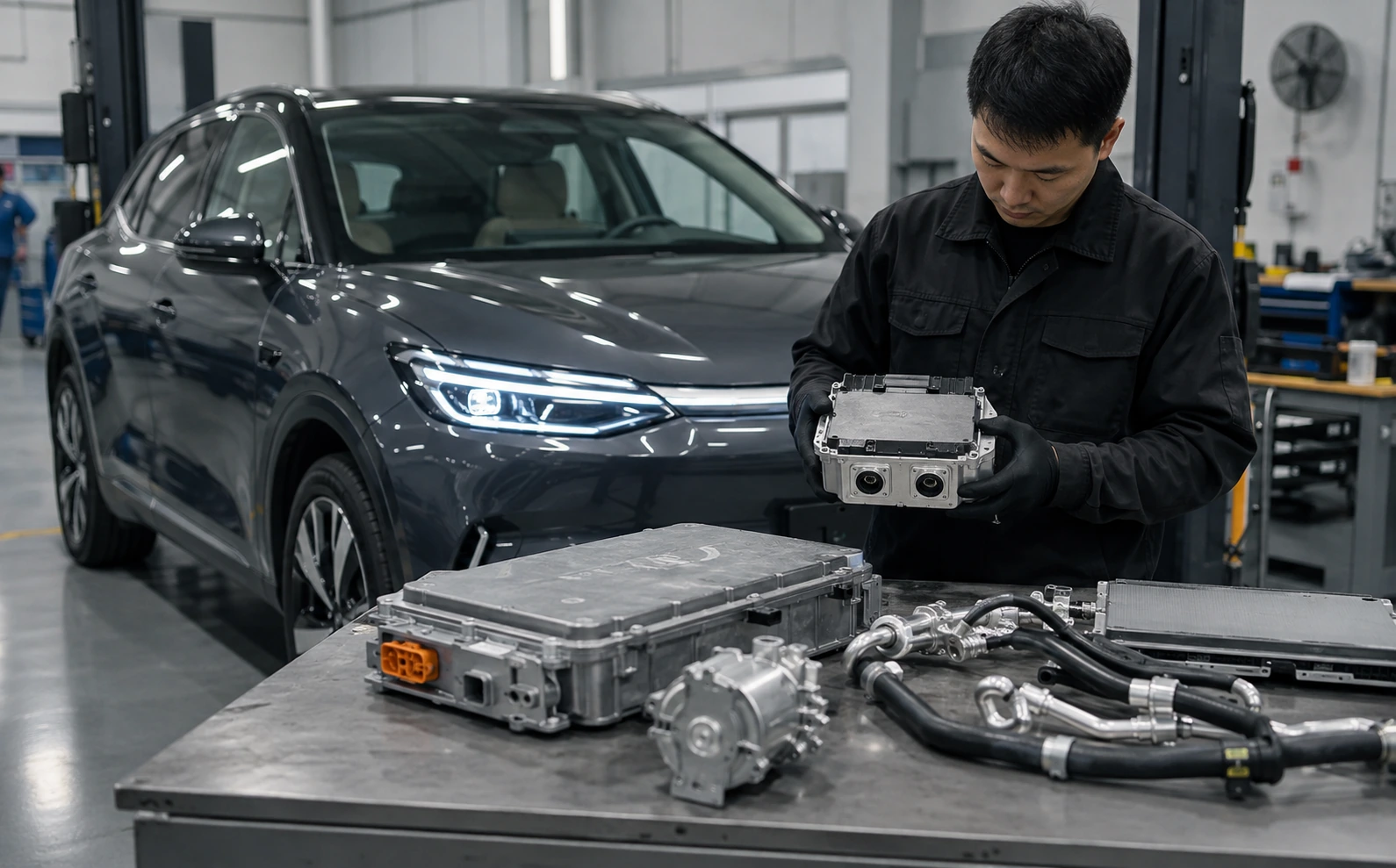
Electric compressor
Exact application, refrigerant compatibility, electrical specification, lubricant requirement and system cleanliness are checked before installation.
Thermal-control hardware
Valves, pumps, sensors and integrated assemblies need a proven failure mode and platform-specific identification.
Lower-risk service items
Cabin filters, selected seals and accessible parts can allow broader options when specification and warranty are clear.
Repair-first electrical route
Power, connector, wiring or communication faults should be repaired when proven instead of being converted into unnecessary module replacement.
Warranty and lead time
Qualifying Chinese EV repairs using original parts include six months of warranty cover. If the exact component requires ordering, the expected lead time is stated rather than hidden behind an uncertain substitute.
What Chinese EV AC repair may cost
These ranges help with budgeting only. Exact EV architecture, refrigerant, electrical diagnosis, component availability and access determine the written estimate.
Turnaround follows the failed branch. Cabin filters, accessible blower work or straightforward refrigerant testing can be shorter. Electric compressor, integrated thermal-control and access-heavy HVAC repairs need parts confirmation, safe service preparation and enough post-repair run time to reproduce the original thermal state.
Separate cabin airflow, refrigerant, electric-compressor, heat-rejection and control branches.
Accessible seals and hoses differ from heat exchangers and access-heavy leak sources.
Filter, blower, controller and wiring create different scopes.
Component availability, electrical diagnosis, refrigerant procedure and contamination findings are major variables.
Pumps, valves and integrated thermal hardware need exact identification before meaningful pricing.
Interior access, seals and refrigerant work can make labour the largest variable.
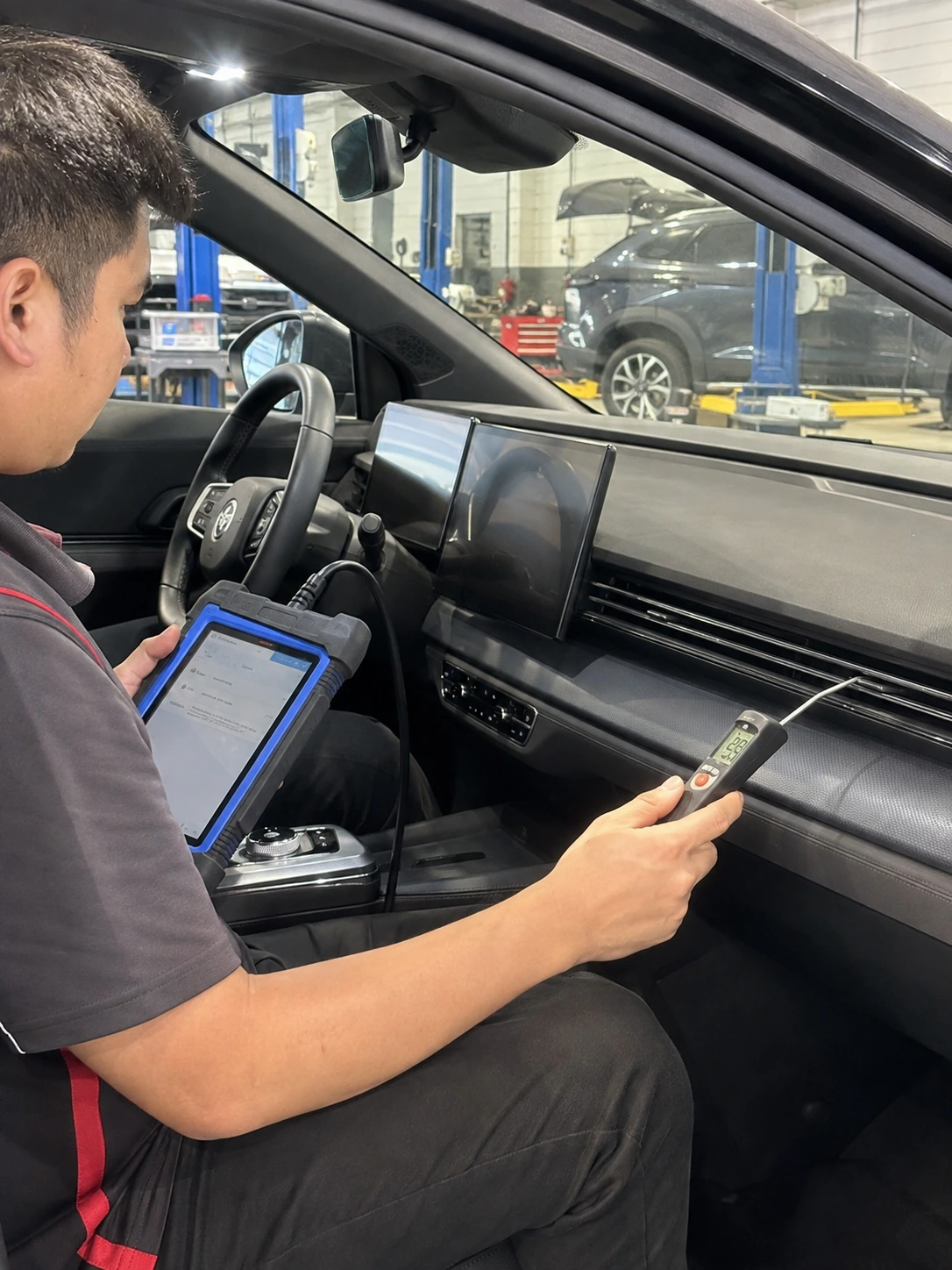
The diagnostic process follows thermal state before parts availability
Identify the exact battery-electric vehicle
Brand, model, year, recent work and the specific cabin or thermal complaint are recorded.
Record the operating state
Hot parking, charging, driving duration, ambient load and warnings are documented before resetting anything.
Measure the cabin result
Vent temperature, airflow and whole-cabin pull-down establish whether air delivery or cooling capacity is weak.
Assess refrigerant and heat rejection
Electric-compressor response, refrigerant condition and external heat exchange are interpreted together.
Include wider thermal demand only where relevant
Battery or coolant thermal state is considered when the exact architecture and fault condition make that connection meaningful.
Compare command with physical operation
Sensor, pump, valve and compressor commands are useful only when matched to real temperatures and component behaviour.
Verify the fitted component before ordering
Part number, electrical specification, connector and application are confirmed to reduce repeat work on fast-changing platforms.
Retest the original thermal condition
The same hot-soak, charging or run-time state is used after repair where practical so the customer complaint is genuinely verified.
What BYD MG Geely and other EV owners ask
These answers keep the service boundary specific to electrified climate systems.
Why is my BYD AC not cold enough in Dubai
Cabin heat load, blower output, refrigerant condition, electric-compressor performance and thermal demand can all contribute. The car should be tested under the state that makes cooling weak.
Can you repair MG electric-car AC faults
We can diagnose the EV climate system, separate airflow, refrigerant, electric-compressor and control branches, and quote the repair supported by the findings.
Do Chinese EVs all use the same thermal design
No. Brands and models can use different compressors, coolant loops, heat exchangers, sensors and thermal strategies. Exact vehicle identification is essential.
Can a Chinese EV simply receive an AC gas refill
If refrigerant is low, the reason for the loss should be investigated and the exact refrigerant specification confirmed. Repeated recharge without finding the cause is not a complete repair.
Can battery thermal demand affect cabin cooling
It can interact on some architectures because the vehicle manages several thermal demands. The exact design and operating state determine whether that interaction matters to the complaint.
Are Chinese EV AC parts interchangeable
They should not be assumed interchangeable. Part number, electrical specification, connector, refrigerant role and exact model application need verification.
How long does Chinese EV AC repair take
Diagnosis and accessible cabin work can be shorter. Electric-compressor, thermal-control and access-heavy repairs need exact parts confirmation and post-repair verification, so completion time is confirmed after diagnosis.
What should I send on WhatsApp
Send the brand, model, year, exact AC symptom, when it occurs, whether charging or long driving affects it and any recent thermal-system work or estimate.
Send the brand model and exact thermal symptom
Tell us whether you have a BYD, MG electric, Geely EV, Zeekr or another Chinese electric vehicle, the year and what the cabin does. That lets us prepare the correct EV climate diagnostic route at our Al Quoz 4 workshop.