
BMW AC Repair Dubai
Weak cooling, different temperatures from the left and right vents, an erratic blower or an AC fault message can come from very different parts of a BMW climate system. The correct repair starts by identifying the exact vehicle and reproducing the complaint, then comparing electronic commands with refrigerant, temperature and airflow measurements.

A fault code is a clue, not a parts order
BMW AC repair may involve a refrigerant leak, condenser airflow, a compressor-control problem, a blocked cabin filter, a blower or final-stage control fault, a temperature sensor, an air-distribution actuator, wiring or a control-module issue. A scan result becomes useful only when it agrees with what the system is physically doing.
A written repair decision should therefore follow testing. Vehicle identification matters because equipment, refrigerant specification, compressor design and thermal-management strategy can change by chassis, model year, engine and powertrain. Related MINI platforms can share engineering approaches and suppliers, but the exact MINI still needs its own vehicle and parts identification. See our MINI AC repair in Dubai page for the MINI-specific service route.
Which BMW AC symptom brought you here?
Cold while moving, warmer at idle
This can direct attention toward condenser airflow, fan operation, system pressures and heat rejection. It does not prove the compressor needs replacement.
One side cools better than the other
Uneven vent temperature can involve air-mix control, sensor feedback, refrigerant charge or distribution inside the HVAC housing. Both sides should be measured under the same settings.
Blower speed surges or stops
The blower motor, its controller, electrical supply, connectors, command signal and control panel can all affect cabin airflow. Strong refrigerant cooling cannot compensate for missing airflow.
Cooling stops after a long drive
An intermittent electrical command, evaporator icing, sensor drift, pressure protection or compressor behaviour may only appear after time and heat. The timing of the change is valuable diagnostic evidence.
AC warning or stored fault returns
The original fault sequence, current operating condition and related module data should be recorded before codes are cleared. A stored code by itself does not confirm that the named component has failed.
Noise begins when AC is requested
A new mechanical noise needs prompt inspection. Stop requesting AC if the noise is severe, if there is a burning smell or smoke, or if the engine begins overheating.
Four stages separate the symptom from the repair
BMW climate faults can cross mechanical, refrigerant, airflow and electronic boundaries. Testing in a clear order prevents one abnormal reading from being treated as a complete diagnosis.
Identify the vehicle
Record the model, chassis or VIN detail, model year, engine or electric powertrain, refrigerant label and any recent AC, battery, dashboard or collision work.
Reproduce the complaint
Use the settings and conditions that trigger the fault. Note ambient temperature, idle or road operation, selected zones, fan level, recirculation and how long the symptom takes to appear.
Compare command and result
Read relevant climate and powertrain data while measuring vent temperature, airflow, electrical supply and refrigerant behaviour. Requested output must be compared with actual response.
Confirm and verify
Isolate the failed circuit, component or leak before approval. After work, repeat the relevant test under documented conditions and disclose any intermittent issue that could not be reproduced.
What different symptom patterns can mean
The table below is a diagnostic starting point, not a remote diagnosis. More than one condition can create the same cabin complaint, and a vehicle can have two faults at the same time.
| Observed pattern | Useful first checks | What should not be assumed |
|---|---|---|
| Warm air from all vents | Refrigerant quantity and leak evidence, compressor request and response, pressure readings, condenser airflow, blend-door position and temperature-sensor plausibility. | That a gas refill alone will solve it, or that the compressor has failed. |
| Left and right vents disagree | Actual vent temperatures, selected zones, actuator movement, flap calibration where applicable, sensor readings and the refrigerant system under a stable load. | That every dual-zone difference is an actuator fault. |
| Cooling falls at idle | Condenser-fan command and operation, heat rejection, pressure movement, engine cooling condition and debris restricting airflow. | That road-speed cooling confirms correct refrigerant charge. |
| Air is cold but volume is low | Cabin filter condition, blower speed, controller output, evaporator icing, air-path restriction and distribution-door position. | That low airflow is a refrigerant problem. |
| Intermittent shut-down | Fault history before clearing, electrical supply, connector condition, pressure or temperature protection, sensor dropouts and behaviour after heat soak. | That a component working during a short workshop check is necessarily healthy. |
| Fault appears after battery work | Battery voltage and charging condition, stored undervoltage events, connector disturbance, initialization or calibration needs and the original complaint timeline. | That coding is automatically required or will repair a physical circuit fault. |
What a BMW AC inspection may include
The exact inspection should be adapted to the car and complaint. A meaningful test can combine module information with measurements taken at the vents, electrical circuits and refrigerant system.
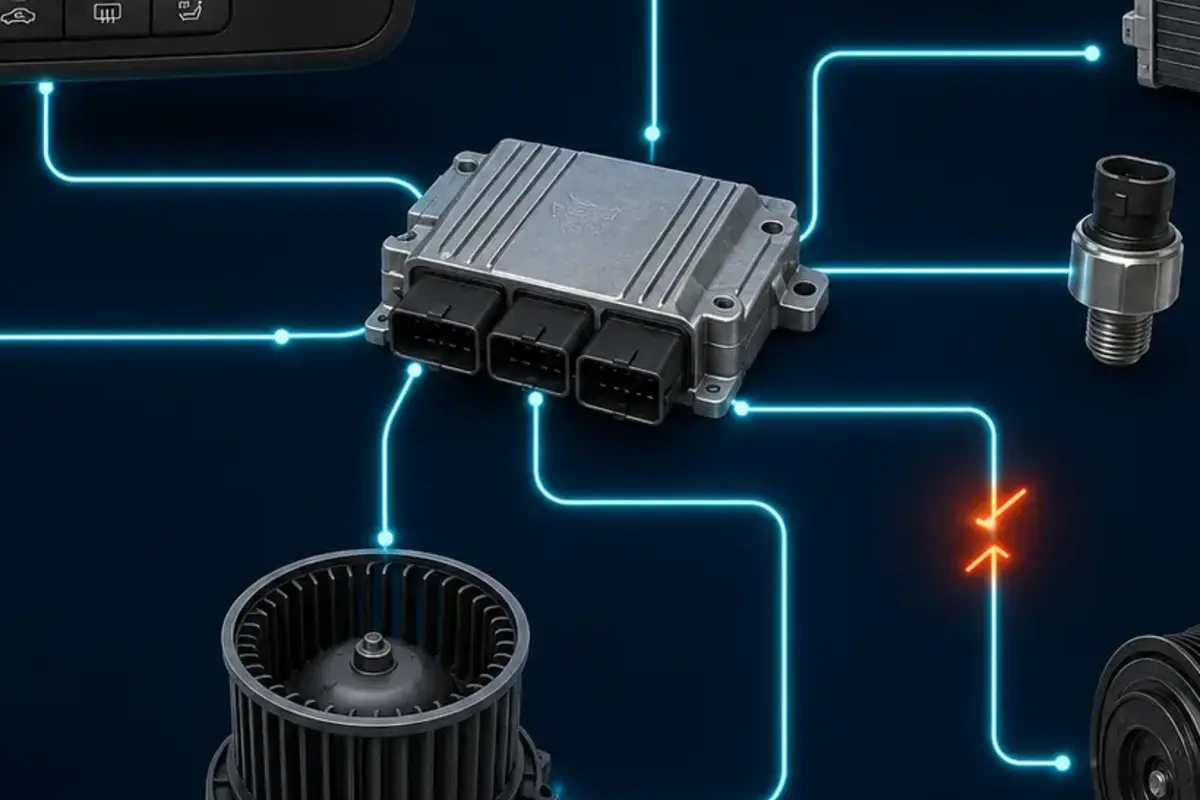
Recharge, repair or replacement depends on what testing proves
A BMW that is low on refrigerant needs a reason for the loss, not only a refill. An electronic fault needs circuit evidence, not only a fault-code description. A noisy or non-responsive compressor needs its command, supply, refrigerant condition and surrounding system checked before the most expensive conclusion is approved.
When a limited repair may be appropriate
A localised leak at an accessible hose or seal, a verified electrical connection fault, a restricted cabin filter, a failed sensor or a single confirmed airflow-control component may allow targeted work. The estimate still depends on access, the exact component, contamination, associated damage and parts availability.
After a refrigerant circuit is opened, correct evacuation, specified refrigerant and lubricant handling, and a performance check matter. A code clear without confirming the physical result is not a completed repair.
When replacement scope can grow
Internal compressor damage, widespread contamination, a damaged condenser, an inaccessible evaporator leak, a burnt electrical connector or a fault inside the HVAC housing can require more labour and supporting parts. Dashboard access or cooling-system interaction may also change the job considerably.
The quotation should explain what was confirmed, which part is proposed, what supporting work is included, what remains conditional after access and how the result will be checked.
BMW hybrid and electric vehicles need configuration-specific caution
On electrified models, cabin cooling may interact with battery or power-electronics thermal management, and the vehicle may use an electrically driven compressor with specific lubricant and electrical-safety requirements. A high-voltage warning, smoke, unusual heat or visible damage is not a normal AC booking situation. Stop using the vehicle as appropriate and arrange qualified inspection or recovery rather than attempting DIY work.
What should appear in a useful repair decision
A clear approval point protects both the owner and the workshop. It should connect the original symptom to the measurements and explain why the proposed work is more appropriate than the alternatives.
The finding
The report should identify the condition that was reproduced and the evidence that isolates the fault. If the complaint is intermittent and did not occur, that limitation should be stated instead of converted into certainty.
The proposed scope
The estimate should identify the part or circuit, required refrigerant work, access labour, supporting materials and any related items that are conditional on disassembly. Brand, new, remanufactured or alternative part choices should be distinguished when options genuinely exist.
The verification
The post-work check should relate to the fault. That may include stable vent temperatures, correct blower response, no confirmed leak at the repaired area, expected command and response, and a recheck for relevant faults. A short cold-air moment is not enough for an intermittent heat-soak complaint.
Prices and completion time depend on the exact BMW, diagnosis, access, parts choice and availability. The final written estimate should be based on inspection rather than a badge-level promise.
Book a BMW AC inspection in Al Quoz 4
Tell us the model, year, exact cooling or airflow symptom and when it happens. We can then arrange the appropriate workshop inspection and base the repair decision on the vehicle’s actual configuration and test results.