
Cadillac AC Repair Dubai
A Cadillac can have strong cooling at the front while a rear row stays warm, one side ignores the selected temperature, or an actuator clicks behind trim. The diagnosis must map each affected zone and distinguish airflow control from refrigerant capacity, electrical faults and long-line leakage before interior access is approved.

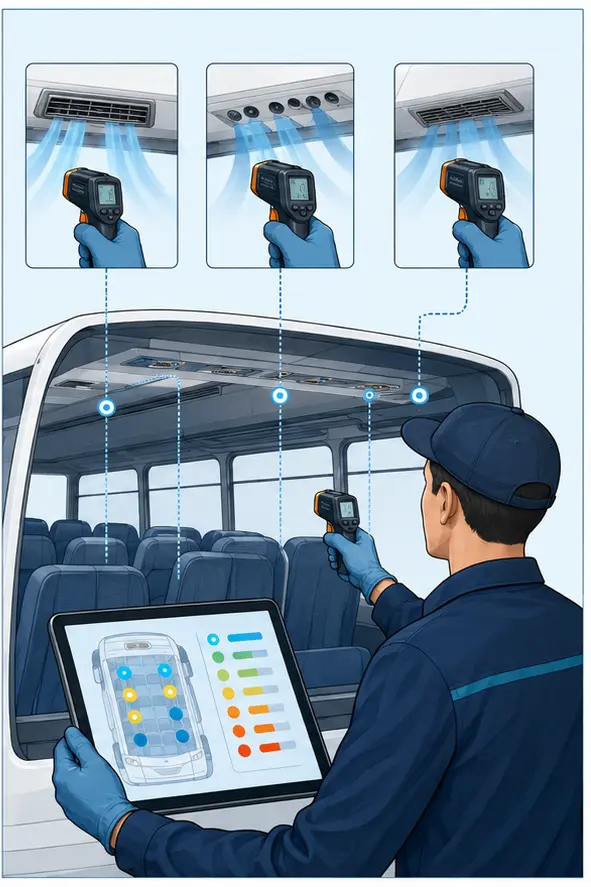
Build a cabin-zone map before choosing a part
Set every requested zone consistently, allow the system to stabilise, then record temperature and airflow at comparable outlets. A front-only thermometer reading cannot represent a large multi-row cabin.
Check selected settings, vent temperature, airflow, air-mix response and sensor plausibility on both sides.
Confirm whether the complaint follows the local setting, blower request, a specific outlet or the overall cooling load.
Evaluate rear evaporator performance, actuator response and accessible refrigerant lines or connections according to the actual layout.
Three fault families can create the same warm zone
Air distribution
A blend or mode door, actuator, mechanical obstruction, calibration issue, blower or restricted path can change temperature or volume in one area. Commanded position should be compared with feedback and physical output before trim is removed.
Refrigerant capacity
Low charge, restricted flow or inadequate heat rejection can reduce evaporator performance. A large or multi-evaporator cabin may reveal shortage unevenly, so a zone difference is not automatically an actuator fault.
Electrical and control
Sensor plausibility, battery voltage, connectors, wiring, module communication and local control requests can affect operation. A stored code is a direction for testing, not automatic parts approval.
Measure from the cabin outward
Identify the Cadillac
Model, year, engine, market specification, VIN detail, seating layout, rear AC equipment and refrigerant label affect the correct diagram and parts.
Map every zone
Use matched settings and document vent temperature, airflow and the exact area that does not follow command.
Interrogate controls
Check relevant faults, requests, sensor values, actuator feedback, supply voltage and communication where the system supports them.
Test cooling capacity
Observe compressor and fan response, pressures, temperatures, leak evidence and performance after cabin heat soak.
Open only with evidence
Interior trim, underbody covers or major components should be accessed after testing identifies the likely location.
Verify all reported rows
After repair, retest each zone named in the original complaint rather than handing over on the front-centre vent alone.
Long refrigerant routes add different inspection points
Where rear AC is fitted, longer lines and additional connections can create leak locations that do not exist on a small single-evaporator system. Inspection follows the actual routing and accessible joints; the vehicle should not be assumed to match another Cadillac only because the body style looks similar.
Underbody line corrosion, impact damage, seal leakage and previous repairs can all affect scope. If a line is confirmed damaged, the estimate should explain the affected section, access, part choice and whether adjacent connections are at risk.
After the circuit is opened, evacuation, specified refrigerant and lubricant handling, leak checking and performance verification are required. Repeated refilling without correcting the loss is not a durable repair plan.
When actuator access is justified
If scan data or control input changes but feedback and outlet result do not, inspect supply, ground, wiring and the mechanical path.
Repeated movement can indicate lost position, gear damage, obstruction or calibration difficulty. Battery condition and recent disconnection can affect the context.
Confirm the refrigerant system can support the cabin. A weak evaporator can create temperature imbalance that resembles an air-door fault.
Only then should trim removal be proposed. The estimate should state the access area, risk of hidden damage and what will be tested before reassembly.
Do not keep operating through a serious warning
Switch off the climate system for heavy mechanical noise, wiring odour or smoke. Engine overheating, a propulsion warning, unusual battery heat or collision damage needs safety-first inspection or recovery rather than routine comfort testing.
Repair options are different for each confirmed fault
A clear estimate protects the full cabin result
The finding should name the reproduced zone difference and the measurements that isolate its cause. It should distinguish a control problem from inadequate cooling capacity and explain why the proposed access is necessary.
The scope should identify parts, labour, refrigerant work, trim access, seals, electrical repair, calibration only when applicable, and conditional discoveries. Imported or apparently similar components should not be ordered without matching specification and connector or communication requirements.
Verification should repeat matched settings at the front and every rear area included in the complaint. Price and timing depend on exact configuration, access, parts choice and availability, so the final written estimate follows inspection.
Book a Cadillac cabin-zone inspection
Tell us which row or side differs, what each control is set to and whether the problem follows heat soak, traffic or time. We will use that map to plan the inspection.