
Used-car AC buyer guide
Used Car AC Check Before You Buy in Dubai
A glossy body, clean interior and fresh registration test can still hide an expensive cooling problem. Test the air conditioning under heat, at idle and on the road before you agree on the price. A documented result gives you leverage before the sale becomes final.
Airflow check
Compressor behaviour
Repair-risk estimate
The purchase risk people miss
A five-minute blast in a shaded showroom proves very little
Dubai used-car buyers often inspect paint, tyres, service history and warning lights, then judge the AC by placing a hand near one vent. That test can miss a system that starts cold but fades, cools only while moving, works better at night, has weak rear airflow or is temporarily overcharged to disguise a leak.
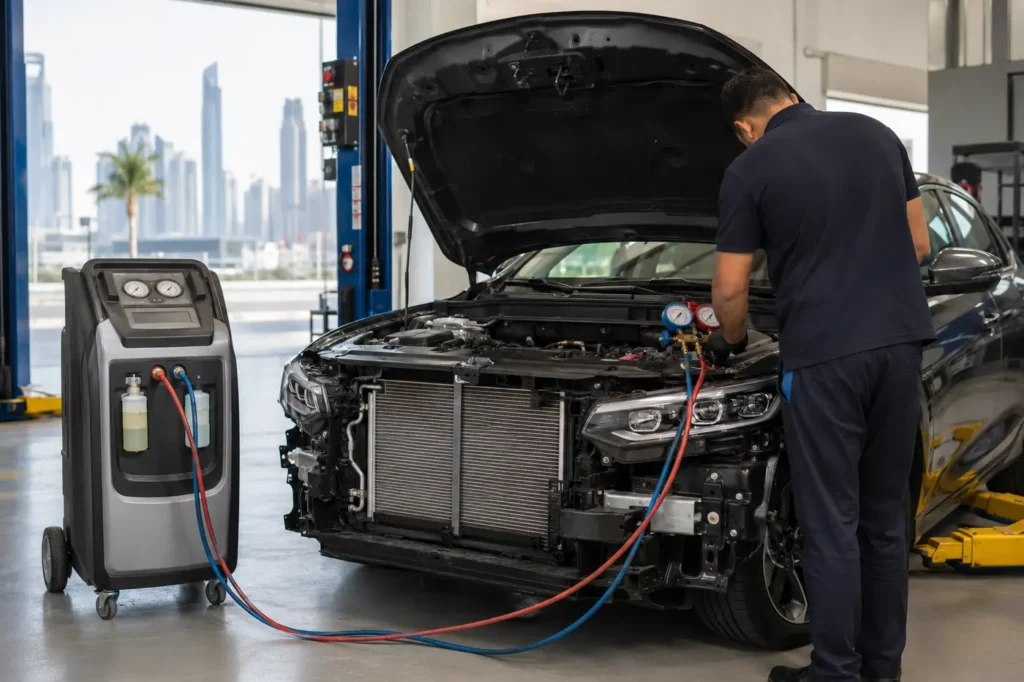
A proper used car AC check in Dubai recreates the conditions that matter after ownership. The car should begin warm enough to challenge the system. Cooling should be observed from startup through idle, traffic-like conditions and a road test. Front and rear outlets should be compared where fitted. Fan delivery, temperature stability, compressor command and unusual noises all matter.
Dubai’s RTA technical inspection checks roadworthiness. Separately, the RTA’s Technical Vehicle Status Report provides important used-vehicle history and warns that unreported issues may still exist, recommending an independent inspection and test drive. Neither service proves that the cabin will hold stable cooling in August or that the refrigerant circuit is leak-free. Treat the AC as a separate purchase decision.
If the seller says the car “just needs gas,” assume nothing. Refrigerant does not get consumed like fuel. Low charge normally leads to a second question about where it escaped. Read our explanation of cheap regas offers versus proper AC service before accepting a top-up as proof of repair.
A buyer-led sequence
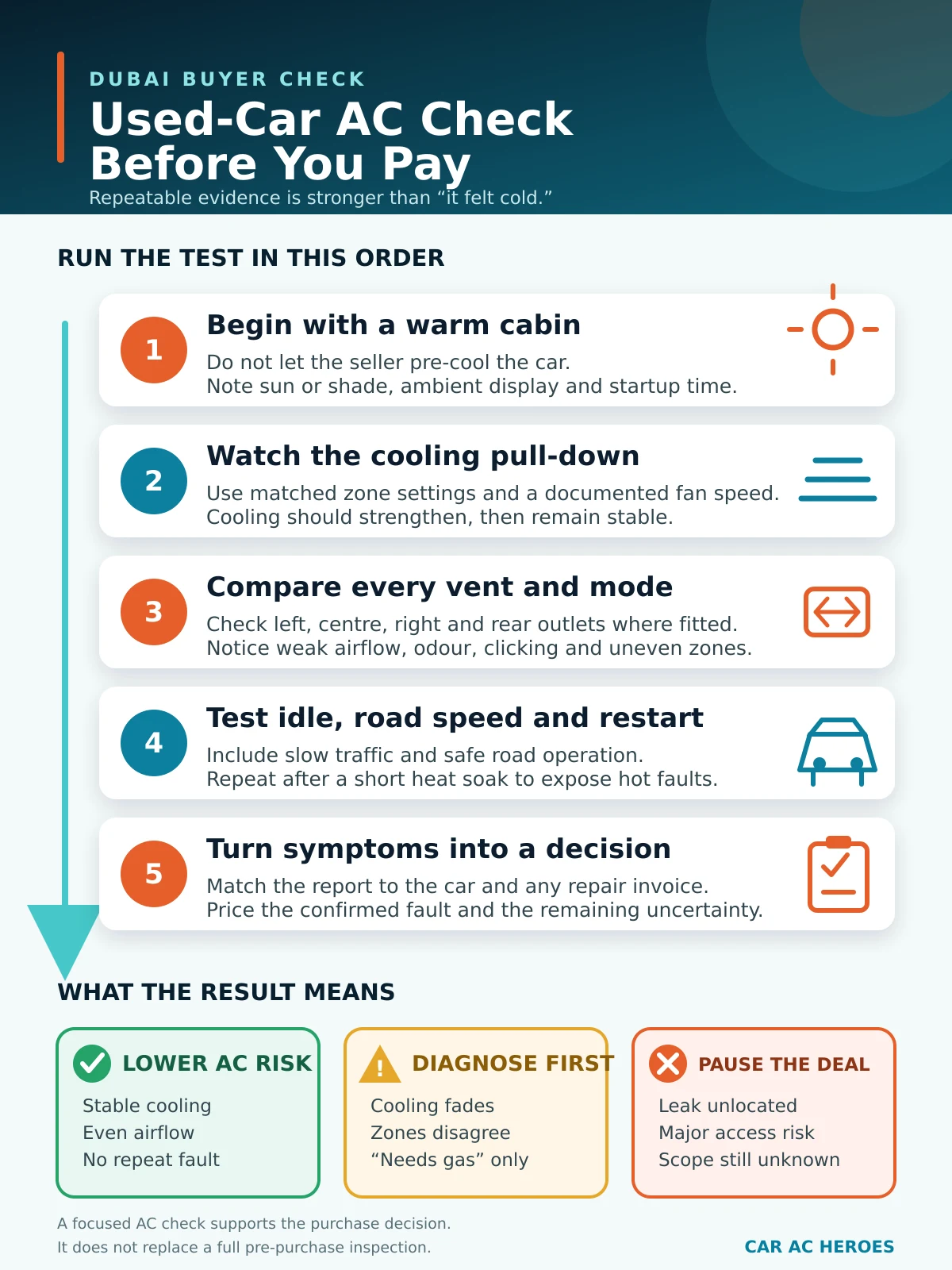
Run the test in an order that exposes intermittent faults
Changing settings randomly makes the result difficult to interpret. Use one repeatable sequence and note when the cooling changes.
Inspect before startup
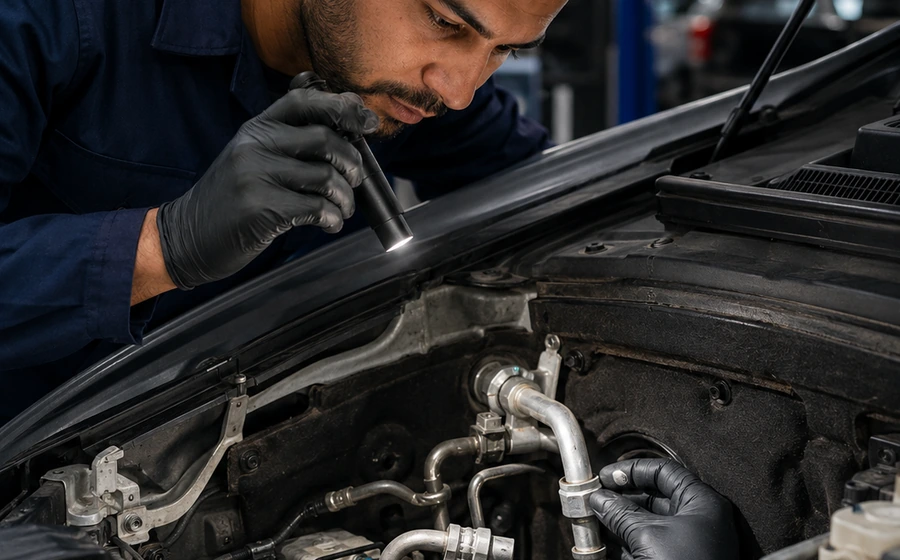
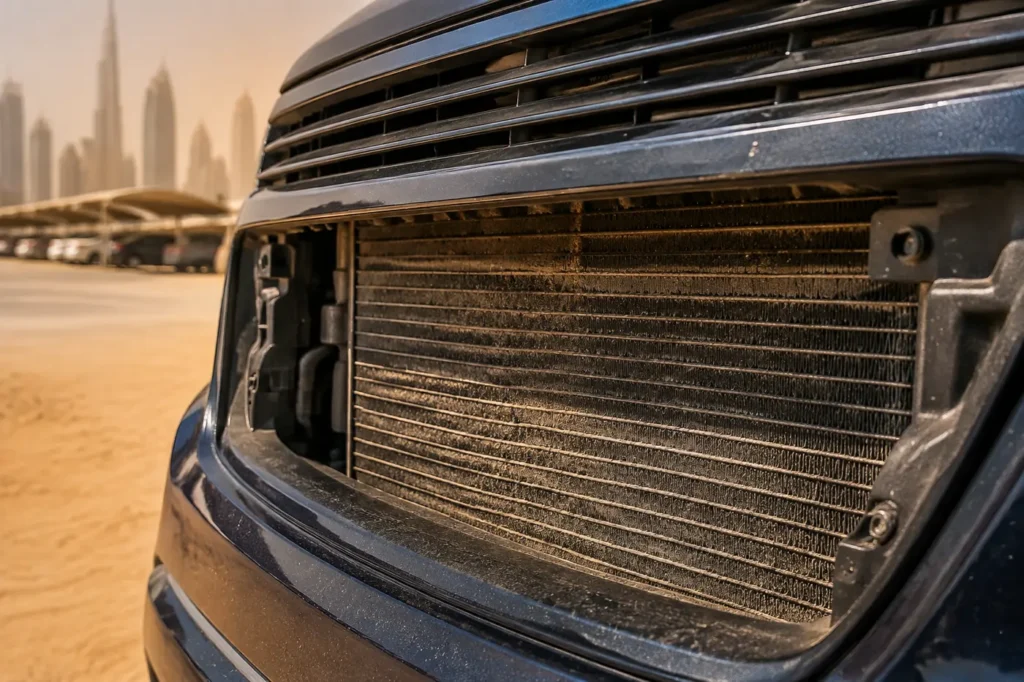
Look for damaged condenser fins, oily residue around visible connections, loose undertrays, non-standard wiring and a missing refrigerant label. Check whether the cabin filter area smells damp before fragrance fills the cabin.
Start from a warm cabin
Record the outdoor conditions and cabin starting temperature if equipment is available. Select a sensible low target, Auto or a documented fan setting, and keep doors and windows closed after the initial purge.
Watch the pull-down
Cooling should strengthen and then stabilise. Note if one side differs, the fan sound changes without airflow changing, or the outlet warms as the car remains stationary.
Test idle and movement
Compare performance at idle with safe road operation. A system that depends heavily on vehicle speed needs further condenser-fan, pressure and airflow checks.
Repeat after heat soak
After a short stop, restart the system. Some sensor, pressure and control faults appear only when components are hot, not during the first cold workshop start.
The handover test
Repeat five checks before ownership changes
Run these checks as one sequence and record the result before the seller changes settings or starts repairs.
Start with an unprepared car
Let the vehicle sit outdoors, then start it without seller pre-cooling. Note sun or shade, the ambient display and the time until useful cooling begins.
Slow compressor engagement, delayed fan operation or climate warnings during the first minutes are more revealing than showroom cold air.
Compare every outlet and mode
Match the climate settings, then compare left, centre, right, footwell and demist airflow. Move the fan from low to high and listen for clicking or an erratic blower tone.
Test rear climate zones separately. Their blowers, valves and evaporators can fail while the front still feels acceptable.
Road-test under real heat
Drive long enough for engine-bay heat to build. Include steady movement and several minutes at low speed or in traffic-like conditions.
Cooling that weakens at idle points toward heat rejection, fan control or pressure trouble. Cooling that fades later needs checks for icing, sensors, compressor control or heat-related electrical faults.
Verify every claimed repair
Match the workshop report to the chassis or registration details. Confirm the refrigerant specification and require a dated invoice for promised work.
Recreate the original symptom after repair. For a refill, ask for leak evidence and the measured charge. After dashboard work, inspect trim, warning lamps and every related control.
Make the result part of the deal
Use confirmed repair scope to negotiate the price. A filter or isolated actuator fault is different from an uncertain evaporator leak, compressor problem or contaminated circuit.
If the evidence remains incomplete, make the deposit refundable subject to inspection or pause the transaction before ownership transfers.
What to test inside the cabin
Comfort is a combination of temperature, airflow and distribution
Compare left, centre and right
Large differences can involve split settings, actuators, sensor input or refrigerant distribution. Do not judge the whole system from the coldest vent.
Check SUVs and family vehicles fully
Rear blowers, ducts, evaporators and controls add separate failure points. Use our rear AC troubleshooting guide if the back remains warm.
Listen and feel at every speed
A loud blower with little output suggests restriction, filter loading, a damaged fan or duct trouble. Learn the common causes of weak airflow from car vents.
Watch for fogging and dampness
Cooling without effective dehumidification can leave glass misty and the cabin uncomfortable. Check that condensate drains under the car rather than into the passenger footwell.
Test at startup and after shutdown
Musty, sour, burning and chemical smells have different investigation paths. A cabin freshener does not confirm a clean evaporator or safe electrical system.
Separate normal operation from wear
Record clicks, grinding, chirping, hissing or a changing compressor note. The timing of a sound is more useful than describing it as simply loud.

Translate symptoms into purchase risk
Not every weak AC result should cancel the deal
The purpose of inspection is not to make every used car look bad. It is to separate a small maintenance item from a repair that changes the value of the purchase. A loaded cabin filter is different from an evaporator leak that requires dashboard removal. A loose connector is different from a failed compressor with contamination in the circuit.
A written diagnosis lets you negotiate using scope rather than fear. Ask whether the estimate includes recovery, leak repair, evacuation, correct refrigerant quantity, oil handling and final performance verification. If the result is simply “add gas and see,” the uncertainty belongs in the purchase price.
Seller explanations decoded
Listen to the claim, then test the system
Service records deserve close reading. Repeated refrigerant charges without a documented leak repair are a warning. Multiple compressor replacements can indicate unresolved condenser contamination, incorrect oil, wrong charge or a control problem. A new part is reassuring only when the cause of the original failure was understood.
For imported vehicles, verify refrigerant specification, parts availability and whether climate components match regional requirements. A vehicle can be mechanically attractive yet expensive to support if its HVAC configuration is unusual locally. Hybrid and electric vehicles also require technicians and equipment appropriate to high-voltage compressors. See our EV and hybrid AC service guide for the additional precautions.
What a workshop should document
A pre-purchase AC report needs conclusions, not just numbers
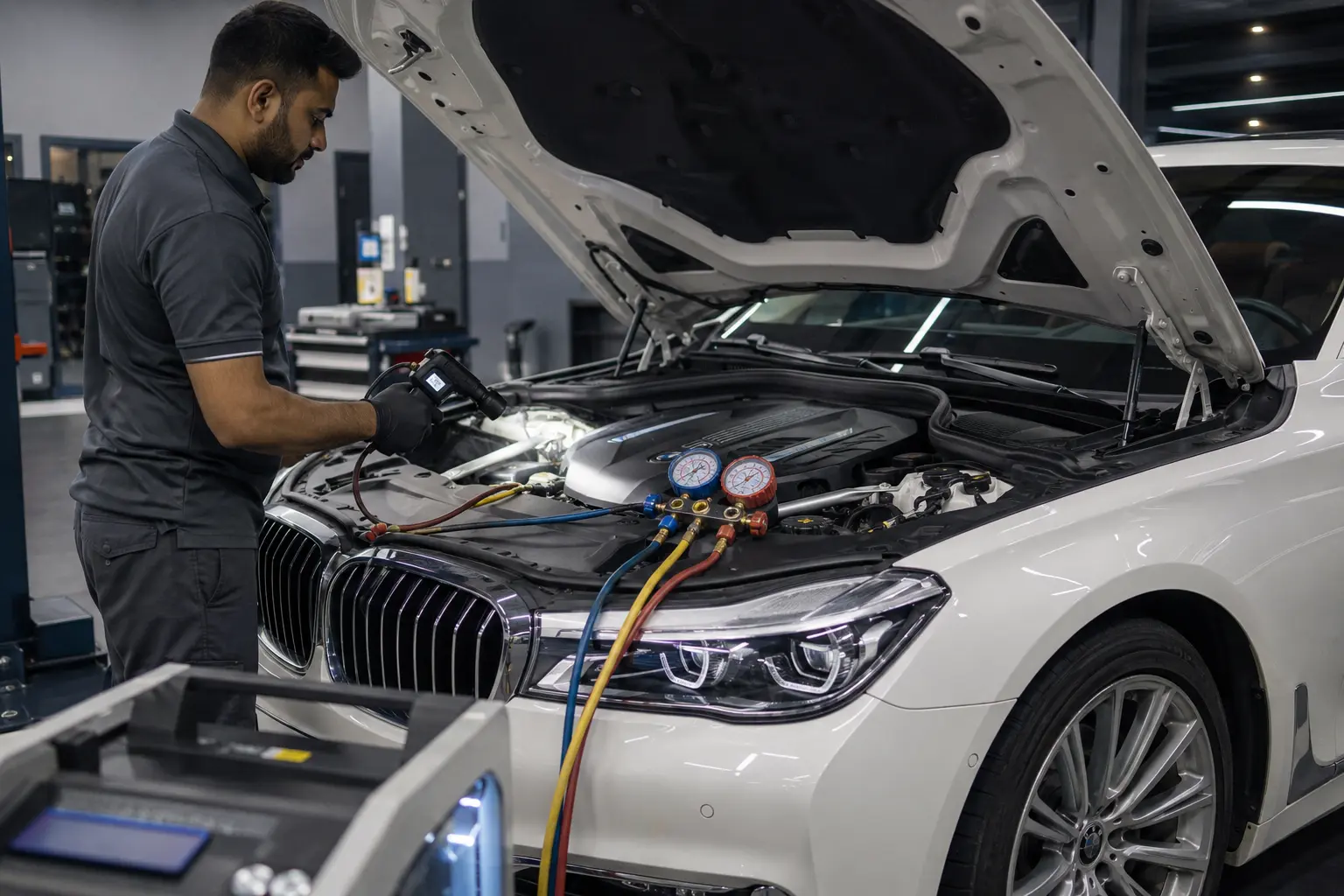
Useful documentation states the test conditions, initial cabin condition, selected controls, vent-temperature trend, airflow observations and any fault codes or warning messages. Pressure readings should be interpreted against refrigerant type, ambient heat, compressor design and vehicle specification. A single photograph of gauges is not a diagnosis.
The report should identify confirmed defects, likely concerns that need more access, and items that passed. It should also explain what cannot be confirmed without dismantling. That boundary protects both buyer and technician from false certainty.
Where leakage is suspected, use a method suited to the location and size of the leak. Electronic detection, UV evidence, controlled inert-gas testing and visual inspection answer different questions. Our existing car AC leak detection service explains why one technique may need another for confirmation. A result should be repeatable enough to support the proposed repair.
Finally, ask for a repair range based on the evidence. The number should distinguish the confirmed minimum from the possible maximum if hidden damage appears. This gives you a rational basis to proceed, renegotiate or walk away.
Arrange the check before purchase
What to book and how much to budget
Tell Car AC Heroes that you are buying the vehicle, rather than booking a gas refill. The useful question is whether the cooling works consistently and whether any findings change your buying decision. We confirm the AC inspection scope and price for that car before you book.
A free initial workshop AC screen can be a useful first look. It does not replace an agreed pre-purchase inspection or prove that hidden leaks and intermittent faults are absent.
Agree what you will receive
Ask for the agreed checks and written findings to cover the points that matter to your purchase. Useful items include front and rear cooling where fitted, airflow at different settings, controls, unusual noise or smell, accessible condition and performance under recorded test conditions. Relevant scan or further leak checks depend on the vehicle and the scope you approve.
The findings should distinguish what worked during testing, confirmed concerns and anything still uncertain. Ask for an itemised repair estimate where a fault is established. Parts, gas, repairs, dismantling and repeat visits are separate unless your written quote includes them. An AC-only inspection does not assess the engine, gearbox, chassis, accident history or the whole vehicle.
Prepare the seller and the vehicle
- Send the vehicle details. Include make, model, year, location and any known AC complaint or recent refill.
- Agree access with the seller. Confirm who will attend, supply the keys and authorise inspection. Any road test needs the owner’s permission and appropriate driving arrangements.
- Confirm scope, price and timing. Request the VAT-inclusive total, written findings and any separate testing charges before the appointment. Let us confirm availability before coordinating the handover.
- Review the findings before committing. Use confirmed repair costs when negotiating. If testing leaves a major uncertainty, arrange the further check before relying on a low repair estimate.
Questions before paying a deposit
Used-car AC checks buyers ask about
How much is a used-car AC inspection in Dubai?
Use AED 100–350 as an indicative workshop diagnostic budget, with the exact pre-purchase scope and VAT-inclusive total confirmed for the vehicle. A mobile AC inspection is AED 199 including VAT for the agreed visit and accessible checks, subject to confirmed location and access. Extra testing and repairs are separate unless listed in your quote.
Can you inspect the AC at the seller’s location?
Ask about the mobile inspection and send the Dubai location, vehicle details and parking arrangements. The seller must permit access, and we confirm availability and suitable checks before attendance. If the purchase decision needs deeper testing, a workshop appointment may be more useful.
Can an RTA inspection confirm that the AC is healthy
No. RTA’s technical inspection is a roadworthiness service. The RTA’s used-vehicle status guidance also warns that records may not show every issue and recommends an independent inspection and test drive. Arrange a separate AC performance check under meaningful heat before buying.
How long should I test the air conditioning
Long enough to observe pull-down and stable operation under meaningful heat load. A brief cold burst is insufficient. Include idle, road operation, front and rear outlets, several fan speeds and a restart after a short heat soak where practical.
Should I reject a car with a refrigerant leak
Not automatically. The decision depends on leak location, access, refrigerant type, contamination risk and sale price. Obtain a credible repair scope before deciding whether the deal still makes financial sense.
What if the seller refuses an independent inspection
Treat refusal as information. You are being asked to accept unknown repair risk without evidence. A serious seller can usually agree on a reasonable inspection process that protects the vehicle and both parties.
Can I rely on a recent AC invoice
An invoice helps when it states the complaint, measured cause, replaced parts, refrigerant quantity and final test. A line saying “AC service” or “gas refill” does not prove that an intermittent problem or leak was corrected.
Arrange an AC inspection before you buy
Send the car details, location and your concerns. We will confirm a suitable workshop or mobile inspection, the included checks and the VAT-inclusive price before booking.
Workshop at AMF Auto Services, 39 Al Quoz 4, Dubai. Monday to Saturday, 9 AM to 7 PM. Coordinate seller access after the appointment is confirmed.
Related Car AC Guides