Evidence before deodorising claims
Ozone Treatment for Cars and Whether It Actually Works
Ozone can react with some odour compounds, but it is not a substitute for removing mould, smoke residue, spills, dirty filters or a contaminated evaporator. It also demands strict unoccupied-use and ventilation controls.
Use source removal and physical cleaning first. Consider controlled ozone only as a supplementary treatment for a suitable residual odour, never while people or animals are inside the vehicle.
Used cars and professional handover
A responsible treatment starts with disclosure and ends with ventilation
Used-car odours often have several layers. Fragrance may cover smoke residue, damp carpet or an evaporator smell during a short viewing. Inspect the vehicle with the perfume source removed, run the climate system through fresh-air and recirculation modes, and check the boot, spare-wheel well, seat rails and headliner. A smell that appears only when the blower starts directs the investigation differently from one that remains in a parked cabin.
Ask what happened before ozone was proposed. Interior extraction, cabin-filter replacement, drain inspection and source repair should be documented where relevant. If the seller says a treatment “sanitised everything,” request the actual process and the reason it was selected. Ozone cannot remove ash, spilled liquid, wet insulation or microbial material. Those sources continue producing odour after the temporary oxidative effect fades.
A professional service should define exclusions before beginning. People, pets and unsecured organic materials must not remain in the treatment area. The operator controls access, protects workers, follows the equipment procedure and allows sufficient time for the gas to break down and the cabin to be ventilated. No customer should be asked to enter a recently treated vehicle merely because the machine has stopped.
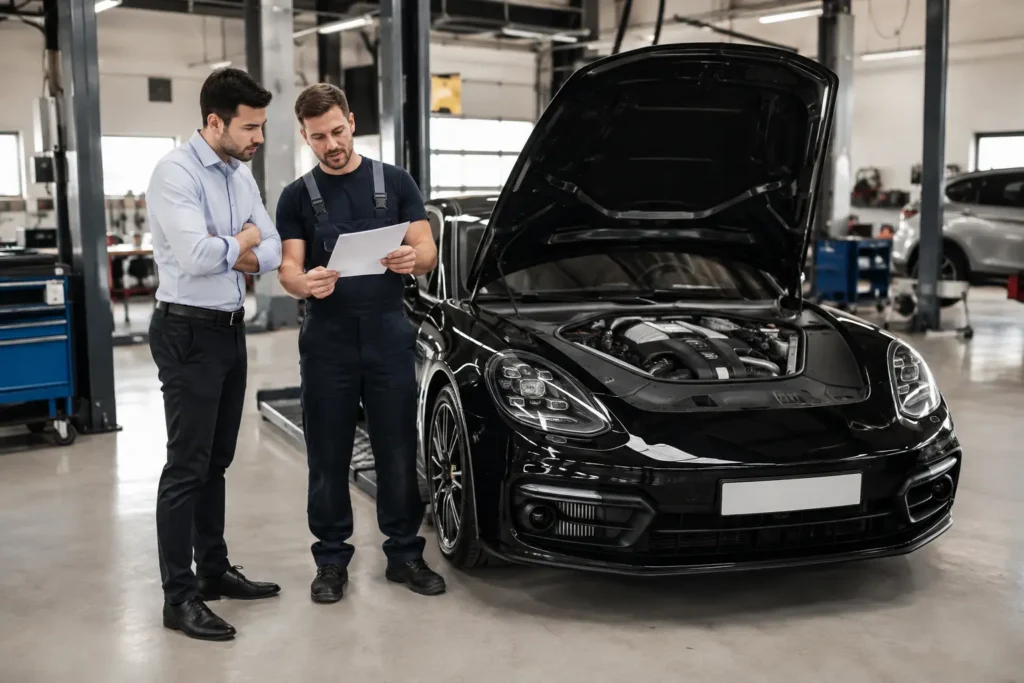
Handover requires more than a fragrance test. The workshop should state what physical cleaning was completed, the treatment duration, ventilation procedure and any remaining concern. Fresh-air operation can be used after the prescribed safe interval to exchange cabin air, but an operator should not promise that smell alone proves a safe concentration. Where measurement is part of the procedure, its limit and instrument should be recorded.
Materials also matter. Ozone is highly reactive, and excessive or repeated exposure can age rubber, coatings, adhesives and some interior finishes. More treatment is not automatically better. The chosen dose and duration belong to a controlled procedure, not an attempt to overpower a stubborn source. If the smell returns quickly, stop repeating the cycle and reopen the diagnosis.
For a buyer, persistent smoke or water damage can affect far more than comfort. Residue may be embedded through fabrics and ventilation surfaces, while water entry can involve corrosion, wiring and hidden mould growth. Use the odour investigation as part of a wider purchase decision. A transparent seller should permit independent inspection and explain previous cleaning or leak repairs with evidence.
What ozone actually is
A reactive gas is not the same thing as a deep clean
Car ozone treatment uses a generator to produce ozone, a reactive form of oxygen. Because ozone reacts with some airborne and surface chemicals, the cabin can smell different after treatment. That change is often marketed as proof that the interior has been sterilised or every odour molecule has been destroyed. The evidence does not support such a broad promise.
The US EPA guidance on ozone generators warns that ozone at concentrations within public-health standards has limited ability to remove many indoor contaminants and odour-causing chemicals. Concentrations high enough to have a stronger effect can be unsafe for occupied spaces and may create irritating reaction by-products. A car cabin is small, enclosed and full of rubber, plastics, adhesives, fabrics and electronics, so process control matters.
The right question is not simply whether ozone “works.” Ask what caused the odour, whether that material has been removed, whether ozone is suitable for the remaining smell, how exposure is controlled and how the cabin is ventilated before return.
For musty AC odour, start with the evaporator, filter, drain and intake path. Our guide to vinegar and sour smells from car vents explains why spraying fragrance into the cabin rarely solves the source.
Claims compared with evidence
What ozone may do and what it cannot replace
It removes every smell permanently
Odours return when the source remains. Smoke film on trim, liquid under carpet, microbial growth on a wet evaporator and a contaminated filter continue releasing compounds after the ozone clears.
Some compounds react more readily than others
Effectiveness depends on chemistry and exposure. A changed smell does not prove complete removal, and ozone itself has a sharp odour that can temporarily dominate perception.
It sterilises the whole vehicle
Biological contamination embedded in porous material or protected by dirt may survive. Effective antimicrobial concentrations can exceed safe occupied-space levels, which is why physical cleaning remains central.
Reach does not guarantee useful dose
Gas may enter spaces that a cloth cannot, but concentration varies around the cabin and HVAC path. Shadowed material and deeply soaked foam can remain contaminated.
More ozone means a better result
Higher concentration and longer exposure increase health and material risks. Process limits should come from suitable equipment and a written safe-work method, not guesswork.
Oxidation can affect materials
Repeated or excessive treatment may age rubber, coatings, adhesives, leather finishes and some cabin materials. A vehicle should not receive routine ozone without a defined need.
Minimum safety framework
Controlled ozone use begins after people leave
The smell of ozone is not a reliable safety meter. People vary in their ability to detect it, and smell sensitivity can diminish during exposure. A lack of odour does not prove that the cabin is ready. Workshops should follow equipment guidance, occupational precautions and applicable local requirements.
Source-first odour diagnosis
Match the treatment to what is actually producing the smell
Car odour is a symptom. Before any fogging or ozone cycle, inspect where the contaminant lives. The same stale description can come from an evaporator, cabin filter, water leak, food spill, tobacco residue, rodent contamination, overheating electrical insulation or exhaust entry.
A burning smell requires electrical and mechanical inspection, not deodorising. Fuel or exhaust odour requires an immediate safety investigation. Wet carpet needs the leak repaired and padding dried or replaced. Ozone must never be used to make a dangerous symptom less noticeable.
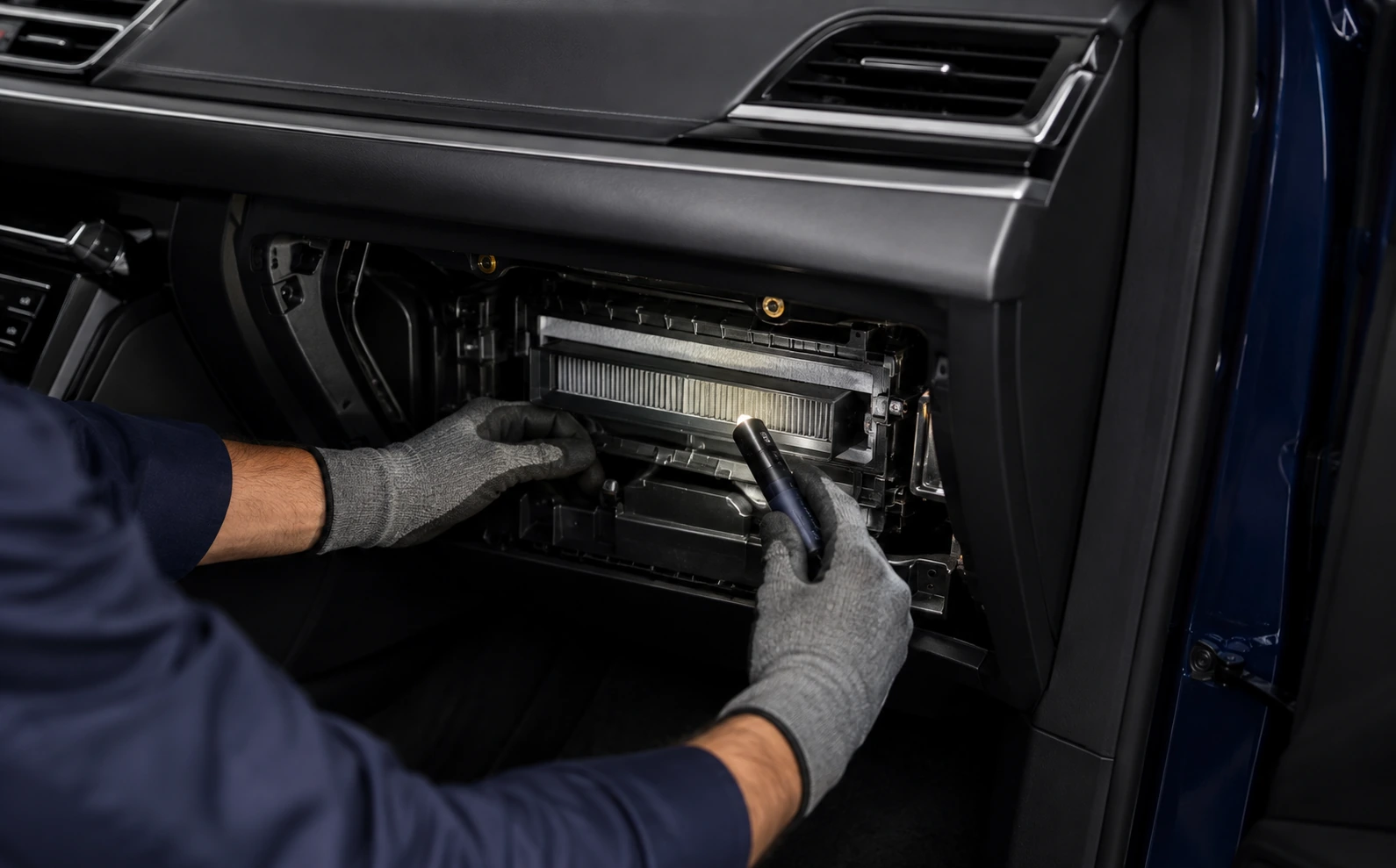
For AC-related mustiness, inspect the intake, filter, evaporator surface and condensate drain. Our car AC smell removal and disinfection service combines source diagnosis with cleaning rather than relying on perfume.
Why AC smells often return
The evaporator stays hidden but not irrelevant
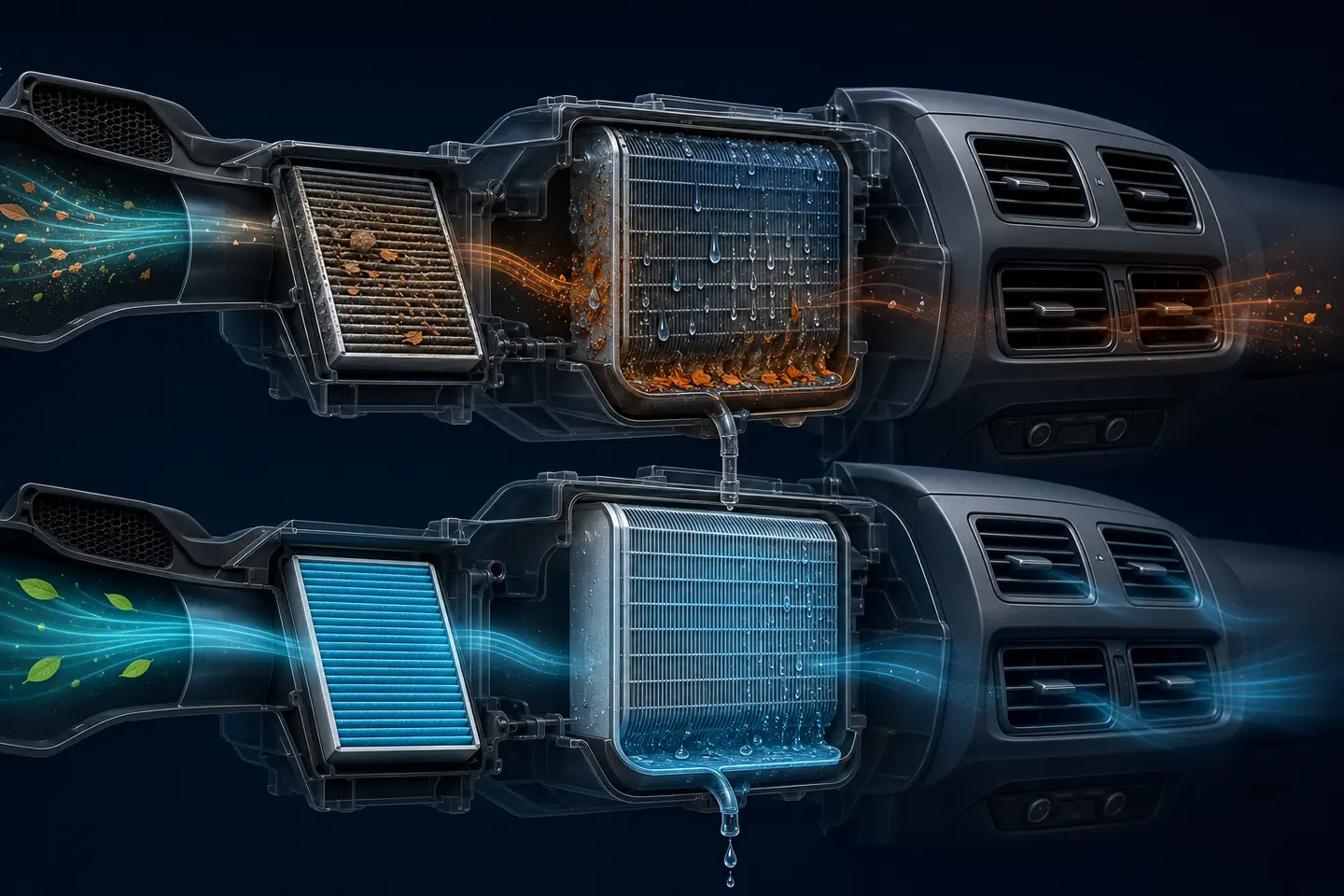
When the AC runs, moisture condenses on the cold evaporator. Dust bypassing or loading the filter can collect on damp fins. If drainage is poor or the housing remains wet, microbial odour can develop. Ozone may change the smell in the air, yet contamination attached to fins and debris can remain.
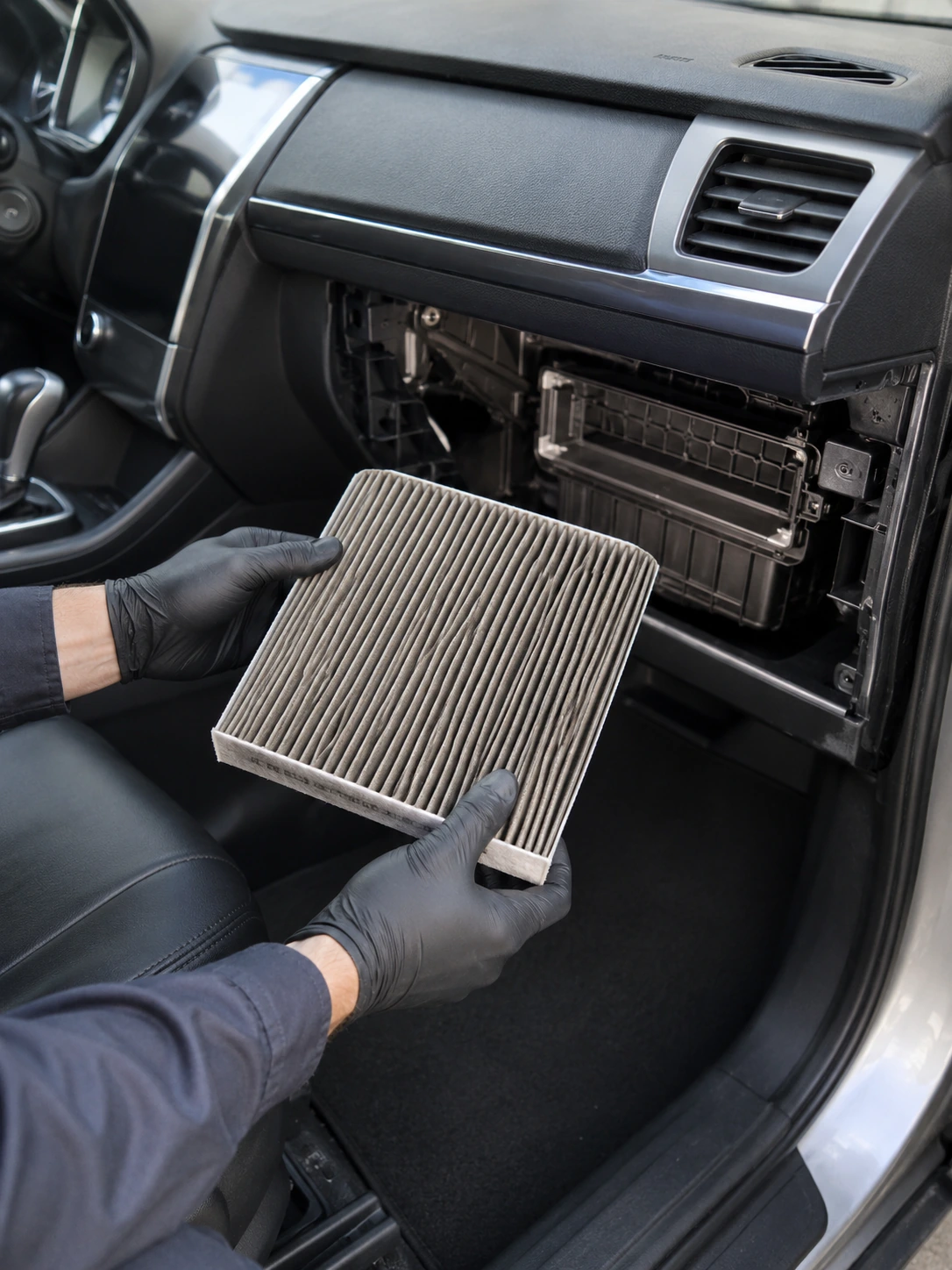
Targeted evaporator cleaning aims to contact the surface, loosen contamination, protect delicate fins and allow condensate to carry residue out through a clear drain. The cabin filter is replaced when loaded, and the intake is inspected. Drying and airflow verification complete the job.
Adding harsh chemicals through vents without knowing the product path can damage sensors, coatings or electronics and leave residue. The method should suit the vehicle and provide access to the actual air path. See our AC duct and vent cleaning guide for the difference between surface wiping and system cleaning.
If the smell appears with water inside the passenger footwell, investigate the drain before treatment. Our page on water leaking inside a car from the AC explains why wet insulation can keep odour alive.
When supplementary use may be considered
Ozone belongs after cleaning, not instead of it
A professionally controlled ozone cycle may be considered when the physical source has been removed but residual odour remains in inaccessible cabin materials. Examples may include a used vehicle with historical smoke contamination after thorough interior cleaning, or a repaired water leak after contaminated materials have been cleaned and dried.
The customer should know what was cleaned, what residual problem the ozone cycle targets, how the vehicle will be ventilated and what result is realistic. “Sterilised” is not a useful promise without a validated process and microbiological evidence. “Odour may be reduced after source removal” is more honest.
Some owners ask whether the AC should run during treatment. Circulating the HVAC can draw gas through the return and duct path, but the method depends on vehicle controls, battery support and equipment procedure. It must not involve anyone sitting in the cabin to operate controls. Remote or pre-set operation and controlled access are necessary.
A better odour-removal sequence
Seven steps produce a more durable result
First, interview the owner about when the smell appears. Second, inspect for leaks, spills, smoke residue and unsafe odours. Third, check the cabin filter, intake, evaporator clues and drain. Fourth, remove contaminated loose material and clean surfaces. Fifth, repair water entry or electrical causes. Sixth, dry and verify the cabin. Seventh, consider a suitable supplementary treatment only if a residual odour remains.
This sequence prevents the common cycle of fragrance, ozone, temporary improvement and return. It also avoids exposing a cabin to a reactive gas when ordinary extraction and cleaning would solve the actual cause.
For health-sensitive occupants, disclose all chemicals used and allow thorough ventilation. Anyone with respiratory concerns should seek medical guidance about exposure rather than relying on a workshop’s generic assurance.
Car AC Heroes workshop evidence
What source-first odour removal looked like on a 2019 Range Rover Sport
One workshop case supplied by Car AC Heroes involved a 2019 Range Rover Sport with 85,000 km. The customer described a persistent sour, wet-dirt smell mixed with stale cigarette smoke, strongest when the AC blower was first switched on. Air fresheners had only masked the complaint temporarily.
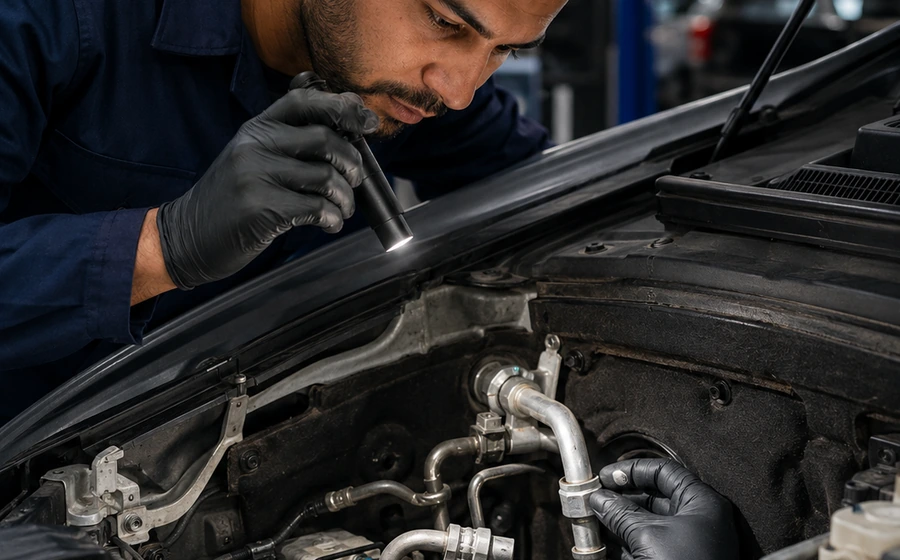
Inspection found two separate causes rather than one. The evaporator drain was partially blocked with dust and debris, allowing condensate to remain in the HVAC housing, while the cabin filter was heavily contaminated with desert dust and smoke residue. Smoke residue was also present in interior fabrics.
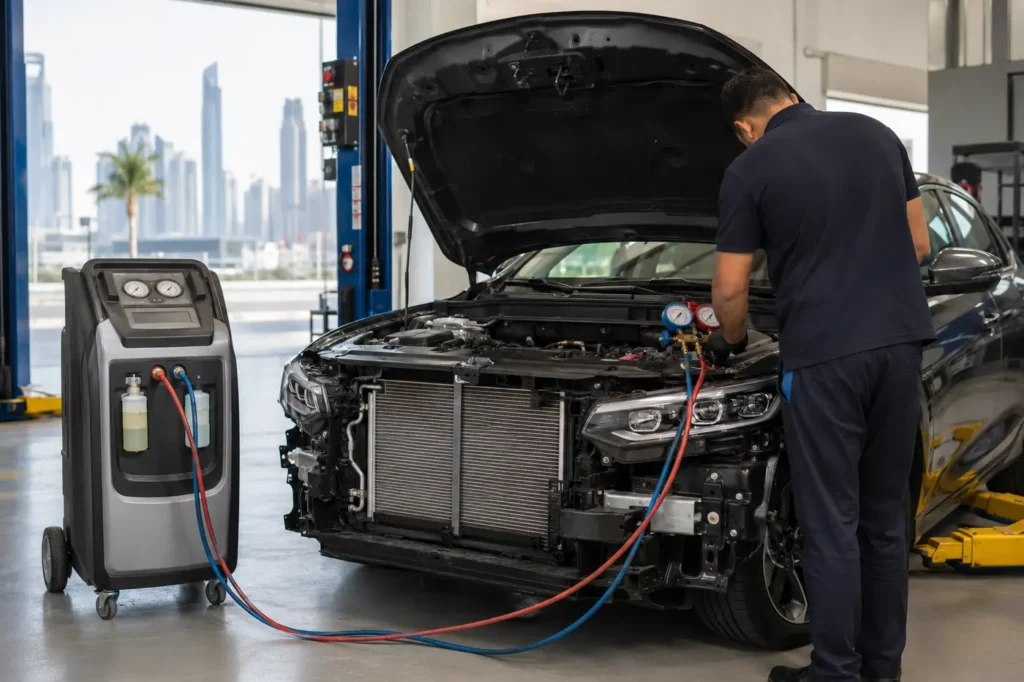
The repair sequence started with the physical sources. The drain was cleared and drainage restored, the evaporator was cleaned with a suitable foaming enzymatic product, and the contaminated cabin filter was replaced with an OEM active-carbon filter. Only after those source-removal steps was a controlled commercial ozone treatment used as a supplementary cabin and air-path treatment under workshop conditions, with no occupants inside. The vehicle was then fully ventilated before handover.
At final QA, the original sour mildew and stale-smoke odours were no longer detectable. A follow-up with the customer two weeks later confirmed that the heavy AC smell had not returned. This case is why we treat ozone as the final supporting step, not as a substitute for drainage repair, evaporator cleaning, filter replacement or interior source removal.
Questions before treatment
Car ozone treatment questions
Does ozone permanently remove cigarette smell from a car
Not by itself. Smoke residue coats glass, trim, fabric, headliner and HVAC surfaces. Thorough cleaning is the foundation. A controlled ozone cycle may reduce some residual odour afterward, but deeply contaminated materials may require replacement.
Can I sit in the car while an ozone machine runs
No. Intentional ozone treatment must not occur in an occupied cabin. People and animals should be removed, entry controlled and the vehicle fully ventilated before return.
Will ozone kill mould inside car vents
Do not treat ozone as a replacement for cleaning. Contamination embedded in debris or porous material may remain, while concentrations needed for strong biological effects can be unsafe. Clean the evaporator, housing, filter and drain as appropriate.
How long should a car be ventilated after ozone
There is no universal time because generator output, cabin size, temperature and procedure differ. Follow a professional process and objective safety guidance rather than judging readiness by smell alone.
Can ozone damage a car interior
Excessive or repeated oxidation can age some rubber, plastics, adhesives, coatings and finishes. Use it only for a defined reason with controlled concentration and duration.
Why did the odour return after a few days
The source probably remained or became wet again. Recheck filters, evaporator contamination, drains, carpet padding, smoke film and water entry instead of simply repeating the ozone cycle.
Remove the cause before treating what remains
A complimentary odour assessment can identify whether the source begins in the filter, evaporator, drain or cabin before you pay for treatment.
Related Car AC Guides